
FORMER TOP US DIPLOMAT REVEALS MISTAKES MADE AFTER 9/11 ATTACKS
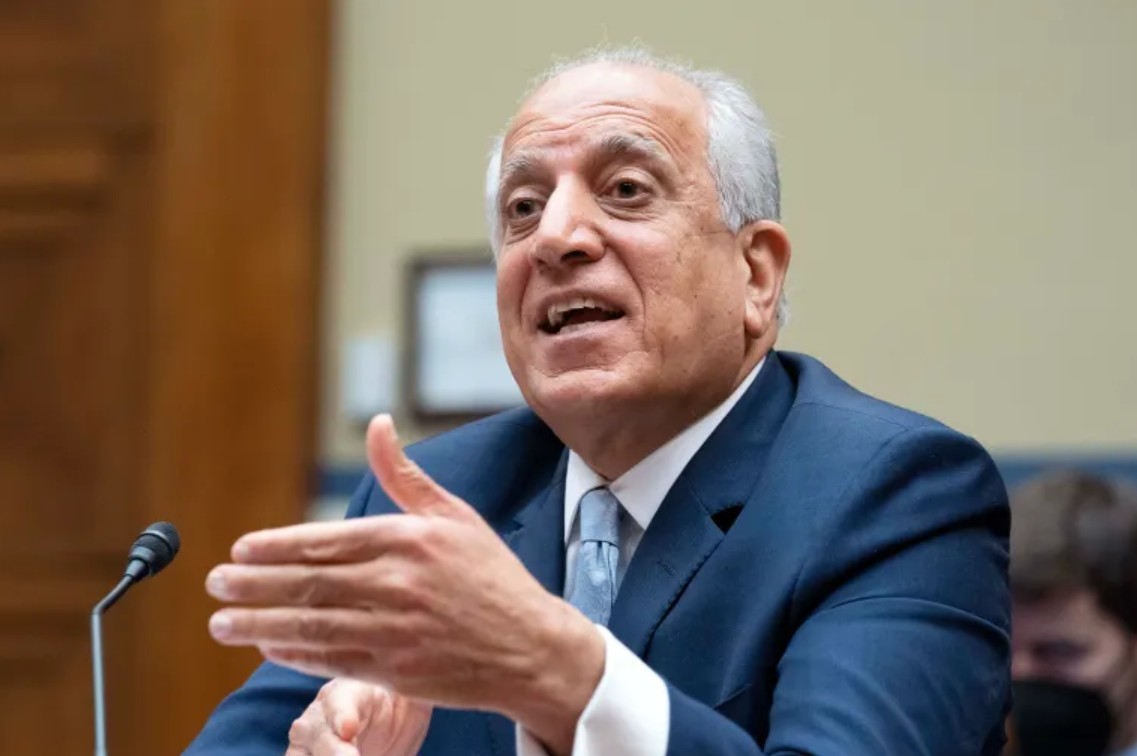
Former US diplomat Zalmay Khalilzad says anger and fear following the September 11 attacks contributed to decisions that shaped the wars in Afghanistan and Iraq. He questioned Washington's failure to negotiate with the Taliban early in the Afghanistan war and said intelligence surrounding the invasion of Iraq was problematic.
Former senior United States diplomat Zalmay Khalilzad has reflected on what he considers major mistakes in Washington's response to the September 11, 2001 attacks, including decisions surrounding the wars in Afghanistan and Iraq.
Speaking 25 years after the attacks, Khalilzad said fear, anger and pressure for immediate action influenced decisions that would shape US foreign policy and global affairs for decades.
"Anger was a factor of urgency because the people wanted to see action. What are we going to do about this?" Khalilzad said during an interview with journalist Alex Marquardt for Al Jazeera's This is America programme.
Nearly 3,000 people were killed on September 11, 2001, when 19 hijackers seized passenger aircraft and carried out attacks against the World Trade Center in New York and the Pentagon outside Washington, while another hijacked aircraft crashed in Pennsylvania.
Less than a month later, the United States invaded Afghanistan with the stated objective of targeting al-Qaeda, the group responsible for the attacks.
The intervention developed into a war that lasted almost 20 years.
KHALILZAD QUESTIONS FAILURE TO NEGOTIATE WITH TALIBAN
Khalilzad, who was serving as a senior director on the National Security Council under President George W Bush at the time, said one of the decisions that deserved reconsideration was Washington's failure to include the Taliban in negotiations during the early stages of the Afghanistan conflict.
"One thought that has emerged is that we should have negotiated with the Taliban or included the Taliban in the political process in Afghanistan," he said.
"It would have been good if that had happened."
Khalilzad said the atmosphere following September 11 made such an approach difficult, with the US focused on finding al-Qaeda members and preventing another attack.
"We were very angry. We were concerned that other attacks may be planned. There may be sleeper cells," he said.
He nevertheless suggested that bringing the Taliban into a political process could have changed the trajectory of the conflict.
The Taliban continued fighting US-backed forces for nearly two decades before returning to power following the withdrawal of American troops in 2021.
IRAQ INTELLIGENCE WAS PROBLEMATIC
Khalilzad also reflected on the 2003 US invasion of Iraq, saying the intelligence and analysis underpinning the decision were problematic.
The Bush administration argued at the time that Saddam Hussein's government possessed or was seeking weapons of mass destruction.
The anticipated weapons stockpiles were not found.
"With regard to Iraq, well, there the information was the problem," Khalilzad said.
"I think, in retrospect, the circumstances, the analysis, the information was problematic."
Khalilzad suggested the September 11 attacks created a security environment in which Washington was particularly concerned about being surprised by another major attack.
"Without 9/11, I don't think we will attack Iraq," he said.
What began as efforts to contain Saddam Hussein ultimately developed into a full scale invasion that toppled his government, Khalilzad said.
"Containment evolved into massive attack and overthrowing of the regime."
DEFENDS DECISION TO LEAVE AFGHANISTAN
Despite his concerns about earlier decisions surrounding the war, Khalilzad said he supported the eventual withdrawal of US forces from Afghanistan.
The withdrawal process followed a 2020 agreement reached between the Trump administration and the Taliban and was completed under President Joe Biden in August 2021.
The final withdrawal was heavily criticised after the Taliban rapidly seized control of Afghanistan and the US-backed government collapsed.
Khalilzad argued that after two decades of military involvement, American priorities and the international security environment had changed.
"We had been there for 20 years. Afghanistan was changed. The war could have gone on indefinitely. The world had changed. Priorities had changed," he said.
He also offered a notable assessment of the Taliban's conduct since returning to power, arguing that from the perspective of US counterterrorism interests, the relationship had produced unexpected results.
"I think the Taliban, surprisingly, have been good in terms of terrorism for the United States interests," Khalilzad said.
His reflections, a quarter century after September 11, highlight the continuing debate over how the attacks transformed American foreign policy and whether different decisions in Afghanistan and Iraq could have prevented years of conflict.