FOUNTAIN OF LIFE CHURCH REJECTS JIMMY ODUKOYA'S REMOVAL, CALLS PURPORTED DECISION "CONSTITUTIONALLY INVALID"
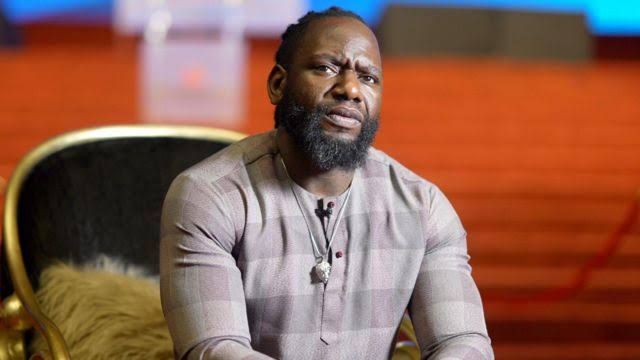
Fountain of Life Church has rejected reports that Pastor Jimmy Odukoya has been removed as its Senior Pastor, describing the purported decision as "constitutionally invalid." The response comes after earlier reports claimed the Lagos-based ministry had removed Odukoya, citing a faulty appointment process and his remarriage. By insisting that the decision did not follow the church's own constitution, the church has turned what looked like a settled leadership change into an open dispute over authority, process and legitimacy. At the heart of the conflict is a question that has troubled many Nigerian ministries since their founders passed on: who has the power to appoint and remove a senior pastor once the founder is gone? Jimmy Odukoya, son of founders Pastor Taiwo Odukoya and the late Pastor Bimbo Odukoya, took over the pulpit after his father's death in August 2023. The clash now places his leadership, the Odukoya family legacy and the church's governing documents under intense public scrutiny. It also shows how quickly internal church disagreements can become public battles, with possible consequences for members, finances, legal standing and the credibility of Nigerian Pentecostalism more widely.
Only days after reports suggested that Pastor Jimmy Odukoya had been removed as Senior Pastor of Fountain of Life Church, the story has taken a sharp turn. The church has now rejected those reports outright and described the purported decision as "constitutionally invalid." With those two words, a leadership change that many had treated as final has become a contest over who speaks for one of Lagos's best-known Pentecostal ministries, and whose authority the church's members should recognize.
The earlier reports had painted a clear picture. According to those accounts, the church removed Odukoya on two grounds. The first was that his appointment as Senior Pastor had been faulty from the start. The second was his remarriage, presented as incompatible with the standards expected of the person who leads the congregation. Taken together, those claims struck at both the legitimacy of how he came to lead the church and his fitness to continue in the role. The church's latest position reverses that picture. Rather than accepting the removal, it says the process used to remove him did not meet the requirements of its own constitution, and therefore carries no force.
That is a significant distinction. The church is not simply saying it disagrees with the decision or that it stands behind Odukoya personally. It is saying that the decision was never validly made. In the language of governance, that means the removal is treated as if it did not happen. Odukoya, in this view, remains the Senior Pastor because no lawful body acting under the church's constitution has removed him. The argument echoes, in reverse, the very claim that was reportedly used against him. If his critics said his appointment was flawed, the church now says the attempt to remove him is the thing that is flawed.
That mirror image tells us a great deal about the nature of the conflict. Both sides appear to be fighting on the same ground, which is the church's constitution and the procedures it sets out. Neither side seems content to rest its case on loyalty, popularity or spiritual authority alone. Each is reaching for the rulebook. For a ministry founded and led for decades on the strength of a husband and wife's personal vision, that shift is striking. It suggests that Fountain of Life has reached the point where the founders' personal authority no longer settles disputes, and the written structures of the church must now do that work.
To understand why the constitutional question matters so much, it helps to understand how large Nigerian churches are organized. Most are registered with the Corporate Affairs Commission as incorporated trustees under the Companies and Allied Matters Act. That status gives the church a legal identity separate from its leaders. A board of trustees holds the church's property and assets on its behalf, and the church's constitution, sometimes alongside bylaws or a trust deed, defines how decisions are made. It sets out who can appoint a senior pastor, who can remove one, what notice must be given, what quorum is required for meetings and what grounds justify discipline or removal. When those rules are followed, decisions can be defended in court. When they are not, decisions can be challenged and overturned.
This is why the phrase "constitutionally invalid" carries real weight. It is not a pastoral statement or a public relations line. It is a legal and procedural claim. It suggests that whoever announced or acted on the removal either lacked the authority to do so, failed to follow the required steps, or acted without the support of the body the constitution recognizes as decisive. The church has not, in the statements reported so far, set out every detail of where the alleged breach occurred. But the framing alone signals that it is prepared to defend its position on procedural grounds, and possibly before a judge if it comes to that.
The dispute also exposes the existence of competing centers of power within the ministry. A removal does not announce itself. Someone, or some group, must have initiated the reported decision, and the church's rejection implies that this group does not represent the church's lawful authority. Without official clarity on who stands on each side, members and observers are left to draw their own conclusions, and that uncertainty is itself damaging. When two voices claim to speak for the same church, members are forced to choose which one to believe, and every choice carries emotional and spiritual consequences.
Factional conflicts of this kind rarely stay neat. They often draw in trustees, senior pastors, long-serving workers, family members and influential members of the congregation. Some people align on principle, believing the church must enforce strict standards for its leaders. Others align out of loyalty to the Odukoya name and the belief that the founders' son is the rightful heir to the pulpit. Still others simply want stability and are frustrated that a house of worship has become the center of a public quarrel. Each group may sincerely believe it is protecting the church. That is precisely what makes such disputes so hard to resolve.
The Odukoya family legacy sits at the center of all of this, and it is impossible to separate the governance question from the emotional history of the church. Fountain of Life was founded in 1990 by Pastor Taiwo Odukoya and his wife, Pastor Bimbo Odukoya. Together, they built a ministry that became a fixture of Lagos Christian life, known especially for its teaching on marriage, family and relationships. Bimbo Odukoya's influence reached far beyond the church through her television program "Single and Married," which tackled subjects many pulpits avoided. Her death in the Sosoliso Airlines crash in Port Harcourt in December 2005 was a national tragedy and a deep wound for the congregation.
Taiwo Odukoya carried the ministry forward after that loss, later remarrying and continuing in ministry with his second wife, Pastor Nomthi Odukoya. When he died in August 2023, the church lost the last of its founding pair. Jimmy Odukoya, the son of both founders, stepped into the role of Senior Pastor. For many members, his appointment felt like a natural continuation, a way of keeping the founders' vision alive through their own child. He also brought an unusual public profile. Before taking up the pulpit, he had built a successful acting career, which gave him visibility well beyond church circles and appealed to younger members.
That background helps explain why the reported removal provoked such strong reactions, and why the church's rejection of it may come as a relief to many. For members who see Jimmy Odukoya as the living link to Taiwo and Bimbo, the idea that he could be pushed out felt like an attack on the founders' memory itself. For others, the earlier reports raised legitimate questions about process and doctrine that they believe deserve honest answers. The church's statement does not erase those questions. It reframes them by insisting that, whatever concerns exist, they cannot be resolved through a process that ignores the church's constitution.
The remarriage issue, which featured prominently in the earlier reports, remains sensitive. Many Pentecostal churches in Nigeria hold strict views on divorce and remarriage, especially for clergy. Those views often draw on passages such as Matthew 19, Mark 10 and Paul's instructions in 1 Timothy 3 that a church leader should be "the husband of one wife." Interpretations vary widely, and many churches distinguish between remarriage after the death of a spouse and remarriage after divorce. Full details of Jimmy Odukoya's marital history have not been comprehensively set out in public reporting, and fairness demands caution before drawing conclusions. What is clear is that if doctrinal standards are to be used as grounds for removing a senior pastor, the church's constitution and statement of faith must say so plainly, and the process for applying them must be followed carefully. A doctrinal objection, however sincerely held, does not override a procedural requirement.
This is where the dispute becomes a broader lesson in church governance. Many Nigerian ministries were built during decades when founders held near-total authority. Constitutions were often drafted quickly to satisfy registration requirements and then rarely consulted. Boards of trustees existed, but in practice they tended to follow the founder's lead. Succession was something people preferred not to discuss while the founder was alive, partly out of respect and partly out of a belief that God would provide when the time came. When the founder dies, those unexamined documents suddenly matter enormously, and their gaps and ambiguities become battlegrounds.
Nigeria's legal environment adds another layer. The Companies and Allied Matters Act of 2020 gave the Corporate Affairs Commission wide powers over incorporated trustees, including provisions that allow the commission, in certain circumstances, to suspend trustees and appoint interim managers. When the law was passed, many churches and Christian bodies protested strongly, warning that it could open the door to government interference in religious organizations. Public leadership disputes are exactly the kind of situation that can invite outside scrutiny. A church that cannot settle its own leadership questions risks having regulators or courts settle them instead.
The courts have long been a familiar venue for church disputes in Nigeria. Contests over leadership, property and control of assets have reached judges in many cases, sometimes dragging on for years. In such cases, courts typically look closely at the church's constitution, the minutes of meetings, the composition of governing bodies and whether proper notice and fair hearing were given. The church's emphasis on constitutional validity suggests it understands this terrain and is positioning itself accordingly. If the matter does go to court, the question will not be who is more popular or more spiritual. It will be who followed the rules.
There is also a human and pastoral cost that no legal argument can fully capture. Members of Fountain of Life have now lived through a sequence of painful moments: the loss of Bimbo Odukoya in 2005, the death of Taiwo Odukoya in 2023, the reported removal of his son and now a public rejection of that removal. Each stage has demanded that members process grief, uncertainty and division in public view. Families attend services together while holding different opinions about the church's leadership. Workers and volunteers may feel caught between people they respect. Young members, many drawn by Jimmy Odukoya's contemporary style, may wonder whether the church they joined will survive in its current form.
The financial and institutional stakes are considerable too. Leadership uncertainty can affect giving, staff morale, ongoing projects and relationships with partner ministries. Donors and members want to know who is accountable for the church's resources. Banks and other institutions dealing with the ministry may seek clarity on who has signing authority. Prolonged disputes can freeze decisions at precisely the moment when the church most needs steady leadership.
Fountain of Life is not the first Nigerian ministry to face a succession crisis, and it will not be the last. Many of the country's largest Pentecostal churches were founded in the 1970s, 1980s and 1990s, and their founders are aging or have already passed on. Some transitions have been smooth. The Redeemed Christian Church of God, for instance, moved from its founder, Pa Josiah Akindayomi, to Enoch Adeboye in 1981, a successor from outside the founder's family whose leadership saw the church grow into a global movement. That example is often cited to show that succession grounded in clear process and calling can strengthen a ministry rather than weaken it. Other transitions, across various denominations, have been marked by family tensions, rival claims and lawsuits that left congregations divided.
The common thread in the difficult cases is rarely theology alone. It is usually unclear structure. When the founder's family, the board of trustees and the senior pastors each believe they hold final authority, conflict becomes almost inevitable. Fountain of Life now stands at that crossroads. Its insistence on constitutional process could, if handled with transparency, become the foundation for a stronger institution. It could equally deepen the split if one camp feels excluded or silenced.
When such disputes go public, the damage often extends beyond the individual church. Critics of Nigerian Pentecostalism already accuse some ministries of being run like family businesses, with too little accountability and too much focus on personalities. A messy public fight over a pulpit feeds that narrative. It invites social media commentary, speculation about money and motives, and mockery from those who see churches as hypocritical. For believers, that is painful, because it distracts from the spiritual mission the church exists to serve. For other ministries, it is a warning that the questions they avoid today may surface tomorrow in far less friendly circumstances.
Yet there is also an opportunity here. A church that publicly commits to its constitution is, in effect, saying that rules matter more than personalities. That principle, if applied consistently, can protect leaders from arbitrary removal and protect members from leaders who act without accountability. It can provide a fair path for raising concerns, including doctrinal concerns about marriage and conduct, through proper channels. And it can model for other churches what mature governance looks like after the founding generation.
For that to happen, Fountain of Life will need more than a statement. Members deserve a clear explanation of what the constitution says about appointing and removing a senior pastor, which body holds that power and why the reported removal fell short. Concerns about Jimmy Odukoya's appointment and remarriage, if they continue to be raised, should be addressed through a transparent process that gives him a fair hearing. Respected senior clergy or umbrella bodies such as the Pentecostal Fellowship of Nigeria could play a mediating role, helping both sides find a resolution that avoids a protracted court battle.
Jimmy Odukoya himself faces a delicate path. The church's rejection of his removal strengthens his position, but it does not end the dispute. How he responds to his critics, whether with openness, restraint and a willingness to engage their concerns, will shape how members view his leadership. Moments like this often define a pastor more than any sermon. A leader who can hold a divided congregation together, while respecting due process, earns a kind of authority that no family name can provide.
The story of Fountain of Life began with a husband and wife who built a ministry on the belief that strong families and faithful relationships could transform lives. The current crisis tests whether the institution they founded can live by the same values it taught: honesty, commitment, patience and the hard work of reconciliation. The church has drawn its line by declaring the purported removal constitutionally invalid. What happens next will determine whether that line becomes the start of healing and stronger governance, or the opening of a long and bitter fight for the soul of one of Lagos's most storied ministries.