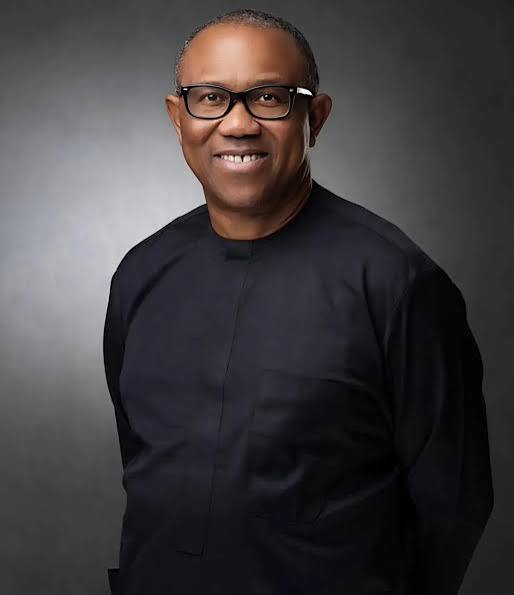
Fountain of Life Church Removes Jimmy Odukoya as Senior Pastor, Faults His Appointment and Cites Remarriage

Fountain of Life Church, the Lagos-based Pentecostal ministry founded by the late Pastor Taiwo Odukoya and his first wife, Pastor Bimbo Odukoya, has removed Jimmy Odukoya as Senior Pastor. The church gave two reasons. It said the process that installed him was faulty, and it cited his remarriage as incompatible with the standards it expects of its senior leader. Jimmy Odukoya, the son of the two founders and a former Nollywood actor, took over the pulpit after his father's death in August 2023. His appointment was widely seen as a natural family succession, but the church's latest position suggests it never had the full institutional backing such a role requires. The removal raises difficult questions about who holds authority in Nigerian Pentecostal churches: the founder's family, the board of trustees, or the wider body of pastors and members. It also brings the long-running debate over divorce and remarriage among clergy into public view. The full details of the church's internal process and of Jimmy Odukoya's marital history have not been fully set out in public reporting, and his own response will shape how the dispute unfolds. What is already clear is that one of Lagos's best-known ministries now faces a leadership crisis at a time when many Nigerian megachurches are confronting the same question of what happens after the founder is gone.
For more than three decades, the name Odukoya and the name Fountain of Life Church have meant the same thing.
The church was built by a husband and wife. Its identity was shaped by their marriage ministry, their public partnership and, later, by tragedy. When Pastor Taiwo Odukoya died in 2023, it seemed only natural that his son would carry the name forward. Jimmy Odukoya stepped into the pulpit, and for many members the succession felt like continuity.
That arrangement has now come apart.
Fountain of Life Church has removed Jimmy Odukoya as Senior Pastor. In announcing the decision, the church faulted the way his appointment was made and cited his remarriage. Together, those two reasons challenge both the legitimacy of how he came to lead the church and his fitness to remain in the role under the church's own standards.
The decision marks a turning point for the ministry. It is also a moment that many Nigerian churches will watch closely, because the questions it raises are not unique to one congregation in Lagos.
A Church Built on a Marriage
Fountain of Life Church began in 1990 in Lagos, founded by Taiwo Odukoya and his wife, Bimbo. The ministry grew from modest beginnings into one of the most recognized Pentecostal churches in the city, with its headquarters in Ilupeju and a congregation drawn heavily from Lagos's professional and middle classes.
Much of the church's public identity rested on Bimbo Odukoya. She became one of the most influential Christian voices in Nigeria on marriage, relationships and sexual purity. Her television program, "Single and Married," reached a wide audience, and she was known for frank conversations with young people about relationships at a time when many pulpits avoided the subject.
In December 2005, Bimbo Odukoya was among those killed when a Sosoliso Airlines flight crashed in Port Harcourt. Her death stunned the church and the country. It also left Taiwo Odukoya to lead the ministry alone and raise their children while grieving in public.
He later remarried. His second wife, Nomthi Odukoya, joined him in ministry, and the church continued to grow. Because his first wife had died, his remarriage was broadly accepted within Pentecostal circles. Most Christian traditions draw a clear line between remarriage after the death of a spouse and remarriage after divorce. That distinction now sits at the center of the church's case against his son.
From Nollywood to the Pulpit
Jimmy Odukoya did not follow a straight path into ministry.
Before he became Senior Pastor, he was better known to many Nigerians as an actor. He built a career in Nollywood and appeared in film and streaming productions, earning recognition beyond church circles. That public profile set him apart from the typical pastor's son raised to inherit a pulpit.
When Taiwo Odukoya died in August 2023, the church moved to fill the leadership gap. Jimmy Odukoya was installed as Senior Pastor in the months that followed. To many members, the choice carried emotional weight. He was the son of both founders, a living link to Bimbo Odukoya's legacy and to the early years of the church.
His leadership brought a younger, more contemporary face to the pulpit. Supporters saw that as an opportunity to connect with a new generation. Skeptics questioned whether a career in entertainment had prepared him for the pastoral and administrative demands of a large church.
Those concerns remained mostly in the background while the church mourned its founder. The latest decision brings them into the open.
The First Reason: A Faulty Appointment
The church's first objection goes to the foundation of Jimmy Odukoya's leadership. It has faulted the process through which he was appointed.
That claim matters because it changes the nature of the dispute. The church is not only saying it disapproves of something its senior pastor has done. It is saying that his appointment may never have been properly made in the first place.
Large Nigerian churches are typically registered as incorporated trustees under the Companies and Allied Matters Act. In that structure, a board of trustees holds legal authority over the organization's property, assets and governance. The church's constitution, or its internal rules, sets out how leaders are appointed and removed. In many ministries, the founder held enormous practical authority while alive, but the formal power to appoint a successor rests with the board or with a defined body of leaders.
When a founder dies without a clearly documented succession plan, gaps appear. Family members, trustees, senior pastors and long-serving members may hold different views of who has the right to decide. A successor can be installed quickly, with good intentions and public celebration, without every required step being followed.
The church's position suggests that something in Jimmy Odukoya's appointment fell short of its own rules. The precise nature of that failure has not been fully detailed in public reporting. It could involve who approved the appointment, whether the proper bodies were consulted, or whether the process followed the church's governing documents. Each possibility points to the same underlying problem: the line between family succession and institutional succession was never clearly drawn.
The Second Reason: Remarriage
The church's second objection is personal, and in Pentecostal culture, it carries great weight. Fountain of Life cited Jimmy Odukoya's remarriage as a reason for his removal.
The full circumstances of his marital history have not been comprehensively set out in public reporting. What is clear from the church's decision is that it regards his remarriage as incompatible with the standards it expects of its senior pastor.
The irony is hard to miss. Fountain of Life Church is closely associated with teaching on marriage. Bimbo Odukoya built much of her ministry around it. For a church with that heritage, questions about the marital life of its leader are not peripheral. They touch the core of its identity and message.
The Theology Behind the Objection
Pentecostal and evangelical churches in Nigeria generally hold strict views on divorce and remarriage, particularly for clergy.
Those views draw on several passages of scripture. In Matthew 19 and Mark 10, Jesus addresses divorce directly, teaching that a man who divorces his wife and marries another commits adultery, with Matthew's account recording an exception for sexual immorality. In Malachi 2, God is described as hating divorce. In 1 Timothy 3 and Titus 1, the Apostle Paul lists the qualifications for church leaders, including that an overseer must be "the husband of one wife" and must manage his own household well.
Interpretations of these passages vary. Some churches read "the husband of one wife" as a ban on polygamy. Others read it as a requirement that a leader has never divorced and remarried. Still others apply it to faithfulness within marriage rather than marital history. Many churches permit remarriage after a spouse's death, as with Taiwo Odukoya, while restricting or forbidding it after divorce while a former spouse is still alive.
In Nigeria, many of the largest Pentecostal denominations take a firm line. Ministers who divorce and remarry often face suspension, removal from leadership or restriction from pastoral duties. The standard for leaders is usually stricter than the standard for members. The reasoning is that a pastor's household is meant to model the teaching of the church.
Fountain of Life's decision places it firmly within that tradition. Whatever sympathy members may have for Jimmy Odukoya personally, the church is signaling that its standards for the pulpit are not negotiable, even for the founders' son.
How Members and the Public Are Responding
The removal has drawn strong and divided reactions.
For many members, the news is painful. Some joined the church under Taiwo and Bimbo Odukoya and saw Jimmy as the continuation of a family legacy they cherished. His removal feels, to them, like a break with the founders themselves. Others may welcome the decision as proof that the church holds its leaders to the same standards it preaches.
Online, the conversation has followed familiar lines. Some Nigerians have defended Jimmy Odukoya, arguing that a pastor's private life should be met with grace and that remarriage should not end a ministry. Others have praised the church for enforcing its doctrine without favoritism. A third group has focused on governance, asking why concerns about the appointment are being raised now rather than when he was installed.
That last question will not go away easily. If the appointment was faulty, members will want to know who allowed it to proceed and why the problem was not addressed sooner. If the remarriage was the decisive issue, they will want to know how the church weighed it and whether the process was fair.
Jimmy Odukoya's response will shape what happens next. He could accept the decision, contest it within the church, or challenge it in court. Each path carries consequences for the church's unity and public image.
A Pattern in Nigerian Pentecostal Succession
Fountain of Life's crisis reflects a wider challenge facing Nigerian Pentecostalism.
Many of the country's largest churches were founded in the 1970s, 1980s and 1990s by charismatic leaders who built ministries around their personal vision and authority. Those founders are aging, and some have died. The question of succession, once easy to postpone, is now unavoidable.
Some ministries have managed transitions well. The Redeemed Christian Church of God offers one of the best-known examples. After its founder, Pa Josiah Akindayomi, died in 1980, leadership passed to Enoch Adeboye, a university lecturer who was not a member of the founder's family. Under Adeboye, the church grew into one of the largest Christian organizations in the world. That transition is often cited as proof that a church can thrive when succession is based on calling and structure rather than bloodline.
Other transitions have been more complicated. After Archbishop Benson Idahosa died in 1998, his wife, Margaret Idahosa, took over the Church of God Mission International. In many ministries, a founder's spouse or children are seen as natural heirs, and their leadership is accepted by members out of loyalty to the founder.
Family succession is not wrong in itself. Many children of founders have proved capable leaders. But it carries particular risks. It can blur the line between personal inheritance and institutional authority. It can make it harder for boards and senior pastors to raise concerns. And it can turn questions about governance into questions about loyalty to the founder's family.
Fountain of Life is now confronting those risks in public.
Where Authority Really Sits
At the heart of the dispute is a question many churches have never answered clearly: who holds final authority after the founder is gone?
In a founder-led church, authority often rests on personal charisma and spiritual standing. Members follow the founder because they trust his or her calling. Boards may exist on paper, but in practice they rarely challenge the founder's decisions.
When the founder dies, that personal authority does not automatically transfer. A son or daughter may carry the family name, but legal and institutional authority lies with the trustees and the church's governing documents. If those documents are vague, outdated or ignored, conflict becomes likely.
Fountain of Life's decision suggests that its institutional bodies are now asserting their authority. By faulting the appointment, the church is effectively saying that succession must follow its rules, not just family ties or emotional consensus. By citing the remarriage, it is saying that doctrine applies to everyone, including the founders' son.
That is a significant shift. It may strengthen the church's governance over time. It may also deepen divisions in the short term, especially among members who see the decision as a rejection of the Odukoya legacy.
The Legal Dimension
Leadership disputes in Nigerian churches do not always stay within church walls.
Several Nigerian ministries have faced court cases over control of leadership, property and assets after a founder's death. Because churches registered as incorporated trustees are legal entities, disputes over appointments and removals can be taken before the courts. Judges then examine the church's constitution, the minutes of meetings and the actions of its trustees.
If Jimmy Odukoya or his supporters choose to challenge the removal, the church's internal processes will come under close scrutiny. The same standards the church has applied to his appointment could be applied to his removal. Was the decision made by the right body? Was due process followed? Was he given a fair hearing?
A legal battle would be costly and painful for the church. It could also expose internal disagreements to public view. Many churches try to avoid that outcome through mediation by respected senior clergy or through umbrella bodies such as the Pentecostal Fellowship of Nigeria. Whether that path is available here remains to be seen.
Lessons for Other Churches
Whatever the final outcome, the Fountain of Life crisis offers clear lessons for ministries across Nigeria.
The first is the need for written succession plans. Founders who want their churches to outlive them should set out clearly how leaders will be chosen, who has authority to choose them and what qualifications they must meet.
The second is the importance of functioning governance. Boards of trustees must do more than exist on paper. They need the independence and confidence to make difficult decisions, including decisions involving the founder's family.
The third is consistency between doctrine and practice. If a church holds firm views on marriage, divorce and remarriage for its leaders, those standards should be clearly stated and applied before an appointment is made, not after.
The fourth is transparency with members. Congregations invest their faith, time and money in their churches. When leadership changes, they deserve clear explanations. Silence or partial information can fuel rumors and division.
What Comes Next
Fountain of Life Church now faces several immediate tasks.
It must decide who will lead the church in the interim and how a permanent successor will be chosen. The process it adopts will be closely watched, especially after it has faulted the previous appointment. Any new appointment will need to meet the standards the church has now set for itself.
It must also manage the emotions of its members. Some will feel betrayed. Others will feel vindicated. Many will simply feel uncertain. Pastoral care during this period will matter as much as governance.
Jimmy Odukoya, for his part, faces his own decisions. His response will influence how the public views both him and the church. A graceful exit could preserve relationships and protect the family legacy. A prolonged dispute could divide the congregation further.
The wider Pentecostal community will also be watching. The case touches on issues that many churches have avoided confronting directly. How Fountain of Life resolves it could shape how other ministries approach succession and clergy standards in the years ahead.
The Bottom Line
Fountain of Life Church has removed Jimmy Odukoya as Senior Pastor, faulting the process that appointed him and citing his remarriage. The decision ends a family succession that began after the death of his father, Pastor Taiwo Odukoya, in 2023, and it reopens questions that the church had left unresolved.
The case rests on two pillars. One is governance: the claim that the appointment did not follow the church's own rules. The other is doctrine: the belief that a senior pastor's marital life must meet a strict scriptural standard. Both reflect tensions that run through Nigerian Pentecostalism, where founder-led ministries often rely on personal authority and family loyalty more than on clear institutional structures.
For a church built by a husband and wife and known for its teaching on marriage, the moment is especially painful. The legacy of Taiwo and Bimbo Odukoya remains deeply valued by members. The challenge now is to honor that legacy while building a leadership structure strong enough to outlast the family that founded it.
How Fountain of Life handles the next steps will determine whether this crisis weakens the church or leaves it with a stronger foundation.