FOUR SOLDIERS DEAD, A STATE ON FIRE, AND ONE OF THE FBI'S MOST WANTED IN CHAINS: MEXICO'S CAPTURE OF "CHAPO ISIDRO" IS A WIN THAT WASHINGTON SHAPED AND MEXICO PAID FOR
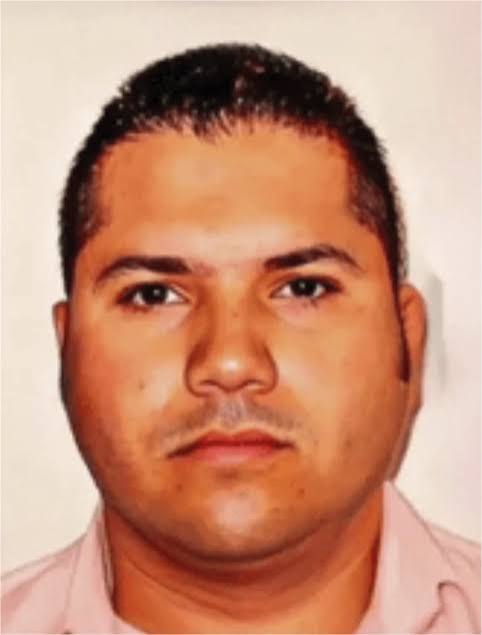
Mexican special forces captured Fausto Isidro Meza Flores, the alleged cartel boss known as "El Chapo Isidro," in Guasave, Sinaloa, on the night of Friday, November 20, 2026. He was one of the FBI's 10 most wanted fugitives. Mexico's security chief announced the arrest on Saturday. Troops from the army and the National Guard carried out the raid in coordination with US and Mexican intelligence agencies, according to Mexico's Defense Ministry. Two other senior figures were also detained: Meza Flores' cousin, described as the second-in-command of his organization, and his brother-in-law, described as its financial operator. The US State Department says Meza Flores and his organization smuggled vast amounts of heroin, methamphetamine, cocaine and marijuana into the United States for more than 20 years. He was considered a leader of the Beltrán Leyva cartel, which security experts say had recently allied with the Los Mayos faction in Sinaloa's internal war. That war began after Ismael "El Mayo" Zambada was taken into US custody in 2024. The operation came at a high cost. Four Mexican Army soldiers were killed. Officials said security forces killed seven attackers and arrested eight suspects. Cartel members set up burning roadblocks, and helicopters fired on ground targets in Guasave. The arrest is the latest in a string of high-profile captures and killings. These have come as US President Donald Trump presses Mexico to act and threatens unilateral military action against the cartels. The capture could reshape cartel alliances in Sinaloa. It will test US-Mexico cooperation. It also carries lessons for Nigeria, Ghana and West Africa, where global drug networks have long used the region as a transit hub.
The baseball game in Guasave was still going when the helicopters arrived.
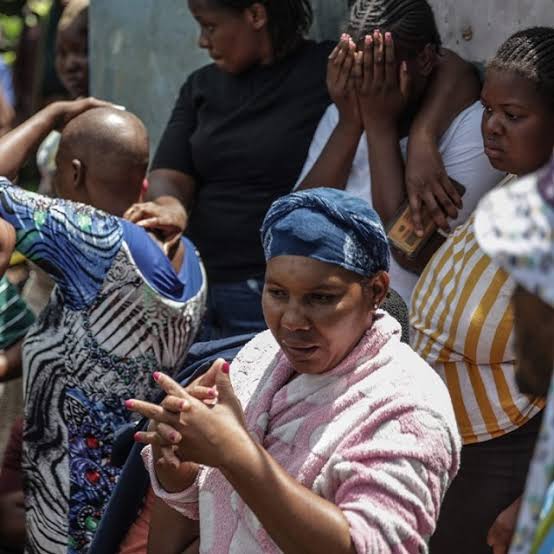
On Friday night, as families watched a game and shoppers browsed a night market in this farming city in northern Sinaloa, Mexican special forces closed in on one of the most wanted men in the Western Hemisphere. Videos shared on social media show what followed. Military helicopters fired at targets on the ground. Spectators ran for cover. People crouched behind stalls at the market. Across the region, gunmen set vehicles on fire and blocked highways. A local reporter was filmed scrambling for safety as a gunfight broke out nearby.
By the early hours of Saturday, the target was in custody. Fausto Isidro Meza Flores, known as "El Chapo Isidro," was flown to Mexico City and handed to prosecutors who handle organized crime. Mexico's security chief announced the arrest on Saturday. The man the FBI had placed among its 10 most wanted fugitives, accused by US authorities of more than two decades of drug trafficking into the United States, was finally in handcuffs.
The capture is a clear success for Mexican security forces. It is also a reminder of what such successes cost. Four Mexican Army infantry soldiers died in the operation. Seven attackers were killed, according to the Defense Ministry. A city of more than 300,000 people spent the night sheltering at home. And the arrest lands in the middle of a much larger story. That story involves a cartel civil war in Sinaloa, rising pressure from Washington, and a long debate over whether capturing kingpins actually reduces the drug trade or simply rearranges it.
Here is what officials have confirmed. According to Mexico's Defense Ministry, special forces from the army and the National Guard carried out the capture in coordination with US and Mexican intelligence agencies. Meza Flores was detained along with two other leaders of his organization. One was his cousin, described as the group's second-in-command. The other was his brother-in-law, described as its financial operator. Meza Flores and his cousin were taken to Mexico City at 5:20 a.m. on Saturday and handed over to the Specialized Prosecutor's Office for Organized Crime. His brother-in-law was also handed over.
In total, the Defense Ministry said, security forces arrested eight alleged criminals during the operation. Three were transferred to Mexico City. Five were turned over to the Attorney General's Office in Culiacán, the Sinaloa state capital. Security Minister Omar García Harfuch said authorities seized a .50-caliber rifle, a grenade launcher and two hand grenades, among other weapons. He offered condolences to the families of the soldiers who were killed.
US officials were quick to praise the operation. "The exchange of strategic intelligence between the United States and Mexico helped make this operation possible," US Ambassador to Mexico Ronald Johnson wrote on X. "Results like these are not achieved overnight. They are the product of sustained cooperation and trust. This is what we can accomplish when we work together. We will continue pursuing criminals." Homeland Security Investigations called the arrest "a MAJOR blow to one of Mexico's most powerful cartel networks." US Northern Command congratulated Mexican forces. It said its counter-cartel task force had worked with other US agencies on the information that led to the capture.
That last detail matters. Northern Command is a military command, not a police agency. Its role in providing information for a raid inside Mexico shows how far US involvement in the fight against Mexican cartels has moved toward the military side. It also shows how carefully both governments are framing that involvement. The guns, the helicopters and the soldiers who died were Mexican. The intelligence, at least in part, came from the United States.
To understand why this arrest matters, start with the man at the center of it.
Fausto Isidro Meza Flores grew up in the Guasave area of northern Sinaloa, the same region where he was finally caught. Sinaloa has long been called the cradle of Mexican drug trafficking. Its mountains, known as the Golden Triangle where Sinaloa meets Durango and Chihuahua, were once home to opium poppy and marijuana fields. Its ports and highways gave smugglers routes to the US border. Generations of traffickers came from its small towns, including Joaquín "El Chapo" Guzmán, the most famous of them all.
Meza Flores built his career inside the Beltrán Leyva Organization, a network founded by four brothers from Sinaloa. For years, the Beltrán Leyva brothers were close partners of the Sinaloa cartel. They handled security, corrupted officials and moved drugs alongside Guzmán and Zambada. That alliance collapsed in 2008, after Alfredo Beltrán Leyva was arrested. His brothers blamed Guzmán for the arrest and turned on their former allies. The war that followed was among the bloodiest in Mexico's history.
The Beltrán Leyva brothers paid a heavy price. Arturo Beltrán Leyva, the most powerful of them, was killed by Mexican marines in Cuernavaca in December 2009. Carlos was arrested the same year. Alfredo was later extradited to the United States and sentenced to life in prison. Héctor was arrested in 2014 and died in custody in 2018. The organization did not disappear. It splintered into factions, some of them violent and largely independent. Meza Flores emerged as one of the most important leaders of what remained.
According to the US State Department, Meza Flores and his organization smuggled vast amounts of heroin, methamphetamine, cocaine and marijuana into the United States for more than 20 years. He has been charged in the United States with drug trafficking offenses, and US authorities had offered a multimillion-dollar reward for information leading to his arrest. His placement on the FBI's Ten Most Wanted list put him in rare company. The list usually includes murderers, terrorism suspects and fugitives the bureau considers among the most dangerous in the world. A Mexican cartel figure on that list signals how seriously Washington viewed his operation.
It is important to be clear about what is alleged and what has been proven. Meza Flores has not been convicted of the charges against him in the United States. The descriptions of his role come from US and Mexican authorities and from security experts. Like any accused person, he is entitled to defend himself in court. What happens next, whether he faces trial in Mexico, extradition to the United States, or both, has not been publicly settled.
His nickname also tells a story. In Mexico's drug world, borrowing the name "Chapo" is a statement of ambition. Meza Flores was not related to Guzmán, and his organization had at times been a rival of the Sinaloa cartel. Yet he carried a name that evoked the most famous trafficker of his generation. Over the years, he built a reputation in northern Sinaloa and neighboring states as a violent and hard-to-catch figure. The fact that it took until late 2026 to capture him, in his home region, shows how deeply such figures can embed themselves in local communities through fear, money and family ties.
His arrest comes at a moment of extraordinary turmoil in Sinaloa.
In July 2024, Ismael "El Mayo" Zambada, the co-founder of the Sinaloa cartel and one of the most elusive drug lords in history, was taken into US custody in Texas. He landed near El Paso on a small plane with Joaquín Guzmán López, one of El Chapo's sons. Zambada later said, through his lawyers, that he had been kidnapped and forced onto the plane. He later pleaded guilty in a US court. The circumstances of his arrival in the United States shocked the criminal underworld. Zambada had evaded capture for decades. His sudden fall, allegedly at the hands of the sons of his old partner, was seen by many as a betrayal.
The result was war. Within weeks, the Sinaloa cartel split into two factions. One, known as Los Chapitos, is linked to Guzmán's sons. The other, known as Los Mayos, is loyal to Zambada and his family. Their fight has turned Culiacán and other parts of Sinaloa into battlegrounds. Thousands of people have been killed or have disappeared, according to many estimates. Businesses have closed early. Schools have suspended classes. Residents have learned to check social media before leaving home, to see where gunfights or roadblocks have been reported.
This is where Meza Flores fits into the bigger picture. According to security experts, his Beltrán Leyva faction had recently allied with Los Mayos. That alliance was striking. The Beltrán Leyva Organization and the Sinaloa cartel had been bitter enemies since 2008. Now, part of the old Beltrán Leyva network had joined one faction of the Sinaloa cartel against the other. In the world of Mexican organized crime, yesterday's enemy can quickly become today's partner when survival is at stake.
That alliance gives his arrest added weight. If experts are right about it, Los Mayos have lost a powerful ally in northern Sinaloa. The question is what happens next. Removing a kingpin rarely ends a criminal organization. More often, it creates a vacuum. Lieutenants compete to take over. Rival groups move in to grab territory. Allies reconsider their loyalties. The arrest of his cousin and brother-in-law, described as his second-in-command and financial operator, may make that vacuum larger. It removes not just the leader but parts of the leadership structure and, potentially, access to money.
Los Chapitos could try to exploit the gap. They may see an opportunity to push into territory once controlled by Meza Flores, especially around Guasave and Los Mochis, a key area for routes toward Sonora and the US border. Los Mayos may try to absorb what remains of his network to keep it from falling to their rivals. Smaller local cells, freed from his control, may act independently. Each of those possibilities carries risks for civilians. The history of Mexico's drug war shows that the weeks and months after a major arrest are often among the most dangerous.
The violence that erupted on Friday night offered a preview of that danger. It is a pattern Mexicans know well. When security forces move against a major cartel figure, his allies often respond by paralyzing the area. They burn cars and trucks across highways. They attack military patrols. They create chaos to slow the operation or to cover an escape. The most famous example came in October 2019, when Mexican forces briefly detained Ovidio Guzmán, another of El Chapo's sons, in Culiacán. Gunmen overwhelmed the city, and the government released him to avoid a bloodbath. The episode became known as the "Culiacanazo" and was seen as a humiliation for the state.
Mexican forces arrested Ovidio Guzmán again in January 2023. That operation also triggered fierce violence across Sinaloa, and soldiers were killed. He was later extradited to the United States.
This time, the outcome was different. Despite the roadblocks and gunfights, the target did not escape and was not released. Security forces deployed alongside local authorities to clear the blockades, according to the Defense Ministry. By Saturday, the violence had largely subsided. Sinaloa state authorities said "the situation is under control and being addressed by all levels of government." They said they were monitoring highways and urban and rural areas, and that residents could resume normal activities.
Life did not return to normal immediately. A local security official described a nervous atmosphere in Guasave. Residents had been sheltering at home since Friday night. Businesses stayed closed and streets were deserted, even though there was no ongoing widespread violence. For the people of Guasave, the arrest of a notorious figure will not feel like a clean victory until they are confident it will not lead to a new round of bloodshed.
And then there are the four soldiers. Their names were not immediately released in the reports. Each was a member of the Mexican Army's infantry, sent into a fight against a heavily armed criminal organization. Each leaves behind a family. In much of the coverage of high-profile arrests, the deaths of the soldiers who carried them out become a footnote. They should not. The seizure of a .50-caliber rifle and a grenade launcher shows the firepower Mexican troops face. These weapons are designed for war, not ordinary crime. Many of the weapons used by Mexican cartels are trafficked south from the United States. That is a long-standing grievance in Mexico, which argues that Washington demands action against drugs flowing north while doing too little to stop guns flowing south.
That point leads directly to the politics behind the arrest.
The capture of Meza Flores is the latest in a string of captures and killings of high-profile suspected drug traffickers by Mexico. That campaign has unfolded under heavy pressure from President Donald Trump. Since returning to office in 2025, Trump has made the cartels a central issue in US-Mexico relations. His administration designated several Mexican cartels, including the Sinaloa cartel, as foreign terrorist organizations. It tied threats of tariffs to Mexico's efforts against fentanyl trafficking and migration. And Trump has threatened unilateral military action inside Mexico if the Mexican government does not do more against the cartels.
That threat has hung over every major security operation in Mexico. For any Mexican government, the idea of US troops or drones striking targets on Mexican soil without permission is politically explosive. Mexico's history includes a US invasion in the nineteenth century that cost it roughly half its territory. Sovereignty is not an abstract principle in Mexican politics. It is a deeply felt issue that unites people across party lines.
Mexico has responded to US pressure with a mix of cooperation and careful boundary-setting. In 2025, it transferred dozens of jailed cartel figures to the United States in large batches, including the veteran trafficker Rafael Caro Quintero. It deployed thousands of National Guard troops to the northern border. It stepped up operations against fentanyl labs and high-profile targets. At the same time, Mexican officials have repeatedly insisted that cooperation must happen on the basis of mutual respect and that foreign forces will not operate on Mexican soil.
The Guasave operation fits neatly into that balance. It was carried out by Mexican forces. It relied, according to both governments, on shared intelligence. The US ambassador's statement stressed "sustained cooperation and trust." Northern Command described its role as working with partners on information. Each side can tell its own story. Washington can say its pressure and intelligence produced results. Mexico can say its own soldiers did the job, at the cost of their own lives, on its own territory.
Critics will see the arrest differently. Some in Mexico will argue that the government is conducting security policy on Washington's timetable, chasing targets that matter most to the United States while violence against ordinary Mexicans continues. Some in the United States will argue that a single arrest, however important, does not change the flow of fentanyl and methamphetamine across the border, and that more aggressive measures are still needed. Both arguments contain some truth.
The long record of the "kingpin strategy" deserves an honest look. Since the mid-2000s, Mexico and the United States have captured or killed dozens of major cartel leaders. El Chapo Guzmán was captured, escaped, recaptured and extradited. He is now serving life in a US prison. Arturo Beltrán Leyva was killed. Heriberto Lazcano of the Zetas was killed. Miguel Ángel Treviño Morales was captured. Zambada is in US custody. Yet the drug trade has not collapsed. In many ways, it has become more fragmented and more violent. Groups that were once hierarchical have broken into smaller cells that fight over territory and diversify into extortion, kidnapping, fuel theft and migrant smuggling.
Analysts often describe this as the hydra effect. Cut off one head, and others grow in its place. The fall of a leader removes a figure who may have imposed some order on his territory. His successors, competing for power, often use violence to prove themselves. Meanwhile, the demand for drugs in the United States remains enormous. As long as that demand exists and the profits are so large, someone will try to supply it.
None of this means arrests are pointless. Removing major figures can disrupt supply chains, damage financial networks and send a signal that no one is untouchable. The arrest of a financial operator, like Meza Flores' brother-in-law, may be especially useful if it gives investigators access to records, bank accounts and contacts. Prosecutors may also seek cooperation from those arrested. In the US justice system, high-level defendants have often provided information on others in exchange for lighter sentences. If any of the men detained in Guasave end up in the United States and decide to cooperate, the arrest could open doors far beyond Sinaloa.
The question of extradition will be closely watched. Meza Flores faces charges in the United States, and Washington will almost certainly want him sent north. Mexico has its own legal process, and it is not yet clear what charges he faces at home or how quickly any transfer could happen. Extraditions can take months or years, though Mexico has recently shown a willingness to move faster under US pressure, including by transferring prisoners outside the normal extradition process. How Mexico handles this case will be read in Washington as a measure of its seriousness.
The arrest also has implications for the broader shift in the drug trade. Heroin, once a major product for Sinaloa-based traffickers, has been largely displaced in the US market by fentanyl, a synthetic opioid that is far cheaper to produce. Methamphetamine production has also become industrialized. These synthetic drugs rely on chemical precursors, many of which have historically come from China and India. That shift has changed the economics of trafficking. Organizations no longer need vast fields of opium poppy or marijuana. They need chemists, labs, precursor supply chains and smuggling routes. Meza Flores' organization, according to US authorities, dealt in heroin, methamphetamine, cocaine and marijuana. Its activities span the old and new eras of the drug trade.
For readers in Nigeria and Ghana, a cartel arrest in northern Mexico might seem distant. It is not. The global drug trade is a connected system, and West Africa has been one of its key junctions for more than two decades.
Cocaine is produced mainly in Colombia, Peru and Bolivia. Much of it flows north to the United States through Central America and Mexico, which is where groups like the Sinaloa cartel and the Beltrán Leyva Organization have played major roles. But a large and growing share goes to Europe, where demand has risen sharply. For years, West Africa has served as a transit hub on the route to Europe. Shipments cross the Atlantic by boat, small aircraft or container, land in West African ports or remote coastlines, and are then moved north by sea, air or overland routes through the Sahel.
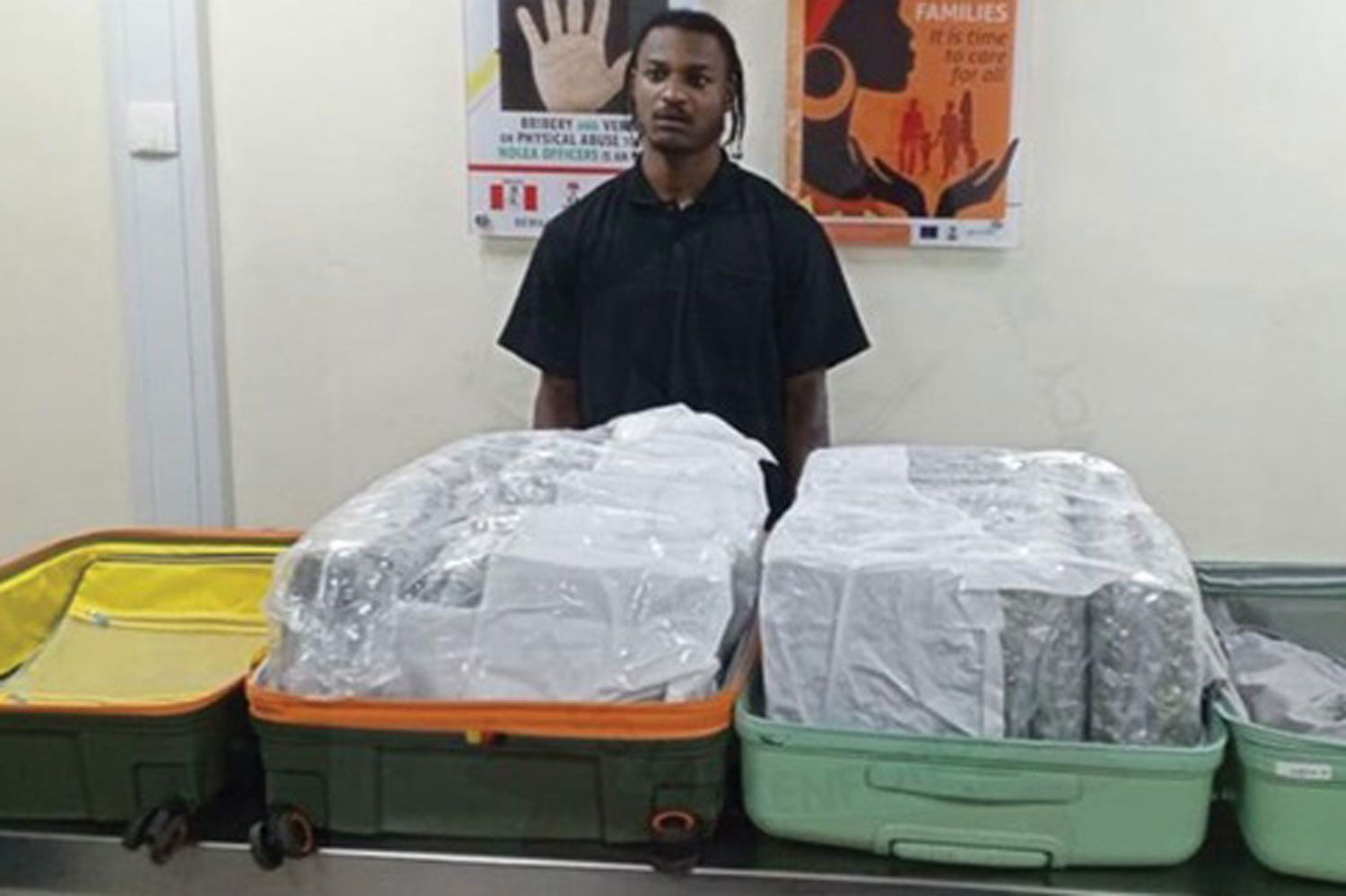
Guinea-Bissau became the most notorious example. In the late 2000s, it was widely described as a narco-state after evidence emerged of large cocaine shipments passing through with the alleged involvement of senior officials. But the problem has never been limited to one country. Nigeria, Ghana, Senegal, Guinea, Sierra Leone, Liberia, Côte d'Ivoire, Togo and Benin have all reported significant seizures over the years. Large Atlantic shipments have been intercepted at sea. Couriers have been arrested at airports carrying drugs in luggage or swallowed in capsules.
Nigeria's National Drug Law Enforcement Agency has repeatedly reported large seizures of cocaine, cannabis, tramadol and methamphetamine. It has also reported dismantling clandestine methamphetamine labs. In past years, Nigerian authorities have said some of those labs involved foreign nationals, including Mexicans, allegedly brought in to share production expertise. Such cases raised concern that Mexican methods, if not always Mexican organizations directly, were spreading to West Africa. Nigerian criminal networks also have a long history in global drug trafficking, with operations reported in Asia, Europe, South America and North America.
Ghana has faced similar pressures. Its relatively stable politics, busy ports and air links to Europe have made it attractive to traffickers. Ghanaian authorities have made notable seizures and have worked with international partners, but corruption, limited resources and the sheer scale of maritime borders make the task difficult. Across the region, the Sahel's insecurity has added a dangerous dimension. Drug routes through northern Mali, Niger and Burkina Faso can overlap with smuggling networks linked to armed groups, though the exact extent of those links is debated by researchers.
What happens in Sinaloa affects this picture in several ways. When pressure rises on routes into the United States, some traffickers look for other markets. Europe, with its high cocaine prices, is the obvious alternative. That can increase interest in West African transit routes. When Mexican groups fragment, smaller networks may form new partnerships with South American suppliers or African brokers. And when synthetic drug production methods spread, labs can appear in places where chemicals are poorly regulated and enforcement is weak. West Africa has seen all of these trends to some degree.
The domestic impact in West Africa is also rising. Drug transit is never only transit. Some of the product stays local, often as payment to local facilitators. Over time, that creates local markets and local addiction. Nigeria has struggled with widespread misuse of tramadol, codeine syrup, cannabis and methamphetamine, known locally by names such as "mkpuru mmiri" in parts of the South-East. Ghana has reported rising concern about drug use among young people. Treatment services in both countries remain limited. The drug trade also feeds corruption, weakens institutions and finances violence.
The Guasave operation offers some lessons for West African governments. First, intelligence cooperation matters. The capture of Meza Flores was made possible, according to both governments, by shared intelligence. West African agencies have worked with partners such as the US Drug Enforcement Administration, the UN Office on Drugs and Crime, and European agencies, but deeper information-sharing within the region and with source and destination countries could improve results. Second, follow the money. The arrest of a financial operator may prove as important as the arrest of the boss. In West Africa, where cash moves easily and financial oversight is often weak, targeting money laundering is as essential as seizing drugs.
Third, and perhaps most important, the Mexican experience shows that a security-only approach has limits. Mexico has spent nearly two decades using its military against the cartels. It has captured and killed many of their leaders. Yet violence remains high in many regions, and organized crime has spread into new businesses. West African governments facing their own drug and security challenges should take note. Arrests and seizures are necessary. So are strong courts, honest police, economic opportunities for young people, treatment for addiction and serious action against official corruption. Without those, drug networks will keep finding new recruits and new protectors.
For Mexico and the United States, the coming weeks will show whether this arrest becomes a turning point or another chapter in a familiar story. Several questions loom.
Will the arrest weaken Los Mayos in their war with Los Chapitos, and if so, will that shorten the conflict or intensify it? A decisive shift in the balance of power could, in theory, reduce violence if one side gains clear control. It could also trigger a new phase of fighting as both sides try to claim the territory once held by Meza Flores.
Will Mexico extradite Meza Flores quickly? A fast transfer would please Washington and reduce the risk of escape or corruption. It would also invite criticism at home from those who argue Mexico should try its own criminals. A slow process would invite pressure from the Trump administration.
Will the operation strengthen trust between the two governments, or deepen the debate over US military involvement? The praise from US agencies suggests Washington sees the raid as a model of what cooperation can achieve. But a US military command describing its role in an operation inside Mexico will raise questions among Mexicans already wary of foreign intervention. If future operations involve a more visible US role, the political tensions could sharpen.
Will the violence in Guasave stay contained? State authorities said the situation was under control by Saturday. Residents will want to see that confidence hold. Sinaloa's experience since 2024 suggests that calm can be fragile.
And will the arrest make a measurable difference to the flow of drugs into the United States? That is the question that matters most to Washington and the one that is hardest to answer. If history is a guide, supply chains will adapt. Other suppliers will step in. The structure of the trade may change, but the trade itself will continue unless demand falls.
There is also a political dimension in Washington. Trump has made pressure on Mexico a central part of his security message. A major arrest gives him a result to point to. It also comes as he faces a newly hostile Congress after his party's heavy losses in the midterm elections, and as foreign policy questions, especially the war on Iran, dominate debate. Cartel policy is one area where his administration can claim tangible progress. That gives Washington an incentive to keep pressing Mexico for more high-profile operations. It also gives Mexico leverage, because it can show it is delivering results while resisting demands for unilateral US action.
For Mexico's security forces, the capture is a professional achievement. Catching a man who evaded authorities for two decades, in his home region, during an active cartel war, required planning and nerve. The fact that the target was secured and flown to Mexico City before dawn, despite roadblocks and gunfights, shows improved capability compared with the chaos of the 2019 Culiacanazo. But the deaths of four soldiers and the terror felt by Guasave's residents are reminders that each such victory is paid for in blood.
The deeper question is whether Mexico and the United States can move beyond a cycle in which each arrest brings headlines, violence, a brief disruption and then a new boss. Breaking that cycle would require action on many fronts at once. That means stopping the flow of US weapons south, reducing US demand for drugs, targeting the financial networks that launder cartel profits on both sides of the border, and building Mexican institutions that can protect communities long after the soldiers leave.
None of that is as dramatic as a helicopter raid at night. All of it is harder. But without it, the capture of "El Chapo Isidro" will be remembered the way so many previous captures have been: as an important arrest that changed the names at the top while the business carried on.
For now, the facts are clear. A man accused of moving heroin, methamphetamine, cocaine and marijuana into the United States for more than 20 years is in custody. His alleged second-in-command and financial operator are in custody too. Four Mexican soldiers are dead. A city spent a night in fear. And Washington is calling the operation proof that pressure works.
Whether it is proof of something larger will be decided in the months ahead, in Sinaloa's streets, in courtrooms in Mexico City and possibly the United States, and in the drug markets that stretch from Culiacán to Chicago, and from Bogotá to Lagos, Accra and the ports of Europe.