
FRESH SCRUTINY OVER $500,000 PAYMENT TO ATIKU'S FORMER WIFE IN MAMBILLA DISPUTE
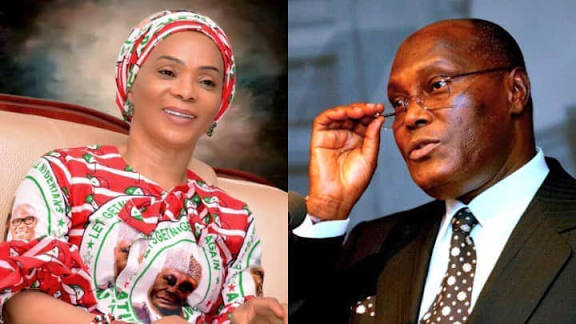
Fresh details from the Mambilla hydropower arbitration have renewed scrutiny of a $500,000 payment made by Sunrise Power promoter Leno Adesanya to Jennifer Douglas, then wife of former Vice President Atiku Abubakar, in January 2003. Adesanya described it as a foreign exchange transaction, but the ICC tribunal said the explanation lacked supporting evidence. The tribunal did not find evidence that Atiku used his official position to secure the contract for Sunrise.
Fresh details from an international arbitration over Nigeria's long running Mambilla hydropower dispute have brought renewed attention to a $500,000 payment made in 2003 to Jennifer Douglas, then wife of former Vice President Atiku Abubakar.
Leno Adesanya, promoter of Sunrise Power and Transmission Company Limited, acknowledged before a three member International Chamber of Commerce tribunal that he transferred the money through China Castle Investments Limited, an offshore company he controlled.
The transfer was made on January 30, 2003, into Douglas's bank account in the United States, less than four months before Sunrise was purportedly awarded a Build Operate Transfer contract for the Mambilla hydropower project.
Adesanya told the tribunal that the payment was part of a foreign exchange transaction carried out for Atiku and was unrelated to the Mambilla project.
The tribunal, however, said the explanation was not supported by documentary or independent witness evidence.
TRIBUNAL QUESTIONS FOREIGN EXCHANGE EXPLANATION
According to details of the final award reported by Nigerian media, Adesanya maintained that he operated a bureau de change business through Moneyline Ventures Limited and that the $500,000 represented foreign currency purchased for Atiku.
But the tribunal said no documents were produced showing the alleged underlying naira payment, the exchange rate applied, instructions from Atiku or his aides, or correspondence establishing the commercial purpose of the transaction.
Adesanya told the tribunal that discussions surrounding the transaction were conducted orally and that more than two decades later he no longer had access to written exchanges that might have existed.
Neither Atiku nor Douglas testified in the arbitration or provided statements corroborating Adesanya's explanation.
The tribunal also noted that the $500,000 was transferred through China Castle Investments Limited rather than Moneyline Ventures, the company Adesanya identified as his bureau de change business.
TIMING OF PAYMENT DRAWS ATTENTION
The timing of the transaction formed part of the tribunal's examination.
Sunrise and North China Power Engineering Company had been pursuing involvement in the Mambilla project since 2001.
Atiku, who was Nigeria's Vice President at the time, had also led a government delegation to China in 2002 as discussions surrounding the power project progressed.
The $500,000 transfer was subsequently made in January 2003.
Less than four months later, Sunrise was purportedly awarded a Build Operate Transfer contract for the Mambilla project.
The tribunal said the circumstances surrounding the transaction raised significant questions, particularly because Adesanya's explanation was not supported by documentary or independent witness evidence.
NO FINDING THAT ATIKU USED HIS OFFICE TO SECURE CONTRACT
The tribunal's findings require an important distinction.
While the panel questioned the explanation offered for the $500,000 transaction, it did not find evidence in the arbitration record showing that Atiku actually exercised his official duties in a manner that helped Sunrise obtain the Mambilla contract.
The tribunal also did not establish that Atiku personally received a bribe.
It said, however, that because it could not accept the explanation that the payment was a genuine foreign exchange transaction, it could not exclude a possible connection between the payment and Atiku's leading role within the Nigerian government concerning the Mambilla project during that period.
That finding does not by itself establish criminal wrongdoing by Atiku.
ATIKU DENIES INFLUENCING MAMBILLA CONTRACT
Atiku has rejected attempts to link him to wrongdoing arising from the arbitration.
The former Vice President said he did not influence the award of the Mambilla contract and maintained that the tribunal did not indict him.
His response followed political reactions to details emerging from the arbitration award.
The distinction between what the tribunal established and what remains allegation is significant.
The confirmed evidence before the tribunal included the existence and timing of the $500,000 transfer and Adesanya's acknowledgment that he made it.
The disputed issue was the purpose of that payment and whether it had any connection to the Mambilla project.
TRIBUNAL RULES IN NIGERIA'S FAVOUR
The controversy emerged from the wider arbitration between Sunrise and the Federal Government of Nigeria over the Mambilla hydropower project.
Sunrise had pursued substantial compensation from Nigeria over the long running dispute.
The ICC tribunal ultimately rejected Sunrise's claims against Nigeria and ordered Sunrise and Adesanya to reimburse a substantial portion of Nigeria's legal costs.
Adesanya has said his legal team is reviewing the decision and will determine what steps to take after assessing the award.
The latest disclosures are now drawing additional public and political attention to events surrounding the Mambilla project more than two decades ago.
The $500,000 payment remains significant evidence examined by the tribunal, but the tribunal's findings should not be interpreted as a determination that Atiku received a bribe or improperly used his office to secure the project for Sunrise.