

FURY–JOSHUA FIGHT SELLS OUT 80,000 TICKETS IN ONE HOUR AS MORE THAN 500,000 FANS QUEUE
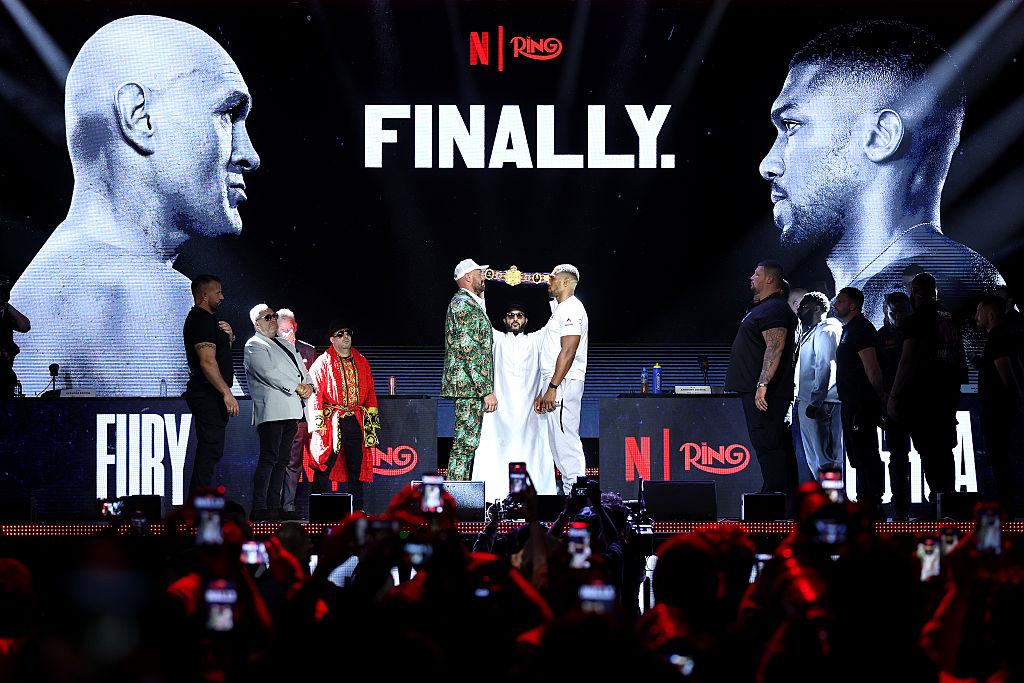
Tyson Fury and Anthony Joshua’s long-awaited heavyweight fight sold out Cardiff’s approximately 80,000-seat Principality Stadium within about an hour of tickets going on sale Friday. More than 500,000 fans reportedly joined online queues, with official ticket prices ranging from £88.50 to £13,128 before resale listings appeared at dramatically higher prices. The December 11 bout will mark the first professional meeting between the two former heavyweight champions and will stream globally on Netflix.
The long-awaited heavyweight showdown between Tyson Fury and Anthony Joshua has sold out Cardiff’s Principality Stadium within roughly one hour of tickets going on sale, with about 80,000 seats snapped up and more than half a million fans joining online queues in one of the strongest demonstrations yet of the commercial power behind British boxing’s biggest unfinished rivalry. Tickets for the December 11 fight became available at midday British Summer Time on Friday, and demand immediately overwhelmed online platforms as supporters tried to secure seats for the first professional meeting between two former heavyweight world champions whose careers have been compared, debated and intertwined for more than a decade.
The rapid sellout confirms that, despite years of delays and repeated failed negotiations, public appetite for Fury against Joshua remains enormous. Reuters reported that around 80,000 tickets were released for the Principality Stadium event and were exhausted within approximately an hour, while more than 500,000 people were reported to be waiting in the online queue at the height of the rush. Other British reports suggested the total number trying to gain access across ticketing platforms may have been even higher, illustrating a level of demand that far exceeded the number of seats available in Cardiff.
Ticket prices ranged from £88.50, including booking charges, to as much as £13,128 for the most expensive premium options, placing the event among the most costly boxing spectacles ever staged in Britain. Within a short period of the official allocation disappearing, tickets began appearing on resale platforms at dramatically inflated prices, with some ringside and VIP listings reaching tens of thousands of pounds and upper-tier seats also being offered well above their original face value. The resale activity immediately triggered frustration among supporters who had spent lengthy periods waiting online only to discover that much of the general allocation had already disappeared.
The sellout is the latest indication that Fury-Joshua remains capable of transcending normal boxing interest. Both fighters are already among the most commercially successful British heavyweights of their generation, and their rivalry has been discussed since Joshua was emerging as an Olympic champion while Fury was building toward his breakthrough victory over Wladimir Klitschko. For years, promoters, broadcasters and fans repeatedly attempted to turn the matchup into reality, but contractual disputes, mandatory challengers, defeats, rematches, broadcasting arrangements and promotional rivalries repeatedly prevented the bout from being finalized.
That uncertainty finally ended in September when the December 11 date and Cardiff venue were confirmed. The fight will take place at Principality Stadium, whose retractable roof, city-centre location and maximum capacity of about 80,000 make it one of Britain’s most suitable venues for major winter boxing events. Netflix will stream the event live globally to subscribers at no additional charge, giving the contest an international audience far beyond the spectators inside the stadium. The platform has described Fury-Joshua as a fight years in the making between two of the biggest names in heavyweight boxing.
Cardiff was selected after other potential venues were considered, including Wembley Stadium in London and Madison Square Garden in New York. One of the advantages of Principality Stadium is its ability to accommodate an unusually late schedule. Organizers have applied for permission for the ring walks to begin at around 1 a.m. on Saturday, December 12, with the stadium remaining open until approximately 3:30 a.m. The timing is designed to place the main event closer to prime viewing hours in North America while maintaining a British venue for a contest being marketed as one of the defining domestic fights of the modern heavyweight era.
The decision to stage the fight so late initially raised questions about transport, policing and crowd management in central Cardiff, but the city has experience hosting major sporting events under unusual schedules. Principality Stadium previously staged Joe Calzaghe’s 2007 victory over Mikkel Kessler in a contest that began after midnight, while other major British boxing events have historically adjusted start times to accommodate overseas television markets. Organizers are expected to operate an extended entertainment program before the main event, with the roof closed and spectators required to enter before a late-night cutoff.
The commercial scale of Fury-Joshua extends well beyond ticket sales. Reports have placed the combined purse for the two fighters at close to $200 million, although exact contractual figures have not been formally disclosed by the promoters. Sponsorship, global streaming rights, premium hospitality and associated commercial activity are expected to make the contest one of the most lucrative boxing events ever staged in the United Kingdom. Dana White has already described the event as having the potential to produce the richest gate in British boxing history.
The sellout also answers one of the questions that had surrounded the matchup after both fighters suffered career setbacks. Fury, now 38, and Joshua, 36, are no longer undefeated champions meeting at the absolute peak of their careers, and both have experienced defeats that altered the heavyweight landscape. Yet the extraordinary demand on Friday suggests that the rivalry itself has retained its value because supporters still want a definitive answer to the question that has dominated British heavyweight boxing for years: who wins when Fury and Joshua finally share a professional ring?
Fury enters the contest with a professional record of 36 wins, two defeats and one draw, including 25 knockouts, while Joshua stands at 30 wins and four defeats with 27 stoppages. Both men have held multiple heavyweight world titles, headlined stadium events and represented Britain on the biggest stages in boxing, but they have never fought professionally. Their only shared ring history comes from a sparring session early in Joshua’s career, which both men have referenced differently over the years and which again became part of the conversation when they came face-to-face at their September 30 press conference.
That press conference demonstrated how deeply rooted the rivalry remains. Fury and Joshua exchanged competing memories of their old sparring encounter while also acknowledging the importance of finally settling the argument in competition. Fury described the fight as the culmination of two careers that had risen through the same era, while Joshua treated the meeting as an opportunity to establish his place against the other dominant British heavyweight of his generation. Their face-off beneath promotional branding declaring “FINALLY” captured the central selling point more effectively than any championship belt: the fight is happening largely because fans have demanded it for years.
The promotional structure has itself generated controversy. The contest is being staged through a collaboration involving Saudi boxing powerbroker Turki Alalshikh’s The Ring and UFC president Dana White, although Joshua’s longtime promoter Eddie Hearn has publicly raised questions about the scope of White’s role because of contractual arrangements surrounding Joshua. Those disagreements have not prevented the event from moving ahead, but they reflect the increasingly complex structure of elite boxing, where fighters, broadcasters, promoters, investors and sanctioning bodies can all have overlapping commercial interests.
The scale of Friday’s ticket demand gives the organizers enormous leverage. A queue of more than 500,000 potential buyers for approximately 80,000 available seats means demand exceeded capacity several times over, creating a scarcity that immediately pushed prices upward on secondary markets. It also strengthens the case for Fury-Joshua as a genuine global event rather than merely a major domestic fight, particularly when combined with worldwide Netflix distribution.
The choice of Netflix is itself part of a wider transformation in boxing broadcasting. Both Fury and Joshua have already appeared in major fights distributed through the streaming platform, and Netflix’s growing interest in live sports has provided promoters with access to audiences far beyond traditional pay-per-view boxing subscribers. The company says the Fury-Joshua event will be available globally to members without an additional pay-per-view fee, potentially exposing the contest to hundreds of millions of subscribers.
That distribution model could significantly increase the fight’s cultural reach. Traditional boxing mega-events often rely on expensive pay-per-view purchases, limiting viewership even while generating enormous revenue per customer. A subscription platform changes the equation by prioritizing global audience scale, subscriber engagement and international relevance. For Fury and Joshua, whose names are already familiar well beyond Britain, the result could be one of the largest live audiences either has ever attracted.
Cardiff is also likely to experience a major economic impact. Tens of thousands of visitors will descend on the Welsh capital for the fight weekend, increasing demand for hotels, restaurants, transport and entertainment. Accommodation prices have already risen sharply around major event dates in the city in the past, and a sold-out 80,000-seat fight scheduled to continue deep into the early morning will create substantial logistical demands on local authorities and businesses.
The unusually late main event will complicate that economic boost. Public transport services, policing, licensing and crowd dispersal will all require planning because tens of thousands of spectators could leave the stadium in the early hours of Saturday. Cardiff City Council is considering event applications covering extended opening hours, live entertainment and alcohol sales, while organizers are planning around the stadium’s ability to remain open well beyond its normal schedule.
Friday’s rush for tickets also exposed tensions around access and affordability. Although the advertised starting price was below £100, many supporters reported seeing substantially higher prices once they reached the front of digital queues, particularly for premium seats and packages. Some listings bundled tickets with transport or hospitality, and resale platforms quickly became a destination for people unable to secure official seats. The extreme gap between the cheapest face-value entry and premium tickets costing more than £13,000 has prompted debate about whether major boxing events are becoming inaccessible to ordinary supporters.
Those complaints are unlikely to slow commercial momentum. Promoters have long argued that elite boxing is driven by scarcity and spectacle, and Fury-Joshua combines both. Unlike a league fixture that may be repeated the following season, this is potentially the only professional meeting between two men whose careers have been linked for more than a decade. That sense of finality encourages supporters to pay prices they might reject for a more routine sporting event.
The fight also carries significant implications for the legacy of both men. Fury has built his reputation around his size, movement, adaptability and ability to recover from adversity, most famously during his trilogy with Deontay Wilder. Joshua’s career has been defined by explosive punching power, Olympic success, multiple world-title reigns and the ability to rebuild after setbacks. Victory on December 11 would not erase either fighter’s previous defeats, but it would give the winner the clearest possible answer to the rivalry that has followed them throughout their professional careers.
For British boxing, the contest is being marketed as a generational event. Lennox Lewis against Frank Bruno, Carl Froch against George Groves and Anthony Joshua against Wladimir Klitschko all produced landmark domestic nights, but Fury against Joshua carries a different level of accumulated history because the fight has been anticipated for so long. The two men became world champions on separate paths, lost titles at different moments and repeatedly appeared close to fighting before negotiations collapsed.
That history explains why the sellout matters beyond simple ticket numbers. The fight was already commercially important when it was announced, but selling approximately 80,000 seats within an hour provides measurable evidence of demand. Hundreds of thousands more people attempted to buy tickets than could possibly enter the stadium, and the immediate resale market suggests scarcity will remain intense until fight night.
Organizers have not yet announced the complete undercard, leaving another major element of the event unresolved. A strong supporting lineup could add further commercial value, particularly given the long gap between stadium opening and the projected 1 a.m. main-event ring walks. With the principal attraction already sold out, promoters now have flexibility to build the rest of the card without depending on additional ticket demand.
The fighters themselves will now move deeper into training camps with the commercial side of the event largely secured. For months, speculation centered on whether Fury-Joshua would ever happen, where it would be staged and whether the public still cared enough after years of delays. Friday’s sales have answered the last of those questions emphatically.
The immediate concern for supporters is now the secondary market. Fans who missed the official release are being warned to use authorized channels and exercise caution because major sold-out sporting events frequently attract fraudulent listings and counterfeit tickets. Principality Stadium continues to advertise hospitality options, but ordinary general-admission inventory appears to have been exhausted rapidly.
As December approaches, attention will shift from ticket queues to training, tactics and the condition of both fighters. Fury’s height, reach and movement have traditionally made him difficult to outbox, while Joshua remains one of the most dangerous punchers in the heavyweight division. Their contrasting styles have fueled debate for years, and the scale of Friday’s demand demonstrates that supporters still want to see the argument settled inside the ring rather than through hypothetical comparisons.
Whatever happens on fight night, the event has already produced one significant result: Fury against Joshua remains one of the biggest commercial attractions available in boxing. Approximately 80,000 seats disappeared in around an hour, more than half a million fans reportedly queued online and premium tickets reached prices normally associated with the world’s most exclusive sporting occasions.
For a fight that spent the better part of a decade failing to materialize, the speed of the sellout carries obvious symbolism. Fury and Joshua have spent years occupying the same heavyweight era without facing one another, but on December 11 they are finally scheduled to settle the rivalry in front of a full Principality Stadium and a global Netflix audience. The extraordinary demand recorded on Friday shows that, despite every delay, defeat and failed negotiation that came before it, the public still considers their meeting an event worth waiting for.