GHANA ANNOUNCES NEW OFFSHORE GAS AND CONDENSATE DISCOVERY AS MAHAMA BREAKS GROUND FOR $137 MILLION TAKORADI SHIPYARD
Ghana has confirmed a new offshore gas and condensate discovery at the Nya Gyidie 1X well in the Deepwater Cape Three Points block, operated by Planet One Oil & Gas with GOIL Upstream and GNPC. The discovery is Ghana’s first successful test of a carbonate reservoir system, opening a new exploration frontier, although commercial reserves have not yet been established. On the same Takoradi visit, President John Mahama broke ground for the $137 million Project Shiprite and a separate $98.41 million Berth 19 expansion at Takoradi Port.
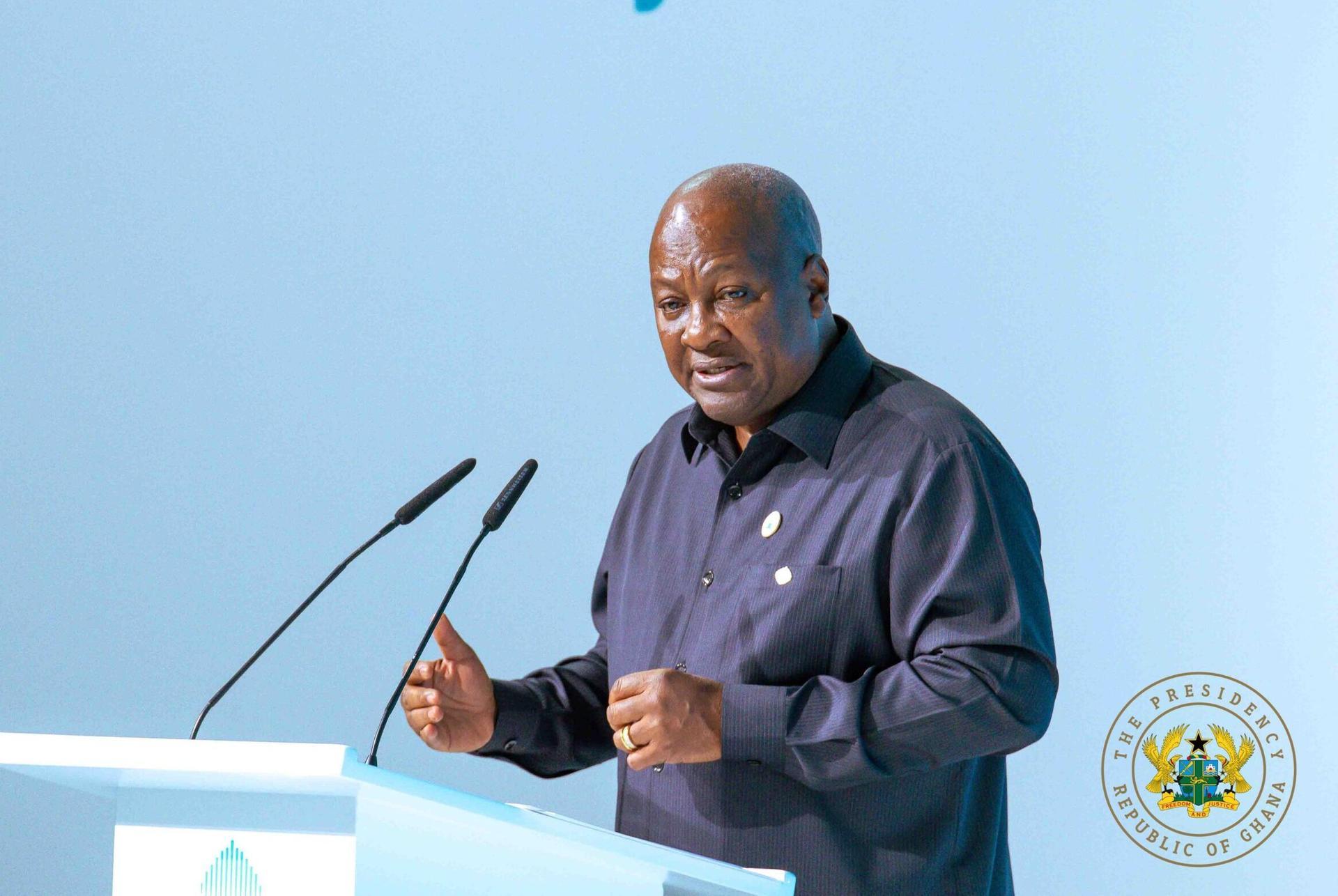
Ghana has announced a significant new offshore hydrocarbon discovery in the Deepwater Cape Three Points block, opening a potentially important new exploration frontier for the country’s petroleum industry at the same time President John Dramani Mahama has launched major maritime infrastructure works at the Port of Takoradi. The discovery was made at the Nya Gyidie 1X exploration well by Planet One Oil & Gas Limited together with GOIL Upstream Limited and the Ghana National Petroleum Corporation, with early results confirming gas and condensate in a carbonate reservoir system that has never previously produced a successful exploration result in Ghana. Mahama announced the find during the 2026 Local Content Conference and Exhibition in Takoradi, where he also broke ground for the $137 million Project Shiprite integrated ship repair and dry docking facility and a separate $98.41 million Berth 19 expansion at Takoradi Port.
The offshore discovery is attracting attention because it is geologically different from the sandstone reservoirs that have underpinned Ghana’s existing commercial oil and gas production. GNPC says Nya Gyidie 1X represents the country’s first successful test of a carbonate reservoir system, creating a new exploration target that could change how companies assess petroleum potential across parts of Ghana’s offshore basin. The well is located about 148 kilometres offshore and was drilled in approximately 2,289 metres of water, placing it firmly in the deepwater exploration category and demonstrating the technical complexity of the operation.
President Mahama described the discovery as an important milestone for Ghana’s upstream petroleum sector and linked it to his government’s broader effort to revive exploration after several years of declining production and limited new discoveries. He said the successful test demonstrates that Ghana’s offshore basins may contain commercially valuable petroleum resources beyond the geological formations that have traditionally attracted exploration spending. The government has been trying to encourage operators to return to active drilling, accelerate field development and increase investment in both established producing areas and less explored prospects.
The Nya Gyidie 1X well tested a Cenomanian Turonian carbonate formation as its primary exploration target and also examined an Albian formation as a secondary objective. That geological distinction is important because most of Ghana’s existing commercial offshore discoveries have been associated with sandstone reservoirs. A successful hydrocarbon encounter in carbonate rock therefore broadens the range of formations that explorers may now consider when evaluating future wells.
Planet One Oil & Gas is the operator of the Deepwater Cape Three Points block, with GOIL Upstream and GNPC participating as partners. Planet One entered the block as part of an effort to revive activity in an area that had already attracted significant exploration interest because of its location within Ghana’s productive Tano Basin. The company says the discovery confirms the value of continuing exploration even where previous geological models may have focused heavily on more familiar sandstone structures.
GNPC has welcomed the result as evidence that Ghana still has meaningful unexplored petroleum potential. The national oil company says reserve replacement is becoming increasingly important because production from mature fields naturally declines over time unless new resources are discovered and developed. Finding additional hydrocarbons is therefore necessary if Ghana wants to maintain oil and gas production over the longer term and preserve revenues from the upstream sector.
The discovery should not yet be described as a proven commercial field. The companies involved have confirmed hydrocarbons, but the size of the accumulation, recoverable reserves and economic viability remain under assessment. Additional technical work will be required before the partners can determine whether the discovery contains enough commercially recoverable gas and condensate to justify development.
Planet One has indicated that further evaluation and additional exploration drilling are planned over the next 12 to 18 months. Those activities will help determine the reservoir’s thickness, pressure, continuity and productivity, all of which are essential before an investment decision can be made. An exploration discovery can be technically successful while still proving too small or too expensive to develop commercially, particularly in deep water where project costs can be substantial.
That caution is important because early discovery announcements can sometimes create expectations of immediate production or large government revenues. In reality, offshore petroleum developments typically require several years of appraisal, engineering, financing, regulatory approvals and infrastructure construction before commercial production begins. The Nya Gyidie result therefore represents a promising exploration breakthrough rather than a completed producing project.
If future appraisal confirms sufficient reserves, however, the discovery could have important implications for Ghana’s gas supply. Gas and condensate developments can support electricity generation, industrial use and potentially petrochemical or processing projects depending on the size and composition of the resource. Ghana already relies heavily on natural gas for thermal power generation, and additional domestic supply could help reduce exposure to imported fuels and provide greater energy security.
The discovery comes at a time when Ghana’s petroleum production has been under pressure from declining output at mature fields and a slowdown in fresh exploration. Mahama has made reversing that trend a central part of his energy policy since returning to office. Earlier in 2026, he announced approximately $3.5 billion in new investment commitments from major upstream operators, including plans for additional drilling and field development aimed at increasing national oil and gas production.
The government says the strategy is beginning to produce results. Production at the Jubilee field has improved following new drilling and operational investment, while other projects are being advanced to sustain output from existing discoveries. The Nya Gyidie result adds a new exploration dimension by suggesting that Ghana may have commercially relevant reservoir types that have not yet been tested extensively.
Energy Minister John Jinapor has described reserve replacement as one of the industry’s most urgent priorities. Ghana cannot rely indefinitely on the same producing fields, particularly as natural decline reduces output over time. New exploration success is therefore essential if the country wants to preserve upstream jobs, export earnings and petroleum related government revenue.
The Western Region remains at the center of that strategy because it hosts much of Ghana’s offshore energy industry and the Port of Takoradi serves as a critical logistics base for petroleum operations. Offshore supply vessels, service companies, equipment providers and engineering businesses all rely on the port, making maritime infrastructure an important part of the broader energy economy.
That connection helps explain why Mahama’s announcement of the new hydrocarbon discovery coincided with the launch of major new infrastructure projects at Takoradi Port. The most prominent is Project Shiprite, a $137 million integrated ship repair and maintenance facility being developed by Prime Meridian Docks Ghana Limited under a 25 year concession with the Ghana Ports and Harbours Authority.
Project Shiprite is designed to provide commercial scale dry docking and ship repair services for vessels operating in the Gulf of Guinea. Once completed, the facility will be capable of servicing ships up to approximately 200 metres in length, including cargo vessels, offshore support ships and other commercial vessels requiring mandatory dry docking or repairs.
At present, many vessels operating in West African waters have to travel long distances for major maintenance. Ships may sail to Walvis Bay in Namibia, Las Palmas in Spain or other distant shipyards because the Gulf of Guinea lacks sufficient modern commercial scale repair capacity. Those journeys can take between 10 and 14 days before repair work even begins, increasing fuel consumption, operating costs, emissions and vessel downtime.
Project Shiprite is intended to reduce that dependence on foreign yards by creating a major repair base in Takoradi. Developers argue that vessels operating off Ghana, Nigeria, Côte d’Ivoire and other Gulf of Guinea countries could instead use the facility locally, allowing shipowners to reduce travel time and keep more maritime service spending within the region.
The project is expected to create up to 430 direct jobs when operational, with approximately 30 percent of those positions targeted at women. Developers also expect indirect employment through engineering, logistics, fabrication, hospitality, transport and supply businesses supporting the shipyard.
A $300,000 technical assistance programme is also being used to support greater female participation in the shipyard’s technical workforce. The programme is expected to fund skills development, professional certification and practical industry exposure aimed at helping women compete for jobs traditionally dominated by men.
The shipyard is being developed through a combination of Ghanaian and international capital. The Private Infrastructure Development Group has invested through its InfraCo platform, while other financing partners include the ARM Harith Infrastructure Fund, Afreximbank, the African Development Bank, the Eastern and Southern African Trade and Development Bank, Petra Pension Schemes and Origen Private Debt Fund.
PIDG says its involvement helped close the final financing gap and unlocked more than $100 million in senior and mezzanine debt needed to move the project into construction. The financing structure is notable because it includes a Ghanaian pension fund alongside international development finance institutions and private investors, creating a model for using domestic institutional capital in large infrastructure projects.
Prime Meridian Docks is leading development of the shipyard and will operate the facility under its concession arrangement with GPHA. The project has been in development for years and was highlighted earlier in 2026 as a flagship investment under the UK Ghana Growth Partnership.
Mahama said the project fills an important gap in Ghana’s maritime infrastructure. He noted that vessels operating in the Gulf of Guinea frequently have no nearby modern shipyard capable of handling major maintenance and repairs, forcing them to leave the region and spend foreign exchange elsewhere. The president said he expects the Takoradi facility to serve ships from Ghana and neighboring countries while creating technical employment for local workers.
He also linked Project Shiprite to Ghana’s local content agenda. The government says it wants infrastructure projects to create opportunities not only through construction jobs but also through technology transfer, supplier development and skills that remain within the country after foreign contractors and investors complete their initial work.
For Ghana’s petroleum sector, the shipyard could be especially useful because offshore production relies heavily on support vessels that require regular maintenance. The Western Region hosts offshore activity around the Jubilee, TEN and Sankofa fields, creating a steady potential customer base for marine repair services.
The facility could also support Ghana’s naval and commercial maritime sectors. Mahama contrasted the new private sector led investment with the challenges that affected the older Tema Dry Dock and Shipyard, arguing that a commercially operated model could deliver more consistent performance and maintenance standards.
Project Shiprite is expected to take about 18 months to complete. Once operational, it will become one of the most significant commercial ship repair facilities in the Gulf of Guinea and could position Takoradi as a regional destination for maintenance and engineering services rather than only a cargo and offshore logistics port.
The government is simultaneously investing in Berth 19, a separate $98.41 million project at Takoradi Port. The 300 metre berth will be able to handle vessels of up to 75,000 deadweight tonnes and is being financed directly from GPHA’s internally generated resources.
Berth 19 is scheduled to take approximately 26 months to complete and is expected to increase bulk cargo handling capacity, improve operational flexibility and allow Takoradi Port to accommodate larger ships. The project forms part of a longer programme of port expansion that has included dredging and new terminal development.
Taken together, Project Shiprite and Berth 19 represent more than $235 million in new port investment. The government sees the projects as part of a broader industrial strategy intended to connect maritime services, mining exports, petroleum operations, rail development and road infrastructure in the Western Region.
Mahama has said the port expansion will be complemented by investment in the Western railway line and major highways under his government’s infrastructure programme. Improved transport links could allow goods moving through Takoradi to reach inland mining areas and neighboring Sahelian countries more efficiently.
Takoradi already plays a major role in Ghana’s seaborne trade. GPHA data show that the port handled more than 11 million tonnes of cargo in 2025 and accounted for the majority of Ghana’s seaborne exports, particularly commodities including manganese, bauxite and cocoa.
The port is also strategically located close to Ghana’s offshore petroleum fields, making it an important base for vessels and service companies supporting the oil and gas industry. Expanding ship repair and berth capacity could therefore strengthen both the maritime and energy sectors simultaneously.
The timing of the infrastructure projects and the offshore discovery gives the Western Region particular prominence in the government’s industrial development strategy. One initiative is aimed at finding new petroleum resources beneath the seabed, while the others are designed to strengthen the physical infrastructure needed to support shipping, energy operations and trade.
The government is presenting both developments as evidence of renewed investor confidence. Mahama has repeatedly said Ghana needs predictable regulations and stronger local content policies to attract capital while ensuring domestic companies and workers benefit from major investments.
At the Local Content Conference, he urged international oil companies to expand technology transfer and give Ghanaian suppliers more opportunities to participate in high value contracts. He also encouraged local financial institutions to provide more funding to businesses seeking to enter the petroleum services sector.
That emphasis is significant because Ghana’s oil and gas industry has historically relied heavily on foreign service companies for specialized technical work. Local content laws were introduced to increase Ghanaian participation, but domestic firms still face challenges accessing financing, advanced technology and international certifications.
A new exploration frontier could create additional opportunities if development proceeds. Appraisal drilling, seismic work, engineering, subsea installation and future production infrastructure would require large numbers of contractors and service providers. The government wants a larger share of that spending to remain in Ghana.
GNPC’s role in the Nya Gyidie block is also strategically important. As the national oil company, GNPC participates in petroleum projects on behalf of the state and can benefit directly if discoveries move into commercial production. Its involvement allows Ghana to retain an equity interest rather than relying exclusively on taxes and royalties.
GOIL Upstream adds another Ghanaian corporate participant to the partnership. The company is the upstream subsidiary of GOIL PLC and has been expanding its involvement in exploration as part of efforts to build more domestic capacity in the petroleum sector.
Planet One’s role as operator places responsibility for exploration and technical evaluation on the company. Its success at Nya Gyidie could improve investor confidence in less explored geological targets and potentially attract additional interest from companies reviewing Ghana’s offshore acreage.
The discovery is especially notable because carbonate reservoirs behave differently from the sandstone systems that dominate Ghana’s existing fields. Carbonate rocks can contain highly productive petroleum reservoirs, but their internal structure can be complex and difficult to predict. Successful development therefore depends heavily on detailed geological and engineering analysis.
Further appraisal wells will be necessary to understand whether the hydrocarbons extend across a large enough area to support commercial development. Reservoir quality can vary significantly even within the same formation, making early estimates uncertain until additional data are collected.
The discovery of gas and condensate rather than a confirmed large crude oil accumulation may also influence development options. Gas projects require reliable infrastructure and long term buyers because the commodity is more difficult to store and transport than crude oil. Ghana already has domestic gas demand from power generation and industry, which could provide a market if volumes are sufficient.
Condensate can add economic value because it is a light liquid hydrocarbon that can be produced alongside natural gas and sold into petroleum markets. The balance between gas and condensate will become clearer as technical evaluation continues.
Commercial decisions will also depend on development cost. Drilling in more than 2,000 metres of water requires advanced subsea equipment and expensive offshore infrastructure. A discovery must therefore contain enough recoverable resources to justify the capital needed to bring it into production.
That is why the government and industry are avoiding definitive reserve claims at this stage. No credible recoverable resource figure has yet been publicly released, and any attempt to assign a large barrel equivalent value to the discovery would be premature.
The correct significance of Nya Gyidie is geological and strategic rather than immediately financial. It proves that hydrocarbons are present in a reservoir type that had not previously delivered a successful exploration result in Ghana, creating new possibilities for future drilling.
If subsequent appraisal confirms a large commercial accumulation, the discovery could eventually contribute to national production, gas supply, employment and government revenue. If the accumulation proves smaller than expected, the geological information could still guide exploration elsewhere in the basin.
For investors, the result provides evidence that Ghana’s offshore petroleum system may still contain opportunities despite more than a decade and a half of development since the Jubilee discovery transformed the country into an oil producer.
For government, the challenge will be balancing renewed exploration with the global energy transition. Oil and gas remain important to Ghana’s economy and energy system, but international investors are increasingly evaluating carbon exposure and long term demand when deciding whether to finance new petroleum projects.
Mahama’s administration has argued that Ghana should continue developing its resources responsibly while also investing in renewable energy and lower carbon infrastructure. Officials say African countries should not be prevented from using petroleum resources to support industrialization when developed economies built much of their own wealth through fossil fuels.
The Takoradi shipyard also contains an environmental argument of its own. Developers say reducing long voyages to foreign repair yards will cut fuel consumption and emissions while allowing ships to complete mandatory maintenance closer to their operating areas. The facility may eventually provide green retrofitting services as the shipping industry adopts cleaner propulsion and energy efficiency technologies.
The combination of offshore exploration and maritime infrastructure therefore reflects a broader effort to turn Ghana’s coastline into a more integrated industrial corridor. Oil and gas production, marine engineering, port services, cargo handling and logistics all reinforce one another when the supporting infrastructure is located in the same region.
Whether that strategy succeeds will depend heavily on execution. Ghana has announced major infrastructure and petroleum projects before that later experienced delays, financing difficulties or disputes. The government will therefore face pressure to ensure that Project Shiprite and Berth 19 are completed on schedule and that the Nya Gyidie discovery progresses through proper technical evaluation.
For Project Shiprite, financial close has already been achieved and construction is beginning, reducing some of the financing uncertainty that often affects large infrastructure projects. The 25 year concession also establishes a long term operating framework between Prime Meridian Docks and GPHA.
The next major milestones will involve construction progress, workforce recruitment and equipment installation. Developers will also need to establish relationships with shipping companies and offshore operators to ensure sufficient demand once the facility opens.
For the offshore discovery, the next milestones will be technical. Planet One and its partners must complete reservoir evaluation, plan additional wells and determine whether a commercial development concept can be justified.
Those two timelines are different. The shipyard is an infrastructure project already moving into construction, while Nya Gyidie remains an exploration discovery whose eventual commercial value is unknown. Treating them separately is essential to understanding the significance of Mahama’s Takoradi announcements.
What connects them is Ghana’s effort to rebuild confidence in sectors that can generate foreign exchange, jobs and industrial capacity. Petroleum remains one of the country’s major export industries, while maritime services represent an opportunity to capture revenue that currently leaves West Africa when vessels travel abroad for maintenance.
The Western Region stands to benefit significantly if both initiatives deliver as planned. New petroleum activity could create demand for logistics, engineering and local services, while the shipyard could provide skilled technical employment and attract vessels from across the Gulf of Guinea.
Mahama has framed the developments as part of his administration’s wider economic reset and infrastructure programme. He says the objective is to move beyond exporting raw resources and instead build domestic industries capable of providing services, processing, engineering and employment around Ghana’s natural and geographical advantages.
The Nya Gyidie discovery gives that strategy a new energy sector opportunity. The find is not yet a commercial field and no proven reserve figure has been announced, but it has demonstrated the presence of hydrocarbons in a previously unproven reservoir system and opened a new geological frontier offshore Ghana.
At the same time, Project Shiprite gives Ghana a more immediate industrial project with financing secured and construction beginning. The $137 million facility could reduce dependence on foreign shipyards, retain maritime spending within West Africa and establish Takoradi as a major repair center for ships operating along the Gulf of Guinea.
Together with the $98.41 million Berth 19 expansion, the projects underline the growing strategic importance of Takoradi to Ghana’s energy, transport and trade ambitions. The government is betting that stronger ports, improved local engineering capacity and renewed offshore exploration can reinforce one another and create a more resilient industrial base.
For now, the most important caution is that Nya Gyidie remains at the discovery stage. The hydrocarbons are real, the reservoir breakthrough is significant and further exploration is planned, but Ghana will need additional drilling and technical analysis before anyone can credibly say how much gas and condensate can be produced or how much the discovery may ultimately be worth.
That distinction does not reduce the importance of the announcement. In exploration, proving an entirely new reservoir concept can be valuable in its own right because it changes what geologists and investors believe may exist elsewhere in the basin. If Nya Gyidie proves commercially viable, the discovery could become an important addition to Ghana’s petroleum portfolio. If it does not, the geological knowledge gained may still guide the next generation of exploration.
The next 12 to 18 months will therefore be critical for Planet One, GOIL Upstream and GNPC. Their appraisal work will determine whether Ghana has simply opened a promising new exploration play or discovered the foundation of its next major offshore development. At Takoradi Port, meanwhile, construction crews will begin turning a long planned $137 million ship repair concept into physical infrastructure, giving the Western Region two closely watched projects with potentially important consequences for Ghana’s economic future.