GHANA ENTERTAINMENT INDUSTRY MOURNS AS BELOVED ACTOR AND BROADCASTER KWAME DZOKOTO DIES AT 51
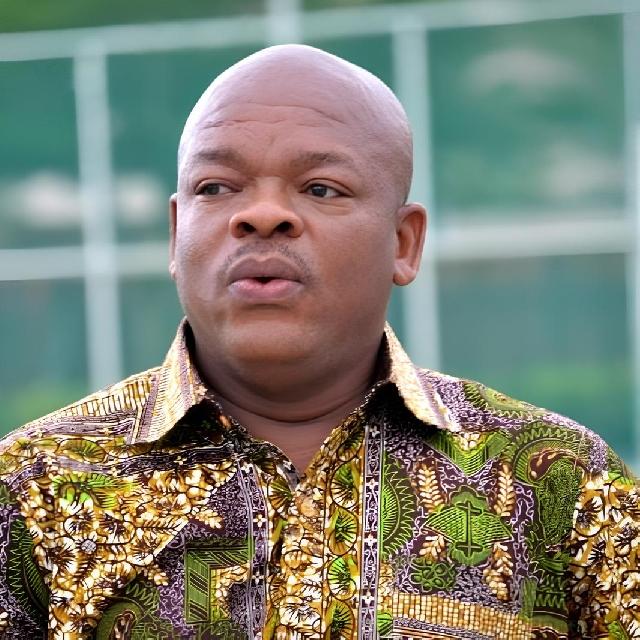
Ghanaian actor, comedian, broadcaster and television presenter Kwame Dzokoto has died at the age of 51 after reportedly collapsing during a live radio discussion in Tarkwa. He was rushed to hospital but was pronounced dead on arrival. Dzokoto became a household name through his role as Judge Koboo in Efiewura and as the popular host of Edziban, one of Ghana’s best-known food television programmes. The exact medical cause of death and funeral arrangements have not yet been publicly announced.
Ghana’s entertainment and media industry has been thrown into mourning following the death of veteran actor, comedian, broadcaster and television personality Seth Kwame Dzokoto, widely known simply as Kwame Dzokoto. The much-loved entertainer, who became a household name through his portrayal of Judge Koboo in the long-running television series Efiewura and later through the popular food and travel programme Edziban, died on Thursday, October 22, 2026, after reportedly collapsing during a live radio discussion in Tarkwa in the Western Region. He was rushed for emergency medical attention but was pronounced dead on arrival at hospital, bringing an abrupt end to a career that had stretched across acting, radio, television, food culture, advertising and politics.
Dzokoto’s death shocked audiences because he remained visible in public life and had only recently returned strongly to entertainment activities after experiencing health challenges. Earlier reports about his death had circulated in September, prompting him to personally dismiss the rumours and assure fans that he was still alive. At the time, he acknowledged that he had been dealing with health problems and had undergone medical treatment abroad, but he appeared optimistic and continued engaging publicly. His actual death just weeks later has therefore been received with particular disbelief by colleagues and viewers who had celebrated his return and expected him to remain part of Ghana’s entertainment scene for years to come.
The circumstances immediately preceding his death have attracted considerable attention because Dzokoto was participating in a radio panel discussion when he became unwell. He was appearing on a morning programme at Owass FM in Tarkwa when he reportedly collapsed during the live broadcast. He was subsequently taken to a medical facility, where he was pronounced dead on arrival. Although reports from the station and political associates have confirmed the sequence of events, no official medical cause of death has yet been publicly announced by his family or the hospital, and speculation about the precise cause should therefore be avoided until those closest to him provide formal information.
His death removes one of the most recognisable faces from an important era of Ghanaian television comedy. Through Efiewura, Dzokoto became associated with Judge Koboo, a character whose humour, expressions and mannerisms helped him establish a connection with audiences across different generations. The series became one of Ghana’s most enduring local television productions, using comedy and everyday neighbourhood situations to tell stories about relationships, family life, conflict, gossip, social expectations and ordinary Ghanaian experiences. Dzokoto’s performances contributed significantly to the identity of the programme and helped cement his place among actors whose characters became more widely recognised than their real names.
His connection to Efiewura remained strong even decades after he first appeared on the programme. The show’s longevity meant that younger audiences encountered him through repeats and later productions while older viewers remembered him from earlier seasons. When plans for renewed Efiewura productions generated excitement in recent years, Dzokoto was again prominently associated with the series, demonstrating the durability of the character he had helped build. His ability to remain relevant to the show over such a long period reflected the affection audiences continued to have for both him and the production.
Yet Efiewura represented only one part of his cultural influence. For many Ghanaians, Dzokoto became equally synonymous with Edziban, the television food programme that travelled around Ghana exploring local meals, chop bars, restaurants and the people behind them. Long before food content became one of the dominant categories on social media, Dzokoto was already presenting Ghanaian cuisine in a format built around humour, curiosity and an unmistakably local personality. His energetic style transformed simple visits to food joints into entertainment while also introducing viewers to meals and businesses outside their own communities.
The programme helped make him one of Ghana’s pioneering mainstream food personalities. Dzokoto did not approach food presentation as a formal culinary critic attempting to impress audiences with technical terminology. Instead, his appeal came from the excitement of an ordinary Ghanaian enjoying familiar meals and encouraging viewers to appreciate the country’s culinary diversity. He interacted naturally with cooks, traders and customers, making the programme feel accessible rather than distant. That style became central to Edziban and helped distinguish it from conventional lifestyle programming.
Many of the expressions associated with Dzokoto’s food presentation became memorable catchphrases. His enthusiasm and comic timing made the eating itself part of the entertainment, and his reactions frequently became more memorable than the dishes he was tasting. Long before short-form video platforms turned exaggerated food reactions into an online genre, he had already developed a distinctly Ghanaian version of that performance on television. The programme therefore occupies an important place in the development of local lifestyle and food broadcasting.
Dzokoto’s career also extended deep into radio. He worked as a broadcaster and presenter, including periods associated with stations such as Skyy Power FM in Takoradi and Hello FM in Kumasi. Radio allowed audiences to engage with his personality without the visual comedy that made him famous on television, revealing another side of his media abilities. His voice, conversational delivery and familiarity with Ghanaian popular culture made him suitable for discussions that ranged beyond entertainment.
His attachment to the Western Region was especially important throughout his career. Tarkwa and surrounding communities formed part of his public and political identity, and his decision to contest parliamentary elections demonstrated that his relationship with the region extended beyond broadcasting and entertainment. In the 2016 general election, Dzokoto stood as the National Democratic Congress parliamentary candidate for the Tarkwa-Nsuaem constituency after winning the party’s internal contest.
He did not win the parliamentary seat, but his entry into electoral politics showed the breadth of his ambitions. Dzokoto was willing to move from acting and media into a political environment where celebrity alone could not guarantee success. He continued to maintain his relationship with the NDC and remained involved in public political discussions after the election. His death while participating in a radio panel in Tarkwa is therefore particularly poignant because he remained connected to both broadcasting and political conversation until the final hours of his life.
His political affiliation sometimes generated debate because entertainers who enter party politics can risk dividing audiences who previously viewed them primarily through their artistic work. Dzokoto nevertheless continued to act, broadcast and appear publicly while maintaining his political identity. He never became defined solely by electoral politics, and for many viewers his name continued to evoke Judge Koboo and Edziban before anything else.
In recent years, Dzokoto also pursued further academic development. In August 2025, he completed a master’s degree in Defence and International Politics at the Ghana Armed Forces Command and Staff College. The achievement surprised some members of the public who knew him mainly as a comic actor and television host, but it demonstrated an intellectual and professional interest extending beyond entertainment. Photographs of him in graduation attire were widely circulated and became part of the public image of a performer determined to keep developing himself later in his career.
His academic achievement also reflected the complexity of a public figure who could easily be underestimated because of the humorous characters he played. Comedy performers are sometimes treated as though the personalities they display on television represent the full extent of who they are, yet Dzokoto’s work in radio, politics and postgraduate education showed a much broader range of interests. His career moved between entertainment, public affairs, communication and community engagement without requiring him to abandon the comic warmth that made him famous.
Only weeks before his death, attention had turned toward Dzokoto’s health after false reports circulated claiming that he had already passed away. He publicly rejected those rumours and explained that he had experienced medical challenges. He said he had received support for treatment abroad and was recovering after surgery. His willingness to speak publicly about his condition reassured supporters who had become concerned after seeing changes in his appearance.
The fact that those false rumours were followed so quickly by confirmation of his actual death has made Thursday’s news even more difficult for some fans to process. Social media immediately filled with expressions of disbelief, with people recalling his television roles, food programmes and memorable humour. For viewers who grew up watching Efiewura, his death represents the loss of another familiar face associated with an era when locally produced television dramas played a major role in Ghanaian family entertainment.
The Efiewura family itself has experienced painful losses over the years. Several performers associated with the programme have died, including actress Mercy Little Smith, whose passing Dzokoto himself publicly mourned. His death now places him among the programme’s late stars and is likely to produce another period of reflection around the contribution the series and its cast made to Ghanaian popular culture.
Dzokoto’s tribute to colleagues in the past showed the emotional bonds that developed within the entertainment community. Actors working on long-running television series often spend years together, creating relationships that go beyond individual productions. Those connections become particularly visible when one cast member dies, as colleagues remember not only the public performances viewers saw but the private experiences behind the cameras.
His death is also significant because Ghana’s entertainment sector has already lost several veteran personalities in recent years. Each passing renews discussions about preservation, archives and whether the country adequately documents the work of performers while they are alive. Many classic Ghanaian television programmes exist only in incomplete archives, poor-quality recordings or private collections, creating the danger that important cultural material may disappear alongside the actors who created it.
Dzokoto leaves behind a body of work that deserves stronger preservation. Efiewura remains an important record of Ghanaian television comedy, while Edziban documents food culture and small businesses across the country during a period before smartphones and social media transformed how such content was produced. Preserving those episodes would mean preserving not only Dzokoto’s performances but pieces of Ghanaian social history.
His food broadcasting is particularly valuable because restaurants, chop bars and communities change over time. A programme filmed years ago can eventually become a record of establishments that no longer exist, dishes prepared in older ways and neighbourhoods before major development. Dzokoto’s comic hosting style made the programme entertaining, but the footage itself also has documentary value.
That legacy helps explain why descriptions of him simply as an actor do not fully capture his contribution. He was an actor, but he was also a presenter who helped popularise food television, a radio broadcaster who spent years behind the microphone, an advertising personality whose image became commercially recognisable and a political participant willing to place his popularity before voters.
His humour was central to all of these roles. Even when he was not acting a scripted character, Dzokoto understood how to use timing, facial expression and language to keep an audience engaged. His television presence rarely felt overly polished or detached from ordinary Ghanaian life. He appeared comfortable in roadside food joints, studios, neighbourhood settings and political conversations, which made him accessible across different sections of the public.
That accessibility was one of his strongest qualities. Dzokoto could communicate with viewers in ways that felt familiar rather than celebrity-driven. Food vendors appeared comfortable joking with him, fellow actors could play off his comic energy and radio discussions benefited from the same conversational character. His performances often relied on exaggeration, but the personality beneath them remained recognisably Ghanaian.
The entertainment industry will now wait for an official statement from his family providing further details about his death and funeral arrangements. At the time of this report, no formal funeral programme had been announced, and the precise medical cause of death had not been made public. Those details should remain with the family and authorised representatives until they are ready to communicate them.
The available information establishes that Dzokoto became unwell while participating in a radio discussion in Tarkwa on October 22, was transported for medical assistance and was pronounced dead on arrival. Reports identifying particular underlying health conditions relate to medical challenges he had previously discussed publicly, but those conditions should not automatically be presented as the cause of Thursday’s death without confirmation.
Dzokoto was 51. His relatively young age has contributed to the shock surrounding the news because he continued to be active professionally and publicly. He had recently completed an advanced degree, was associated with renewed entertainment work and continued participating in political and radio discussions, giving little indication to the broader public that his life was approaching an end.
For younger entertainers, his career offers an example of how a performer can move across different media without completely losing the identity that audiences originally embraced. He transitioned from acting into television presentation, from television into radio, and from broadcasting into politics and academic work. Each stage added another layer without erasing the earlier ones.
His career also predates the era when social-media followers became the dominant measure of entertainment influence. Dzokoto became famous through traditional television and radio, building recognition gradually through programmes watched repeatedly in homes across Ghana. His status was created before viral clips, influencer marketing and digital streaming transformed the industry, yet his personality translated naturally into the newer media environment.
That generational bridge helped keep him relevant. Older audiences remembered the earliest years of Efiewura, while younger viewers could encounter old clips, newer appearances and viral moments online. His food catchphrases continued to circulate, and photographs of his changing looks often became entertainment stories themselves.
The sudden nature of his death will inevitably dominate the immediate conversation, but his life should not be reduced to the circumstances of his final morning. Kwame Dzokoto spent decades entertaining Ghanaians, using comedy to make ordinary experiences memorable and using food television to celebrate parts of the country that mainstream entertainment did not always showcase.
Judge Koboo gave him one kind of fame, while Edziban gave him another. Radio gave him a voice outside scripted entertainment, politics demonstrated his willingness to enter public service, and his postgraduate studies showed his continued interest in personal development. Together, those roles produced a career unusually broad for a performer primarily remembered for comedy.
The tributes expected from fellow actors, broadcasters, politicians, food vendors and viewers will therefore come from very different parts of Ghanaian society. Some will remember the television actor whose expressions made them laugh, others the presenter who visited their town to eat local food, while political colleagues will remember a constituency organiser and party member. That range itself demonstrates the extent of his public footprint.
For Ghanaian television, his death marks the loss of a performer associated with one of the country’s longest-running and most culturally recognisable local series. For food broadcasting, it removes one of the personalities who helped demonstrate that Ghanaian cuisine could sustain its own entertainment programme long before food content became fashionable online. For radio, it removes an experienced broadcaster who remained comfortable discussing public issues until the final day of his life.
The sadness surrounding his passing is therefore not only about nostalgia. Dzokoto remained active, and his career still appeared capable of producing new chapters. His death interrupts those possibilities at a time when he had recently overcome health challenges and publicly reassured supporters that he was recovering.
As Ghana waits for his family to announce funeral arrangements, the images being shared across social media are likely to tell the story of his career better than any single tribute. Some show him as Judge Koboo, others eating with unmistakable excitement on Edziban, others presenting radio programmes or campaigning politically, and more recent photographs show him proudly wearing academic robes after completing his master’s degree.
They are different versions of the same man, and together they explain why the news has travelled so quickly across Ghana.
Seth Kwame Dzokoto leaves behind a legacy built on laughter, food, storytelling, broadcasting and public engagement. His death on October 22, 2026, closes a career that made him one of the most easily recognisable personalities of his generation, but the characters, programmes and expressions that created that recognition will remain part of Ghanaian popular culture.
For millions who knew him not personally but through their television screens, he will continue to be remembered as Judge Koboo, the enthusiastic face of Edziban and a broadcaster whose humour made ordinary moments entertaining. Ghana has lost a familiar voice and face, and the entertainment industry has lost a personality whose work stretched far beyond a single role.
Kwame Dzokoto is dead at 51, but the laughter and cultural memories attached to his name are likely to outlive the programmes that first made him famous.