GHANA HEALTH MINISTRY OPENS RECRUITMENT FOR 36TH BATCH OF MEDICAL OFFICERS AND DENTISTS
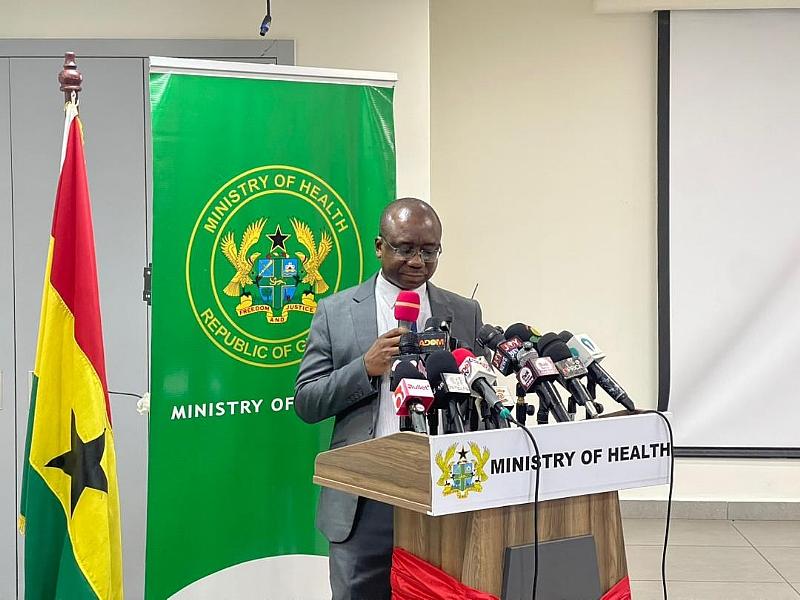
Ghana’s Ministry of Health has announced a recruitment window for medical officers and dentists in the 36th batch who have completed mandatory housemanship and received verification from the Medical and Dental Council. Applications open on Tuesday, October 27 and close on Thursday, October 29, with candidates required to use the Ministry’s official online recruitment system and select preferred districts and agencies. The Ministry says the process is transparent and has warned applicants not to pay anyone who claims they can secure recruitment or a preferred posting.
Ghana’s Ministry of Health has announced a new recruitment window for qualified medical officers and dentists belonging to the 36th batch, giving eligible professionals who have completed their mandatory housemanship and received verification from the Medical and Dental Council an opportunity to apply for placement in health facilities across the country. The online exercise opens on Tuesday, October 27, 2026, and is scheduled to close on Thursday, October 29, giving applicants a narrow period within which to complete the required process through the Ministry’s official recruitment platform.
The Ministry said the recruitment exercise forms part of continuing efforts to fill staffing gaps across Ghana’s health system and improve the distribution of qualified doctors and dentists to facilities that require additional personnel. Eligible applicants are expected to submit their details electronically and indicate their preferred districts and agencies through the recruitment system, although final placement will depend on available vacancies, financial clearance and the staffing needs of the health service rather than applicant preference alone.
According to the notice, eligibility is restricted to members of the 36th batch who have successfully completed the compulsory housemanship period and whose professional status has been verified by the Medical and Dental Council. That verification is important because completion of medical or dental school alone does not automatically qualify a graduate for permanent clinical placement within the public health system. Housemanship provides supervised practical experience following graduation, while the Council’s verification process confirms that the applicant has satisfied the professional requirements necessary to practise.
The Ministry has directed applicants to use its official online recruitment system and follow the instructions provided to select preferred districts and agencies. MyJoyOnline’s report on the October notice directs applicants to the Ministry recruitment platform at mohrecruitment.com, while the Ministry’s established Human Resource recruitment platform is also publicly accessible through its official health recruitment system. The government’s recruitment infrastructure allows applicants to create accounts, verify clearance information, submit applications and track the recruitment process electronically.
There is a discrepancy in current media reporting over the precise time at which Tuesday’s portal will activate. MyJoyOnline, citing the Ministry’s notice, reports that applications will open at 10:00 a.m., while Citi Newsroom lists 3:10 a.m. for the same date. Both agree that the application period begins on October 27 and closes on October 29. Because of that conflicting reporting, applicants should rely on the Ministry’s live recruitment portal and official communication rather than assume that an unofficially circulated time guarantees access.
The narrow recruitment window makes early preparation particularly important. Applicants who wait until the final hours risk encountering problems involving internet connectivity, account registration, missing professional information or high traffic on the portal. The Ministry’s online recruitment system requires applicants to have their professional and personal information properly entered and, where applicable, verified against the records supplied by health professional regulatory bodies and financial-clearance databases.
The government has also issued an explicit warning against recruitment fraud. The Ministry said the process is transparent and that prospective applicants should not make any payment to individuals claiming they can influence recruitment, secure a preferred posting or accelerate an application. The warning is particularly significant because public-sector recruitment exercises in Ghana have periodically attracted fraudsters who impersonate officials or demand money from job seekers in exchange for supposed placement assistance.
“The Ministry of Health advises all applicants NOT to make any payment for this process,” the Ministry said in the notice reported by multiple Ghanaian news organisations. Applicants should therefore treat any request for money outside official government procedures as suspicious and avoid sharing passwords, verification details or other sensitive information with individuals claiming to act as recruitment intermediaries.
The October exercise comes as Ghana continues to confront the difficult contradiction of having trained health professionals seeking public-sector employment while many hospitals and clinics simultaneously report staffing shortages. Doctors, nurses, midwives, pharmacists and allied health professionals have repeatedly raised concerns about delays between completion of professional training and formal government placement, while health administrators in underserved districts continue to call for additional personnel.
Health Minister Kwabena Mintah Akandoh recently acknowledged that a backlog remains within the system. Speaking on October 19, he said the Ministry was awaiting additional financial clearance to recruit another 8,000 health professionals as part of a broader exercise intended to bring 16,000 professionals into employment. He said government had already begun dealing with outstanding groups but acknowledged that professionals who completed training between 2021 and 2025 were still among those waiting for employment in some categories.
That backlog has created frustration among qualified professionals who may spend months or years waiting for financial clearance despite having completed the academic and professional requirements necessary to work. Public recruitment in Ghana’s health sector generally depends not only on vacancies but also on financial approval from the Ministry of Finance, because salaries for new employees must be accommodated within the government payroll and national budget.
The Ministry of Health’s own recruitment documentation explains that regulatory bodies provide information on professionals who have completed their training, after which eligible names are forwarded for financial clearance. Once clearance is granted, the Ministry can open the electronic recruitment platform and allow approved applicants to compete for available positions or select from facilities where vacancies exist. That structure is intended to prevent uncontrolled hiring and ensure that recruitment remains consistent with government expenditure limits.
Financial controls, however, can produce long waiting periods when the number of trained professionals exceeds the number of positions government is immediately able to fund. The result is an unusual labour-market problem in which unemployed or underemployed health professionals coexist with hospitals that require more staff, particularly in rural communities and less attractive districts.
The distribution challenge is especially serious. Ghana’s health workforce is concentrated disproportionately in Accra, Kumasi and other major urban centers, while smaller towns and northern districts often struggle to attract and retain doctors, dentists and specialists. Recruitment exercises that allow candidates to express district preferences can help improve matching, but applicants naturally tend to favour locations with stronger infrastructure, better schools, housing and professional opportunities.
The government has therefore increasingly emphasized district-based recruitment and placement rather than simply adding professionals to already well-staffed facilities. The objective is to direct new personnel toward areas where staffing gaps have the greatest effect on patient care, although retention remains a challenge once mandatory service periods end.
Medical officers play a particularly important role because they serve as the frontline physicians in district hospitals, regional facilities, teaching hospitals and other public institutions. They assess patients, manage emergencies, supervise treatment and refer complex cases to specialists. A shortage of medical officers can therefore increase waiting times, intensify pressure on existing staff and make it more difficult for hospitals to provide continuous services.
Dentists face a different but related challenge. Oral healthcare remains less accessible in many parts of Ghana than general medical care, with dental professionals heavily concentrated in urban areas. Recruiting and distributing dentists beyond major cities can improve access to preventive dental services, emergency treatment and oral-health education, particularly in communities where residents may otherwise travel long distances for care.
The current 36th-batch exercise is not the first recruitment announcement involving the group in 2026. The Ministry had previously announced a July recruitment window for 36th-batch medical officers and dentists who had completed housemanship and been verified by the Medical and Dental Council. That earlier exercise opened on July 8 and included vacancies under institutions such as the Ghana Health Service, Christian Health Association of Ghana, Ahmadiyya Health Service and Mental Health Authority.
Monday’s October announcement therefore represents an additional recruitment opportunity involving the same professional batch. The Ministry’s current public notice focuses on eligible 36th-batch applicants and does not, in the reports reviewed by VNTV, provide a detailed explanation of how the October window relates administratively to the July exercise or whether it specifically targets applicants who remained unplaced after that recruitment round. Applicants should consequently rely on the eligibility status displayed in the official portal rather than assume that previous participation automatically includes or excludes them.
The Ministry has used similar mop-up processes in other professional categories this year. Earlier in October, it announced a nationwide exercise to fill hundreds of vacancies created when previously selected applicants failed to report to their assigned facilities. That exercise included nursing and pharmacy positions across teaching hospitals, Ghana Health Service facilities and institutions under the Christian Health Association of Ghana.
Those repeated recruitment exercises highlight the complexity of workforce planning. Government may recruit professionals into specific districts, only for some candidates to reject placements because of geography, accommodation, family commitments or career preferences. The resulting vacancies then have to be reopened, delaying the point at which hospitals actually receive the workers for whom payroll clearance was granted.
The Health Ministry has said it wants recruitment to become more regular rather than relying on prolonged periods between large exercises. Akandoh has argued that predictable recruitment would help reduce the accumulated backlog and allow health institutions to plan staffing requirements more effectively. The Ministry is also examining opportunities for qualified Ghanaian professionals to work abroad through structured government-to-government arrangements where domestic opportunities are temporarily insufficient.
That strategy reflects another complication in Ghana’s health labour market: international demand for Ghanaian professionals. Doctors, nurses and other healthcare workers are frequently recruited by hospitals in the United Kingdom, United States, Canada and other countries offering considerably higher remuneration. Ghana therefore faces pressure not only to employ newly trained professionals but also to retain experienced workers once they enter the system.
Government officials have argued that carefully managed labour exchange arrangements could allow professionals who cannot immediately be absorbed domestically to obtain employment abroad while ensuring that international recruitment does not become an uncontrolled drain on Ghana’s health workforce. Earlier in 2026, the Ministry also advertised international opportunities for Ghanaian medical and nursing professionals under arrangements involving Jamaica.
The immediate concern for the current applicants, however, is completing the October process correctly. Eligible medical officers and dentists should verify that their housemanship records and Medical and Dental Council information are accurate, ensure that they can access the government recruitment platform and carefully review the districts and agencies available before submitting their choices.
Applicants whose names do not appear in the system may need to use the Ministry’s clearance-support mechanisms rather than paying individuals to add them manually. The official recruitment platform provides a clearance-request process for professionals who cannot locate their information in the database, and the Ministry has published official contact channels for applicants requiring support.
The fraud warning should therefore be taken seriously. Government recruitment does not require applicants to pay an intermediary to have their names entered, upgraded or moved to a preferred facility. An individual who promises a guaranteed posting in exchange for cash is not following the process described by the Ministry.
Applicants should also be cautious about unofficial links circulated through WhatsApp, Facebook or Telegram. Recruitment exercises involving thousands of job seekers can provide opportunities for phishing pages designed to collect identity information, passwords or mobile-money payments. The safest approach is to access the government recruitment platform through official Ministry channels and verify that the web address is legitimate before entering personal details.
For health facilities, the recruitment exercise provides another opportunity to address staffing deficits that directly affect service delivery. A district hospital that lacks sufficient medical officers may have existing doctors covering extended shifts, managing larger patient numbers and taking on responsibilities that would normally be distributed across a larger team. Adding qualified staff can therefore have an immediate effect on waiting times and workload.
The same applies to dentistry, where many public facilities have limited personnel relative to population need. Increased recruitment alone will not solve broader challenges involving equipment, infrastructure and geographical distribution, but appropriately targeted placements can improve access to essential services.
The larger policy question remains how Ghana can build a recruitment system in which trained professionals move more smoothly from graduation and housemanship into productive employment. Long periods of unemployment represent a loss both to the individual professional and to the state that helped finance medical training, particularly when communities continue to face shortages.
Regular financial clearance, better workforce forecasting and more attractive conditions in underserved districts will all be necessary if government wants to close that gap. Recruitment announcements create opportunities, but long-term workforce planning determines whether those opportunities translate into stable staffing across the country.
The 36th-batch recruitment therefore matters beyond the professionals submitting applications this week. It forms part of a broader effort to reduce accumulated unemployment among health graduates while addressing shortages across Ghana’s health institutions. How quickly successful applicants are subsequently posted and placed on payroll will be an important measure of whether the exercise succeeds.
The Ministry’s promise of transparency will also be tested. Applicants need clear information about available vacancies, timelines, selection criteria and posting decisions, particularly because competition for preferred locations can be intense. Transparent digital recruitment can reduce opportunities for favoritism, but only if the data used to determine eligibility and vacancies are kept accurate and applicants receive timely information.
For those eligible to participate, the immediate timetable is short. The portal opens on Tuesday, October 27, and submissions close on Thursday, October 29. Candidates who have completed housemanship and have been verified by the Medical and Dental Council should therefore prepare their information in advance and use only the official recruitment channel.
The Ministry’s final warning is equally direct: applicants should not pay anyone to secure a job or posting. Recruitment is being conducted through the government’s online process, and any claim that payment to an individual is necessary to obtain placement contradicts the Ministry’s official instructions.
As Ghana continues trying to match trained health professionals with the facilities that need them, the latest recruitment window provides another opportunity to move qualified doctors and dentists into active service. The challenge after October 29 will be ensuring that the application process translates into timely placements, sustainable payroll funding and a fair distribution of professionals across the communities where their skills are most urgently required.