
GHANA MOVES TO ESTABLISH NATIONAL SPACE AGENCY
Ghana has begun the process of transforming the Ghana Space Science and Technology Institute into a fully fledged Ghana Space Agency following Cabinet approval. Minister for Environment, Science and Technology Dr Zanetor Agyeman-Rawlings announced the move in Accra on October 2, saying government will now advance the legislation and institutional framework required to establish the agency formally. The proposed agency would coordinate Ghana’s national space activities, oversee research and infrastructure, strengthen international partnerships and expand the use of satellite and geospatial data. Government says the technology could support agriculture, flood forecasting, illegal mining monitoring, maritime surveillance, telecommunications, climate adaptation, urban planning and national security.
Ghana has taken a major step toward establishing a national space agency after Cabinet approved plans to transform the Ghana Space Science and Technology Institute into a statutory institution responsible for coordinating the country’s space activities.
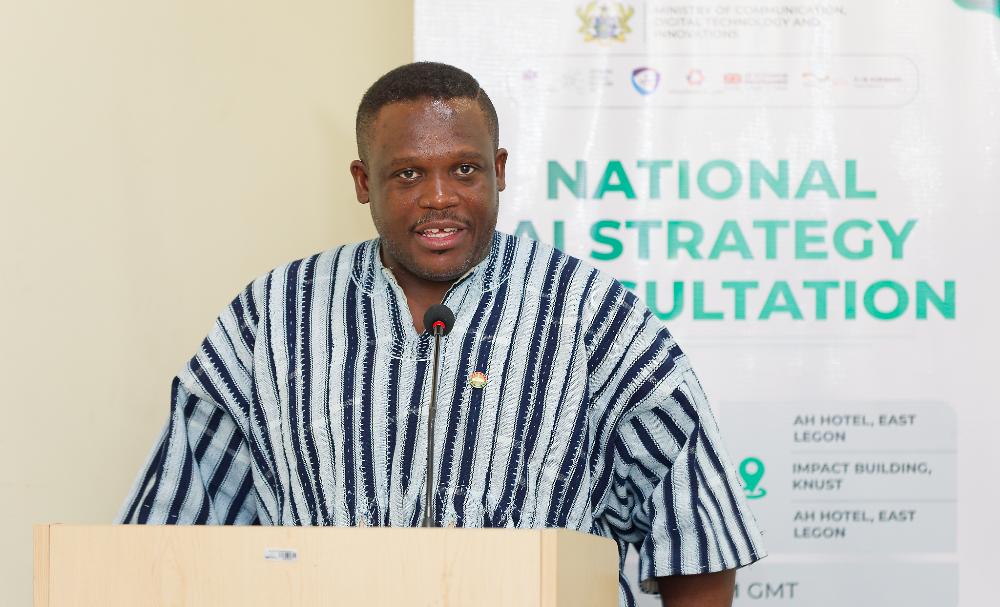
Minister for Environment, Science and Technology Dr Zanetor Agyeman-Rawlings announced the development during a media engagement in Accra on Friday, October 2.
She said the process has begun but stressed that additional legislative and institutional work must still be completed before the Ghana Space Agency becomes fully operational.
The announcement therefore does not mean Ghana already has a functioning national space agency.
It means government has approved the direction and is moving toward creating one through the required legal process.
CABINET APPROVAL CLEARS WAY FOR LEGISLATION
Cabinet approval represents one of the most important stages in establishing the agency.
Government is now expected to advance the necessary legislation and institutional structure.
The 2026 Budget had already stated that Cabinet had approved the Ghana Space Agency Bill, while Ghana’s existing Space Policy provides for the creation of a statutory agency under the ministry responsible for science and technology.
Once the required legislation is completed, the agency would have a formal legal mandate rather than operating simply as a research institute.
GSSTI WOULD BE TRANSFORMED
The Ghana Space Science and Technology Institute currently operates under the Ghana Atomic Energy Commission.
It carries out research and technical work in fields including astronomy, remote sensing, satellite applications and space science.
The proposed reform would elevate that work into a broader national institution.
Instead of concentrating primarily on research, the new agency would have responsibility for coordinating Ghana’s overall space program and regulating activities across government, academia and the private sector.
GOVERNMENT SAYS THIS IS NOT ABOUT PRESTIGE
Agyeman-Rawlings said Ghana’s space ambitions should not be understood simply as an attempt to join countries associated with rockets and prestige projects.
She said the focus should be on solving practical national problems.
That includes using satellite data and geospatial technology to improve decisions in agriculture, disaster management, environmental protection and security.
The minister said the value of satellite technology lies not only in obtaining images but in turning that information into useful decisions.
AGRICULTURE COULD BE A MAJOR BENEFICIARY
Satellite imagery can help farmers and government agencies monitor crops, soil conditions, drought and rainfall.
Remote sensing can identify areas under stress before damage becomes widespread.
It can also help estimate crop production.
Better agricultural information could support food security planning and help farmers prepare for changing weather conditions.
For a country where agriculture remains important to employment and rural livelihoods, these applications could have significant economic value.
FLOOD FORECASTING IS ANOTHER PRIORITY
Ghana has repeatedly experienced serious flooding, particularly in Greater Accra and other urban areas.
Satellite information can help authorities monitor rainfall, drainage systems, land use and flood prone zones.
When combined with weather data and computer modeling, this information can improve early warning systems.
The goal would be to identify risks before communities are flooded rather than reacting only after disaster occurs.
SPACE DATA COULD HELP FIGHT ILLEGAL MINING
Government has also identified illegal mining as one of the areas where satellite technology could be useful.
High resolution imagery can reveal changes to rivers, forest cover and mining sites.
Repeated satellite observations allow authorities to compare changes over time.
This could help identify areas where mining activity is expanding or where water bodies are being degraded.
Satellite data would not replace enforcement on the ground.
But it could help authorities identify where enforcement resources should be deployed.
ENVIRONMENTAL MONITORING WOULD EXPAND
The proposed agency could support monitoring of deforestation, wetlands, coastal erosion and land degradation.
Ghana faces significant pressure on forests and water resources.
Satellite based observation can provide national coverage that would be difficult to achieve using only ground inspections.
Government also plans to combine satellite information with drones, geospatial systems, artificial intelligence and ground based observations.
That could create a more detailed picture of environmental change.
MARITIME SURVEILLANCE COULD IMPROVE
Ghana’s position on the Gulf of Guinea creates another important application.
Satellite systems can help track ships and identify unusual maritime activity.
This can support monitoring of illegal fishing, smuggling and other security threats.
Ghana’s economy depends heavily on maritime trade through ports such as Tema and Takoradi.
Improved maritime awareness could therefore support both security and commerce.
TELECOMMUNICATIONS ALSO PART OF THE PLAN
Space technology is already central to modern telecommunications.
Satellites provide connectivity in areas where terrestrial networks may be difficult or expensive to build.
A national space agency could help coordinate Ghana’s approach to satellite communications and partnerships with international operators.
This does not necessarily mean Ghana would immediately build or operate its own large communications satellite.
The more immediate role would involve policy, coordination, data use and international cooperation.
GHANA IS NOT STARTING FROM ZERO
Ghana already has experience in space science.
The Ghana Space Science and Technology Institute has operated for years.
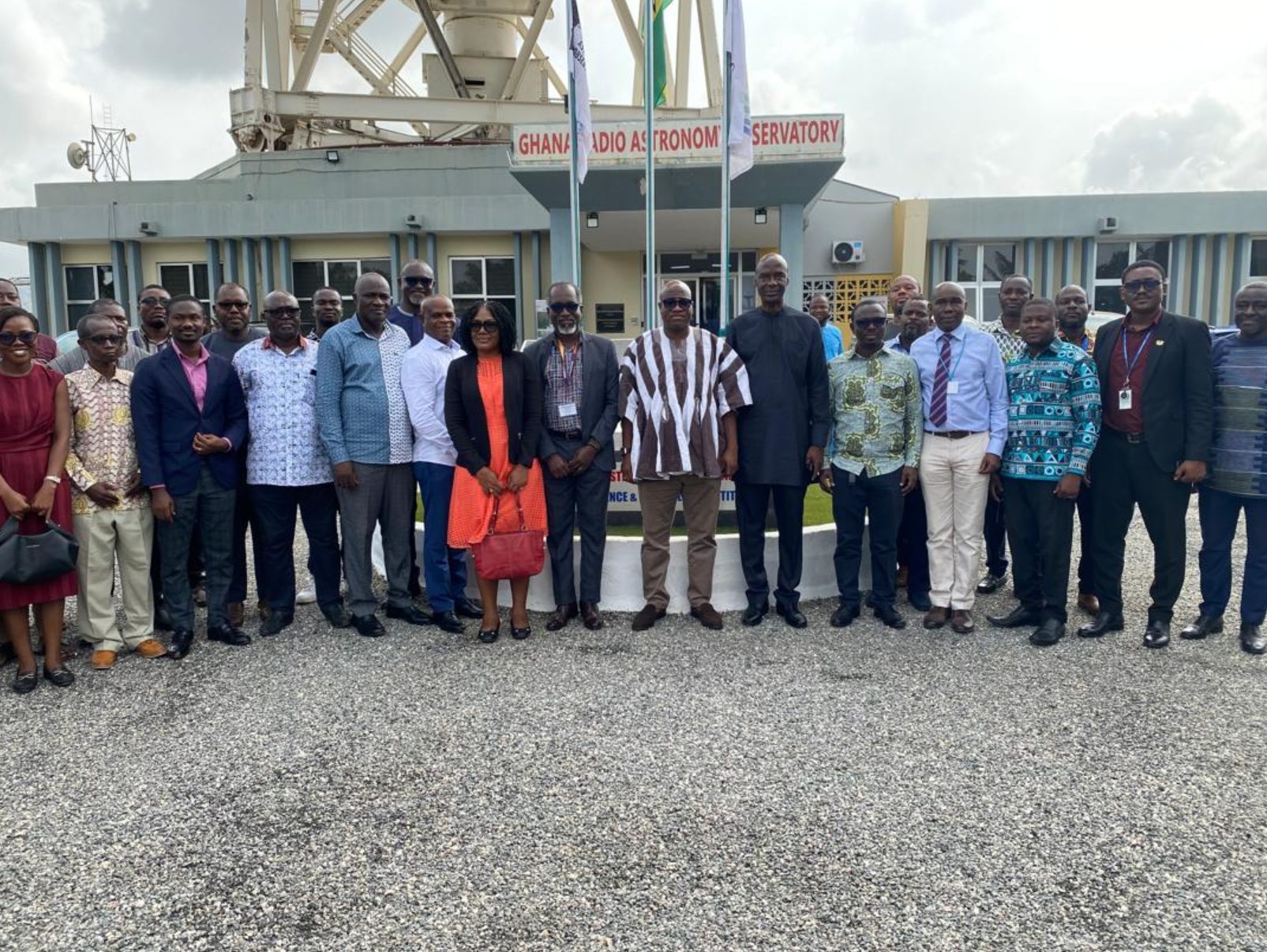
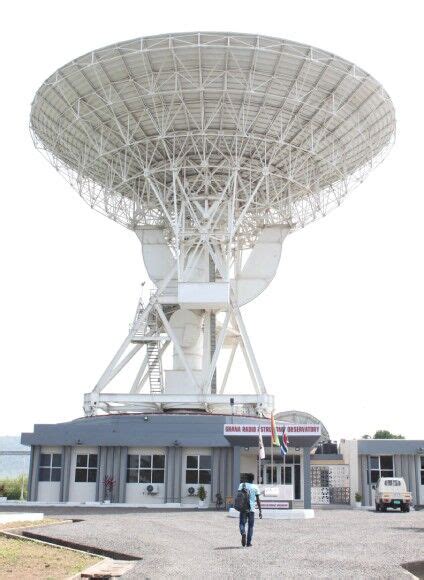
The country also hosts the Ghana Radio Astronomy Observatory at Kuntunse.
The observatory forms part of international radio astronomy research.
Ghanaian researchers have also participated in satellite and remote sensing projects.
The proposed agency would therefore build on an existing scientific base rather than create an entirely new sector.
GHANASAT 1 SHOWED LOCAL CAPABILITY
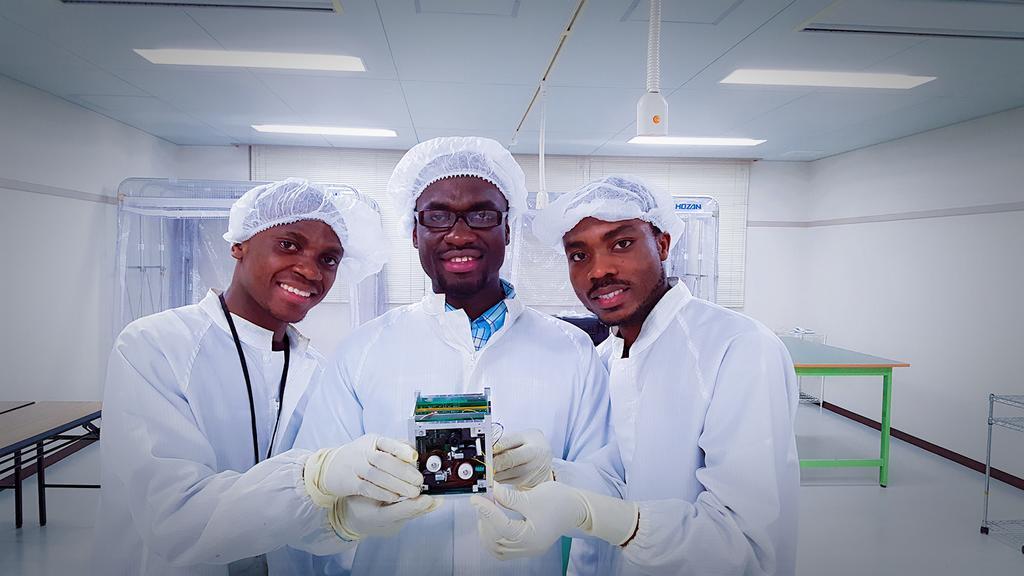
Ghana also gained international attention through GhanaSat 1.
The small CubeSat was developed by Ghanaian students from All Nations University and launched in 2017.
The project demonstrated that Ghanaian researchers and engineers could participate directly in satellite development.
It was not a large national communications satellite.
But it helped build technical experience and encouraged greater interest in space engineering.
HUMAN CAPITAL WILL BE CRITICAL
Agyeman-Rawlings said Ghana’s greatest space asset will ultimately be its people.
Government plans to promote training in aerospace engineering, satellite engineering, astrophysics, remote sensing, artificial intelligence, robotics, data science, telecommunications and cybersecurity.
Space law and policy are also expected to become more important.
A national agency would require not only scientists and engineers but also lawyers, regulators, economists and policy specialists.
UNIVERSITIES EXPECTED TO PLAY MAJOR ROLE
Government wants stronger cooperation between universities, research institutions and industry.
Universities can train engineers and scientists.
Research institutions can develop technologies.
Private companies can turn those technologies into commercial products and services.
Government would provide the policy and regulatory framework.
This model is similar to how emerging space programs operate in several other countries.
PRIVATE SECTOR PARTICIPATION IS PART OF THE PLAN
The government says Ghana’s space ambitions cannot depend entirely on public funding.
Officials want private companies to participate.
Potential commercial opportunities include agriculture, insurance, banking, telecommunications, logistics, mining and disaster management.
For example, insurers can use satellite data to assess crop damage.
Mining companies can use geospatial information for exploration.
Telecommunications companies can expand connectivity through satellite partnerships.
GHANA WANTS A SHARE OF THE GLOBAL SPACE ECONOMY
The global space economy has expanded rapidly.
It includes far more than rockets and astronauts.
Satellite communications, navigation, weather information, mapping and Earth observation generate significant economic activity.
Private companies increasingly provide services once dominated by governments.
Ghana wants to position itself to participate in that economy rather than remain only a consumer of foreign technology.
LOCATION COULD PROVIDE STRATEGIC ADVANTAGES
The minister said Ghana’s location near the equator and along the Gulf of Guinea could provide opportunities.
Equatorial geography can be useful for certain space related activities.
The country’s political stability and scientific institutions could also support international research partnerships.
Government believes Ghana could eventually become a regional hub for space science, Earth observation and satellite data services.
That ambition will depend on investment, skills and infrastructure.
INTERNATIONAL PARTNERSHIPS WILL BE IMPORTANT
Ghana does not intend to build every aspect of its space capability independently.
Government wants partnerships with established space agencies, universities and research institutions abroad.
The minister recently participated in international science and space engagements in Germany.
Such partnerships can provide technical training, research opportunities and access to infrastructure that would be expensive for Ghana to develop alone.
REGULATION WILL BECOME MORE IMPORTANT
A national space agency would also have regulatory responsibilities.
Space activities raise legal questions involving satellite licensing, frequencies, orbital positions, liability and international agreements.
Countries participating in space activities must comply with international rules.
A dedicated agency would give Ghana a central institution responsible for coordinating these obligations.
NATIONAL SECURITY IS PART OF THE MANDATE
Space based information can also support national security.
Satellite imagery can help monitor borders, coastlines and critical infrastructure.
Communications satellites can support secure government operations.
Navigation systems are important for military and emergency services.
Government has listed national security as one of the potential areas where improved space capacity could provide benefits.
The agency’s precise security responsibilities would depend on the final legislation.
CLIMATE CHANGE MAKES EARTH OBSERVATION MORE IMPORTANT
Ghana faces increasing climate risks.
Coastal erosion threatens communities.
Flooding affects cities.
Changing rainfall patterns affect agriculture.
Heat and drought can place pressure on water resources.
Earth observation satellites can provide repeated measurements across large areas.
That information can help governments track changes that may be difficult to detect using local observations alone.
DATA CAPACITY MAY MATTER MORE THAN SATELLITE OWNERSHIP
One of the most important elements of Ghana’s strategy may be its ability to analyze satellite information.
A country does not necessarily need to own every satellite from which it obtains data.
Huge quantities of Earth observation information are available from international partners and commercial providers.
The challenge is developing the technical capacity to process that information and turn it into useful policy.
That is why government is emphasizing data analysis, artificial intelligence and geospatial science.
AGENCY WILL NEED CLEAR FUNDING MODEL
Creating an institution is only the first step.
A functioning space agency requires sustained funding.
Research laboratories need equipment.
Satellite data can be expensive.
Scientists and engineers require training.
International partnerships also require resources.
The final institutional framework will therefore need to establish how the agency will be financed.
Government funding may need to be combined with grants, international partnerships and private investment.
PARLIAMENT WILL HAVE AN IMPORTANT ROLE
Because the agency requires legislation, Parliament is expected to become part of the process.
Lawmakers may examine the agency’s mandate, governance structure, funding and regulatory powers.
That process could result in changes before the final law is approved.
The agency therefore remains a proposal moving through formal establishment rather than a completed institution.
GHANA SPACE POLICY ALREADY PROVIDES THE FOUNDATION
Ghana’s Space Policy sets out many of the goals now being discussed.
It calls for coordinated development of space science and technology.
It also emphasizes research, infrastructure, commercialization, international cooperation and human capital.
The proposed Ghana Space Agency would become the main institution responsible for implementing that policy.
This means Friday’s announcement is part of a longer national strategy rather than an entirely new idea.
GOVERNMENT SAYS THE FOCUS MUST BE PRACTICAL
Agyeman-Rawlings emphasized that the agency should produce measurable benefits.
The aim is not simply to place Ghana’s name alongside countries with national space institutions.
Government wants satellite and geospatial technology to influence everyday development decisions.
That could mean helping farmers predict drought.
It could mean identifying illegal mining activity.
It could mean improving flood warnings.
It could also mean tracking vessels or monitoring coastal erosion.
WHAT GHANA IS NOT ANNOUNCING
The announcement should not be misunderstood as confirmation that Ghana is immediately launching astronauts, constructing rockets or preparing a major national satellite launch.
No such program was announced.
The immediate development is institutional.
Government is building the legal and organizational framework for a national agency.
Specific missions and infrastructure projects would come later.
WHAT HAPPENS NEXT
The next stage will be the completion of legislation and the institutional structure for the Ghana Space Agency.
Government will also continue consulting universities, research institutions, private companies and international partners.
Priority infrastructure and training needs are expected to be identified.
The agency’s final mandate, budget and governance arrangements will become clearer as the legislation advances.
For now, the Cabinet decision marks an important step.
Ghana already has scientists, research institutions and experience using space technology.
Government now wants to place those capabilities under a single national institution with a broader mandate.
If Parliament completes the required legal framework, the Ghana Space Agency would become the central institution responsible for coordinating how the country uses space science and technology for economic development, environmental protection and national security.