GHANA NAVY INTERCEPTS TWO BOATS CARRYING 117 SACKS OF SUSPECTED INDIAN HEMP WORTH OVER US$1 MILLION AT ADA
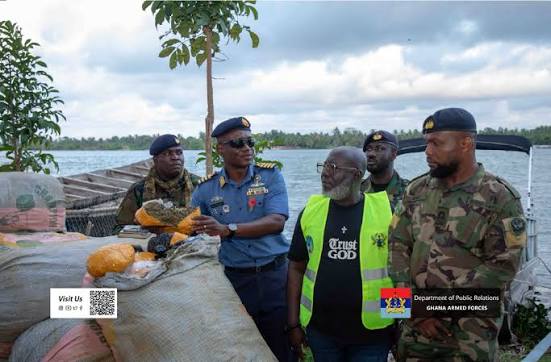
The Ghana Navy's Riverine Command, working with NACOC and National Security, intercepted two wooden boats carrying 117 sacks of suspected Indian hemp at the Ada Estuary on November 5. The consignment weighed approximately 4.7 tonnes and had an estimated street value exceeding US$1 million. The suspects abandoned the boats and escaped. Authorities believe the substances were being transported out of Ghana.
The Ghana Navy has intercepted two wooden boats carrying 117 sacks of substances suspected to be Indian hemp at the Ada Estuary in the Greater Accra Region, in an intelligence-led operation that prevented an estimated US$1 million consignment of suspected narcotics from being transported out of the country. The seizure, carried out by the Navy’s Riverine Command in collaboration with the Narcotics Control Commission (NACOC) and National Security, involved approximately 4.7 tonnes of dried substances believed to be cannabis.
The operation took place in the early hours of Thursday, November 5, 2026, when naval personnel pursuing the boats forced the occupants to abandon the vessels and their cargo before escaping. According to information released by the Ghana Navy, the consignment consisted of 117 sacks containing dried leaves packaged in more than 80 individual parcels per sack. The estimated street value of the seized material exceeds US$1 million.
The Navy’s account indicated that the operation was based on intelligence gathered by the collaborating security agencies. Preliminary information suggested that the substances were being transported out of Ghana, although the authorities have not publicly established the final destination or identified the individuals responsible for organising the shipment.
Speaking to journalists at a press briefing in Ada, the Director of Naval Operations at Naval Headquarters, Captain Festus Osei Brobbey, said the suspects abandoned the two wooden boats and their cargo after noticing the approaching naval patrol team. The occupants subsequently fled, leaving the vessels and suspected narcotics behind. No arrests were announced in connection with the interception, and the authorities have not disclosed whether investigators have identified the boat operators or other individuals suspected of financing and coordinating the attempted transportation.
Further details published by the Ghana News Agency indicated that the boats had been concealed along the banks of the Volta Lake, approximately 200 metres from Dalave village. The naval team reportedly located the vessels at about 1 a.m. and later transported them to Ada-Foah, where they were searched at approximately 5 a.m. in the presence of officials from NACOC. The search uncovered all 117 sacks.
The substances have been described by the Navy as suspected Indian hemp, a common term for cannabis. Their precise identity and composition will need to be established through the appropriate examination by the narcotics authorities. The estimated market value announced by the Navy is therefore based on the suspected nature and quantity of the consignment rather than a publicly reported final laboratory confirmation.
Captain Brobbey explained that the interception formed part of efforts to strengthen security along the Volta Lake and surrounding communities, where the Navy has deployed a riverine detachment to improve surveillance and prevent the waterways from being exploited for illegal activities. He emphasised that sustained monitoring, intelligence gathering and cooperation with other security institutions were necessary to identify suspicious movements and disrupt criminal operations.
The operation also relied on information provided by members of the local community. The Director of Naval Operations commended residents for supplying timely information that assisted security agencies, stressing the importance of public cooperation in identifying and reporting activities that could threaten the security of the country's waterways.
The Ada East District Chief Executive and Chairman of the District Security Committee, Kenneth Kofi Kabu Kanor, also commended the Navy and its collaborating agencies for the interception. He warned residents against allowing the Volta Lake to become a transit corridor for illicit drugs and encouraged community members to report suspicious movements to the appropriate authorities.
Kanor further assured the Navy of the Assembly's support for security operations in the district and called on relevant government ministries and agencies to provide the logistical assistance required to strengthen surveillance and enforcement activities. He also raised concerns about drug abuse and its effects on families and communities, arguing that preventing the transportation of illicit substances through the area should remain a shared responsibility.
Ada occupies a strategically important position because of its connection to the Volta Lake, the estuary and the Atlantic coastline. These waterways support fishing, transportation and other economic activities, but their geographical connections can also present security challenges when criminal networks attempt to exploit them for the movement of prohibited goods. Monitoring the movement of boats and cargo across the area therefore requires coordination between the Navy, law enforcement agencies, local authorities and communities.
The latest interception highlights the importance of riverine security in Ghana's wider efforts to prevent drug trafficking. While attention is often focused on major seaports, airports and land borders, inland waterways can also be used to move illicit consignments between communities and towards coastal routes. The use of wooden boats in the Ada operation illustrates how suspected traffickers may attempt to exploit ordinary water transport infrastructure to move cargo while avoiding conventional checkpoints.
The involvement of NACOC is particularly important because the seizure requires further investigation beyond the physical recovery of the suspected narcotics. Investigators will need to establish the identity of the substances, trace their origin and determine who owned, financed or organised the attempted shipment. The circumstances under which the boats were abandoned may also provide leads, particularly if the vessels contain identifying information or other evidence that can help establish who operated them.
The authorities have not yet announced whether the seized boats will be subjected to forensic examination or whether additional intelligence has emerged about the people who escaped. They have also not disclosed the precise route the consignment was expected to follow after leaving the Ada area. The Navy's preliminary assessment that the substances were being transported out of Ghana points to a possible cross-border trafficking operation, but the intended destination remains subject to confirmation by investigators.
The seizure also comes amid continuing concerns about the movement of illicit drugs through West African countries and the use of coastal and inland transport routes by trafficking networks. Ghana's geographical position along the Gulf of Guinea makes maritime security an important part of the country's efforts to protect its borders and prevent illegal shipments. The ability of security agencies to detect suspicious movements before consignments reach their intended destinations depends heavily on intelligence sharing, patrol capacity and cooperation with communities located along waterways.
Captain Brobbey warned individuals financing, sponsoring or organising drug trafficking activities against exploiting Ghana's maritime corridors, adding that the Navy would intensify surveillance and monitoring operations to identify and disrupt criminal networks. He reaffirmed the service's commitment to working with other security institutions to protect Ghana's territorial waters and inland waterways.
For residents of Ada and surrounding communities, the interception is a reminder of the importance of protecting local waterways from criminal exploitation while preserving their role in legitimate economic activity. The District Assembly's call for stronger cooperation reflects the view that security operations cannot depend solely on patrols, particularly in areas where local residents are often the first to notice unusual movements.
The immediate outcome of the operation is the recovery of two boats and 117 sacks of suspected narcotics valued at more than US$1 million, with the people transporting the consignment escaping before they could be arrested. The next stage will depend on the laboratory examination of the seized substances and further investigations aimed at identifying those behind the attempted shipment. Although the interception has disrupted the movement of a substantial suspected drug consignment, establishing the source, ownership and intended destination of the cargo will be important in determining whether the operation can lead to wider action against the network responsible.