
GHANA READY FOR MORE SOUTH AFRICA EVACUATIONS IF SITUATION WORSENS ABLAKWA SAYS
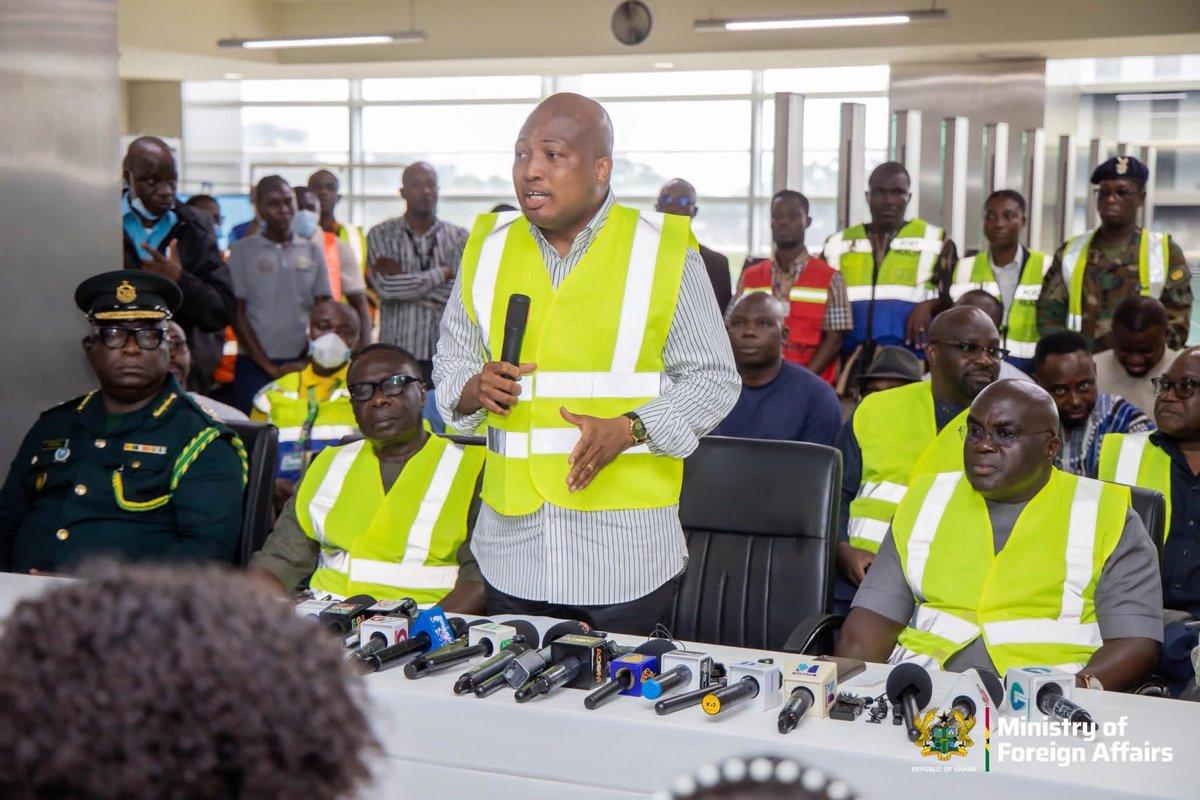
Foreign Affairs Minister Samuel Okudzeto Ablakwa says Ghana has not ruled out another evacuation of citizens from South Africa if anti immigrant violence worsens. The Pretoria mission has described the security environment as dire, while government officials continue monitoring developments following protests in Johannesburg and Durban. Ghana previously evacuated 1,964 citizens from South Africa earlier in 2026.
Foreign Affairs Minister Samuel Okudzeto Ablakwa says Ghana is prepared to evacuate more of its citizens from South Africa if the current anti immigrant unrest deteriorates, after the Ghana High Commission in Pretoria described conditions on the ground as a dire situation. Ablakwa said the government has not closed the door on another emergency evacuation and will intervene if renewed violence places Ghanaian nationals at risk.
Speaking on TV3 on Saturday, October 10, Ablakwa said Ghana’s diplomatic mission in Pretoria had sent an updated assessment to the Foreign Affairs Ministry as anti immigrant sentiment continued to rise in parts of South Africa. The ministry’s Consular and Humanitarian Affairs Bureau is monitoring developments and assessing the welfare of Ghanaians who may require help, particularly after protests in Johannesburg, Durban and other areas produced arson, looting, road disruptions and attacks on foreign owned businesses.
Ablakwa said the current tensions are partly connected to public reaction following a South African Constitutional Court ruling concerning access to the asylum system. The court held that asylum seekers should not automatically be prevented from lodging claims solely because they entered the country illegally. South African authorities have repeatedly stressed that the decision does not grant automatic refugee status, permanent residency or citizenship to undocumented migrants, but misinformation surrounding the ruling has contributed to protests and anger in some communities.
The foreign minister said Ghana remains ready to act if there is another wave of violence. He stressed that the completion of an earlier evacuation exercise does not mean the government has withdrawn its protection arrangements for citizens who remain in South Africa. According to Ablakwa, if the situation worsens and Ghanaians require assistance, the government will move in again.
Ghana has already carried out one of its largest recent emergency evacuations from South Africa. Between May and September 2026, the government evacuated 1,964 Ghanaians following a series of xenophobic and anti immigrant attacks. The operation involved chartered and commercial flights, ground transport, accommodation, feeding and medical assistance. Government figures show the exercise cost approximately GH¢49.7 million, with part of the expense supported by a GH¢16 million contribution from Engineers and Planners.
The earlier intervention followed a period of rising violence against African migrants. Ghanaian authorities later confirmed that four Ghanaian nationals died in South Africa between April and July during incidents linked to the wider anti foreigner climate. Those deaths and reported attacks on property led Accra to intensify diplomatic engagement with Pretoria and eventually organise evacuation flights for citizens who wanted to leave.
The current unrest has again raised concerns that foreign nationals could become targets if demonstrations escalate. Protests in Johannesburg and Durban have included burned vehicles, looting of foreign owned shops and clashes with police. South African officials have attributed part of the violence to misinformation about immigration policy and the asylum ruling, while police have increased deployments in affected areas.
The Ghana High Commission has already advised nationals in Johannesburg, Durban and surrounding areas to avoid protest sites, reduce non essential travel and remain vigilant. The mission warned that demonstrations could produce sudden road closures, congestion and confrontations between protesters and security forces. Ghanaians have also been encouraged to remain in contact with community leaders and diplomatic officials and to seek police assistance if threatened.
Ablakwa said the government is treating the situation seriously because the latest developments come only weeks after the previous evacuation exercise ended. The fact that anti immigrant tensions have re emerged so quickly has reinforced concerns that the underlying hostility has not been resolved and could return in waves.
The minister also said Ghana has taken the issue beyond bilateral discussions with South Africa. Accra has petitioned the African Union over attacks on foreign nationals, and Ablakwa said the continental body has responded. The matter is expected to be discussed at the African Union summit scheduled for January 2027. He declined to disclose extensive details about the latest diplomatic exchanges, saying Ghana does not want to undermine the discussions before the matter reaches the AU.
Ghana’s concern is not directed at South Africa as a whole but at recurring violence and intimidation targeting migrants. South African authorities have repeatedly condemned attacks on foreigners and have said immigration enforcement must remain within the law. However, groups campaigning against undocumented migration have continued to mobilise in major cities, and some demonstrations have expanded into broader hostility toward African nationals regardless of their legal status.
Ablakwa said Ghana’s 72 diplomatic missions are under instructions to monitor the welfare of citizens in their respective countries and to intervene when nationals face serious threats. He said more than 6,300 Ghanaians have been assisted out of distress situations around the world since last year, including evacuations or repatriations from South Africa, Libya, Myanmar and Cambodia.
The immediate focus remains South Africa because of the size of the Ghanaian community and the speed with which anti migrant demonstrations can turn violent. Johannesburg and Durban are major commercial centres with large migrant populations, making disruptions in their central business districts particularly significant for foreign workers, traders and families.
The South African government has meanwhile withdrawn an asylum processing directive introduced after the Constitutional Court ruling, citing pressure on refugee reception offices and concerns about staff safety and public order. Officials say they are developing a new legal response that complies with the court judgment while attempting to restore stability and reduce confusion around asylum procedures.
For Ghana, the decision to keep the evacuation option open reflects lessons from the earlier crisis. The previous exercise required extensive coordination with South African authorities, charter flight approvals, airport logistics, accommodation and support for evacuees after arrival in Ghana. By signalling preparedness now, the government appears to be trying to avoid delays if conditions deteriorate suddenly.
There is currently no announcement of a new evacuation flight, and Ablakwa did not say that Ghanaian nationals should immediately leave South Africa. The government’s present position is one of heightened monitoring and preparedness. A fresh evacuation would depend on a significant deterioration in security and on whether Ghanaian citizens request or require assistance.
The distinction is important because the current advisory remains precautionary. Although the security environment is tense and the Pretoria mission has described it as dire, the government has not declared an emergency evacuation phase. Ghanaian nationals are being asked to avoid hotspots, monitor official information and remain in contact with the mission while authorities assess developments.
The latest statement nevertheless marks an escalation in the government’s level of concern. Only weeks after almost 2,000 citizens were brought home from South Africa, Ghana is again considering the possibility that another group may need to be removed if anti immigrant violence spreads.
Ablakwa says the government will continue watching conditions closely and will not hesitate to intervene if Ghanaian lives are placed at risk. For now, no new evacuation has been launched, but the machinery that supported the previous operation remains relevant as Accra prepares for the possibility that the situation in South Africa could deteriorate again.