GHANA STEPS IN AFTER 15-YEAR-OLD JAVITS FRIMPONG IS SHOT DEAD ON WAY TO SCHOOL IN NEW YORK
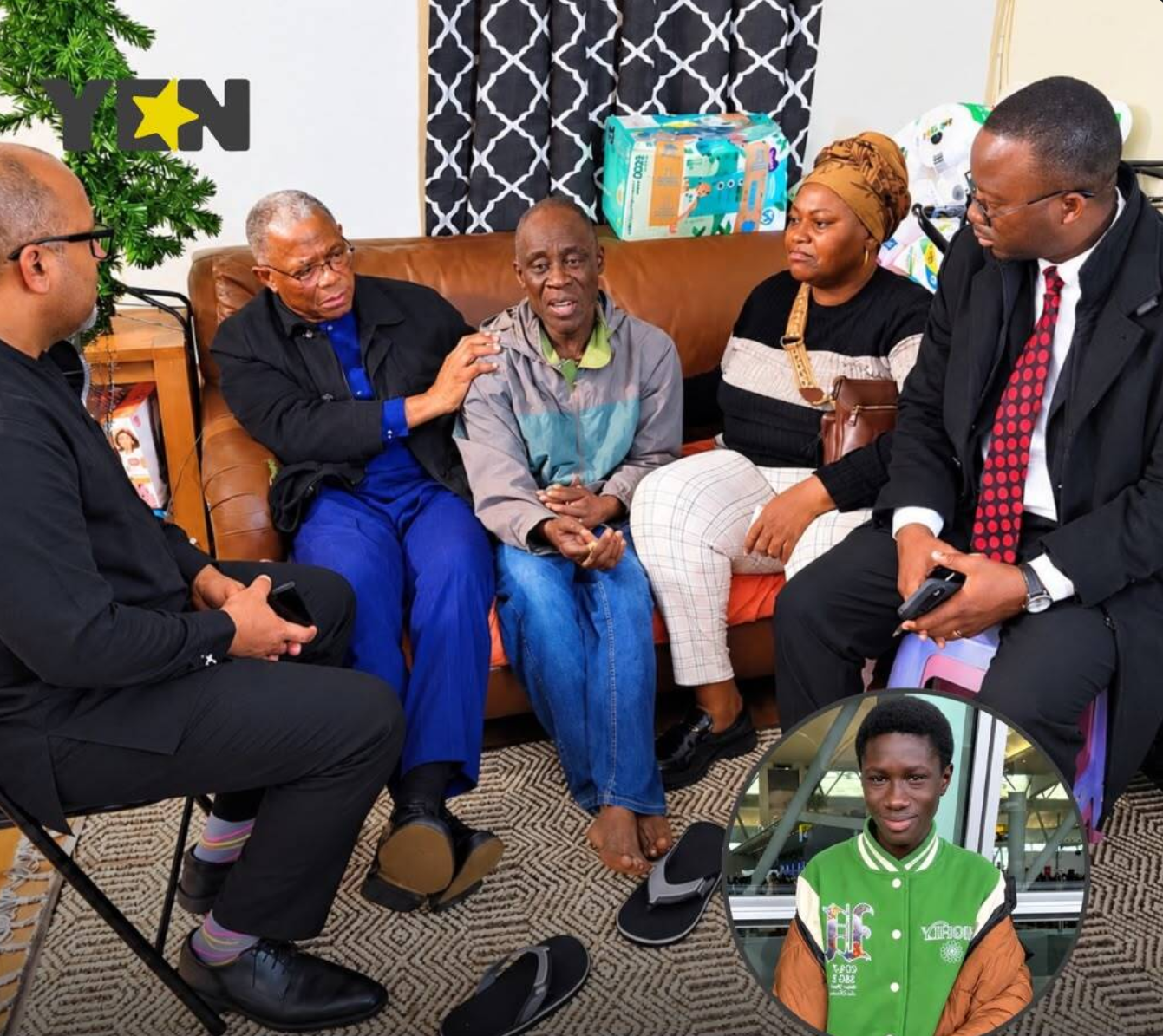
Senior officials from Ghana’s Permanent Mission to the United Nations have visited Thomas Frimpong, father of 15-year-old Javits Badu Nkansah Frimpong, after the teenager was fatally shot while walking to school in the Bronx on October 29. The delegation included Ben Dotsei Malor, Anthony El-Adas and Mawuli Klu, while Foreign Affairs Minister Samuel Okudzeto Ablakwa spoke with the grieving father by telephone and promised government support. Ghana says it will work with U.S. authorities and provide legal and consular assistance as police continue investigating the killing.
Ghana’s government has stepped directly into the investigation surrounding the killing of 15-year-old Ghanaian teenager Javits Badu Nkansah Frimpong in New York, with senior officials from the country’s Permanent Mission to the United Nations visiting his grieving father in the Bronx and Foreign Affairs Minister Samuel Okudzeto Ablakwa promising that the state will work with American authorities to ensure those responsible are brought to justice. Javits was fatally shot on the morning of Thursday, October 29, while walking to school in the Bronx, and his death has triggered grief in both Ghana and the United States while raising urgent questions about the circumstances of the attack and the safety of the Ghanaian family now confronting an unimaginable loss.
The condolence delegation to Javits’ father, Thomas Frimpong, included Ghana’s Deputy Permanent Representative to the United Nations, Ben Dotsei Malor, Consul General Anthony El-Adas and Vice Consul-General Mawuli Klu. The officials visited the bereaved father at his home to convey the condolences of Ghana’s Permanent Representative, Ambassador Samuel Kumah, the entire Mission, the government and Ghanaians more broadly. During the visit, Foreign Affairs Minister Samuel Okudzeto Ablakwa called Mr Frimpong directly, offering words of comfort and assuring him that the government would not leave the family to navigate the tragedy and legal process alone.
The Ministry of Foreign Affairs has also publicly condemned the killing and called on authorities in the Bronx to conduct a thorough investigation. Ghana says its Permanent Mission in New York will work with U.S. law-enforcement and other relevant authorities while providing whatever legal and consular assistance the family requires. Ablakwa has made clear that the government intends to follow the case closely, saying Ghana would pursue justice and would not allow those responsible to escape accountability if they are identified and prosecuted.
The tragedy unfolded shortly after 9 a.m. near East 171st Street and Third Avenue, close to Crotona Park in the Bronx. New York police found Javits conscious but suffering from a gunshot wound to the abdomen, and he was rushed to St. Barnabas Hospital, where he later died. Investigators were reported to be searching for several teenagers seen fleeing the area after the shooting, but no arrests had been announced in the immediate aftermath. The motive remains under investigation.
Surveillance footage obtained in the area reportedly showed a teenager running while another person dressed in dark clothing appeared to pursue him shortly before Javits collapsed. Police sources told New York media that as many as three young males may have fled the scene following the shooting. Those details have become important to the investigation as detectives attempt to identify everyone who was present and determine whether Javits was specifically targeted.
Javits’ father has told U.S. media that his son had previously complained about being bullied at school, saying the teenager had raised the issue with school officials. That allegation has drawn considerable attention because it could help investigators understand whether the shooting was linked to an earlier dispute. However, law-enforcement authorities have not yet publicly confirmed that bullying caused the attack, and the circumstances remain under investigation. Any connection between the reported bullying and Javits’ death should therefore be treated as a concern raised by his father rather than an established police finding.
Thomas Frimpong described his son as quiet and committed to attending school, telling reporters that Javits had moved from Ghana to the United States in 2025 to live with him. He said the teenager’s principal informed him after the shooting, turning what had begun as an ordinary school day into a devastating family tragedy. The teenager’s mother, Doris Adu Gyamfi, remains in Kumasi, according to Ghana’s Foreign Affairs Ministry, leaving the family separated across two countries as they mourn his death and await progress in the investigation.
The involvement of Ghana’s government reflects the seriousness with which Accra is treating the case. The Foreign Affairs Ministry has said the safety and dignity of Ghanaian citizens abroad remain a government responsibility and that consular assistance will be provided when nationals face serious difficulties overseas. In this case, that commitment is expected to involve communication with U.S. authorities, legal guidance for the family and continued diplomatic monitoring of the police investigation.
President John Dramani Mahama has also been briefed on the case, according to the Ghana Mission’s account of the condolence visit, and the government says he directed officials to provide the family with the assistance it needs. The intervention places the killing at the centre of Ghana’s diplomatic attention in New York and gives the family direct access to officials capable of communicating with city, state and federal institutions where necessary.
For Ghanaian families living abroad, such consular intervention can become particularly important when a serious crime occurs because grieving relatives may suddenly find themselves dealing with unfamiliar police procedures, legal systems, hospital documentation, media attention and funeral arrangements. Diplomatic missions cannot control criminal investigations, but they can help ensure families receive information, understand their rights and communicate effectively with local authorities.
The Ghanaian government’s demand for justice therefore does not mean Accra is taking over the investigation. The homicide remains under the jurisdiction of New York law enforcement, which will determine who is responsible, what charges may be filed and whether the evidence supports prosecution. Ghana’s role is diplomatic and consular: maintaining pressure for a thorough investigation, supporting the bereaved family and ensuring its citizens are not left without institutional assistance.
That distinction is especially important while the investigation remains open. Early reporting can generate intense speculation, particularly when the victim is a child and the killing occurs in broad daylight. The father’s account of prior bullying may ultimately prove relevant, but detectives must still establish whether the people involved in that earlier dispute are connected to the shooting. Surveillance evidence, witness interviews, school records, social-media communications and forensic evidence may all become important before investigators determine motive.
The possibility that other teenagers were involved has also intensified attention on the case. New York police have been searching for young suspects seen leaving the area, but until formal identifications or arrests are announced, news organisations should avoid naming or accusing individuals who have not been publicly identified by law enforcement.
The killing occurred near a residential neighbourhood and close to the route Javits used to travel to school. That setting has added to public concern because the teenager was not reported to have been involved in a late-night confrontation or high-risk activity; he was simply making his way to school in the morning when he was shot. His age and the ordinary circumstances surrounding his journey have made the tragedy particularly difficult for relatives and community members to comprehend.
The death has also prompted renewed discussion of youth violence in New York, although citywide and neighbourhood-level trends can differ significantly from individual incidents. Local reporting noted that shootings and murders in the area had declined compared with the previous year, illustrating how a single devastating case can occur even amid broader statistical improvement. For the Frimpong family, however, those trends offer little comfort because their loss is personal and irreversible.
The teenager’s death has resonated strongly in Ghana because many Ghanaian families have relatives living in the United States, and migration frequently separates parents, children and extended families across continents. Javits had only recently moved to the U.S., according to his father, making the circumstances of his death even more painful for relatives who expected his move to create new educational and personal opportunities.
The government’s response therefore carries symbolic importance beyond this single family. By sending senior Mission officials and placing the Foreign Affairs Minister directly in contact with the father, Accra is signalling that the death of a Ghanaian citizen abroad will receive official attention, particularly where the circumstances involve serious violence and an unresolved criminal investigation.
The Mission’s delegation was also intended to offer more than formal diplomatic condolences. Consul General Anthony El-Adas conveyed the Mission’s continued solidarity, while the officials made clear that assistance would remain available beyond the initial visit. That ongoing support will matter as the family navigates funeral arrangements and any future criminal proceedings that may follow arrests.
If suspects are arrested and charged, the case could continue for months or longer through New York’s criminal justice system. The family may be asked to attend hearings, communicate with prosecutors or provide information relevant to the victim’s background. Ghanaian consular officials could play an important role in ensuring Thomas Frimpong and relatives in Ghana understand developments as the case progresses.
The Foreign Affairs Ministry has already said it stands ready to provide appropriate legal assistance. That could include helping the family access lawyers or victim-support resources, although the exact form of assistance has not yet been publicly detailed. Government Communications Minister Felix Kwakye Ofosu has also said authorities are monitoring the proceedings to ensure the family receives appropriate legal representation.
The death has inevitably raised questions about whether school authorities were aware of the bullying concerns described by Javits’ father and whether any action was taken. Those questions remain separate from the homicide investigation unless evidence establishes a connection. It would be premature to conclude that school officials could have prevented the shooting or that the alleged bullying directly caused the killing.
What is established is that Thomas Frimpong says his son had complained that another student was disturbing him and had reported those concerns. Investigators may examine that history as one possible lead among several, but police have not publicly announced a motive.
The lack of arrests in the immediate aftermath means detectives remain focused on identification and evidence gathering. Witnesses in densely populated urban areas can be crucial, particularly when shootings occur during daylight hours. Surveillance cameras from nearby homes, businesses and traffic infrastructure may also provide investigators with movement patterns before and after the shooting.
The Ghanaian government’s insistence on a thorough investigation could help ensure sustained attention as the case moves beyond the initial news cycle. High-profile crimes often generate intense media coverage for several days before public interest shifts elsewhere, but families can wait much longer for answers. Diplomatic follow-up can help maintain communication between the bereaved family and authorities even after public attention declines.
For Javits’ father, however, the immediate reality is grief rather than diplomacy. He has lost a teenage son who had been living with him for barely a year, and his public comments convey both shock and frustration as he tries to understand why the teenager was targeted.
The government has acknowledged that emotional dimension. Ablakwa’s message to the family went beyond procedural assurances, describing the killing as deeply distressing and telling the father that Javits did not deserve what happened to him. The Mission’s visit similarly sought to communicate national solidarity rather than simply provide administrative support.
The tragedy has also reunited, through grief, a family spread between New York and Kumasi. Javits’ mother and relatives in Ghana now face the difficulty of mourning from thousands of kilometres away while decisions are made about investigations, funeral arrangements and the possible return or burial of the teenager’s remains.
Ghana’s consular officials may become central to those logistical arrangements as well. When citizens die abroad, diplomatic missions often assist with documentation, liaison with local authorities and procedures involving remains, although the specific arrangements for Javits have not yet been publicly announced.
The case is likely to remain one of the Ghanaian government’s most closely watched consular matters in the United States in the coming weeks because it involves the violent death of a minor and an unresolved search for suspects.
The clearest official position is that Ghana wants justice pursued through the American legal system. The government has not accused any identified individual or institution of responsibility. Instead, it has asked Bronx authorities to complete a thorough investigation and hold whoever is responsible accountable.
That approach allows the investigation to proceed without diplomatic speculation while still placing pressure on authorities to treat the killing seriously.
For the New York Police Department, the priority remains identifying the people seen fleeing the scene and determining what motivated the attack. For Ghana’s Mission, the priority is ensuring the family is supported and kept informed. For the Frimpong family, the priority is far more fundamental: understanding why a 15-year-old who left home for school never returned.
The condolence visit therefore marks the beginning rather than the end of Ghana’s involvement. Officials have promised to remain engaged with U.S. authorities and support the family throughout the process.
As the investigation continues, the most responsible reporting remains careful and restrained. Javits was shot and killed on his way to school; police are searching for suspects; his father has raised concerns about prior bullying; and Ghana’s government has formally committed itself to supporting the family and pursuing justice through cooperation with American authorities.
Everything beyond those established facts remains part of an investigation that has yet to deliver the answers Thomas Frimpong and his family are waiting for.