
GHANA WARNS NATIONALS IN SOUTH AFRICA AS ANTI MIGRANT PROTESTS RAISE SECURITY FEARS
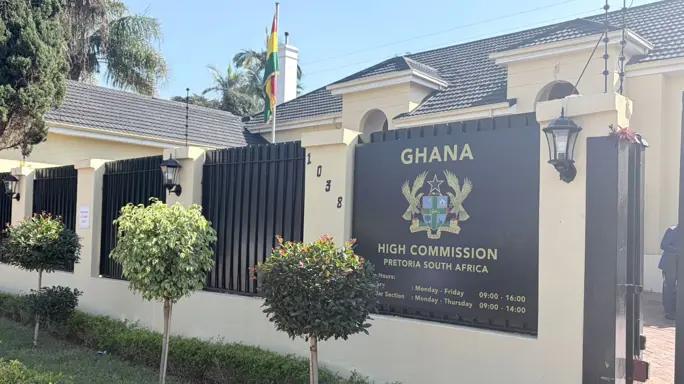
Ghana’s High Commission in Pretoria has warned Ghanaians in Johannesburg, Durban and nearby areas to avoid protest locations, limit unnecessary travel and remain alert as anti migrant demonstrations continue across parts of South Africa. The mission says the protests could cause road closures, traffic disruption and clashes with police, although no Ghanaian casualty has been confirmed in the current unrest.
The Ghana High Commission in Pretoria has issued a security warning to Ghanaians living, working or travelling in Johannesburg, Durban and surrounding areas as anti migrant protests continue to disrupt parts of South Africa and raise concerns over possible clashes, road closures and attacks on foreign nationals. In an advisory dated October 10, 2026, the mission urged Ghanaians to avoid protest locations, reduce unnecessary movement into affected central business districts and remain alert to changing security conditions.
The warning follows several days of unrest linked to South Africa’s increasingly tense immigration debate. Demonstrations have been reported in the central business districts of Johannesburg and Durban, with protesters in Johannesburg expected to converge on the Constitutional Court. The High Commission warned that the gatherings could lead to heavy traffic, restricted movement, road closures and possible confrontations between demonstrators and law enforcement officers.
Ghanaian nationals have been advised to stay away from large crowds and any locations where disturbances are taking place. The mission also recommended using alternative routes where necessary and closely following updates from the South African Police Service, municipal authorities and local traffic agencies before travelling through affected areas.
The High Commission specifically urged Ghanaians not to engage protesters or become involved in confrontations, even if provoked. Nationals have also been encouraged to remain in regular contact with relatives and Ghanaian community leaders, particularly when travelling through Johannesburg, Durban or other areas where demonstrations could spread with little warning. Anyone facing threats, intimidation or violence has been advised to contact the nearest police station and inform the High Commission if consular assistance is required.
The current unrest is part of a broader wave of anti migrant demonstrations that has intensified across South Africa in 2026. Recent protests in Johannesburg and Durban have turned violent, with vehicles set on fire and foreign owned businesses looted in some areas. Reuters reported that at least 24 vehicles were torched during recent unrest, while authorities increased police deployments in an effort to restore order.
Some of the latest protests were triggered by anger over asylum processing and a Constitutional Court ruling that said asylum seekers should not automatically be prevented from lodging claims solely because they entered South Africa illegally. The South African government has stressed that the court decision does not grant automatic refugee status, residency or citizenship to undocumented migrants, but officials say misinformation surrounding the ruling contributed to public anger and demonstrations.
South Africa’s Department of Home Affairs later withdrew a directive connected to asylum processing after refugee reception offices became overwhelmed and authorities raised concerns about security and public order. The government said the withdrawal was necessary while officials work on a new approach that complies with the Constitutional Court ruling without creating further pressure on immigration offices.
The unrest has again placed African migrants living in South Africa in a vulnerable position. Foreign nationals have repeatedly become targets during periods of anti migrant agitation, with demonstrators sometimes accusing migrants of taking jobs, placing pressure on public services or contributing to crime. Many of those claims are contested and are not supported by broader social research, but they have continued to fuel hostility in some communities.
Ghanaians have already been affected by previous episodes of anti migrant violence in South Africa this year. In June, Ghanaian national Bashiru Isak was killed in Cape Town during unrest linked to anti immigrant tensions, prompting calls from Ghanaian authorities for justice and increased protection for citizens living in the country.
Large numbers of Ghanaian nationals have also returned home from South Africa in recent months. In June, South Africa’s Border Management Authority confirmed the repatriation of 663 Ghanaian nationals through OR Tambo International Airport, although many of those cases involved immigration status issues rather than direct involvement in protest violence.
The latest advisory does not say that Ghanaians are currently being specifically targeted in Johannesburg or Durban, and there has been no confirmed report from the High Commission of Ghanaian casualties arising from the current round of demonstrations. The warning is therefore precautionary, based on the possibility that anti migrant protests could become unpredictable or expand into areas where Ghanaian nationals live and work.
That distinction is important because the mission has also cautioned members of the Ghanaian community against circulating unverified information that could create unnecessary panic. Officials want residents to rely on verified security updates rather than social media rumours, particularly during periods when videos or photographs from older incidents may be recirculated as though they are current.
The High Commission said the safety and welfare of Ghanaian nationals remains its priority and urged community members to remain calm while complying with lawful instructions from South African police and other security agencies. It also asked anyone requiring emergency consular assistance to contact the mission and provide details of any security incident affecting them.
The situation remains fluid because protest activity can move quickly between neighbourhoods and major transport routes. Johannesburg and Durban are among South Africa’s largest urban centres, and demonstrations in their central districts can rapidly affect public transport, commercial activity and road access far beyond the immediate protest location.
For Ghanaian residents who depend on those routes for work or business, the High Commission’s guidance is to delay unnecessary travel where possible and avoid attempting to pass through crowds or police controlled areas. Travellers arriving in South Africa are also being encouraged to confirm road conditions and transport arrangements before moving through affected sections of the two cities.
The warning comes at a time when anti migrant sentiment remains one of South Africa’s most sensitive social and political issues. The country continues to attract migrants from across Africa because of its larger economy and employment opportunities, but high unemployment, inequality and pressure on public services have created an environment in which foreigners are frequently blamed for broader economic problems.
South African authorities have repeatedly condemned violence against migrants and have said immigration enforcement must remain within the law. Police have also warned that attacks on foreign owned businesses, intimidation and destruction of property will be treated as criminal acts regardless of the political grievances raised by protesters.
For Ghana, the immediate concern is preventing its nationals from becoming caught in confrontations that are not directed specifically at them but could still place them at risk. The High Commission’s advisory therefore focuses on movement, situational awareness and rapid communication with police and consular officials rather than evacuation or any broader emergency measure.
Ghanaians in Johannesburg, Durban and nearby areas are being asked to keep monitoring developments over the coming days because protest activity may continue even if individual demonstrations disperse. Authorities are also advising residents to avoid assuming that a return to normal traffic means all security risks have passed, particularly in neighbourhoods where anti migrant mobilisation has been active.
For now, there is no indication that the Ghana High Commission is ordering citizens to leave South Africa or advising against all travel to the country. The instruction is targeted at affected locations and emphasizes caution, limited movement and avoidance of protest sites until the situation becomes more stable.
The current advisory reflects the seriousness of the environment without suggesting that every Ghanaian in South Africa is under immediate threat. The risk comes from the unpredictability of anti migrant demonstrations that have already produced violence and property destruction in parts of the country. Ghanaian nationals are therefore being urged to remain vigilant, follow official security information and avoid becoming caught in gatherings that could quickly escalate.