GHANA’S 2027 BUDGET SPARKS POLITICAL BATTLE AS GOVERNMENT UNVEILS $10 BILLION ‘NEW ECONOMY’ PLAN
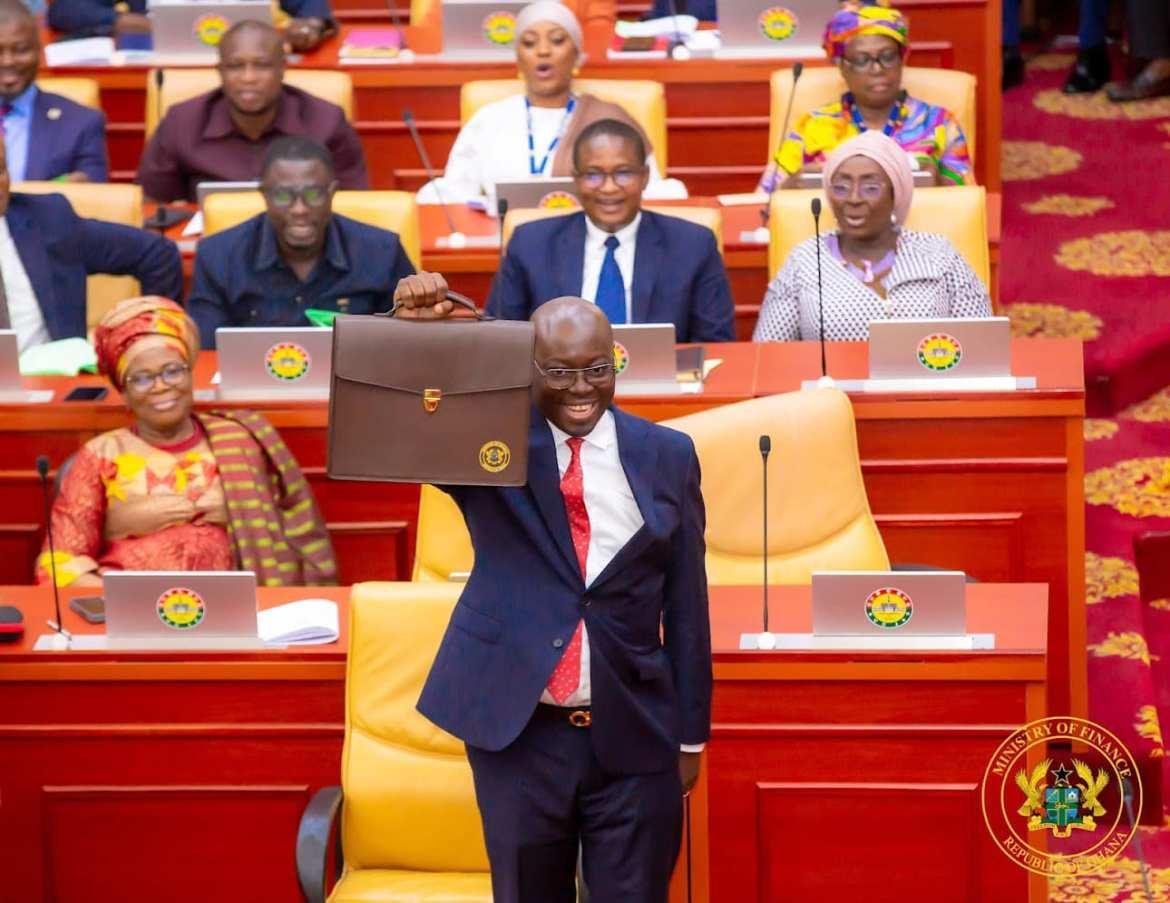
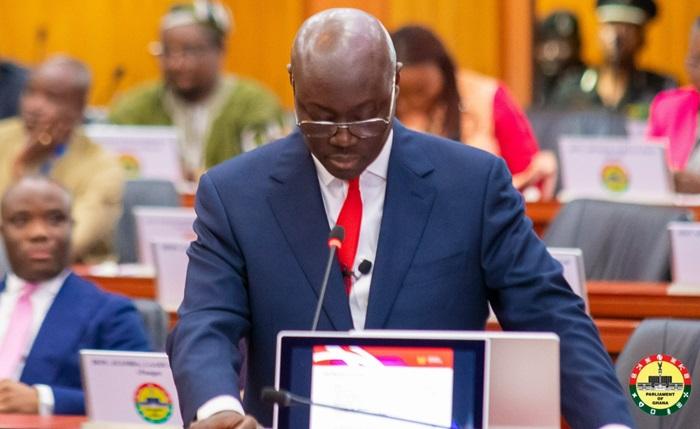
Ghana’s 2027 Budget has opened a major political battle in Parliament after Finance Minister Dr Cassiel Ato Forson unveiled a US$10 billion New Economy programme covering 2027 to 2030, with GH¢30 billion earmarked for the first year. The plan targets eight areas including agriculture, energy, critical minerals processing, technology, textiles, pharmaceuticals, tourism and affordable finance, while the government says it will introduce no new taxes. Minority Leader Alexander Afenyo-Markin has described the budget as “stability on paper, hardship in our pockets,” arguing that improved macroeconomic indicators have not translated into lower living costs, employment or sufficient support for businesses. Ghana News Agency
Ghana’s Parliament has entered an intense political debate over the government’s newly presented 2027 Budget Statement and Economic Policy, with Finance Minister Dr Cassiel Ato Forson unveiling a four-year US$10 billion economic transformation programme while the Minority accuses the government of presenting impressive macroeconomic numbers that have not translated into meaningful relief for ordinary households. The budget, presented to Parliament on Thursday, November 12, places the government’s proposed “New Economy” programme at the centre of its development strategy for 2027 to 2030, promising increased domestic production, job creation, value addition and a shift away from Ghana’s long-standing dependence on raw commodity exports. The Minority, however, has challenged both the scale and credibility of the plan, describing the government’s economic narrative as “stability on paper, hardship in our pockets” and demanding clearer explanations of how the programme will be financed, implemented and translated into actual improvements in living conditions.
Dr Forson told Parliament that the government intends to spend the equivalent of US$10 billion over the four-year period from 2027 to 2030 to build what it describes as a modern, production-driven Ghanaian economy. The programme, which is one of the most ambitious elements of the Mahama administration’s economic agenda, is designed to move the country beyond a period dominated by fiscal consolidation and macroeconomic stabilisation toward a phase of higher productive investment. Government says the programme will target sectors capable of increasing exports, creating large numbers of jobs and reducing Ghana’s dependence on imported goods.
The New Economy programme is structured around eight interconnected pillars. These are macroeconomic stability and affordable finance, commercial agriculture, energy infrastructure, critical minerals value addition, tourism, culture and creative arts, textiles and garments, pharmaceuticals and biomanufacturing, and the technology economy. Government says the pillars are intended to operate as part of an integrated production system rather than as isolated interventions, with public investment expected to attract private capital and support the expansion of businesses across multiple sectors.
For 2027 alone, the government has earmarked GH¢30 billion for the New Economy programme, equivalent to approximately 1.5 percent of gross domestic product. Dr Forson said the money will finance the initial foundations of the transformation programme and will be directed toward productive infrastructure, industrial expansion, export development and job creation. The allocation is expected to continue in different forms through 2030 as government attempts to maintain the programme over the full four-year period.
The financing structure is one of the most closely watched aspects of the plan. According to the budget, government intends to create fiscal space by reducing the primary surplus target by one percentage point of GDP while generating additional revenue through tax reforms, improved compliance and efforts to close leakages. The Finance Minister insisted that the strategy can be implemented without abandoning the macroeconomic discipline achieved during Ghana’s recent stabilisation programme.
Dr Forson also announced that the 2027 Budget will introduce no new taxes. Government says it will instead focus on improving the efficiency of existing taxes, strengthening administration and reviewing selected tax laws to reduce leakages and improve compliance. The Finance Minister said the government would review the Income Tax Act, Revenue Administration Act, Stamp Duty administration, Communications Service Tax framework and customs concessions on selected raw materials, machinery and industrial inputs.
The no-new-tax announcement forms part of the government’s effort to present the budget as a transition from economic adjustment toward growth. The Mahama administration argues that Ghanaians have endured years of inflation, debt restructuring and difficult fiscal reforms and now need policies that directly stimulate production and employment. The New Economy programme is being presented as the mechanism through which that transition will occur.
The budget forecasts real GDP growth of 5.2 percent in 2027, compared with an estimated 4.8 percent in 2026. Government is also targeting a cash-based fiscal deficit of approximately 3.6 percent of GDP, down from around 4 percent, while inflation is expected to remain within a target band of 8 percent plus or minus two percentage points. These projections form the macroeconomic foundation on which the New Economy programme has been built.
The government’s confidence is partly based on the significant improvement Ghana has recorded since the economic crisis that preceded the current administration. Inflation, which reached more than 54 percent in December 2022, fell dramatically during the country’s IMF-supported recovery period and reached as low as 3.2 percent in March 2026 before rising moderately again. The cedi has also experienced periods of greater stability compared with the extreme volatility seen during the height of the crisis.
Ghana has now completed the US$3 billion IMF-supported programme that played a central role in the country’s recent economic adjustment, although the government continues to engage the Fund under a non-financing policy coordination arrangement. That transition gives the 2027 Budget particular importance because it represents one of the first major attempts to demonstrate that Ghana can maintain macroeconomic discipline while increasing productive public investment outside the direct framework of the previous programme.
Dr Forson presented the New Economy agenda as a deliberate break from what he described as decades of economic dependence on raw materials and debt-financed consumption. He said Ghana has repeatedly experienced cycles in which commodity prices rise, government revenues improve and spending expands, only for the economy to become vulnerable when external conditions deteriorate. The new programme, he argued, is intended to create a stronger domestic production base capable of sustaining growth through agriculture, manufacturing, technology and value-added exports.
Commercial agriculture is expected to receive one of the largest portions of investment under the programme. Government has indicated that approximately US$3 billion will be directed toward transforming agriculture into a more productive and commercially oriented sector. The objective is to increase food production, reduce imports, support agro-processing and create more predictable supply chains for domestic manufacturers.
Energy infrastructure is another major pillar because government views reliable and affordable electricity as essential to industrial expansion. Businesses have consistently identified power costs as a major constraint, and the budget seeks to improve energy infrastructure in ways that support manufacturing, mining, technology and other productive sectors. The government has not yet provided complete project-level details for every energy investment expected under the four-year plan, leaving Parliament and the public to demand further clarification as implementation moves forward.
Critical minerals value addition is also central to the strategy. Ghana is seeking to move beyond exporting raw minerals and instead develop processing, refining and manufacturing industries around resources such as gold, lithium and other strategically important minerals. Government argues that exporting unprocessed resources limits employment and domestic revenue while allowing much of the economic value to be captured abroad.
The technology economy forms another pillar of the plan, reflecting the government’s ambition to position Ghana as a stronger digital and innovation hub in West Africa. Investments are expected to target technology businesses, digital infrastructure and skills development, although detailed programme structures will be important in determining whether the sector generates significant employment outside the country’s existing technology centres.
Tourism, culture and creative arts are also included in the transformation agenda. This reflects the Mahama administration’s argument that Ghana’s cultural and creative industries can become significant export sectors rather than remaining primarily domestic. Film, music, fashion, tourism and digital content are increasingly being treated as economic sectors capable of generating foreign exchange and employment.
Textiles and garments form another major area of focus. Ghana’s textile and garment industry has struggled for years with import competition, high production costs and declining local manufacturing capacity. Government says the New Economy programme will attempt to reverse that decline by supporting local production and positioning Ghana to participate more competitively in regional and international apparel markets.
Pharmaceuticals and biomanufacturing are also included, with government seeking to reduce dependence on imported medicines and build domestic production capacity. The COVID-19 pandemic exposed weaknesses in global supply chains and increased calls across Africa for greater local production of vaccines, medicines and medical supplies. Ghana has already been pursuing pharmaceutical manufacturing investments, and the New Economy plan is expected to expand those efforts.
Government argues that these eight sectors collectively represent a more sustainable pathway to growth than relying primarily on commodity exports and consumption. The central promise is that growth will increasingly be measured by the number of jobs created, the income generated and the productive capacity built within the economy rather than by GDP figures alone.
That message has not convinced the Minority. Minority Leader Alexander Afenyo-Markin said the budget offers an attractive macroeconomic narrative but does not address the everyday economic difficulties facing households and businesses. He accused the government of attempting to celebrate falling inflation and other indicators while many Ghanaians continue to face high food prices, unemployment and rising business costs.
His description of the budget as “stability on paper, hardship in our pockets” quickly became the defining phrase of the Minority’s initial response. Afenyo-Markin argued that economic statistics mean little if households are still struggling to afford basic necessities and if businesses remain under pressure from electricity tariffs, financing costs and weak consumer demand.
The Minority Leader cited markets across the country, including Techiman, Tamale, Kumasi, Winneba and Accra, as examples of places where he said consumers are still facing expensive food. He argued that locally produced staples remain costly despite the government’s emphasis on agricultural transformation and said farmers have not received sufficient support to reduce production costs.
Afenyo-Markin also criticised what he described as a lack of clarity around the US$10 billion New Economy programme. He questioned how much of the total amount would actually be spent in 2027, although the budget states that GH¢30 billion has been earmarked for the first year. He also demanded project-level details explaining exactly where the money will go and how Parliament and the public will be able to track implementation.
The Minority has additionally questioned the relationship between the New Economy programme and the government’s earlier 24-hour economy agenda. Afenyo-Markin argued that the administration has repeatedly introduced new policy slogans and demanded clarity on whether the New Economy replaces, complements or restructures previous programmes. His criticism reflects a wider opposition argument that government branding has moved faster than implementation.
The government rejects that interpretation and says the New Economy is intended to consolidate multiple development initiatives into a coherent production strategy. Supporters argue that the 24-hour economy remains part of the wider effort to expand productive activity, while the New Economy provides the investment framework needed to support factories, farms, logistics, technology and other sectors capable of operating around the clock.
Another contentious issue is the government’s timeline. The New Economy programme runs from 2027 to 2030, extending beyond the current administration’s four-year mandate. The Minority has questioned why a programme that extends into a future electoral period should be presented as a guaranteed investment framework when its continuation would depend on future political decisions and budget approvals.
Government officials argue that long-term economic transformation cannot be constrained entirely by election cycles. Major infrastructure, agricultural and industrial programmes frequently require several years to complete, and the government says the 2027 to 2030 timetable is necessary to provide a realistic planning horizon.
The debate also extends to employment. Afenyo-Markin has challenged the government to state clearly how many jobs have already been created and how many additional jobs the New Economy plan is expected to generate. He argued that unemployment remains one of the most important tests of economic performance and that Ghanaians cannot be expected to celebrate improved macroeconomic indicators if they are unable to find work.
The Minority has also questioned public-sector recruitment and compensation. Afenyo-Markin acknowledged the government’s announcement that it is able to meet obligations under the Domestic Debt Exchange Programme but asked why similar financial capacity has not translated into broader recruitment of teachers, nurses and other public-sector workers. His argument is that fiscal progress should be reflected in opportunities for citizens rather than only in debt-management statistics.
The 2027 Budget includes a significant debt-management component. Dr Forson announced that government had made arrangements to repay GH¢29 billion in restructured domestic bonds ahead of schedule and expects to retire more than GH¢36 billion in debt obligations earlier than originally planned. Government presents these measures as evidence that Ghana’s public finances have become more stable after the debt crisis.
The Minority has welcomed aspects of the debt repayment but insists that government must explain how such fiscal improvements translate into better living standards. This tension between macroeconomic stability and household welfare is emerging as the central political argument surrounding the budget.
The opposition has also raised questions about the Women’s Bank, a flagship NDC promise intended to provide financing to women-led businesses. Afenyo-Markin said the initiative featured prominently in previous government plans but was not given sufficient attention in the 2027 Budget presentation. He demanded clarification on whether the programme is still being implemented and how much funding has been committed.
Government supporters are likely to argue that the absence of extensive discussion in the Finance Minister’s abridged parliamentary speech does not necessarily mean the programme has been abandoned. The full 2027 Budget Statement runs to more than 300 pages and contains significantly more detail than the speech delivered in the chamber. Parliamentary scrutiny will therefore focus increasingly on the full document rather than only the presentation.
The atmosphere in Parliament during the budget reading demonstrated the intensity of the political divide. Minority MPs displayed placards carrying messages including “Paper Economy” and other slogans criticising the government’s economic record, while Majority members supported the Finance Minister’s presentation. The scenes reflected a broader contest over how Ghana’s economic performance should be interpreted as the country moves beyond the most severe phase of its recent crisis.
The Majority’s argument is that the government inherited a deeply damaged economy and has succeeded in restoring relative stability within two years. Supporters point to lower inflation, improved debt management and greater fiscal discipline as evidence that the administration has created conditions for a new phase of investment. From that perspective, the 2027 Budget is designed to move from stabilisation into structural economic transformation.
The Minority’s counterargument is that macroeconomic stability is incomplete if households remain under pressure. Opposition MPs say inflation may have fallen sharply from crisis levels, but the cumulative increase in prices over several years means food, transport, housing and other essentials remain expensive. Lower inflation means prices are rising more slowly, not that they have necessarily returned to previous levels.
That distinction is economically important and politically powerful. A government can legitimately point to lower inflation as evidence of stabilisation while households simultaneously experience hardship because the price level remains elevated. The 2027 Budget debate is therefore likely to focus heavily on whether government policies can translate lower inflation into higher real incomes and stronger employment.
Private-sector growth will be another major area of scrutiny. Afenyo-Markin has warned that high electricity costs and limited business incentives could undermine the investment required to support the New Economy programme. He argued that government cannot achieve its transformation agenda through public spending alone and must create an environment in which private companies are willing to expand.
The government agrees that private investment is essential and says the programme is explicitly designed to position the private sector as the principal driver of growth. Public funds are expected to support infrastructure and strategic sectors while private businesses provide much of the capital needed for industrial expansion.
Affordable finance is therefore included as the first pillar alongside macroeconomic stability. Ghanaian businesses have historically faced high interest rates, making borrowing for expansion difficult. Government says reducing financial instability and improving access to credit will be central to achieving the programme’s objectives.
Whether interest rates can decline sustainably will depend on inflation, government borrowing and monetary policy. If public-sector borrowing remains high, businesses may continue competing with government for limited domestic credit. The success of the New Economy programme will therefore depend partly on whether fiscal discipline is maintained while investment spending increases.
That balancing act represents one of the biggest risks in the budget. Government wants to spend more on productive transformation without returning to the excessive borrowing that contributed to Ghana’s debt crisis. The decision to reduce the primary surplus target creates additional fiscal space, but it also reduces the buffer available for debt reduction.
Dr Forson argues that the additional spending is justified because it is directed toward productive investment rather than consumption. If the investments increase exports, employment and government revenue, they could strengthen public finances over time. If projects fail to generate adequate economic returns, however, the additional spending could create new fiscal pressure.
That is why the budget promises rigorous project appraisal and value-for-money assessment. Government says every New Economy project will be budgeted, authorised and transparently reported, with investment decisions subjected to scrutiny before funds are committed. Parliament will play an important role in determining whether those commitments are followed.
The first major test will come through the GH¢30 billion allocated for 2027. MPs will want to identify the projects receiving those funds, the agencies responsible for implementation and the expected economic returns. Without detailed tracking, the US$10 billion headline could become difficult for citizens to evaluate.
The programme’s four-year value also requires careful interpretation because the amount is denominated in U.S. dollars while much of the actual expenditure will occur in Ghana cedis. Exchange-rate movements could therefore affect the real value of investment over the period. Government will need to clarify whether the dollar figure represents a fixed commitment or an approximate equivalent based on current exchange rates.
Implementation capacity will be another challenge. Ghana has frequently announced ambitious development programmes that later faced delays because of procurement problems, financing shortages or weak coordination among ministries. The success of the New Economy plan will depend not only on the amount of money allocated but on how efficiently projects are executed.
Commercial agriculture provides a clear example. Increasing food production requires more than providing money to farmers. Irrigation, storage, transportation, improved seeds, fertiliser, mechanisation and access to markets all need to function together. Failure in one part of the system can reduce the effectiveness of the entire investment.
The same is true for industrial development. Factories need reliable electricity, affordable finance, skilled labour and access to domestic and export markets. Government incentives alone cannot compensate for persistent weaknesses in infrastructure or regulation.
The technology pillar will also require more than investment in digital infrastructure. Ghana needs a workforce with the skills demanded by technology companies and policies that encourage entrepreneurship, research and innovation. Education and training will therefore be essential even though they are not listed as a separate pillar.
The creative economy faces similar structural challenges. Ghana has internationally recognised music, film, fashion and tourism assets, but creators often struggle with financing, intellectual property protection and access to global distribution. The New Economy programme could support the sector if investment addresses those underlying constraints rather than concentrating only on promotional projects.
The pharmaceuticals pillar may offer significant opportunities because Ghana already has a domestic pharmaceutical manufacturing base. Expanding production could reduce import dependence and create skilled jobs, but companies will need reliable access to capital, raw materials and regulatory support.
Critical minerals could become one of the most strategically important areas. Global demand for lithium and other minerals used in batteries and modern technology has increased sharply, and Ghana has sought to ensure that more processing occurs locally. Government says the New Economy programme will support value addition rather than repeating the historical model of exporting raw minerals.
The challenge will be attracting investors willing to build processing facilities while maintaining competitive and transparent mining regulations. Ghana will also need to manage environmental and community impacts carefully because mining projects can generate significant social conflict if benefits are not shared fairly.
Energy infrastructure will be another central test because almost every other pillar depends on reliable power. Ghana has made progress in electricity access, but businesses continue to complain about tariffs and occasional supply constraints. Investments that improve generation, transmission and distribution could therefore have broad effects across the economy.
The government’s decision not to introduce new taxes may help politically, but it also means revenue growth must come from stronger compliance and administration. Closing tax leakages can produce significant revenue, but doing so at the scale required will demand stronger digital systems, enforcement and cooperation with businesses.
The Minority is likely to scrutinise whether the projected revenue gains are realistic. Opposition MPs have previously criticised government budgets for relying on ambitious revenue assumptions that later prove difficult to achieve. Any shortfall could force expenditure cuts or additional borrowing.
The government will argue that improvements in economic activity and tax administration make the targets achievable. Stronger growth can itself expand the tax base, while better compliance can increase revenue without raising tax rates.
The budget therefore represents a significant policy gamble. Government is betting that the stability achieved through fiscal adjustment can now support a major productive investment programme without recreating the imbalances of the past. The opposition is warning that the plan risks becoming another collection of slogans if projects, financing and employment outcomes are not clearly defined.
Parliament’s scrutiny will now become increasingly important. The initial post-budget statements were political and broad, but the budget will be examined more closely through parliamentary debate, committee work and sector-level consideration of appropriations. Those stages should provide greater detail about how the GH¢30 billion allocation will be distributed in 2027.
The Minority has already said it will conduct a fuller assessment after its budget workshop. Afenyo-Markin indicated that the caucus’s immediate response was preliminary and that more detailed scrutiny would follow. That means criticism of individual allocations and assumptions is likely to intensify as MPs work through the full budget document.
The Majority will simultaneously attempt to defend the plan as a credible transition from crisis management to growth. Government MPs are likely to focus on debt reduction, lower inflation and the absence of new taxes while arguing that the New Economy programme represents the next stage of Ghana’s economic recovery.
The debate could therefore become one of the defining political contests of the Mahama administration’s current term. If the programme produces visible projects and employment, government will be able to argue that economic stability has translated into structural transformation. If implementation is slow, the Minority’s description of a “paper economy” could gain greater political force.
For ordinary Ghanaians, the argument is likely to be judged less by parliamentary rhetoric than by everyday economic conditions. Food prices, employment, wages, electricity costs and business opportunities will determine whether households feel that the economy has genuinely improved.
That reality explains why the Minority’s phrase has resonated. “Stability on paper, hardship in our pockets” captures the gap that can exist between improving economic indicators and household experience. The government’s challenge is to close that gap.
The New Economy programme is designed precisely to answer that criticism by moving government spending toward sectors that create employment and expand production. Its success, however, will depend on whether the US$10 billion commitment becomes identifiable projects, functioning businesses and measurable jobs rather than remaining a long-term headline.
The 2027 Budget therefore marks a crucial transition point for Ghana’s economic policy. The country has moved beyond the immediate phase of debt crisis and IMF-supported adjustment, but the harder question is whether stability can now produce sustained increases in productivity and living standards.
Dr Forson has presented the US$10 billion New Economy plan as the government’s answer. The Minority has responded that the numbers are not enough and that citizens need tangible relief.
The political battle in Parliament will continue, but the larger verdict will be delivered outside the chamber. If investment reaches farms, factories, technology businesses and households in a way that creates jobs and raises incomes, the government will be able to argue that the New Economy has moved beyond rhetoric. If not, the Minority’s warning that Ghana is being offered stability on paper while hardship remains in people’s pockets could become one of the most powerful critiques of the 2027 Budget.