GHANA'S FRONT PAGES ASK ONE QUESTION: WHO PAYS AND WHO PROFITS? STALLED PORTS, A 15% HOSTEL HIKE, A TARKWA OWNERSHIP FIGHT AND MTN'S $1.1BN BET
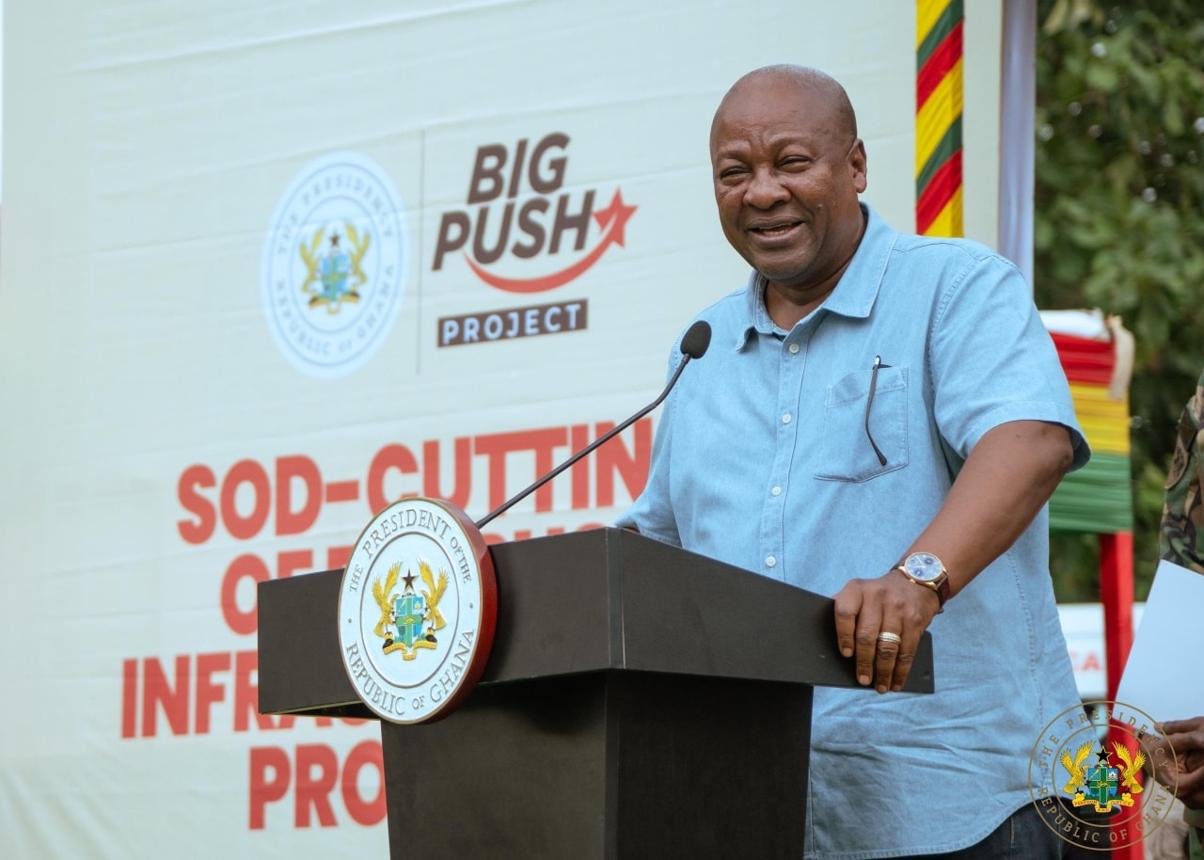
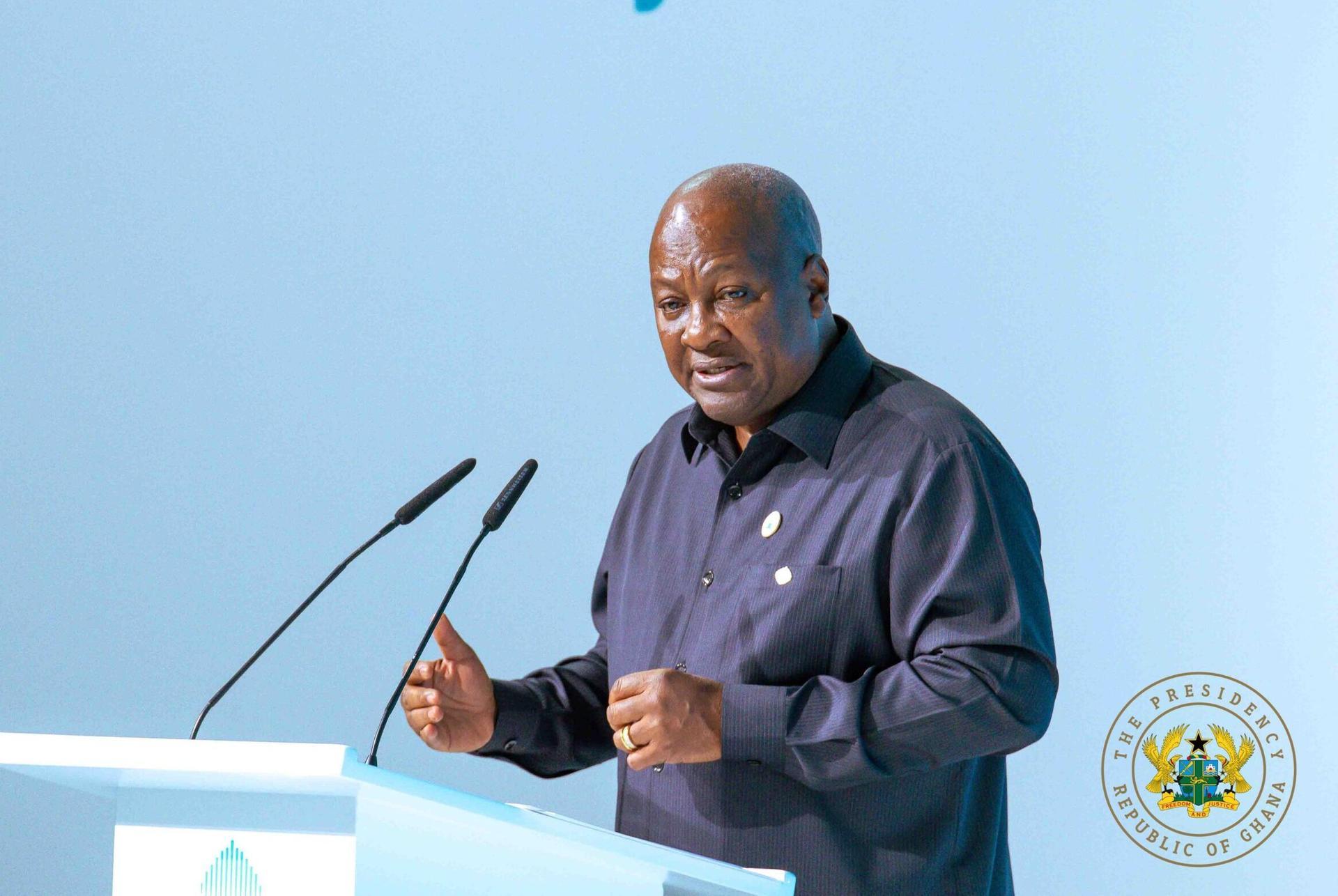
Four stories dominated Ghana's front pages on Friday, November 20, 2026. Each one is about who carries the cost of the country's economic choices and who gets the gains. President John Dramani Mahama has called for urgent reforms at Ghana's ports, warning about delays in clearing containers that raise costs for traders and consumers. The Minister of Education has directed the Ghana Tertiary Education Commission (GTEC) to work with the Rent Commission on student hostel fees. The move follows anger over a proposed 26 percent increase in fees at hostels managed by University of Ghana Enterprises Limited (UGEL), which the university has since cut to 15 percent. Students say even the lower figure is too much. In the Western Region, WPN has urged the government to make host community ownership a condition for renewing the lease of Gold Fields' Tarkwa Mine, one of the country's largest gold operations. Its lease is due to expire in 2027. And MTN Ghana marked its 30th anniversary with a commitment to invest $1.1 billion over three years. The plan includes 500 new cell sites and a push toward 5G for a network that now serves more than 32 million subscribers, with 18.9 million active Mobile Money users. Taken together, the stories show a government trying to reset the terms between the state, private capital and ordinary citizens. That reset carries real promise and real risk.
Some news days are crowded but disconnected. Others, read closely, tell a single story. Ghana's front pages on Friday belonged to the second kind. On the surface, the headlines covered four separate worlds: the container yards of Tema, the student hostels of Legon, the gold pits of Tarkwa and a glittering anniversary dinner for the country's largest telecommunications company. Underneath, each one asked the same hard question. In an economy still recovering from one of the worst crises in its modern history, who pays the cost of doing business in Ghana, and who gets the gains?
President John Dramani Mahama's call for urgent reform at the ports is about the cost of moving goods, a cost that reaches every market stall and supermarket shelf. The ministerial directive on hostel fees is about the cost of education, carried by students and families already squeezed by years of inflation. WPN's demand for host community ownership at Tarkwa is about who should own a share of the country's mineral wealth. MTN's $1.1 billion pledge is about how much a dominant private company invests in Ghana, and what Ghana expects in return.
These are not abstract debates. They will shape prices, opportunities and public trust in the months ahead. They also test the central promise of the Mahama administration since its return to power in January 2025: to reset Ghana's economy so that growth is felt more widely, not only in official statistics and boardrooms.
The port story offers the clearest picture of how everyday frustration becomes national policy. President Mahama has called for urgent reforms to Ghana's port operations, warning that delays in clearing containers and cargo are hurting the economy. The full details of his directives have not all been made public. But the message reported in Friday's papers was direct. The presidency wants faster clearance, fewer bottlenecks and an end to the delays that have long frustrated importers, exporters and freight agents.
For anyone who has dealt with Ghana's ports, the complaint is familiar. Tema, the country's main gateway, handles the majority of its container traffic. Takoradi, in the Western Region, serves much of the mining and oil industry. Over the past decade, both have seen major investment. The Meridian Port Services Terminal 3 at Tema, a deepwater container terminal developed in partnership with international operators, transformed the port's physical capacity. Takoradi has been expanded and modernized. On paper, Ghana has some of the most advanced port infrastructure in West Africa.
Physical capacity, however, is only part of the story. A container can sit at a world-class terminal for days or weeks if the paperwork, inspections and payments needed to release it are slow. Traders often describe a maze of agencies, each with its own requirements. These include customs officers from the Ghana Revenue Authority, the Ghana Ports and Harbours Authority, standards and food safety regulators, shipping lines, terminal operators and clearing agents. Each touchpoint adds time. Each delay adds cost. Demurrage and storage charges build up quickly when containers are not cleared on time. Those charges do not disappear. They are passed down the supply chain until they land on the consumer.
Ghana has tried several times to fix this. The country introduced the Integrated Customs Management System, known as ICUMS, to digitize customs clearance and link agencies on a single platform. The rollout was rocky, and many traders complained of system failures and slow processing in its early years. Over time, the platform improved, but complaints about delays, physical inspections and informal payments never fully went away. Past governments have also promised paperless ports, joint inspections and round-the-clock operations. Each promise brought progress. None fully solved the problem.
Mahama's intervention carries extra weight because it ties into one of his administration's signature policies, the 24-hour economy. The idea is to encourage businesses, public agencies and logistics operators to work in shifts around the clock, increasing productivity and creating jobs. Ports are a natural place to test that vision. A port that clears cargo day and night, with every agency staffed and every system running, could move goods far faster than one that slows down after office hours. If the government wants the 24-hour economy to be more than a slogan, the ports are where it must prove itself.
The stakes go beyond domestic convenience. Ghana competes directly with its neighbors for regional trade. The Port of Lomé in Togo has built a reputation as a major transshipment hub, attracting cargo bound for landlocked Sahelian countries such as Burkina Faso, Mali and Niger. Abidjan in Côte d'Ivoire is another powerful rival. When Ghana's ports are slow or expensive, shippers and traders simply route their goods through Lomé or Abidjan. That costs Ghana revenue, jobs and influence. Transit traffic to the Sahel was once a major source of business for Tema. Regional insecurity, political changes in the Sahel and competition from neighboring ports have all made that business harder to win and keep.
There is also the matter of the African Continental Free Trade Area. The AfCFTA secretariat is based in Accra, and Ghana has positioned itself as a champion of intra-African trade. The agreement's promise depends on goods moving quickly and cheaply across borders. A country that hosts the AfCFTA headquarters but struggles to clear containers efficiently sends an awkward message. If Ghana wants to lead on continental trade, its ports need to be a model rather than a cautionary tale.
The economic timing makes the issue more urgent. Ghana is emerging from a deep debt crisis that began in 2022, when inflation soared, the cedi collapsed and the government defaulted on most of its external debt. A $3 billion program with the International Monetary Fund, agreed in 2023, along with debt restructuring and tough fiscal measures, helped stabilize the economy. Inflation has fallen sharply from its peak, and the cedi recovered strongly for a period. But the recovery remains fragile. Recent Bank of Ghana data have shown the cedi weakening again, with year-to-date depreciation reported at 10.6 percent by November. Producer price inflation has also risen for four consecutive months, reaching 5.2 percent. The central bank has warned that a strong El Niño could affect food prices, cocoa output and the currency.
In that environment, every extra cost at the ports matters. When clearance is slow, importers pay more, and they pass that cost on. A container of rice, cooking oil, medicine, spare parts or building materials that sits idle at Tema adds to the price Ghanaians pay. Manufacturers waiting for raw materials lose production days. Exporters waiting to ship cocoa, cashew, processed goods or manufactured items lose time and sometimes contracts. Port efficiency is not a niche issue for shipping companies. It is a cost-of-living issue.
Reform will not be easy. Delays at ports often reflect deep institutional habits. Some agencies are protective of their roles and revenue. Some officials benefit from the friction that delays create, because slow systems create opportunities for informal payments to speed things up. Clearing agents, freight forwarders and some traders have adapted to the existing system and may resist change. Any real reform will require political will, digital systems that actually work, clear accountability for each agency and a willingness to take on vested interests. Presidential pressure helps. It is not enough on its own.
Critics will also watch whether the government sets measurable targets. A promise to reduce delays means little without data. How long does it take today to clear a container at Tema? How long should it take? Which agency is causing the most delay? How will progress be tracked and published? Transparent performance data, released regularly, would let traders and the public judge whether reform is working. Without it, the latest push risks joining the long list of past announcements that produced headlines but not lasting change.
If the port story is about the cost of moving goods, the hostel fee story is about the cost of building a future. The Minister of Education has directed the Ghana Tertiary Education Commission to engage the Rent Commission over student hostel fees. The directive comes after a wave of anger over a proposed increase in fees at hostels managed by University of Ghana Enterprises Limited, the university's commercial arm, which operates some of the student accommodation on and around the Legon campus.
The original proposal was for a 26 percent increase. After student protests and public criticism, the University of Ghana reduced the planned increase to 15 percent. University authorities presented the reduction as a response to student concerns. Many students and their representatives were not satisfied. They argued that even a 15 percent increase is too much for families still struggling with high living costs. The controversy remained live in media discussions on Friday, with radio and television panels debating whether the reduction went far enough.
To understand why the issue has struck such a nerve, it helps to look at the student housing landscape in Ghana. Public universities have expanded enrollment rapidly over the past two decades. The University of Ghana, the country's oldest and largest university, has tens of thousands of students. Housing has not kept pace. Traditional halls of residence, many built decades ago, cannot accommodate everyone. To fill the gap, universities have turned to public-private partnerships, commercial subsidiaries and private hostel operators. Newer hostels often offer better facilities, but they come at higher prices.
That shift has changed the economics of a university education. Tuition and academic fees are only part of the cost. For many students, accommodation is now one of the largest expenses, sometimes rivaling or exceeding academic fees. Students who cannot secure a place in university-managed hostels often turn to private hostels or rent rooms in nearby communities, where prices can be even higher and conditions less regulated. Some share crowded rooms to save money. Others commute long distances, adding transport costs and losing study time.
The case for higher fees usually rests on operating costs. Hostel managers point to rising prices for electricity, water, maintenance, security and staff salaries. Utility tariffs in Ghana have been adjusted several times in recent years as the government and regulators try to close revenue gaps in the energy sector. Inflation has raised the cost of almost everything needed to run a building. Commercial entities like UGEL are also expected to remain financially viable. If fees do not cover costs, facilities can deteriorate, and the university may face pressure to subsidize them from other budgets.
Students see a different picture. They argue that a university is not a hotel and that its commercial arm should not treat students simply as customers. Many come from families with modest incomes. Parents and guardians who have already stretched their finances to pay for secondary school and university entry face a fresh burden with every increase. Students also question the timing. They say a 26 percent proposal, even when reduced to 15 percent, reflects a lack of sensitivity to economic conditions. Some have demanded more transparency on how hostel fees are calculated, how revenues are used and why increases are needed.
The government's response is notable. By directing GTEC to engage the Rent Commission, the Minister of Education is treating student accommodation not only as an academic matter but as a housing and rent issue. That framing matters. GTEC regulates tertiary education institutions and has oversight of standards and fees in the sector. The Rent Commission deals with rent disputes, tenancy rights and fair rent practices. Bringing the two together suggests the government may be considering a more structured approach to student housing costs. That could include guidelines on fair fees, rules on advance payments and protections against arbitrary increases.
This approach fits within the administration's broader messaging on education affordability. Since returning to office, the Mahama government has promoted measures such as its "No Fees Stress" initiative for first-year tertiary students and support for students with disabilities. Those policies were designed to ease the financial burden of higher education and widen access. A hostel fee controversy at the country's flagship university, in the middle of that push, is politically awkward. It shows that tuition support alone does not solve the affordability problem when accommodation costs keep rising.
There are real policy questions underneath the headlines. If the government caps or regulates hostel fees, who covers the gap between what students pay and what it costs to run the facilities? If universities absorb the cost, it may come from academic budgets already under pressure. If the government provides subsidies, it must find the money at a time of fiscal constraint under an IMF-backed program. If private operators face price controls, they may reduce investment in new hostels, worsening the shortage over time. Any solution must balance affordability with sustainability.
Some experts argue that the long-term answer is to build far more student housing, through a mix of public investment, partnerships and long-term financing, so that supply catches up with demand. Others favor targeted support for students from low-income families, rather than across-the-board price controls. Transparency is likely to be part of any lasting fix. Students are more likely to accept fee changes if they can see clear, credible breakdowns of costs and evidence that their money is being used well.
For now, the 15 percent figure sits uneasily between the university's financial needs and students' financial reality. The outcome of the GTEC and Rent Commission engagement will be watched closely, not only at Legon but at other public universities facing similar pressures. Whatever approach emerges could set a precedent for how student housing is priced and regulated across the country.
The third story moves from lecture halls to gold mines, and from household budgets to national wealth. WPN has urged the government to make host community ownership a condition for the renewal of the Tarkwa Mine lease. The full details of the group's proposal, including the size of the stake it wants for local communities and how ownership would be structured, have not been fully set out in the front-page reports. But the core demand is clear. The people who live around the mine, and who bear its environmental and social costs, should own a share of it.
The Tarkwa Mine, operated by Gold Fields Ghana, is one of the largest gold mines in the country and among the most significant in West Africa. Gold Fields, the South African mining group, holds the majority stake in the operation, with the government of Ghana holding a minority interest. For decades, Tarkwa has produced large volumes of gold, generated substantial tax and royalty revenue and provided thousands of jobs. Its mining lease is due to expire in 2027. That expiry has turned the mine into one of the most important negotiations between the Ghanaian state and a foreign mining company in years.
The government has already signaled that it does not intend to renew major mining leases on old terms. Officials have spoken repeatedly about increasing Ghanaian participation in the mining sector and capturing more value from the country's natural resources. The clearest sign came in 2025, when the government declined to extend Gold Fields' lease at the nearby Damang Mine and moved to transfer its operations to a Ghanaian-owned company. That decision sent a strong message to the industry. Long-standing leases held by international mining companies would no longer be renewed automatically.
Gold Fields has responded by highlighting its contribution to the country. In a statement released earlier this week, the company set out what it described as the facts on Tarkwa and its contribution to Ghana. Mining companies in such negotiations typically emphasize tax payments, royalties, dividends to the state, jobs, local procurement and community investment. They also stress the need for stable, predictable terms to justify the large capital spending required to extend the life of a mine. The timing of Gold Fields' statement suggests the company is preparing for a tough negotiation, both at the table and in the court of public opinion.
WPN's intervention adds a third voice to what has largely been framed as a contest between the government and the mining company. The argument for host community ownership draws on long-standing grievances in Ghana's mining areas. Communities around large mines often face the most direct costs of mining. These include land loss, displacement, pollution of rivers and farmland, dust, noise and pressure on local services. In many cases, they also see relatively limited direct benefit. Royalties and taxes flow to the national government, and only a portion returns to local areas through mechanisms such as the Minerals Development Fund and payments to traditional authorities and district assemblies. Critics have long argued that those mechanisms are too small, too slow or poorly managed.
The Western Region, home to Tarkwa, captures this paradox vividly. It is one of the richest regions in Ghana in terms of natural resources, with gold, oil, timber, cocoa, manganese and bauxite. Yet many of its communities remain poor, with limited infrastructure, high youth unemployment and environmental damage from both large-scale and illegal mining. The spread of illegal small-scale mining, known as galamsey, has polluted rivers and destroyed farmland across the region, deepening frustration. For many residents, the gap between the wealth extracted from their land and the conditions in their communities is a daily source of anger.
Host community ownership is presented as a way to close that gap. If local people owned a share of the mine, the argument goes, they would receive dividends directly, have a voice in decisions and feel a stronger stake in the mine's success. Supporters point to international models in which local or Indigenous communities hold equity in resource projects, sometimes through community trusts or development companies. They argue that ownership can reduce conflict, build trust and ensure that a fair share of mineral wealth stays in the area where it is produced.
The idea also raises difficult questions. Who exactly counts as the host community? Mining areas often include several towns and villages, traditional authorities and groups with competing claims. How would a community stake be financed? Equity in a major mine is worth a great deal of money, and communities rarely have the capital to buy it. A stake could be granted as part of renewal terms, financed through future dividends or carried by the state. Each option has costs and trade-offs. Governance is another concern. Community trusts and development funds in Ghana and elsewhere have sometimes been captured by local elites or mismanaged, with benefits failing to reach ordinary residents. Any ownership structure would need strong transparency and accountability rules.
For the government, WPN's demand presents both an opportunity and a dilemma. On one hand, it aligns with the administration's stated goal of increasing local participation in mining. It also offers a way to strengthen the government's hand in negotiations with Gold Fields, by showing that renewal terms reflect not only national interests but local ones. On the other hand, the government must balance community demands with its own interests, including revenue and state participation, and with the need to maintain investor confidence. Mining investors around the world are watching how Ghana handles its expiring leases. A process seen as fair and predictable could reassure them. One seen as arbitrary or politically driven could make them more cautious.
The stakes for Ghana's economy are high. Gold is now the country's most important export, ahead of cocoa and oil. High global gold prices in recent years have brought record export earnings and supported the cedi's recovery. The government has also used gold in innovative ways, including through the Bank of Ghana's domestic gold purchase program and the creation of the Ghana Gold Board to regulate and formalize the trade, especially from small-scale miners. The future of Tarkwa, one of the country's largest producers, will matter for export earnings, government revenue and the stability of the currency.
How Tarkwa is handled will also set a precedent. Other major mining leases will expire in the coming years. If host community ownership becomes a condition at Tarkwa, communities around other mines will likely demand the same. That could reshape the structure of Ghana's mining industry. Whether that reshaping strengthens the sector or weakens it will depend on how carefully the terms are designed and how transparently they are implemented.
The fourth story offers a striking contrast. While the first three headlines involve disputes over costs and ownership, MTN Ghana's 30th anniversary is a celebration of growth and investment. Yet it, too, sits at the heart of the debate over who benefits from Ghana's economy.
At its 30th Anniversary Stakeholders' Dinner at the Labadi Beach Hotel in Accra, MTN Ghana announced plans to invest $1.1 billion over the next three years. Chief Executive Officer Stephen Blewett said the money would support the expansion of the company's network infrastructure, including its move toward 5G, as well as home broadband, fiber, enterprise solutions and other digital services. He also announced that the company was rolling out 500 new cell sites across the country to improve coverage and capacity.
The scale of MTN's presence in Ghana is enormous. The company now serves more than 32 million subscribers in a country of roughly 34 million people. It employs more than 2,000 people directly, while hundreds of thousands of Ghanaians earn a living through its wider ecosystem of Mobile Money agents, merchants, retailers, dealers, contractors and suppliers. Since its establishment in 1996, MTN has grown from a service available to a small minority into the backbone of the country's mobile communications and a central player in its digital economy.
No part of that story is more important than Mobile Money. Introduced in 2009, MoMo has transformed financial services in Ghana. According to the company, about 18.9 million Ghanaians were actively using the platform as of September 2026. People use it to pay school fees, run businesses, receive wages, save and borrow. Blewett noted that for many women, traders and farming families, a MoMo wallet has become their first financial account. In a country where millions once had no access to formal banking, that is a profound change. Mobile money has helped Ghana become one of the leading digital finance markets in Africa.
MTN's leaders and government officials used the anniversary to frame connectivity as national infrastructure. "Connectivity is now essential national infrastructure," Blewett said. "When the network is disrupted, businesses cannot transact, services grind to a halt and families cannot stay in touch." He called for telecommunications sites to be protected as critical national infrastructure, reflecting industry concerns about vandalism, theft of equipment and power cables, and disruptions to service.
Vice President Professor Naana Jane Opoku-Agyemang, who addressed the gathering, stressed the importance of affordable and reliable connectivity, especially in underserved communities. She defended the government's allocation of $45 million in the 2027 budget for rural telephony projects, describing it as necessary to bridge persistent connectivity gaps. Access to technology, she said, should not be determined by where people live. She also called for stronger data protection, cybersecurity and accountability, noting that public confidence in digital financial services depends on protecting personal information and securing transactions. On financial inclusion, she argued that access to mobile money must go beyond simply making transactions to delivering real improvements in people's economic lives. She said the proposed National Financial Inclusion and Development Strategy would place greater emphasis on consumer protection and financial well-being.
Deputy Minister of Communication, Digital Technology and Innovation Mohammed Adams Sukparu urged MTN and other industry players to make sure their investments translate into better service quality, affordable connectivity, wider coverage and better customer experiences. He said the next phase of the digital economy would be shaped by artificial intelligence, cybersecurity, digital financial services and cloud computing. MTN Ghana Board Chairman Ishmael Yamson said the company's success should be measured not only by its infrastructure, balance sheet and market share but also by its contribution to national development.
The message from officials was warm but pointed. The government welcomes MTN's investment. It also expects results. That expectation reflects a long and sometimes tense relationship between MTN and the Ghanaian state. MTN's dominance in the market has made it a frequent subject of regulatory scrutiny. In 2020, the National Communications Authority designated MTN as a Significant Market Power, a status that allows regulators to impose special measures to promote competition. Those measures have included rules on pricing, interconnection and other practices intended to give smaller competitors a fairer chance. MTN has at times pushed back, arguing that it should not be penalized for success.
Mobile money taxation has been another source of friction. The Electronic Transfer Levy, known as the E-Levy, introduced in 2022, was deeply unpopular. Critics argued that it discouraged digital transactions and hurt low-income users. The Mahama government repealed the levy in 2025, fulfilling a campaign promise. That decision was welcomed by MTN, its customers and the wider digital finance industry. It also showed how closely government policy and MTN's business are linked. Decisions on taxes, regulation and spectrum allocation shape the company's growth, while the company's performance affects government revenue and the wider economy.
The anniversary also came alongside a high-level meeting between MTN leadership and the Minister of Finance. MTN Group Board Chairman Mcebisi Jonas and Blewett reaffirmed the company's long-term commitment to Ghana during the engagement. Such meetings typically cover tax, regulation and the business environment. The timing suggests that MTN is keen to reinforce its partnership with the government as it prepares for a major investment cycle.
For ordinary Ghanaians, the most important question about the $1.1 billion pledge is what it will mean in practice. Will the 500 new cell sites reach the rural and underserved communities that still struggle with weak or no signal? Will 5G expansion benefit the wider population, or mainly businesses and urban consumers who can afford compatible devices and premium data plans? Will service quality improve, with fewer dropped calls and faster data speeds? Will prices for data and calls become more affordable, or will customers bear the cost of the investment? These questions echo the deputy minister's call for investment to translate into tangible benefits.
There are also wider concerns about the concentration of digital power. MTN's dominance in both telecommunications and mobile money gives it enormous influence over how Ghanaians communicate, transact and access information. That influence brings responsibilities. Data protection, cybersecurity and fair treatment of customers become matters of national importance. The Bank of Ghana has recently urged financial institutions to strengthen cybersecurity as fraud schemes targeting digital financial services grow more sophisticated. As more Ghanaians depend on MoMo for daily life, any major breach, outage or fraud wave could have serious consequences.
Competition is another issue. A healthy digital economy depends on a range of players, including other mobile operators, banks, fintech startups and payment providers. Regulators face the challenge of encouraging investment from a dominant player like MTN while ensuring that competitors can grow and that consumers benefit from choice. The government's own role in the telecommunications sector, following the restructuring of AirtelTigo and the creation of the state-owned Telecel and AT arrangements, adds another layer of complexity.
None of this diminishes the significance of MTN's achievement. Thirty years of growth, tens of millions of customers, a transformed financial landscape and a major new investment commitment are real contributions to Ghana's development. The company's Bright Scholarship program, which supports 300 university students and 200 teachers studying science, technology, engineering, mathematics and technical education, adds to that picture. The challenge for both MTN and the government is to make sure that growth continues to broaden opportunity rather than concentrate benefits.
Read side by side, the four stories reveal a government trying to renegotiate the terms of Ghana's economic life on several fronts at once. At the ports, it is pressing public agencies and private operators to cut the costs and delays that weigh on trade. On hostel fees, it is stepping into a dispute between a university's commercial arm and its students, signaling that affordability matters. At Tarkwa, it faces pressure to make a foreign mining company share ownership with local communities. With MTN, it is welcoming a major private investment while making clear that it expects that investment to serve national goals.
Each of these efforts carries a common risk. When governments intervene in markets, they can correct real failures and protect citizens. They can also create uncertainty, discourage investment or make promises they cannot keep. Port reform that is announced but not delivered will deepen cynicism. Hostel fee regulation that ignores the cost of running facilities could worsen the housing shortage. Mining renewal terms that seem arbitrary could unsettle investors in Ghana's most important export sector. Pressure on telecom companies to deliver more for less, without a stable policy environment, could slow investment in the networks that power the digital economy.
The opposite risk is equally real. Governments that defer entirely to markets can leave citizens exposed to costs they cannot bear and exclude communities from the benefits of growth. Ghana's history is full of examples. Ports remained slow and costly for years despite repeated promises. Students and families have absorbed rising costs with little say. Mining communities have watched wealth leave their land while their rivers turned brown. Mobile users once paid a levy many saw as unfair. The public frustration behind each of Friday's headlines is rooted in real experience.
The Mahama administration came to power promising to "reset" Ghana. That word captures a desire to change the balance between the state, business and citizens. Friday's front pages show that reset in action, with all its tensions. The government wants faster ports, fairer fees, more local ownership and more investment, all at the same time. Achieving all four will require careful policy, credible institutions and a willingness to make hard choices.
It will also require trust. Traders need to believe that port reform will reduce costs, not simply shift them. Students need to believe that fee decisions are transparent and fair. Mining communities need to believe that ownership will bring real benefits rather than empty promises. Investors, including MTN and Gold Fields, need to believe that the rules will be clear and stable. Citizens need to believe that their government is acting in their interest rather than for political advantage.
Ghana's economic recovery gives that trust real stakes. After the crisis of 2022 and 2023, the country has regained some stability. But the recent weakening of the cedi, rising producer prices and warnings about climate risks show how quickly conditions can change. In that environment, the choices made at Tema, Legon, Tarkwa and in the boardrooms of Accra will matter far beyond the headlines.
The coming weeks and months will reveal how these stories unfold. Will the president's push on port delays produce measurable results, with clearance times published and tracked? Will the GTEC and Rent Commission engagement lead to clear rules on student housing costs, or simply another round of negotiation? Will the Tarkwa renewal include meaningful host community ownership, and on what terms? Will MTN's $1.1 billion investment deliver better coverage and service for Ghanaians who still struggle to stay connected?
Each answer will say something about the kind of economy Ghana is trying to build. The questions behind Friday's headlines are not new. What is new is the pressure to answer them now, in a country that has endured painful sacrifices and wants to see the rewards shared more widely. A container waiting at Tema, a student counting cedis for rent, a farmer near a mining pit and a trader sending money by MoMo are all part of the same story. Whether that story ends in broader prosperity or deeper frustration will depend on what happens after the front pages are replaced by the next day's news.