
GHANA’S GOLD IS FLOWING AGAIN AS BOG SAYS FOREIGN RESERVES GET FRESH BOOST
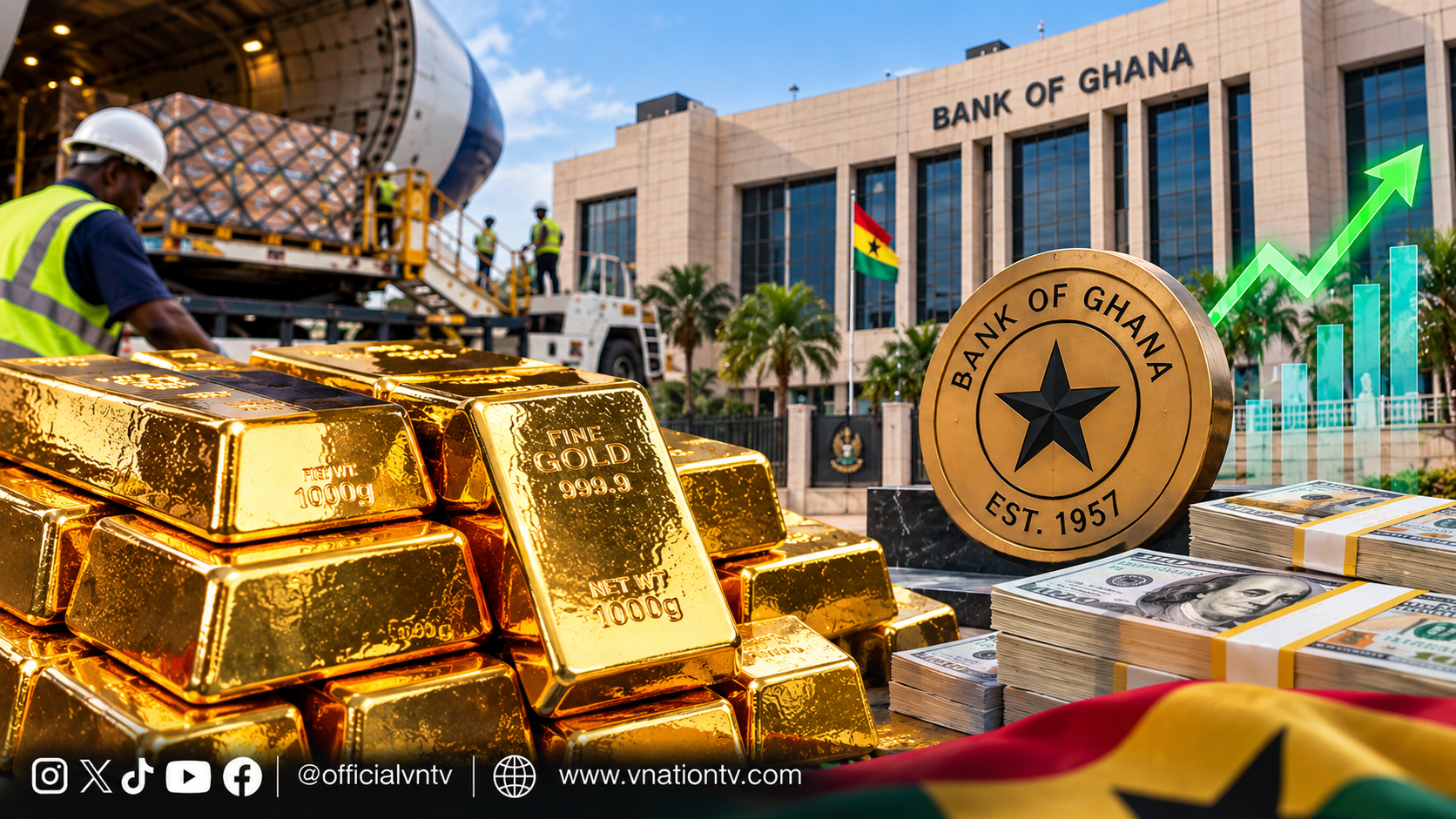
Bank of Ghana Governor Dr Johnson Asiama says significant gold shipments have resumed, providing fresh support for Ghana's foreign exchange reserves after shipments became less regular in recent months. The central bank estimates the country's reserve buffer at around 4.5 months of import cover, although fluctuations in global gold prices remain a major risk.
Ghana's foreign exchange reserve position has received fresh support following the resumption of significant gold shipments, Bank of Ghana Governor Dr Johnson Asiama has disclosed.
The development comes after concerns over slower gold exports and pressure on the country's external buffers raised questions about the pace of reserve accumulation.
Speaking at the press briefing following the Bank of Ghana's 132nd Monetary Policy Committee meeting, Asiama said new information received by the central bank showed that the Ghana Gold Board, GoldBod, had made a significant shipment during the previous week.
“The shipments have resumed,” Asiama said.
He explained that the latest data changed the central bank's assessment from information available when the Monetary Policy Committee began its deliberations.
According to the governor, GoldBod had not completely stopped exporting gold, but shipments had become less regular compared with the previous two quarters.
That slowdown had contributed to concerns about Ghana's external position.
The Bank of Ghana reported that gross international reserves stood at about $11.1 billion at the end of August, equivalent to approximately 4.2 months of import cover.
More recent data subsequently showed reserves rising to about $12.04 billion as of September 22.
Asiama's latest assessment puts Ghana's reserve cover at around 4.5 months of imports, reflecting the more recent improvement in the country's external buffers.
The renewed gold shipments are particularly significant because gold has become an increasingly important part of Ghana's strategy for generating foreign exchange and strengthening international reserves.
Under the Ghana Accelerated National Reserve Accumulation Policy, the government and central bank are seeking to build stronger external buffers while reducing vulnerability to sudden foreign exchange pressures.
GoldBod has become central to that strategy.
In August, the state gold trading body generated approximately $1.315 billion in foreign exchange under its new financing model.
Of that amount, about $668.21 million was supplied directly to commercial banks through spot sales and funded forward arrangements.
Another $646.59 million was made available to the Bank of Ghana for reserve accumulation.
GoldBod subsequently projected that it could generate as much as $1.4 billion in foreign exchange during September.
Under that projection, approximately $700 million would be supplied to commercial banks to support foreign exchange market stability, while up to another $700 million could be directed to the Bank of Ghana for reserve accumulation.
The latest resumption of significant shipments therefore provides an important boost to that strategy.
But Asiama cautioned that Ghana's increasing reliance on gold also exposes the reserve accumulation programme to developments beyond the country's control.
One of the biggest risks is the international price of gold.
Gold prices can move sharply in response to global interest rates, geopolitical developments, investor demand and monetary policy decisions by major central banks.
Asiama specifically pointed to monetary policy in the United States as one factor capable of affecting international gold prices.
Changes in US interest rates can influence investor demand for gold and, consequently, the value of Ghana's gold exports.
A sustained fall in gold prices could therefore reduce the foreign exchange generated from shipments even if export volumes remain strong.
The governor said Ghana's reserve accumulation strategy would not depend exclusively on gold.
The central bank is also looking to foreign exchange earnings from other exports, including non-traditional exports, as it attempts to build a more diversified and sustainable reserve position.
That diversification could become increasingly important as Ghana attempts to protect its external buffers against commodity price volatility.
The latest developments also come after a noticeable decline in reserves earlier this year.
Ghana's gross international reserves stood at about $14.5 billion in March, equivalent to approximately 5.8 months of import cover.
By the end of August, the figure had fallen substantially.
The decline coincided with slower gold shipments and increased external payments, prompting the Bank of Ghana to identify the external sector as an area requiring close attention.
The latest shipment data now offers a more encouraging picture.
But the improvement does not eliminate the underlying risks.
Ghana remains exposed to changes in global commodity prices, international financial conditions and fluctuations in foreign exchange demand.
The central bank must also manage the relationship between reserve accumulation and the supply of foreign currency to the domestic economy.
For businesses and consumers, the strength of Ghana's reserves matters because they provide the Bank of Ghana with a buffer against external shocks and can improve its ability to respond to periods of pressure on the cedi.
Stronger reserves can also improve confidence in the country's ability to meet international payment obligations.
The latest figures therefore represent more than an increase in gold exports.
They provide fresh support for one of the central pillars of Ghana's current foreign exchange strategy.
For now, Ghana's gold is flowing more strongly again.
Whether that translates into a sustained rebuilding of the country's international reserves will depend not only on how much gold Ghana can ship, but also on what that gold is worth when it reaches the international market.