GHANA’S NEW HERITAGE SERIES BANKNOTES TO ENTER CIRCULATION DECEMBER 1 AS REDESIGN SPARKS NATIONAL DEBATE
Ghana’s new Heritage Series banknotes will enter circulation on December 1, 2026, alongside the existing notes, which will remain legal tender and be withdrawn gradually. The redesigned series retains the GH¢1, GH¢2, GH¢5, GH¢10, GH¢20, GH¢50, GH¢100 and GH¢200 denominations and introduces smaller sizes, reinforced cotton paper and enhanced security features. President John Dramani Mahama officially unveiled the series at the Bank of Ghana on November 12.
ACCRA, GHANA — Ghana’s newly unveiled Heritage Series banknotes will enter circulation on December 1, 2026, introducing the most extensive redesign of the cedi in nearly two decades and placing a new generation of national figures, cultural symbols and historic landmarks into the hands of millions of Ghanaians. The Bank of Ghana says the eight redesigned denominations, ranging from GH¢1 to GH¢200, are intended to improve security, durability and ease of use while transforming the national currency into a broader visual account of Ghana’s political, cultural and social history. The new notes have already triggered widespread public discussion over who was selected for recognition, who was omitted and what the currency should represent as Ghana approaches the 70th anniversaries of independence and the central bank in 2027.
President John Dramani Mahama officially unveiled the Ghana Cedi Heritage Series at Bank Square in Accra on Thursday, November 12, alongside Bank of Ghana Governor Dr. Johnson Pandit Asiama, senior government officials, traditional leaders, diplomats and representatives of the financial sector. The redesigned notes will not immediately replace the existing currency. Instead, both series will circulate side by side from December 1, with older notes remaining legal tender and gradually being withdrawn through the banking system as the new series becomes more widely available.
That transition is important because the introduction is not a redenomination and does not change the value of the cedi. A GH¢20 Heritage Series note will have exactly the same monetary value as the GH¢20 note currently in circulation, and the Bank of Ghana has emphasized that people do not need to rush to banks to exchange their existing cash. The gradual approach is intended to reduce disruption for households, traders, businesses, banks and cash-handling institutions while allowing the central bank to replace worn notes through the normal currency cycle.
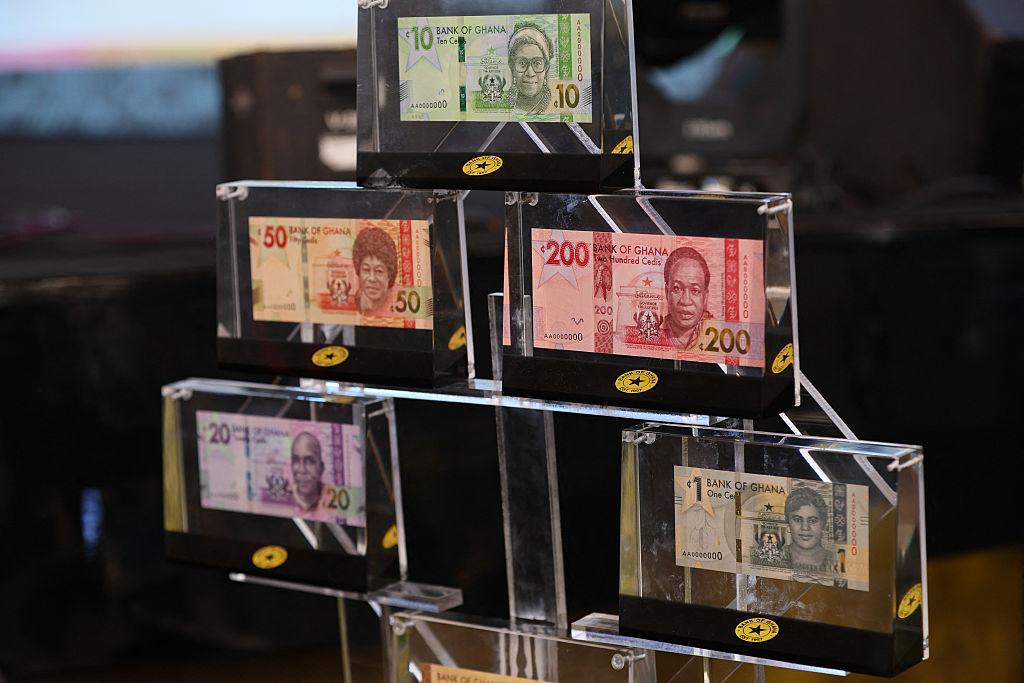
The Heritage Series retains all eight current denominations: GH¢1, GH¢2, GH¢5, GH¢10, GH¢20, GH¢50, GH¢100 and GH¢200. Each denomination has been given a separate theme built around a Ghanaian personality, a historic site or national institution and an Adinkra symbol intended to connect the note to a broader story about the country. The designs also introduce smaller physical dimensions, reinforced cotton paper, updated security technology and features intended to help people identify genuine notes more easily.
One of the most discussed designs is the new GH¢1 note, which honors Agnes Oforiwa Tagoe-Quarcoopome, a prominent Accra trader associated with Makola Market and the commercial networks that helped finance Ghana’s independence movement. Rather than simply presenting a generic image of “market women,” the note places a specific woman from Ghana’s commercial history at the center of the country’s lowest paper denomination, while the reverse depicts market activity and the broader role of traders in everyday economic life.
Tagoe-Quarcoopome, born in 1913, became known as one of Makola’s influential textile traders and has been remembered for supporting Kwame Nkrumah’s political activities and for becoming one of the market women associated with the early adoption of formal banking. Her inclusion has been widely interpreted as recognition of the generations of Ghanaian women whose trading businesses helped sustain families, finance political activity and build commercial networks long before women received significant representation in formal corporate and political institutions.
The GH¢1 note carries the theme of commerce and includes the Bese Saka Adinkra symbol, traditionally associated with wealth, abundance and trade. The reverse side references market women and Makola, linking the denomination to the everyday economic activity of traders across the country. The design has attracted particular attention because informal and small-scale trade remains central to Ghana’s economy, and market women continue to occupy a highly visible place in urban and regional commerce.
The new GH¢2 note focuses on religious freedom and peaceful coexistence. It features Cardinal Peter Porekuu Dery, the late Catholic Archbishop of Tamale and one of Ghana’s most influential Christian leaders, while the reverse depicts the historic Larabanga Mosque in the Savannah Region. By pairing a Catholic cardinal with one of Ghana’s oldest and best-known Islamic landmarks, the Bank of Ghana is presenting the denomination as a deliberate statement about interfaith tolerance and the country’s history of coexistence between Christian, Muslim and traditional religious communities.
The GH¢5 note centers on education and features James Emman Kwegyir Aggrey, one of Ghana’s most celebrated educators and intellectuals. Achimota School appears on the reverse, connecting Aggrey’s legacy to an institution with which he was closely associated. The design uses the Adinkra expression Nea Onnim No Sua A, Ohu, conveying the idea that a person who does not know can learn, reinforcing the educational theme.
The GH¢10 note honors Justice Annie Jiagge and carries the theme of justice and equality. Jiagge was a pioneering Ghanaian jurist and one of the first women to achieve senior judicial office in the country and the Commonwealth. The reverse depicts Ghana’s Supreme Court, while the note’s symbolism emphasizes justice, equality and lawful authority. Her inclusion also gives the new series a stronger female presence than many previous Ghanaian banknote designs.
The GH¢20 note turns to arts and culture through Dr. Ephraim Amu, the influential composer, musicologist and educator whose work helped shape modern Ghanaian music and cultural identity. The reverse shows the National Theatre, while the note’s visual language links artistic expression with national heritage. Amu is widely remembered for works including “Yɛn Ara Asaase Ni,” which remains one of Ghana’s most recognized patriotic compositions.
The GH¢50 note features Theodosia Salome Okoh, the artist best known for designing Ghana’s national flag. Jubilee House appears on the reverse, and the theme centers on nationalism and freedom. The choice of Okoh has attracted considerable interest because it places the designer of one of Ghana’s most powerful national symbols directly on the currency itself, linking the flag’s colors and Black Star symbolism to the state institutions that emerged after independence.
There has also been public discussion over the accuracy of Okoh’s portrait after some social media users questioned whether the image on the note resembled her. The Bank of Ghana has since clarified that the portrait was developed from authentic photographs of Okoh and represents her, illustrating how quickly banknote imagery can become the subject of public scrutiny when the people depicted are widely known.
The GH¢100 note honors former United Nations Secretary-General Kofi Annan under the theme of peace. The reverse features the Kofi Annan International Peacekeeping Training Centre in Accra, while the Bi Nka Bi Adinkra symbol represents peaceful coexistence and the rejection of conflict. The Kofi Annan Foundation has welcomed the recognition, describing the note as a tribute to his lifelong work in diplomacy, human rights, development and international cooperation.
Annan served as UN Secretary-General from 1997 to 2006 and jointly received the Nobel Peace Prize with the United Nations in 2001. His presence on the GH¢100 note places one of Ghana’s most internationally recognized public figures at the center of the new currency series and connects Ghana’s domestic identity with its long-standing role in peacekeeping and multilateral diplomacy.
The GH¢200 note features Ghana’s first president, Dr. Kwame Nkrumah, under the theme of sovereignty. The reverse carries the Kwame Nkrumah Mausoleum, while the Adinkrahene symbol emphasizes leadership and authority. Nkrumah’s appearance on the highest denomination has attracted particular political and historical attention because the new series removes the collective “Big Six” image that has been one of the most recognizable features of Ghana’s existing banknotes.
Under the current series, the portraits of the Big Six — Kwame Nkrumah, Edward Akufo-Addo, Ebenezer Ako-Adjei, William Ofori Atta, J.B. Danquah and Emmanuel Obetsebi-Lamptey — appear together across several denominations as a symbol of the independence struggle. In the Heritage Series, only Nkrumah remains, while the other five figures are absent. That change has already produced debate among historians, political commentators and members of the public over how Ghana should represent the independence movement and whether the redesign gives too much prominence to some figures at the expense of others.
The Bank of Ghana has not presented the series as an attempt to rewrite Ghana’s history but as a broader selection of national figures drawn from commerce, religion, education, justice, arts, nationalism, peace and sovereignty. The central bank’s argument is that currency design should evolve to reflect multiple dimensions of Ghanaian identity rather than remain fixed around one generation of political leaders.
That explanation has not ended the debate. Banknotes are among the most frequently handled national symbols, meaning portrait choices inevitably carry political and emotional significance. Unlike statues or museums, currency passes through millions of hands every day, giving the people depicted extraordinary visibility and making decisions about representation far more consequential than ordinary commemorative honors.
The Heritage Series has therefore become a national conversation about memory as much as money. Supporters have praised the inclusion of women, educators, artists, religious leaders and diplomatic figures who rarely appeared on previous banknotes. Critics and commentators have questioned the absence of some independence-era personalities and whether the distribution of figures across denominations reflects a balanced account of Ghanaian history.
The Bank of Ghana has emphasized that practical considerations played an equally important role in the redesign. Governor Asiama said Ghana’s existing core banknote designs have been in circulation for more than two decades, during which printing technology, counterfeiting methods, cash-handling systems and public expectations have changed significantly. Periodic modernization, he argued, is necessary to protect the integrity of the currency and reduce the long-term cost of replacing damaged notes.
The new notes are printed on reinforced cotton paper intended to withstand Ghana’s hot and humid climate and the heavy daily handling common in markets, public transport and retail transactions. The notes are also smaller than the current series, which the central bank says will make them easier to carry, count and process while reducing the amount of material required for production.
Security has become another major focus. The Bank of Ghana has introduced updated threads, color-shifting elements, tactile features, 3D security stripes on higher denominations and other authentication devices designed to make counterfeiting more difficult. The GH¢100 and GH¢200 notes include advanced three-dimensional security elements, while lower denominations carry different threads and metallic features that change appearance when the note is tilted.
The central bank is encouraging the public to use a simple method of checking the notes by looking, tilting and feeling them. Security elements are designed to be visible without specialized equipment, allowing traders, transport operators, banks and ordinary users to make quick checks during transactions. That approach is particularly important in a cash-heavy economy where sophisticated authentication machines are not available at every point of sale.
The Bank of Ghana is also launching a dedicated Cedi mobile application to help people learn the security and design features of the new notes. The app is intended to provide visual and educational information about each denomination and will include accessibility features aimed at helping visually impaired users identify currency more easily.
Public education will be a major part of the December rollout. The central bank is expected to work with commercial banks, market associations, transport operators, retailers, schools and media organizations to explain what the new notes look like and reassure the public that old currency remains valid. Such education is essential during currency transitions because uncertainty can create opportunities for fraudsters to falsely claim existing notes are no longer accepted.
The Bank of Ghana has repeatedly stressed that there is no deadline requiring citizens to exchange all their existing cash before December 1. Current notes will continue circulating and will be withdrawn gradually when they reach banks, allowing the transition to occur through normal transactions rather than a compulsory mass exchange.
The new series also arrives as the central bank prepares for broader reform of Ghana’s currency-management framework. Governor Asiama said the Bank is working with stakeholders on a modern Currency Act to replace the Currency Act of 1964, legislation written more than six decades ago. The proposed law is expected to strengthen penalties for counterfeiting, currency mutilation and other offenses while updating the legal framework for a modern financial system.
That legal review reflects the growing complexity of currency management at a time when cash must coexist with mobile money, digital banking, electronic payments and emerging central bank technologies. Ghana remains one of Africa’s most active mobile-money markets, but physical banknotes continue to play a central role in daily commerce, particularly in informal trade and smaller transactions.
President Mahama used the launch to connect the redesign to the broader question of confidence in the cedi. He argued that the national currency must be judged not merely by its appearance but by whether economic policy protects its purchasing power and gives households and businesses confidence when planning for the future. For traders, he said, currency stability should mean greater certainty when buying stock, while manufacturers need confidence that exchange-rate movements will not undermine production planning.
The cedi has historically faced periods of sharp depreciation, inflation and public anxiety over purchasing power. A new banknote design cannot resolve those macroeconomic challenges, and the Bank of Ghana has not claimed that it can. The Heritage Series is principally a security, durability and national-identity project, while the value of the currency will continue to depend on inflation, fiscal policy, monetary discipline, foreign exchange flows, reserves and broader economic performance.
That distinction is important because currency redesigns can sometimes be misinterpreted as monetary policy interventions. Ghana’s Heritage Series does not remove zeros from the currency, alter denomination values or amount to a currency reset. The GH¢1 remains GH¢1 and the GH¢200 remains GH¢200. The changes are visual, physical and technological rather than a revaluation of the cedi.
The launch also carries historical symbolism because it comes ahead of 2027, when Ghana will mark 70 years since independence and the Bank of Ghana will celebrate its 70th anniversary. The central bank has framed the Heritage Series as part of that milestone, using the redesign to connect the evolution of money in Ghana from cowrie shells and gold dust to modern banknotes and digital payments.
President Mahama referenced that history directly at the launch, tracing the word “cedi” to the Akan term associated with cowrie shells once used as a medium of exchange. By placing market traders, nationalists, educators and other figures on the new notes, the government and central bank are presenting currency as an educational object as well as an economic instrument.
That educational ambition is particularly visible in the decision to include QR codes, landmarks and cultural symbols across the notes. Younger Ghanaians handling the currency will repeatedly encounter figures such as Aggrey, Jiagge, Amu, Okoh and Tagoe-Quarcoopome, potentially prompting greater public interest in people whose contributions may not be as familiar as those of presidents and political leaders.
The market-women theme on the GH¢1 has become one of the strongest examples of that approach. For decades, Ghanaian market women have played a major role in commodity distribution, textiles, food supply and household finance, yet their contribution has rarely been represented in official national imagery. The selection of Tagoe-Quarcoopome places that history into everyday transactions and has become one of the most widely discussed aspects of the redesign.
The religious symbolism of the GH¢2 has similarly attracted interest. Pairing Cardinal Dery with the Larabanga Mosque presents religious diversity not as a competition between faiths but as a shared national tradition. In a region where religious polarization has contributed to conflict in several countries, the Bank of Ghana appears to have deliberately used the note to emphasize Ghana’s reputation for interfaith coexistence.
The inclusion of three women across the eight denominations also represents a significant shift from older designs. Tagoe-Quarcoopome appears on the GH¢1, Justice Annie Jiagge on the GH¢10 and Theodosia Okoh on the GH¢50. Their roles span commerce, law and national symbolism, broadening the visual story of who contributed to Ghana’s development.
Kofi Annan’s GH¢100 note adds an international dimension, while Nkrumah’s GH¢200 placement reinforces the political and sovereignty theme at the top of the denomination range. Together, the eight notes create a deliberately curated narrative rather than simply repeating the same portraits across multiple values.
The debate over the Big Six will nevertheless remain one of the most politically sensitive aspects of the rollout. The collective portrait has been embedded in Ghanaian banknotes for years and carries strong associations with the independence struggle. Removing five of the six from the new series means the public will gradually see fewer of those images as older notes are withdrawn, even though they remain part of Ghana’s official historical memory.
Some critics are likely to interpret that change through partisan politics because the historical legacy of Nkrumah and figures such as J.B. Danquah remains entangled with Ghana’s modern political traditions. The Bank of Ghana has sought to present the redesign as an institutional rather than partisan exercise, but currency imagery inevitably intersects with competing interpretations of national history.
The central bank will therefore have to manage not only the technical rollout but also the political and cultural conversation surrounding the designs. Public acceptance of currency depends partly on trust, and transparency about why figures were selected can help prevent the redesign from becoming dominated by speculation about partisan motives.
For businesses and banks, the immediate challenge will be practical. Cash machines, counting devices, vending equipment and other systems may need recalibration to recognize the new dimensions and security features. Financial institutions will also need to train staff to distinguish genuine notes and explain the coexistence of the two series to customers.
Retailers and market traders will be among the first groups to encounter the new notes at scale. Because the GH¢1, GH¢2, GH¢5 and GH¢10 denominations change hands frequently, those lower-value notes will provide an early test of the durability claims behind the reinforced cotton paper. If they last significantly longer than existing notes, the Bank of Ghana could reduce the cost of replacing damaged currency over time.
The redesign is therefore both symbolic and operational. It is about who Ghana chooses to remember, but also about how long banknotes last, how easily they can be authenticated and how efficiently they move through an economy that still depends heavily on cash.
As December 1 approaches, public attention is likely to shift from photographs and political debate to practical questions about what the notes look like in hand, how easily they fit into wallets and tills and whether people can recognize their security features. The Bank of Ghana’s education campaign will be critical during that period, particularly in rural communities and markets where misinformation about new currency can spread quickly.
The introduction also provides an opportunity for schools, museums and cultural institutions to use the notes as entry points into Ghanaian history. Each denomination links money to a specific story, whether it is the commercial power of Makola traders, religious coexistence, education, justice, the arts, nationalism, peace or sovereignty.
That narrative approach helps explain why the Heritage Series has generated such intense discussion before a single note has entered circulation. Currency is normally treated as a practical tool, but a redesign forces a country to decide which faces, places and symbols deserve constant public visibility. Those choices inevitably reveal how a nation understands itself.
Ghana’s Heritage Series therefore represents more than a new look for the cedi. It is a statement about national memory, economic confidence and the continuing relevance of physical money in an increasingly digital economy. The Bank of Ghana has presented the new series as secure, durable and designed to last, while President Mahama has framed it as a link between Ghana’s economic future and its historical inheritance.
Whether the public ultimately embraces every design choice will only become clear after the notes begin circulating. The debates over the Big Six, the portraits selected and the meaning of individual symbols are unlikely to disappear immediately. What is certain is that from December 1, Ghanaian traders, commuters, businesses and households will begin handling a substantially different visual representation of the cedi, one that places market women, educators, judges, artists, religious leaders, diplomats and independence figures together in a new national story printed directly onto the country’s money.