
GHANA'S PUBLIC DEBT RISES GH¢13.1 BILLION IN TWO MONTHS
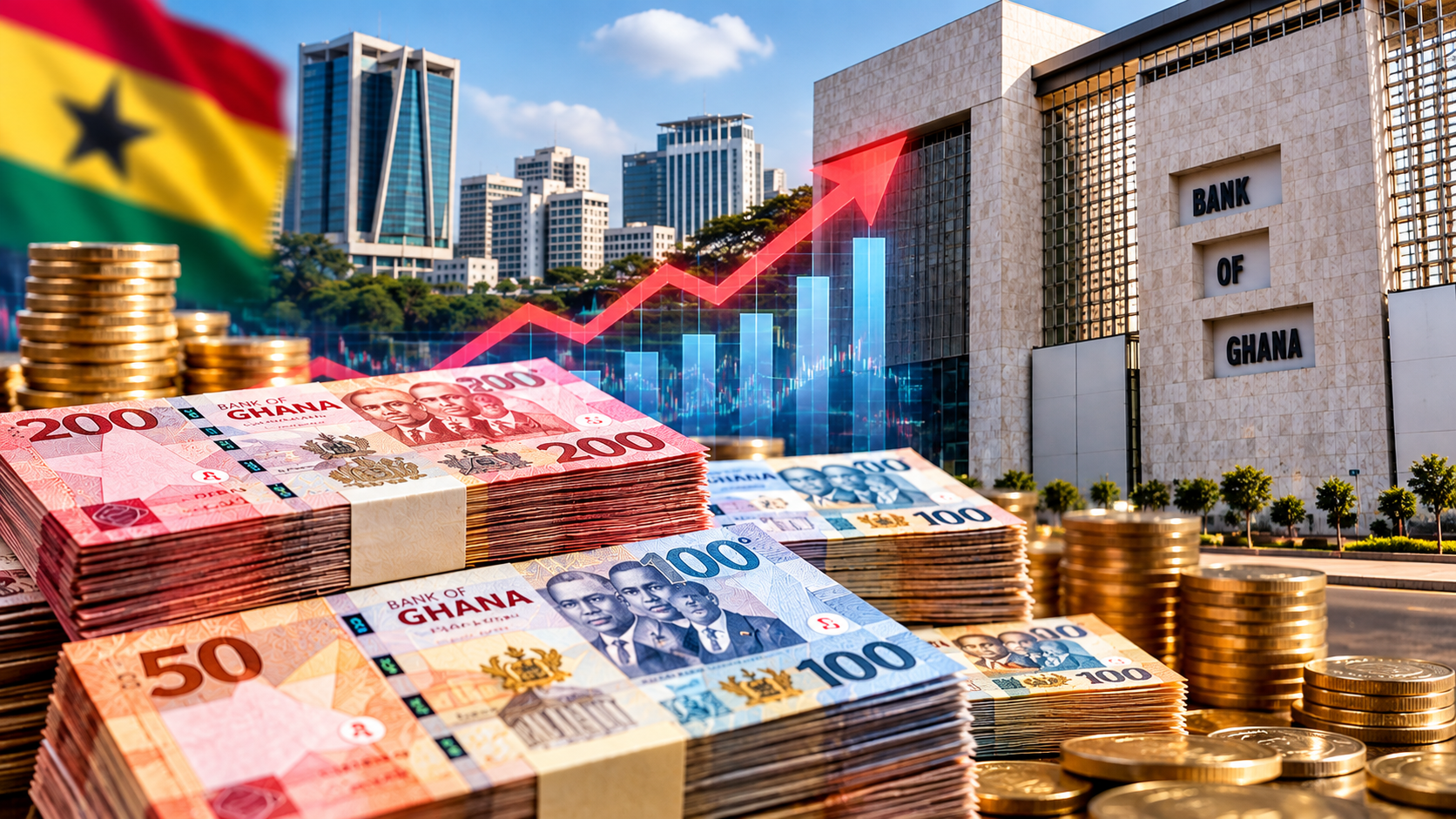
Ghana's public debt increased by GH¢13.1 billion between May and July 2026, reaching GH¢733.9 billion, according to the Bank of Ghana's latest economic data. The increase was driven primarily by domestic debt, while the external component declined.
Ghana's public debt increased by GH¢13.1 billion between May and July 2026, driven largely by a rise in domestic borrowing as the government continues to manage its finances following the country's debt restructuring programme.
The Bank of Ghana's September 2026 Summary of Economic and Financial Data shows that total public debt rose from GH¢720.8 billion in May to GH¢733.9 billion in July.
The debt stock initially declined marginally to GH¢719.5 billion in June before increasing by GH¢14.4 billion the following month.
At the end of July, Ghana's total public debt was equivalent to approximately 45.9% of gross domestic product.
The composition of the debt shows that domestic borrowing accounted for most of the increase recorded during the two month period.
Domestic debt rose from GH¢379.1 billion in May to GH¢396.7 billion in July, representing an increase of GH¢17.6 billion.
Domestic debt accounted for approximately 24.8% of GDP in July.
External debt, however, moved in the opposite direction.
The external component declined from approximately GH¢341.7 billion in May to GH¢337.2 billion in July.
In dollar terms, external debt edged down from $28.9 billion in May to $28.8 billion in July.
The country's total public debt expressed in US dollars stood at approximately $62.8 billion in July, compared with $61.5 billion in May. It had climbed to $63.4 billion in June before declining the following month.
The latest figures continue a broader increase in Ghana's nominal debt stock since the beginning of 2026.
Total public debt stood at GH¢663.4 billion in January before increasing to GH¢674.1 billion in February, GH¢686.1 billion in March and GH¢695.9 billion in April.
It subsequently climbed to GH¢720.8 billion in May.
The Bank of Ghana has previously linked part of the increase in domestic debt during the first half of the year to government borrowing aimed at strengthening fiscal buffers and meeting future debt service obligations.
The latest data therefore place renewed attention on the pace of domestic borrowing as Ghana navigates its post restructuring fiscal environment.
An increase in the nominal debt stock does not by itself provide a complete assessment of the country's debt sustainability. The debt to GDP ratio, government revenue, interest costs, maturity structure, exchange rate movements and the government's ability to meet future obligations are also important measures of the country's overall debt position.
The figures come as the Bank of Ghana's Monetary Policy Committee begins its September deliberations against a backdrop of changing domestic and external economic conditions.
The central bank is assessing inflation, economic growth, exchange rate developments, government financing conditions and emerging pressure on Ghana's external reserves before announcing its latest monetary policy decision.
For the government, the latest debt figures underline the continuing challenge of meeting financing requirements while preventing a renewed build up of debt vulnerabilities following the restructuring programmed.
The direction of domestic borrowing in the coming months will be closely watched as policymakers seek to maintain fiscal discipline while meeting government expenditure and debt service obligations.