
GODFRED DAME QUESTIONS TWO NIGHT EOCO DETENTION OF MANHYIA SOUTH MP
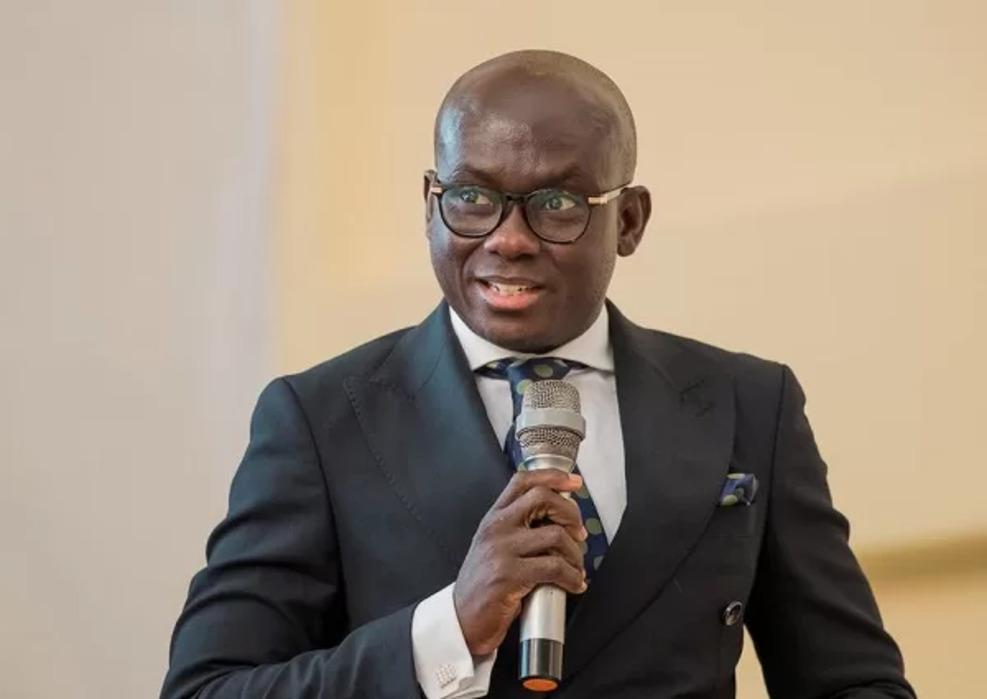
Former Attorney General Godfred Yeboah Dame has questioned why Manhyia South MP Nana Agyei Baffour Awuah remained in the custody of the Economic and Organised Crime Office for two nights after voluntarily reporting to investigators. Dame said the investigation appears to involve a transaction from which Baffour Awuah reportedly earned GH¢2.2 million in legal fees and questioned whether the conduct under investigation amounts to a criminal offence. He also accused state investigative institutions of using their powers against political opponents. Those claims are Dame’s political and legal allegations and have not been independently established. EOCO says its investigation involves allegations including conspiracy, financial loss involving SIC Savings and Loans, money laundering and tax related offences. No court has determined that Baffour Awuah is guilty of any of those allegations.
Former Attorney General Godfred Yeboah Dame has questioned the continued detention of Manhyia South Member of Parliament Nana Agyei Baffour Awuah by the Economic and Organised Crime Office, adding a new political dimension to an investigation already attracting intense scrutiny.
Baffour Awuah voluntarily reported to EOCO on October 1 after an Accra High Court issued a warrant connected to an ongoing investigation.
He remained in custody through a second night as investigators continued questioning him and EOCO worked with the Attorney General’s Office to arrange an appearance before a weekend court.
DAME QUESTIONS BASIS FOR CONTINUED DETENTION
In a statement issued on Saturday, October 3, Dame questioned why the MP had spent two nights in custody without being released on bail.
He pointed specifically to reports that Baffour Awuah received GH¢2.2 million in legal fees in connection with the transaction under investigation.
Dame also questioned whether the matters being examined by investigators amount to criminal conduct.
His questions represent his interpretation of the facts and legal issues surrounding the case.
EOCO has presented the investigation more broadly.
EOCO SAYS INVESTIGATION INVOLVES MULTIPLE ALLEGATIONS
According to EOCO, the inquiry involves suspected criminal conspiracy, financial loss involving SIC Savings and Loans, money laundering and tax related offences.
Those allegations remain under investigation.
Baffour Awuah has not been convicted of any offence arising from the matter.
The fact that investigators are examining a financial transaction does not by itself establish criminal liability.
The precise evidence supporting EOCO’s suspicions has not yet been fully tested in open court.
MP REPORTED VOLUNTARILY
Baffour Awuah appeared at EOCO’s offices on October 1 accompanied by his lawyers and other Members of Parliament.
Minority Leader Alexander Afenyo Markin has said the MP waited for several hours before formal questioning began.
According to the Minority’s account, investigators later decided to detain him while additional investigative steps were undertaken.
EOCO has said the MP is cooperating with investigators.
EOCO SAYS WEEKEND COURT PROCESS IS BEING ARRANGED
On October 2, EOCO said it was working with the Office of the Attorney General to bring Baffour Awuah before a weekend court.
The agency said the process was intended to comply with constitutional and procedural requirements governing detention and bail.
EOCO also rejected reports that the MP had already been granted GH¢50 million bail.
At that stage, the agency said investigative and procedural processes remained ongoing.
DAME ACCUSES STATE INSTITUTIONS OF POLITICAL TARGETING
Dame went beyond questioning the detention itself.
He accused EOCO, the Criminal Investigations Department and the Attorney General’s Office of using investigative and prosecutorial authority to punish political opponents.
He argued that state power was being deployed selectively against opposition figures.
Those are allegations made by the former Attorney General.
EOCO and the current Attorney General’s Office have not been shown in the available evidence to have accepted that characterization.
DAME COMPARES CASE WITH PAST PROSECUTIONS
Dame compared Baffour Awuah’s treatment with several cases handled under the previous administration.
He referred to former ministers and lawmakers who were granted bail without spending extended periods in custody while facing serious financial crime allegations.
His argument is that similar treatment should apply to Baffour Awuah.
The legal circumstances of each case, however, can differ depending on the evidence, risk of interference, availability of suspects and investigative requirements.
DETENTION DOES NOT MEAN GUILT
The continued custody of the MP should not be interpreted as evidence of guilt.
Under Ghanaian law, criminal allegations must be proved through the appropriate judicial process.
Investigative agencies may question or arrest suspects, but courts determine criminal responsibility.
Baffour Awuah retains the presumption of innocence unless and until a court finds otherwise.
GH¢2.2 MILLION FIGURE NEEDS CONTEXT
The GH¢2.2 million figure highlighted by Dame is described as legal fees received in relation to a transaction under investigation.
The receipt of legal fees is not itself a criminal offence.
The central question for investigators would be whether there is evidence that the lawyer knowingly participated in or benefited from unlawful conduct beyond providing legitimate legal services.
That has not yet been established publicly.
LAWYERS SAY HE ACTED PROFESSIONALLY
Baffour Awuah’s legal team and political allies have argued that he acted as a lawyer in the transaction and provided professional services.
Bosome Freho MP Nana Asafo Adjei Ayeh has said Baffour Awuah was not an employee of SIC and that his involvement related to legal work.
Lead counsel Samuel Atta Akyea has also questioned how an allegedly unfavorable settlement could automatically become criminal conduct.
Those are defense positions.
Investigators may present a different interpretation if charges are eventually filed.
SEARCH WARRANT HAS ALSO BECOME DISPUTED
Another issue concerns the scope of a court issued search warrant.
Afenyo Markin has said the order obtained by EOCO authorized a search of Baffour Awuah’s law firm in Dzorwulu rather than his residence.
He questioned reports that investigators also intended to search the MP’s home.
That interpretation has been presented by the Minority and should be distinguished from any eventual judicial ruling on the warrant.
EARLIER ATTEMPTED ARREST CAUSED CONTROVERSY
The case had already generated controversy before Baffour Awuah surrendered.
EOCO attempted to arrest him at the Accra High Court on September 23.
The MP described that encounter as unlawful.
EOCO rejected that characterization and said it was taking lawful steps to secure his attendance in an ongoing investigation.
The dispute later resulted in the High Court issuing a warrant for his arrest.
POLITICAL ARGUMENTS ARE INTENSIFYING
The detention has increasingly become a political issue.
NPP figures have criticized EOCO’s handling of the MP.
Some lawyers and commentators have also questioned whether investigators need to keep a cooperative suspect in custody simply because the constitution permits detention for a limited period before court.
Others may argue that investigative agencies should be allowed to complete necessary procedures without political interference.
Ultimately, the legality of any detention or bail decision can be challenged before a court.
48 HOUR RULE IS A MAXIMUM CONSTITUTIONAL LIMIT
Ghana’s Constitution requires an arrested person who is not released to be brought before a court within 48 hours.
The rule does not automatically require investigators to hold someone for the entire period.
Nor does it mean every suspect must be released immediately.
The circumstances of the individual case matter.
A court may eventually determine whether the procedures followed in this case complied with constitutional requirements.
WHY THE CASE MATTERS
The controversy raises broader questions about how investigative agencies exercise arrest and detention powers.
Those powers are necessary for investigating serious crimes.
At the same time, they must operate within constitutional protections for personal liberty and due process.
When the person involved is an opposition MP, political scrutiny becomes particularly intense.
That makes transparency especially important.
EOCO WILL NEED TO EXPLAIN ITS CASE IN COURT
If Baffour Awuah is brought before a weekend court, EOCO and prosecutors will have an opportunity to explain the basis for continued detention, bail conditions or any charges they seek to pursue.
His lawyers will also be able to challenge those arguments.
A court, rather than competing political statements, will then decide the immediate legal questions.
WHAT IS ESTABLISHED SO FAR
Baffour Awuah voluntarily reported to EOCO on October 1.
He has remained in custody during the agency’s investigation.
EOCO says he is cooperating.
The investigation concerns transactions involving SIC Savings and Loans and includes allegations of financial and economic offences.
Godfred Dame has now questioned both the detention and whether the MP’s conduct was criminal.
Those are the established developments.
WHAT REMAINS UNPROVEN
It has not been established that Baffour Awuah committed conspiracy, money laundering, tax offences or caused financial loss.
It has also not been independently established that EOCO’s actions are politically motivated.
Dame’s claim that state power is being used against political opponents is his allegation.
The government and investigative agencies are entitled to respond to that claim.
WHAT HAPPENS NEXT
Attention now turns to the expected weekend court proceedings.
The court could consider bail, detention and any formal charges presented by prosecutors.
EOCO may also provide additional information about the evidence it is investigating.
Dame’s intervention ensures that the case will remain politically prominent.
But the central legal questions will ultimately depend on evidence presented through the judicial process rather than statements from either political side.