GUMI DRAWS A RED LINE FOR NORTHERN EMIRS: IF GUILTY, VACATE THE THRONE
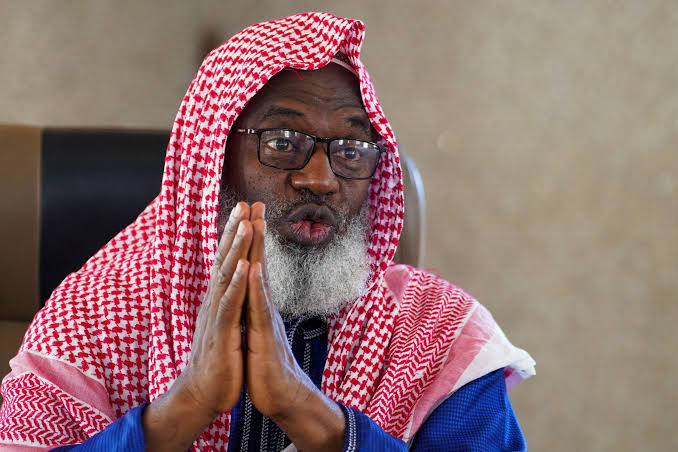
Sheikh Ahmad Gumi, the Kaduna-based Islamic cleric, has called for the removal of any traditional ruler found guilty of immoral conduct. In a Facebook post on Sunday, he said such action is needed to protect the integrity of Nigeria's traditional institution. His statement came after a female foreign tourist accused the Emir of Daura, Alhaji Faruk Umar Faruk, of sexual harassment. The allegation has not been proven. No court, panel or official inquiry has made any finding against the emir, and he is entitled to the presumption of innocence. Gumi's comments have nonetheless opened a sensitive debate in Northern Nigeria. The questions include how allegations against emirs are investigated, who has the power to judge them, and whether royal fathers should face the same moral standards that religious authorities and Hisbah officials apply to ordinary citizens. The case touches Daura, a city revered as the ancestral home of the Hausa people. It also involves one of the North's most outspoken clerics and a foreign complainant. Together, these make the matter a test of how Nigeria's oldest institutions handle accountability, due process and the rights of people who accuse the powerful.
Sheikh Ahmad Gumi has never been known for speaking softly, and his latest intervention is no exception. In a Facebook post on Sunday, the Kaduna-based cleric said any traditional ruler found guilty of immoral conduct should be removed from the throne. Such a step, he argued, is necessary to protect the integrity of the traditional institution. The timing made his meaning clear to almost everyone who read it. His post came amid a sexual harassment allegation made by a female foreign tourist against the Emir of Daura, Alhaji Faruk Umar Faruk.
The details matter, and so do their limits. The allegation against the emir has not been proven. It has not been tested in any court or before any formal inquiry. Key facts have not been independently established in public, including the precise circumstances of the alleged incident and the complainant's full account. Under Nigeria's Constitution, every person accused of wrongdoing is presumed innocent until proven guilty. That principle applies to a first-class emir as fully as it applies to anyone else. Several voices responding to the controversy online have stressed exactly that point. They insist the emir remains innocent until a court of competent jurisdiction says otherwise.
Gumi's statement, read carefully, does not abandon that principle. His call is conditional. It targets any ruler "found guilty," not any ruler accused. In a public climate where social media can convict a person in an afternoon, that distinction is important. Yet the cleric's words still carry great weight. He did not limit himself to the abstract. He chose to speak while a specific allegation was circulating about a specific emir. In doing so, he has pushed a question into the open that Northern Nigeria's elite usually prefers to handle behind closed palace doors. What happens when a royal father, a figure wrapped in religious and cultural reverence, is accused of the kind of conduct his own institution is supposed to condemn?
To understand why Gumi's intervention has drawn so much attention, it helps to understand who he is. Sheikh Ahmad Abubakar Mahmud Gumi is the son of the late Sheikh Abubakar Mahmud Gumi. The elder Gumi was one of the most influential Islamic scholars in twentieth-century Nigeria. He served as Grand Khadi of the old Northern Region and became the intellectual inspiration behind the reformist movement that gave rise to the Izala organization. His Hausa translation of the Qur'an and his campaigns against practices he considered innovations reshaped religious life across the North. The family name carries authority in mosques, homes and markets from Sokoto to Maiduguri.
The younger Gumi built his own reputation on a different path before joining his father's. He trained as a medical doctor and served in the Nigerian Army before devoting himself fully to Islamic scholarship and preaching. For years, his sermons and lectures in Kaduna have drawn large audiences. His reach has grown further through social media, where his posts are shared, debated and reported by national newspapers within hours.
He is also one of the most polarizing figures in Nigerian public life. In 2021, he made headlines nationwide by traveling into forests in the North-West to meet armed bandit groups. He argued that dialogue, amnesty and attention to grievances among Fulani herders could reduce the violence. Supporters saw courage and pragmatism. Critics accused him of legitimizing killers and kidnappers, and his stance drew scrutiny from security agencies. He has also spoken sharply on national politics, foreign policy and security strategy, often in ways that unsettle those in power.
That record shapes how his latest statement is received. Gumi is not a palace insider issuing a quiet warning. He is an independent religious voice with a mass following, a famous family name and a long history of confronting authority. When such a figure says emirs guilty of immorality must go, it lands as a challenge to the institution itself. Some will welcome it as overdue moral clarity. Others will see it as a cleric reaching for influence over thrones that are not his to judge.
The setting adds to the sensitivity. Daura, in Katsina State, is not just another emirate. In Hausa tradition, it is the place where the Hausa nation began. The famous legend of Bayajidda tells of a stranger who arrived in Daura, killed the serpent that guarded the town's well and married its queen. According to the story, their descendants founded the seven original Hausa states. The Kusugu well, linked to that legend, still draws visitors. For millions of Hausa-speaking people, Daura holds a symbolic place as the ancestral heart of their identity.
The town also gained national prominence as the hometown of former President Muhammadu Buhari. During his years in office, Daura became a frequent stop for politicians, diplomats and journalists. The emirate's profile rose with it. A controversy involving the Daura throne therefore carries emotional and political weight well beyond the town's size. It touches Hausa heritage, Northern pride and the image of one of the region's most storied royal seats.
The involvement of a foreign tourist adds another layer. Daura's history and cultural sites, including the Kusugu well and the colorful durbar festivals, have made it a place of interest for visitors. Nigeria has long tried to promote cultural tourism as a way to diversify its economy and improve its global image. An allegation that a foreign visitor was harassed in a royal setting, whether or not it is ultimately proven, raises uncomfortable questions about safety and trust. If the claim is found to be false, it raises a different but equally serious set of questions about reputation and fairness.
Behind all this sits a larger structural problem. Nigeria's traditional institution occupies an unusual position in the country's system of government. It is powerful, respected and deeply rooted in history. Yet it has almost no formal place in the Constitution, and its methods of accountability are weak, inconsistent and often political.
The emirates of Northern Nigeria grew largely out of the Sokoto Caliphate, founded after the jihad led by Sheikh Usman dan Fodio in the early nineteenth century. Dan Fodio, a scholar and preacher, accused the old Hausa kings of corruption, injustice and violating Islamic law. His movement swept many of them from power and installed emirs who pledged allegiance to the caliph in Sokoto. In those emirates, the ruler was meant to be both a political authority and a guardian of the faith. His legitimacy depended, at least in theory, on piety and justice.
Daura's history fits into that story in its own way. The old Hausa dynasty of Daura was displaced during the jihad era and later restored under British colonial rule. That history is a reminder that royal legitimacy in the region has always been shaped by religion, conquest and colonial power all at once.
When the British took control of Northern Nigeria in the early twentieth century, they chose to govern through the existing emirs rather than replace them. This system, known as indirect rule, kept the emirs powerful. They collected taxes, ran native courts and maintained order on behalf of the colonial government. But it also changed the nature of their authority. Emirs now owed their positions partly to colonial approval. The British could and did remove rulers they considered disloyal or incompetent.
After independence, the regional governments, and later the state governments, inherited that power. Today, the selection, appointment and removal of emirs are governed largely by state chieftaincy laws. In most Northern states, kingmakers from the emirate recommend candidates from eligible ruling houses. The state governor then makes the formal appointment. Governors also hold the power to suspend or depose emirs, usually after some form of inquiry or on grounds set out in the law.
The Constitution says little about traditional rulers. They have no guaranteed legislative role, no formal executive powers and no constitutional immunity. Their influence is real but mostly informal. They mediate disputes, mobilize communities, advise governments, support security efforts and shape public opinion. Politicians court them before elections. Federal officials consult them during crises. Ordinary citizens often trust them more than elected officials.
This gap between informal power and formal accountability is at the heart of the current debate. Emirs are highly influential, yet there is no clear national standard for investigating misconduct allegations against them. There is no independent ethics body for traditional rulers. Mechanisms vary from state to state. The most powerful check, the governor's power of removal, is also the most politically compromised.
History shows how that power has been used. In 1996, the military government of General Sani Abacha deposed Sultan Ibrahim Dasuki of Sokoto, the spiritual leader of Nigeria's Muslims. In 2005, the Kebbi State government deposed Emir Mustapha Jokolo of Gwandu. In 2020, Kano State Governor Abdullahi Ganduje deposed Emir Muhammadu Sanusi II, citing insubordination after years of open tension. In 2024, after a change of government in Kano, the state assembly repealed the law that had split the emirate. Sanusi was reinstated, setting off legal battles and a bitter standoff with the deposed Emir Aminu Ado Bayero.
What these cases have in common is not moral misconduct. Most removals of prominent emirs in modern Nigeria have been driven, or widely perceived to be driven, by politics. Rulers fell out with governors or military rulers. They were accused of disloyalty, disrespect or interference. The formal grounds were often vague. The public rarely saw a transparent process with evidence, testimony and a clear finding.
That is why Gumi's call cuts in a different direction. He is not asking governors to remove emirs who displease them politically. He is asking that rulers who are found guilty of immoral conduct face removal on principle. In effect, he is arguing for a moral standard of royal accountability, not a political one. That is a significant shift in a system where thrones have more often been lost through feuds with Government House than through proven personal wrongdoing.
It also exposes a practical gap. If an emir is accused of sexual harassment, who investigates? The options exist, but none is straightforward.
The first is the criminal justice system. Sexual harassment and assault can be criminal offenses under Nigerian law. In Northern states, the Penal Code and related state laws include provisions against acts that insult or outrage the modesty of a woman, as well as more serious sexual offenses. Federal law, including the Violence Against Persons (Prohibition) Act of 2015, also addresses sexual and gender-based violence, though its application across the states depends on whether and how each state has adopted it. In principle, the police can receive a complaint, investigate and refer a case for prosecution.
In practice, investigating a first-class emir is extraordinarily difficult. Royal palaces are guarded spaces. Witnesses may be courtiers, guards or staff whose livelihoods depend on the palace. Fear of retaliation, social pressure and deep reverence for royal fathers can silence potential witnesses. Police officers working in emirate towns live within the same social structures. Questioning an emir, let alone arresting or prosecuting one, would be almost without precedent.
For a foreign complainant, the barriers are even higher. A visitor may leave the country before any investigation begins. She may lack local legal support, language skills or confidence in local institutions. Her embassy may offer consular help but has no power to direct a Nigerian investigation. She may face a flood of online attacks questioning her motives, character and credibility, as complainants against powerful men often do. Pursuing a case from abroad requires time, money and resilience few people have.
The second route is administrative. A state government can set up a panel of inquiry to examine allegations against a traditional ruler. It can suspend a ruler pending investigation, or ask kingmakers and emirate councils to address the matter. This route gives governors wide discretion, and therein lies the problem. A governor who is close to an emir may do nothing. A governor in conflict with an emir may act too fast. Either way, public trust in the outcome is fragile.
In Katsina State, any official process would ultimately run through the government of Governor Dikko Umaru Radda. That places the state administration in a delicate position. Acting forcefully on an unproven allegation could look like a rush to judgment against a respected ruler in a symbolic emirate. Doing nothing could look like a cover-up, especially with a foreign complainant and international attention involved. The most credible path would be a transparent, impartial process that protects both the complainant's right to be heard and the emir's right to a fair hearing. Whether such a path is taken remains to be seen.
The third route is internal. Emirate councils, kingmakers and senior palace officials have their own customs and traditions for dealing with misconduct. Those processes are usually private. They may involve elders quietly counseling a ruler, mediating with complainants or managing the matter away from public view. Supporters argue that this protects the dignity of the throne and avoids public humiliation. Critics argue it protects the powerful at the expense of victims. In a case involving an allegation of sexual misconduct, a private settlement would satisfy few people who are demanding accountability, and it would do nothing to establish the truth.
Into this unsettled terrain steps Gumi, invoking religious principle. His argument draws on a long tradition in Islamic political thought. Classical Muslim scholars wrote extensively about the qualities required of a ruler. Among the most important is adalah, often translated as probity, integrity or moral uprightness. A ruler is expected to uphold justice, avoid open sin and set an example for the community. Scholars debated for centuries whether a ruler who loses such qualities can be removed, and how, given the risk of chaos and bloodshed. But the core idea that leadership is a trust, and that moral failure damages that trust, runs deep.
For a Northern Nigerian audience, that tradition is not abstract. The emirate system was founded on dan Fodio's claim that the old kings had lost their right to rule through injustice and immorality. His movement was, at its heart, a cleric's challenge to royal power in the name of religious standards. Gumi is not calling for revolution. But by insisting that immoral conduct should cost an emir his throne, he is drawing on the same moral logic that underpins the legitimacy of the emirates themselves.
That points to the deeper power dynamic in this controversy: the relationship between Islamic clerics and traditional rulers. In Northern Nigeria, the two often work closely together. Emirs appoint chief imams. Palaces host religious events. Clerics praise rulers who protect the faith and support Islamic education. Many emirs are themselves trained in Islamic scholarship, and some rulers are regarded as religious figures in their own right, most notably the Sultan of Sokoto.
Yet the relationship also contains real tension. Emirs draw their authority from lineage, tradition and state appointment. Clerics draw theirs from knowledge, piety and popular following. When the two align, they reinforce each other. When they clash, the question of who speaks for the community becomes contested.
Over the past half-century, the rise of reformist movements, including the movement inspired by Gumi's father, has shifted that balance. Reformist preachers built followings that did not depend on royal patronage. Mass media, cassette sermons and now social media gave them direct access to the public. A popular cleric today can reach millions without the approval of any palace. That gives figures like Gumi a form of power traditional rulers cannot easily control.
Gumi's statement is therefore more than a comment on one allegation. It is an assertion that religious standards stand above royal status. It tells emirs that their thrones do not shield them from the moral expectations of the faith. And it signals that clerics with large followings are prepared to say so in public.
Some traditional title holders and their supporters may resent that message. They may argue that clerics have no authority to dictate the fate of thrones, that the matter belongs to kingmakers and governments, and that public commentary prejudices the case. There is merit in the concern about prejudice. When a prominent cleric speaks about immorality while an allegation is circulating, some followers may hear a verdict rather than a principle. That risk is real, especially in a society where religious voices carry such weight.
But Gumi's supporters can point to the conditional nature of his words. He did not declare the emir guilty. He set out what should happen if guilt is established. That is a position many people across religious and political lines would accept. Few Nigerians would openly argue that a ruler proven to have sexually harassed a visitor should keep his throne. The disagreement lies not in the principle but in the process. Who decides guilt? By what standard? With what protections for both sides?
There is also an uncomfortable question about consistency, and it is one many Northerners have raised for years. In several Northern states, Sharia-based laws and religious enforcement bodies such as the Hisbah police public morality. Hisbah officials have arrested young people for mixing at parties, cracked down on dress codes and seized alcohol. Ordinary citizens, especially the poor and young, often face swift public consequences for conduct considered immoral.
Critics have long argued that this moral policing rarely reaches the elite. Politicians, wealthy businessmen and royal figures, they say, are treated with quiet tolerance. The poor are punished in public. The powerful are counseled in private. Katsina is among the Northern states that adopted Sharia-based laws in the early 2000s. In that context, Gumi's call challenges a double standard. If moral rules apply to the young man arrested at a wedding party, the argument goes, they should apply even more strictly to the royal father who is supposed to embody those rules.
This is one reason the statement has resonated. It speaks to frustration among many Northerners who feel that religious morality is enforced downward but rarely upward. Whatever the outcome of the allegation in Daura, the principle Gumi has articulated invites a broader reckoning. If the North's moral codes are serious, they must bind the throne as well as the street.
The allegation also raises difficult questions about gender, power and silence. Sexual harassment is widely believed to be underreported across Nigeria, and the North is no exception. Women who accuse powerful men face enormous obstacles. They may be blamed, shamed or accused of seeking money or fame. Families may pressure them to stay quiet to protect their reputation. Religious and cultural norms that emphasize modesty can, in practice, place the burden of shame on women rather than on men accused of misconduct.
When the accused is a revered figure, the pressure to stay silent is even stronger. An accusation against an emir is, for many, an accusation against tradition, community and even faith. Supporters of a ruler may rally to his defense instinctively, viewing any allegation as an attack on the institution. That reaction can drown out legitimate complaints, and it can discourage other potential complainants from ever speaking.
At the same time, fairness demands caution. False or exaggerated allegations do occur. A public figure's reputation can be destroyed by claims that later collapse under scrutiny. Online outrage moves faster than evidence. A ruler who is innocent deserves to have his name cleared just as firmly as a complainant who is truthful deserves to be heard and believed. The only way to serve both interests is a credible, independent process. Rumors, sermons, palace statements and social media campaigns are not substitutes for evidence.
That is why the handling of this case matters well beyond Daura. Nigeria's traditional rulers are often described as custodians of culture and fathers of their communities. That role carries moral expectations. If the institution cannot show that it takes serious allegations seriously, it risks losing the trust that is its main source of power. Traditional rulers have no armies and few formal powers. Their influence rests on respect. Respect, once lost, is hard to rebuild.
Younger Nigerians are already questioning many old institutions. They are more educated, more connected to global debates and less willing to accept authority without question. Movements against sexual harassment in universities, workplaces and religious bodies have gained ground across the country in recent years. Students have exposed lecturers. Employees have challenged bosses. Congregations have confronted religious leaders. It would be naive to think royal palaces will remain untouched by that shift.
The foreign dimension also sharpens the stakes for Nigeria's international image. The country has struggled for years with perceptions of insecurity, corruption and weak rule of law. Every high-profile case involving a foreign visitor is watched closely abroad. If the complainant's claims are examined fairly and the outcome is credible, whatever it is, Nigeria can show that its institutions function. If the matter is buried, or if the complainant is attacked and silenced, the damage will reach well beyond one emirate.
There is a further risk that the controversy becomes a proxy for other battles. In Nigeria, few public disputes remain purely about their stated subject. Political rivalries, ruling-house rivalries, religious factionalism and personal grudges can all attach themselves to a case like this. Some may seize on the allegation to weaken a ruler for unrelated reasons. Others may defend the ruler reflexively to protect their own interests. Gumi himself has critics who will interpret his statement through the lens of his past controversies. Separating the facts of the allegation from the noise around it will require discipline from officials, the media and the public.
What would genuine accountability look like? First, any complaint should be received and investigated by the appropriate authorities without fear or favor. If the complainant has made a formal report, the police and, where relevant, state authorities should treat it seriously and professionally. If she has not, she should be able to do so safely, with access to legal advice and protection from intimidation.
Second, the emir should be given a full and fair opportunity to respond. Due process is not a favor to the accused. It is the foundation of any credible outcome. A ruler removed without a fair hearing becomes a martyr to his supporters. A ruler cleared without a credible investigation remains under a cloud.
Third, the process should be as transparent as possible without compromising privacy or fairness. Secret palace settlements and unexplained government decisions have long undermined trust in how traditional rulers are disciplined. The public does not need every detail. It does need confidence that the matter was examined honestly.
Fourth, the episode should prompt broader reform. State chieftaincy laws could include clear codes of conduct for traditional rulers. They could set out defined grounds for suspension and removal, including proven criminal or serious ethical misconduct. They could establish independent procedures for investigating complaints, insulated from the politics of Government House. Traditional councils could adopt their own standards, showing that the institution is willing to police itself rather than wait for scandal.
Such reforms would serve traditional rulers as much as anyone. A clear, fair process would protect emirs from politically motivated removals disguised as moral concerns. It would also protect the institution from the damage caused when genuine misconduct goes unaddressed. Thrones are safer when their occupants, and the public, know the rules.
Gumi's intervention has forced that conversation into the open. Whether one admires him or distrusts him, his statement poses a question Northern Nigeria cannot easily dismiss. Can a royal father be held to the moral standards he is expected to uphold? If the answer is yes, the region needs a process that can deliver that accountability fairly. If the answer is no, the moral authority of the throne is weaker than its defenders claim.
For now, the facts remain unsettled. A foreign woman has made a serious allegation. The Emir of Daura has not been found guilty of anything. A prominent cleric has said what should happen if guilt is proven. Between those points lies a gap that only evidence and due process can close.
Daura's legend tells of a stranger who arrived in the town and changed the course of Hausa history. Centuries later, another visitor's account has placed the ancient emirate at the center of a modern test. It is not only a test of one ruler's conduct. It is a test of whether Nigeria's oldest institutions can face hard questions with honesty, fairness and courage. How Daura, Katsina and Nigeria answer will say a great deal about whether those institutions are built to last.