GYAMPO SAYS "CONDITIONS THEN AND NOW ARE DIFFERENT." GHANAIANS ARE ASKING WHETHER THE ONLY THING THAT CHANGED IS WHO OWNS THE JET
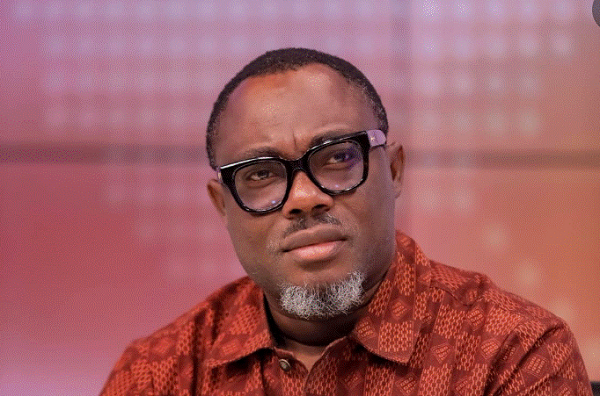
Prof. Ransford Gyampo, the political scientist who now heads the Ghana Shippers' Authority, has defended the Mahama administration's acquisition of a new presidential jet. His central argument is that "conditions then and now are different." In a Facebook post, and in similar remarks on TV3's The Key Points, he said the presidential aircraft debate goes back to 1998, when Jerry John Rawlings faced heavy criticism over plans to buy a plane. He accused critics of applying double standards. To support his case, he pointed to hard economic figures from the era of the previous New Patriotic Party (NPP) government: a budget deficit of about 15 percent at the end of 2020, growth near zero, inflation of 54 percent, fuel at GH¢23 per liter and an exchange rate above GH¢17 to the dollar. Several of those figures come from different points in the NPP's second term rather than a single moment, but together they describe a real economic crisis. Gyampo also asked why critics stayed silent when experts recommended new helicopters and a presidential jet after the deadly 2025 military helicopter crash. The opposition, and many ordinary Ghanaians, see the matter differently. National Democratic Congress (NDC) figures, now in government, fought hard against the previous administration's aircraft plans and its use of costly chartered jets. To critics, the new purchase looks like a reversal. The debate now goes beyond aviation. It touches Ghana's recovery from debt default, the IMF-backed program, and a basic question of governance credibility: do principles in opposition survive the move into power?
Few objects in Ghanaian politics carry as much symbolic weight as a presidential airplane. It is never just a machine. In opposition, it becomes a symbol of waste. In government, it becomes a matter of security and national dignity. For almost three decades, Ghana's two main parties have traded places on the question, each condemning the other's aircraft ambitions and then finding fresh reasons to pursue their own.
The latest round began with the Mahama administration's acquisition of a new presidential jet. It has now drawn in one of the country's best-known political scientists, Prof. Ransford Gyampo. Gyampo built his public reputation as a sharp academic critic of governments. He is now Chief Executive Officer of the Ghana Shippers' Authority, appointed by the current administration. His defense of the purchase has made him the face of the government's argument, and a lightning rod for those who say the NDC is doing exactly what it once condemned.
His position is simple. "I am unashamedly and unabashedly in support of my position that the conditions then and the conditions now aren't the same," he wrote in a Facebook post. He made a similar case on TV3's The Key Points on Saturday. "The circumstances surrounding the aircraft debate then during the NPP administration are different from what we have now," he said.
That sentence sits at the center of a national argument. Supporters see a reasonable point about timing and economic context. Critics see a convenient rationalization from a government appointee. Both sides are partly right, and that is what makes the debate worth taking seriously.
Gyampo framed the dispute as a long-running national habit rather than a new scandal. He traced it to 1998, when the Rawlings government faced fierce criticism over plans to buy a presidential aircraft. At the time, the NDC was in power and the NPP was in opposition. Critics then argued that a developing country with pressing needs should not be spending scarce foreign exchange on a luxury jet. The government argued that the head of state needed safe, reliable transport. The script has barely changed since.
According to Gyampo, many of those who condemned Rawlings' plans later attacked the previous NPP government's aircraft ambitions, but without acknowledging the different circumstances. In his telling, the problem is not that people criticize jets. It is that they criticize them selectively, and without regard to the state of the economy at the time.
He then laid out the numbers he believes settle the matter. "At the close of 2020, Ghana had a budget deficit of an unprecedented 15 per cent and growth was nearly zero," he wrote. He also cited inflation of 54 percent, fuel prices of GH¢23 per liter and an exchange rate that required more than GH¢17 to buy one US dollar. He listed financial mismanagement, corruption, labor unrest and the pain inflicted on bondholders and pension contributors as further evidence of a country in distress.
Under those conditions, he argued, a presidential jet purchase would have been difficult to justify. Ordinary Ghanaians were struggling to afford food, fuel and transport. Investors were losing money. Workers were striking. Buying a jet in that climate, he suggested, would have been tone-deaf at best.
His figures deserve a careful reading, because they tell a real story but not a single, tidy one. Ghana's 2020 fiscal deficit did reach roughly 15 percent of GDP on a broad measure that included energy and financial sector costs, driven partly by COVID-19 spending and revenue losses. Growth that year slowed to well under 1 percent. But inflation did not hit 54 percent in 2020. It peaked at about that level in late 2022, after the country lost access to international capital markets. Fuel prices surged toward GH¢23 per liter for diesel in that same late-2022 period. The cedi's slide past GH¢17 to the dollar came later still. In other words, Gyampo's list draws on different moments of the NPP's second term, from 2020 to 2024, rather than describing the economy at a single point.
That does not make his broader point false. The NPP's final years in office were marked by one of the worst economic crises in Ghana's modern history. In December 2022, the government suspended payments on most of its external debt, effectively defaulting. It launched a Domestic Debt Exchange Programme that forced bondholders, including pension funds and individual investors, to accept lower returns and longer maturities. Pensioners protested in the streets. Banks took heavy losses. Inflation ate into savings and wages. In May 2023, the IMF approved a three-year, roughly $3 billion Extended Credit Facility to support recovery. By any fair measure, the economy Gyampo describes was in deep trouble.
But critics are entitled to point out that the timing he chose matters. The previous government's most visible aircraft debate began in 2021, before the worst of the crisis. If the argument is about conditions at the moment of the decision, the comparison needs to match the right dates. Mixing figures from several years can sharpen a political point while blurring an analytical one.
Gyampo's second line of argument is more pointed, and perhaps more effective. He reminded Ghanaians of the helicopter crash of August 2025. A Ghana Air Force Z-9 helicopter went down in the Adansi area of the Ashanti Region, killing all eight people on board. Among the dead were Defence Minister Edward Omane Boamah and Environment, Science and Technology Minister Ibrahim Murtala Muhammed, along with other officials and crew. It was one of the darkest days in the country's recent history. The tragedy forced a national conversation about the safety and condition of the aircraft used to move top officials.
In the aftermath, according to Gyampo, experts recommended that the state acquire new helicopters and a presidential jet. "Where were they when experts, following the helicopter accident, recommended that new helicopters plus a presidential jet be purchased? Why didn't they object to the recommendations then?" he asked.
He went further, accusing opponents of changing position for political reasons. "They accepted the recommendations and when they are being implemented, they have issues, just because it would make the government look good," he said.
This is a strong rhetorical move. It shifts the debate from luxury to safety. It also places critics in an uncomfortable position. If they accepted that Ghana's official air fleet was outdated and unsafe after eight people died, it is harder to argue now that replacing it is reckless.
Yet the argument has limits too. The crash involved a military helicopter, not the presidential jet. The case for replacing aging helicopters used for domestic travel and security operations is not automatically the same as the case for a new long-range executive jet. Critics may reasonably support fleet safety while questioning the type, cost, timing and procurement process of a specific aircraft. Silence after a national tragedy, when the country was grieving, is also not the same as consent to every purchase that follows. Whether expert recommendations specifically called for a new presidential jet, and in what terms, is a matter the government could settle by publishing them in full.
To understand why this argument stirs such strong feelings, it helps to revisit the long history of Ghana's presidential aircraft.
After the Rawlings-era controversy, the issue returned under President John Agyekum Kufuor. In the late 2000s, his NPP government moved to acquire new presidential and military aircraft. The NDC, then in opposition, attacked the plan as wasteful. The deal was completed and the aircraft delivered after power changed hands. The Dassault Falcon 900EX that became Ghana's main presidential jet arrived around 2010, under President John Evans Atta Mills, whose NDC government took delivery of aircraft its members had criticized in opposition. Even then, the pattern of reversal was visible.
The Falcon served Ghana's presidents for more than a decade. But by the time Nana Addo Dankwa Akufo-Addo took office in 2017, the NPP argued that it was too small, too limited in range and too old for a president's long international trips. In 2021, then Defence Minister Dominic Nitiwul told Parliament that the Falcon was not convenient for the president's travel. In a line that became famous, he said no president could even shower in it. The government signaled interest in acquiring a larger aircraft.
Meanwhile, Akufo-Addo frequently traveled on chartered jets. That practice became one of the most effective attack lines of the opposition. NDC Member of Parliament Samuel Okudzeto Ablakwa, who is now Foreign Minister, led a sustained campaign against the costs. He published details of the president's use of a luxury Airbus jet for foreign trips, claiming it cost the state thousands of dollars per hour. The government defended the charters as necessary given the Falcon's limitations, and disputed parts of the opposition's cost estimates. But the image of a president flying in luxury while the economy stumbled stuck with many voters. "The flying president" became a durable political label.
The NDC's message in those years was clear. A country in fiscal distress should not be spending heavily on presidential air travel. Party figures argued that the money should go to schools, hospitals, roads and jobs. That message resonated, especially as the economy moved toward default.
Then came the 2024 election. John Dramani Mahama won decisively, and the NDC took a large parliamentary majority. Mahama campaigned on fiscal discipline, a leaner government and a promise to "reset" Ghana. Early in his term, he reduced the number of ministers and emphasized cost-cutting. His government launched efforts to recover allegedly misused public funds.
The aircraft question returned almost immediately. The Falcon was reported to be undergoing maintenance in France, and Ablakwa himself publicly addressed why it remained grounded there. In 2025, Mahama used a private jet known as Dzata for some travel. The opposition seized on it. NPP lawmaker Frank Annoh-Dompreh suggested Akufo-Addo would never have used a relative's private jet, a claim the government rejected as misleading. Government spokesperson Felix Kwakye Ofosu insisted the trips had not cost taxpayers anything. Nitiwul, now in opposition, faced his own scrutiny when old clips of his 2021 remarks were compared with his new comments. Each side found ammunition in the other's past.
Now, with a new presidential jet acquired, the roles appear fully reversed. NPP figures who once argued Ghana needed a better aircraft are questioning the purchase. NDC figures who once condemned aircraft spending are defending it. Gyampo's "conditions then and now" argument is, in effect, an attempt to explain why the reversal is principled rather than opportunistic.
The opposition's case rests on consistency. If buying or chartering expensive aircraft was wrong under Akufo-Addo, they argue, it should be wrong under Mahama too. They point out that Ghana has not fully escaped the effects of default. Debt restructuring has eased pressure but not ended it. Many households are still recovering from the inflation shock of 2022 and 2023. Public sector workers continue to press for better pay. Hospitals lack equipment. Schools lack furniture and teachers in some regions. Galamsey has poisoned rivers. In that environment, critics say, a jet is a poor priority, whatever the macroeconomic numbers show.
Some opposition voices go further, accusing the NDC of hypocrisy outright. They argue that the party built part of its 2024 campaign on attacking the previous government's spending habits, only to adopt similar habits once in office. Online, clips of NDC leaders condemning aircraft spending have circulated widely alongside news of the new jet. Even some commentators sympathetic to the government have suggested it overpromised in opposition and must now own its earlier rhetoric.
There are also questions about process. Ghanaians across the political spectrum have asked for full details of the acquisition. They want to know the aircraft type, the total cost, whether it is new or pre-owned, how it was financed, whether it was competitively procured, and what it will cost to operate and maintain. They also want to know what happens to the Falcon. Clear public answers to these questions would do more to settle the debate than any comparison of inflation rates. Until such details are fully disclosed and scrutinized, claims about value for money on either side remain contested.
The government's defenders make several arguments beyond Gyampo's. The first is safety. After the 2025 crash, few Ghanaians want to see officials flying on aging aircraft. A president of a country of more than 34 million people, who travels to regional summits, international conferences and investment meetings, needs dependable transport. The second is cost over time. Supporters argue that owning a suitable aircraft can be cheaper than repeated charters at commercial rates, a point the NPP itself made when in power. The third is security. Chartered aircraft involve outside crews, maintenance and scheduling arrangements that may pose risks for a head of state.
These are serious points. They are also points the NPP made in 2021. That is precisely why the hypocrisy charge has stuck. The arguments for a presidential jet have not changed much over the years. What has changed is which party is making them.
Gyampo's answer is that the context has changed. And on the economic side, there is evidence for that claim. Ghana's economy has stabilized significantly since the depths of the crisis. Inflation fell sharply through 2025, reaching single digits by late that year, from a peak above 50 percent. The cedi staged a strong recovery in 2025, gaining substantial ground against the dollar after years of decline. Growth returned. The country reached agreements with bilateral creditors and bondholders to restructure its external debt. The Bank of Ghana rebuilt reserves. The IMF program, despite its hardships, helped restore a measure of confidence.
The Mahama government has claimed credit for much of that progress, citing tighter spending controls, stronger gold reserves and policy discipline. Critics argue that some of the recovery began under the IMF program the previous government negotiated, and that high gold prices did much of the work. Economists generally agree that both policy and global conditions played a role.
Either way, it is fair to say Ghana in late 2026 is in a stronger macroeconomic position than it was in late 2022. If the question is purely whether the state can afford a jet without derailing its finances, the answer is more plausible now than it was then.
But affordability is not the only test. The deeper question is about priorities and trust. A country can afford many things and still choose badly. A government can be fiscally stable and still lose public confidence if it appears to apply one set of rules to opponents and another to itself.
That is where the IMF context matters. Ghana's recovery has been built on sacrifice by ordinary citizens. Bondholders took losses. Pensioners waited for payments. Workers saw their real wages collapse. Taxpayers faced new levies and higher rates. Public investment was cut. The IMF program required spending restraint and tighter control of public finances. It also emphasized transparency in procurement and stronger management of state resources. As Ghana moves beyond the program, the discipline it imposed must become self-sustaining. If a high-profile purchase appears to bypass that discipline, it sends a troubling signal, both to citizens and to creditors.
International lenders and investors watch these signals closely. They do not judge a country by a single aircraft. A jet is a tiny fraction of a national budget. But they do judge governments by whether they follow transparent processes, keep promises and resist pressure to spend on prestige projects. Ghana is working to restore its credit standing after default. Each controversy over public spending, however small in budget terms, feeds into perceptions of governance quality.
There is also the question of Gyampo himself. For years, he was one of Ghana's most quoted political scientists. He taught at the University of Ghana and was known for blunt commentary, often critical of those in power. Many Ghanaians valued him as an independent voice. His appointment as head of the Ghana Shippers' Authority placed him inside the government's orbit. That does not invalidate his arguments. Academics who join government bring expertise and experience. But it does change how his words are heard. When a government appointee defends a government decision, the public naturally asks whether the defense is analysis or advocacy.
Gyampo has insisted his position is consistent, and that he simply believes conditions differ. That may well be his sincere view. Still, his case would be stronger if it addressed the obvious counterpoint directly: that many of the arguments now made for the jet, including safety, cost over time and presidential dignity, were dismissed by NDC figures when the NPP made them. A credible defense would explain not only why conditions are different, but why the earlier objections were framed in absolute terms rather than conditional ones.
This is the heart of the credibility problem. In opposition, Ghanaian parties often argue in absolutes. A jet is a waste. Charters are scandalous. Spending on the presidency is an insult to the poor. In government, they discover nuance. A jet is a security necessity. Charters are expensive. Spending must be weighed against national needs. Voters notice the shift. Over time, the pattern teaches citizens that political arguments are tools for winning power, not principles for using it.
That lesson is corrosive. Ghana has one of Africa's most admired democracies. Power has changed hands peacefully between the NDC and the NPP several times since 1992. Elections are competitive. Courts and the media are active. But democratic quality depends on more than peaceful transfers. It depends on whether citizens believe their leaders mean what they say. Each episode of apparent hypocrisy chips away at that belief, and it does not belong to one party. Both the NDC and the NPP have changed positions on presidential aircraft depending on whether they held power.
A fairer reading of the jet debate might therefore start with a shared admission. Ghana does need safe, reliable transport for its head of state. The Falcon is old and has faced maintenance problems. Charters are costly and raise their own concerns. The country's aviation safety for officials deserves serious attention after the 2025 tragedy. At the same time, any acquisition must be transparent, competitively procured, properly approved and justified by clear analysis of costs and alternatives. And politicians on both sides should acknowledge that their past rhetoric often ignored these realities.
That kind of honesty is rare in any country. But it would serve Ghana well. It would allow the debate to move from accusations of hypocrisy to questions of value and process. Was this the right aircraft? Was the price fair? Was Parliament properly consulted? What are the operating costs? Could a cheaper option have met the need? What safeguards exist to prevent misuse?
Parliament has a central role here. Major procurement decisions involving state funds should face scrutiny from the relevant committees, especially Defence and Interior and Finance. The Public Accounts Committee can examine whether processes were followed. The Auditor-General can review costs. The opposition, rather than relying only on social media outrage, can use these institutions to demand documents and answers. The government, rather than relying on appointees' Facebook posts, can publish a full account of the acquisition. Both would strengthen trust.
The debate also has a regional dimension. Nigeria offers a familiar comparison. Its Presidential Air Fleet has long been among the largest in Africa, and it has faced repeated criticism for cost. In 2024, the Nigerian government acquired a new Airbus A330 for the president amid severe economic hardship, including high inflation and the effects of fuel subsidy removal. Critics condemned the timing. The government said the older aircraft had become unsafe and costly to maintain. Lawmakers had also recommended replacing presidential aircraft. The arguments mirror Ghana's almost exactly.
Elsewhere in Africa, leaders have made the opposite choice to send a message. In 2012, Malawi's President Joyce Banda announced she would sell the country's presidential jet to save money and signal austerity. The move drew praise, though critics questioned its practical impact. Other governments have downsized fleets, leased aircraft or flown commercial on some trips. There is no single right answer. But the choice always carries political meaning.
For Nigerian readers, Ghana's debate is a reminder that the politics of presidential aircraft are not unique to one country. Across the region, citizens facing high living costs view presidential perks through the lens of their own hardship. Governments that ask people to accept sacrifice must be seen to share it. A jet becomes a test of whether leaders live by the austerity they preach.
There is a further irony in Ghana's case. Mahama himself has long been sensitive to criticism over aircraft and luxury. During his earlier presidency, from 2012 to 2017, he faced controversies over gifts, including a Ford vehicle received from a Burkinabè contractor, which the Commission on Human Rights and Administrative Justice reviewed. He has since sought to project a leaner, more disciplined image. A presidential jet acquisition early in his second stint in office was always going to be politically delicate. The way it is handled will shape how voters judge his promise to "reset" governance.
The government may argue that the reset is about results, not symbolism. If it can show that the economy is recovering, that services are improving and that corruption cases are being pursued, a single aircraft purchase may matter little to most voters. That may be true in the short term. But symbols accumulate. Governments rarely lose trust in one dramatic moment. They lose it gradually, through a series of decisions that suggest the rules are flexible for those in power.
The opposition faces its own test. If it wants to be credible, it must explain why its own government sought a larger aircraft in 2021 and why that was justified then but not now. Simply reversing positions, as the NDC is accused of doing, would leave the NPP open to the same charge. Ghanaians would be left with two parties that each oppose aircraft in opposition and buy them in government. That is not accountability. It is theater.
Gyampo's intervention, for all its partisan edges, raises a real question that deserves a real answer: should the timing of a purchase matter? Most economists would say yes. Buying an expensive asset during a debt crisis, when citizens are absorbing heavy losses, is different from buying it during recovery. Timing affects affordability, public perception and the opportunity cost of the money. In that sense, "conditions then and now are different" is not a meaningless slogan. It reflects a legitimate principle.
But the principle cuts both ways. If conditions matter, then the government must show that conditions now justify the purchase. It must show that the economy is stable enough, that priority spending on health, education and infrastructure is protected, and that the purchase does not undermine fiscal commitments. It must also acknowledge that the NDC's earlier criticism was not framed as "not now." It was often framed as "not ever." Citizens are entitled to ask which version was sincere.
There is also the matter of who bears the burden of proof. In a democracy, the government spending public money must justify the expense. Critics do not need to prove the purchase is wrong. The government needs to prove it is right. Gyampo's challenge to critics, asking where they were after the helicopter crash, is rhetorically sharp, but it reverses that burden. Whether critics stayed silent in 2025 does not answer whether this specific acquisition, at this specific cost, through this specific process, was the best use of public funds.
The broader stakes go beyond any one aircraft. Ghana is emerging from a crisis that shook public faith in economic management. The default, the debt exchange and the inflation shock left deep scars. Rebuilding confidence requires more than good macroeconomic numbers. It requires a political culture in which leaders are consistent, transparent and willing to explain decisions honestly. Every high-profile spending debate is a chance to show that such a culture is taking root, or evidence that it is not.
The presidential jet will fly. Few expect the government to reverse course. What remains open is how the episode will be remembered. It could be remembered as the moment Ghana's political class finally admitted that presidential aircraft are a practical need rather than a partisan weapon, and agreed on transparent rules for acquiring them. Or it could be remembered as another round of the same old cycle, in which the party in power defends what it once condemned and the party in opposition condemns what it once defended.
Gyampo is right that conditions then and now are different. Ghana's economy is in better shape. A tragedy has forced attention to aviation safety. The political landscape has shifted. But one condition has not changed since 1998: Ghanaians are still waiting for leaders whose principles do not depend on which side of the aircraft door they are standing on.
Until that changes, every new jet will carry the same heavy cargo of suspicion. And no amount of comparison between inflation rates will make it lighter.