HEGSETH BLASTS IMPEACHMENT PUSH AS POLITICAL SPECTACLE AND DEFENDS US MILITARY OPERATIONS
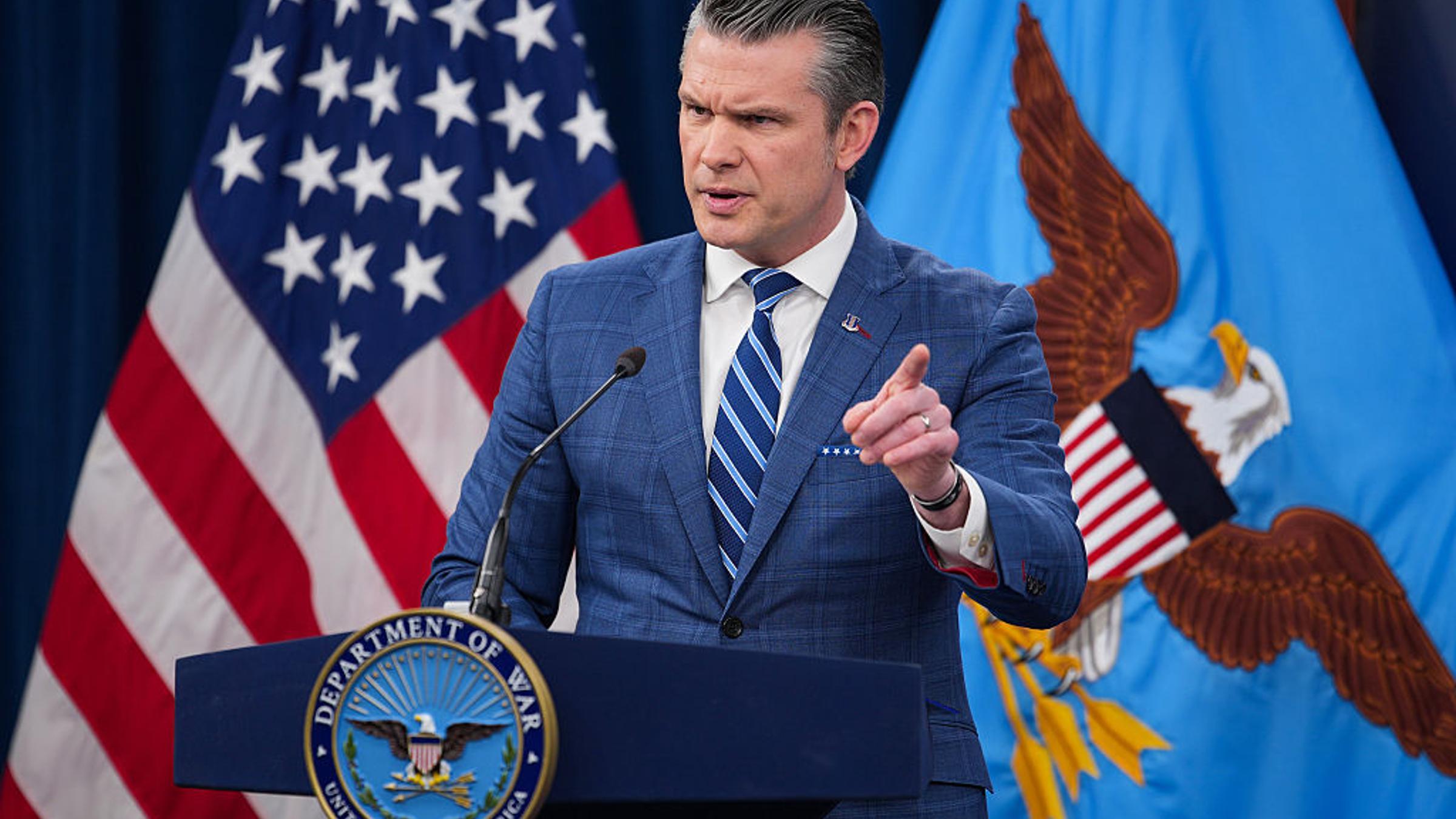
Defense Secretary Pete Hegseth has denounced a Republican led effort to impeach him as a political spectacle, arguing that the United States military operations cited by Representative Thomas Massie were lawful and successful. Massie has introduced eight articles accusing Hegseth of violations involving the Iran war, operations in Yemen and Venezuela, strikes against suspected drug traffickers, civilian protections and alleged retaliation against Senator Mark Kelly. The House must address the privileged resolution within two legislative days.
United States Defense Secretary Pete Hegseth has mounted a defiant defense of his leadership at the Pentagon as the House of Representatives moves toward a potentially historic impeachment confrontation, rejecting accusations that he carried out unlawful military operations and describing the effort led by Republican Representative Thomas Massie as a political spectacle built around disagreements over President Donald Trump’s use of American military power.
Speaking at the Pentagon on Tuesday, Hegseth argued that the military campaigns cited in the impeachment articles were lawful operations carried out under presidential authority and insisted that American service members should not become political targets for carrying out orders from civilian leaders. He pointed to generations of American military action under presidents from both parties and said no secretary overseeing the armed forces had been impeached for executing what he described as lawful military operations.
“No secretary of war or secretary of defense has ever been impeached for carrying out lawful military operations, and in our case, successful ones at that,” Hegseth said. His argument goes directly to the central dispute surrounding the impeachment effort. Hegseth and the Trump administration say the operations were legally justified exercises of presidential military authority, while Massie and supporters of his resolution argue that several of those actions violated congressional war powers and other legal protections.
The disagreement is not simply about whether particular operations succeeded militarily. It reaches into one of the oldest constitutional disputes in Washington, the division of war making authority between the president and Congress. The Constitution gives Congress the power to declare war, raise and fund the armed forces and establish rules governing them, while the president serves as commander in chief. Successive administrations from both parties have interpreted presidential authority broadly, particularly when ordering limited military operations without a formal declaration of war.
Massie, a Kentucky Republican who has frequently challenged his own party on questions involving executive power and foreign military intervention, introduced eight articles of impeachment against Hegseth on Monday. By presenting the resolution as a privileged matter before the House, Massie triggered a process requiring congressional leaders to address it within two legislative days. The House could vote directly on impeachment, vote to table the resolution or send it to committee.
The most consequential accusations concern the United States war with Iran. Massie alleges that Hegseth helped wage the conflict without congressional authorization and continued military operations even after Congress sought to assert its authority under the War Powers Resolution of 1973. Three of the eight articles specifically accuse Hegseth of violating provisions of that law.
Massie argues that the administration lacked a declaration of war or other statutory authorization for sustained hostilities against Iran and that the circumstances did not satisfy the legal requirements that the administration has cited to justify the campaign. His resolution also alleges that Hegseth continued directing the conflict after time limits contained in the War Powers Resolution had expired.
Those claims remain allegations contained in an impeachment resolution and have not been established by a court or by a completed congressional impeachment proceeding. Hegseth strongly rejects them. The administration maintains that the military acted lawfully and that the president possessed the authority necessary to direct the operations.
That distinction is important because Hegseth’s description of the operations as lawful is his defense, rather than a settled legal finding accepted by both sides. Massie’s impeachment campaign is built largely on the opposite conclusion.
The War Powers Resolution was enacted in 1973 during the closing years of the Vietnam era as Congress attempted to place limits on a president’s ability to keep American forces engaged in hostilities without legislative authorization. The law generally requires the president to notify Congress when United States forces are introduced into hostilities and establishes deadlines for ending unauthorized involvement unless Congress approves continued military action.
Presidents from both parties have frequently questioned aspects of the law and have sometimes ordered military operations without seeking advance congressional authorization. That history forms a major part of Hegseth’s defense. He argues that the current impeachment effort attempts to turn longstanding disagreements over presidential military authority into accusations of high crimes and misdemeanors.
Massie’s resolution, however, goes considerably beyond the Iran conflict. It accuses Hegseth of involvement in military actions in Yemen and Venezuela and challenges strikes carried out against suspected drug traffickers in the Caribbean Sea and eastern Pacific. The resolution also accuses the Pentagon chief of disregarding legal protections intended to reduce civilian casualties during armed conflict.
One article focuses on American strikes against suspected drug trafficking vessels. Massie alleges that the operations amounted to unlawful killings and cites incidents in which people were allegedly targeted without the protections he argues should have applied. Hegseth and the administration have defended the operations as legitimate actions against what they describe as narcoterrorist networks posing threats to the United States.
During his Pentagon appearance, Hegseth attempted to broaden the political stakes beyond his own position. He argued that criticism of the operations amounted to an attack on sailors, pilots and other service members who carried out orders. His message was that military personnel should not be treated as criminals for executing missions authorized by the government.
That argument has become a central feature of his response to the impeachment campaign. Hegseth has repeatedly framed the effort not simply as an attempt to remove one Cabinet official but as a challenge to the legitimacy of the military operations undertaken during the Trump administration.
Massie and other critics reject that framing. Their argument is that congressional scrutiny of civilian leadership does not amount to attacking rank and file service members. Under the American constitutional system, the armed forces remain under civilian control, and decisions made by the president and defense secretary can be subjected to oversight even when military personnel themselves were following orders.
The distinction is likely to become increasingly important as the House debate intensifies. Impeachment is directed at Hegseth as a civilian officer of the United States government. It is not a criminal proceeding against military personnel who participated in the operations described in Massie’s articles.
Another article concerns Venezuela and the United States operation that resulted in the seizure of Nicolás Maduro and his wife in Caracas earlier this year. Massie contends that the operation exceeded lawful executive authority. The Trump administration has defended the action as part of its broader national security and regional policy.
The impeachment resolution also challenges American military operations in Yemen. Massie alleges that Hegseth directed strikes without proper congressional authorization and cites reports of significant civilian casualties alongside deaths among Houthi fighters. The administration has maintained that its military actions were necessary to protect American interests and respond to security threats linked to Houthi attacks.
A separate accusation involves Senator Mark Kelly of Arizona. Massie alleges that Hegseth abused his authority by retaliating against Kelly over speech concerning potentially unlawful military orders. The precise legal questions surrounding that dispute differ from the war powers arguments and introduce constitutional questions involving political speech and executive authority.
Taken together, the eight articles represent one of the most expansive congressional challenges to a sitting defense secretary in modern American history. They combine disagreements over war powers, civilian casualties, presidential authority, military operations and political retaliation into a single attempt to remove the Pentagon chief.
Hegseth has responded by arguing that none of those disputes rises to the constitutional standard required for impeachment. He described the case against him as being driven by policy disagreement rather than genuine high crimes and misdemeanors and suggested that political opponents were using impeachment because they disagreed with how the Trump administration has used military force.
The Constitution gives the House authority to impeach federal civil officers for treason, bribery or other high crimes and misdemeanors. The phrase has never been limited strictly to ordinary criminal offenses. Throughout American history, impeachment has also been understood as a political and constitutional mechanism for addressing serious abuse of public office.
Whether Hegseth’s conduct meets that standard is now at the center of the House dispute.
There is also an important historical complication surrounding Hegseth’s declaration that no secretary of war or defense has previously been impeached for lawful military operations. No defense secretary has been impeached over the conduct of military operations, but a civilian leader of the American military has been impeached before.
Secretary of War William Belknap was impeached by the House in 1876 over corruption allegations involving payments connected to trading posts at military installations. Belknap resigned shortly before the House acted, but lawmakers proceeded with the impeachment anyway. He was later acquitted by the Senate after supporters of conviction failed to obtain the required two thirds majority.
The Belknap case involved allegations of corruption rather than disagreement over the legality of military campaigns, meaning Hegseth’s narrower historical point about impeachment over military operations has a different context. Still, his assertion that the current effort is unprecedented does not mean that civilian military leaders have always been beyond the reach of impeachment.
Only one other Cabinet official has been impeached in American history. In 2024, the House impeached Homeland Security Secretary Alejandro Mayorkas over allegations involving his handling of immigration and border enforcement. The Senate later dismissed the charges without conducting a full trial.
Hegseth’s case would therefore enter a very small group of Cabinet impeachment proceedings if the House approves Massie’s resolution.
The political circumstances surrounding the effort are equally unusual. Massie is a Republican challenging a defense secretary appointed by a Republican president, making the effort more complicated than a conventional confrontation between an administration and the opposition party.
Massie has long represented a libertarian leaning wing of the Republican Party that is skeptical of expansive presidential war powers and prolonged overseas military involvement. His criticism of the Iran conflict has placed him sharply at odds with Trump and senior administration officials.
Democrats are expected to provide substantial support for the impeachment effort. House Democratic leader Hakeem Jeffries has publicly said he supports removing Hegseth, while other Democratic lawmakers have cited the Iran conflict and the Pentagon chief’s broader record as reasons for backing Massie’s resolution.
The mathematics of the vote remain politically sensitive because Republicans still control the House during the final weeks of the current Congress, but Democrats are preparing to take control of both chambers when the next Congress begins in January following the November 3 midterm elections.
That transition has increased pressure on Republicans who must decide whether to defend Hegseth, join Massie or attempt to avoid a direct impeachment vote through a procedural move.
President Trump has strongly defended his defense secretary and said he would continue standing behind Hegseth even if the House impeaches him. Trump has repeatedly praised American military operations under Hegseth and has described the administration’s actions in Iran and Venezuela as successful.
House Speaker Mike Johnson has opposed the impeachment effort, warning against removing the defense secretary while the United States remains involved in significant international military and security confrontations.
The politics surrounding Iran are especially difficult for Republicans after the midterm elections. The prolonged conflict, disruption to shipping through the Strait of Hormuz and resulting pressure on global energy prices became major political issues during the campaign. Democrats won control of Congress in elections that exposed public frustration over the war and broader economic conditions.
The Trump administration has nevertheless continued defending its decision to confront Iran militarily. Hegseth has repeatedly argued that the campaign protected American interests and weakened threats posed by Tehran, while critics contend that the administration entered a major conflict without the congressional authorization required for a war of such scale and duration.
The debate has therefore become larger than Hegseth himself. At its core is the question of how far a president can go in ordering sustained military action before Congress must formally authorize continued hostilities.
American presidents have launched numerous military operations without declarations of war during the decades following World War II. Korea, Vietnam, Kosovo, Libya, Syria and other conflicts have repeatedly generated arguments about the boundaries between executive and legislative authority.
Congress has sometimes authorized military force through specific legislation rather than formal declarations of war. In other cases, administrations have relied on presidential constitutional authority or existing statutes to justify military action.
The Hegseth impeachment fight brings that long running argument into unusually personal territory because lawmakers are considering whether the defense secretary himself should be removed for participating in the implementation of disputed military orders.
Hegseth argues that such a precedent would be dangerous. His position is that civilian defense officials cannot effectively carry out presidential military decisions if every disputed operation creates the possibility of impeachment.
Massie’s counterargument is that the opposite precedent would be more dangerous. If Cabinet officials can execute extended military campaigns regardless of congressional limits, he argues, then Congress’s constitutional war powers could become largely meaningless.
Neither position settles the legal dispute on its own. The House vote will be a political and constitutional judgment by lawmakers rather than a conventional court ruling on whether each military operation violated federal law.
If the House approves one or more articles, Hegseth would become impeached but would not automatically lose his job. The matter would move to the Senate, where senators would determine how to proceed with a trial or other action.
Removing a federal official after impeachment requires a two thirds vote in the Senate. Republicans currently hold 53 of the chamber’s 100 seats, making conviction a much higher hurdle than impeachment in the House.
The political landscape will change in January when Democrats take control of the new Congress, but the timing of any Senate proceedings could become important if the House votes before the current session ends.
Hegseth has given no indication that he intends to resign. Instead, he has publicly promised to fight the effort and remain in office, drawing comparisons between the impeachment campaign against him and the two impeachments Trump faced during his first presidency.
His Pentagon remarks on Tuesday appeared designed not only to answer the formal accusations but also to rally Republicans and military supporters ahead of the House decision. By repeatedly describing the operations as lawful and successful, Hegseth sought to shift attention away from the political controversy surrounding him and toward the service members who carried out the missions.
Massie’s resolution forces lawmakers to confront a different question. Even if an operation achieved its military objective, did the administration possess the constitutional and statutory authority to conduct it?
Military effectiveness and legal authority are not necessarily the same issue. A mission can succeed tactically while still generating disputes about whether it should have been ordered without congressional approval. Conversely, the existence of political disagreement does not by itself prove that an operation was unlawful.
That is the distinction likely to dominate the coming House debate.
The vote will also test how much political support Hegseth retains among Republicans after a difficult midterm election and months of arguments over the administration’s foreign policy. Some Republicans may agree with Massie’s concerns about congressional war powers without accepting that impeachment is the appropriate remedy. Others may view support for the resolution as necessary to reassert Congress’s constitutional authority.
Democrats face a different calculation. Many have strongly opposed the Iran war and other Trump administration military operations, but joining a Republican led impeachment effort also raises questions about how the new congressional majority intends to oversee the administration once it takes power in January.
For Hegseth, the immediate challenge is survival in the House. For Congress, the implications reach further. A successful impeachment would establish an extremely rare precedent involving a civilian military leader and disputed presidential war powers. A failed effort would leave unresolved many of the same constitutional questions that have followed American military interventions for decades.
The House is expected to confront the resolution no later than Wednesday unless lawmakers dispose of it through another permitted procedure. Until that happens, Hegseth remains in office with Trump’s backing and continues to insist that the operations cited against him were lawful.
What Congress decides will not by itself settle every legal dispute surrounding the Iran war, Yemen, Venezuela or the maritime strikes. It will, however, provide one of the clearest indications in years of how lawmakers view their own constitutional authority over war and whether they believe a Cabinet official crossed the line between executing presidential policy and participating in conduct serious enough to justify impeachment.