HOUSE REPUBLICANS BLOCK PETE HEGSETH IMPEACHMENT EFFORT AS DEFENSE SECRETARY DISMISSES MOVE AS POLITICAL SPECTACLE
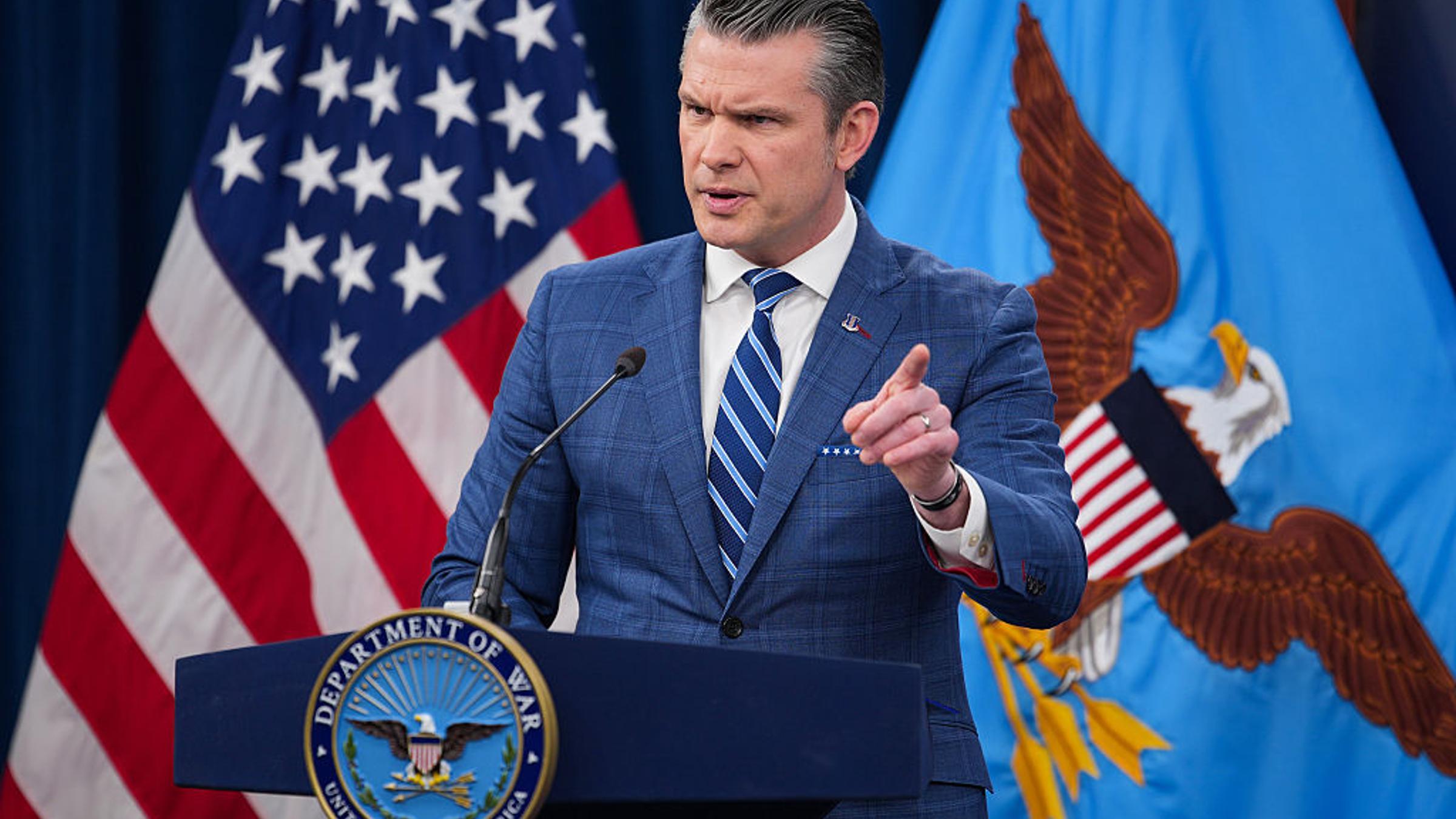
House Republicans have blocked an effort to impeach Defense Secretary Pete Hegseth by voting 211 to 204 to send Republican Rep. Thomas Massie’s impeachment resolution to committee, effectively ending the effort for the current Congress. Massie was the only Republican to oppose the procedural move, while all Democrats present joined him, although 11 Democrats were absent. Hegseth dismissed the allegations as a political spectacle and argued that lawmakers were attempting to turn policy disagreements over the Iran war and other military operations into impeachable offenses.
House Republicans have blocked an effort to impeach Defense Secretary Pete Hegseth, narrowly voting to send the resolution back to committee and effectively ending the attempt to remove one of President Donald Trump’s most controversial Cabinet officials before the current Congress expires. The House voted 211 to 204 on Tuesday to refer the impeachment resolution introduced by Kentucky Republican Thomas Massie to committee, preventing a direct floor vote on whether Hegseth should be impeached over his conduct in office and his handling of the prolonged United States war with Iran. The vote came only days after sweeping Republican losses in the 2026 midterm elections, with some members of the party openly blaming the Iran conflict, rising fuel prices and dissatisfaction with the administration’s foreign policy for contributing to the political backlash against the GOP.
Massie was the only Republican to vote against sending his own impeachment resolution to committee, joining every Democrat who was present in opposing the procedural move. Eleven Democrats were absent from the vote, while seven Republicans also did not participate, making the Democratic absences particularly significant because the Republican motion passed by only seven votes. The result immediately sparked frustration among Democratic lawmakers and activists who argued that the party had missed an opportunity to force Republicans into a direct vote on Hegseth’s conduct at a moment when the administration is politically weakened by the election results.
The resolution itself contained multiple articles of impeachment accusing Hegseth of abusing his authority as defense secretary and disregarding congressional limits on military power. Massie argued that the Pentagon chief had continued major combat operations in Iran without obtaining the congressional authorization he believed was constitutionally required, and he accused Hegseth of treating Congress as though it had little meaningful role in determining whether the United States remains at war. The Iran conflict has now lasted for months and has become one of the most divisive foreign policy issues of Trump’s second presidency.
Massie’s resolution also accused Hegseth of failing to follow laws and procedures intended to minimize civilian casualties during military operations. One of the most serious allegations cited a missile strike on an Iranian school that reportedly killed as many as 168 people, an incident that has generated intense criticism of the administration’s targeting practices and its broader conduct during the war. Hegseth and the Pentagon have defended United States military operations as lawful and necessary, while critics in Congress have demanded greater transparency regarding how targets are selected and how civilian harm assessments are carried out.
Another article focused on United States military strikes against vessels suspected of involvement in drug trafficking in the Caribbean and Latin America. Critics of the administration have argued that some of those operations amounted to extrajudicial killings because suspects were attacked without being arrested, tried or given an opportunity to surrender. Hegseth and administration officials have defended the strikes as legitimate national security operations against networks they say threaten the United States through narcotics trafficking and other forms of organized crime.
The impeachment effort also cited Hegseth’s role in the operation involving Venezuelan President Nicolás Maduro. Massie and other critics accused the Pentagon chief of directing or participating in an unlawful operation aimed at capturing or removing the Venezuelan leader. The Trump administration has defended its actions toward Venezuela as necessary to confront what it describes as criminal and national security threats linked to the Maduro government, while opponents argue that the United States has exceeded legal limits on the use of military force.
A separate allegation involved Democratic Senator Mark Kelly, whom Hegseth was accused of retaliating against after Kelly participated in a video encouraging military personnel to refuse unlawful orders. Hegseth and his allies argued that the video was irresponsible and risked undermining military discipline. Kelly and other Democrats said the message simply reminded service members of their existing legal duty to reject clearly unlawful commands and accused Hegseth of trying to intimidate political opponents.
Hegseth rejected the entire impeachment effort during a Pentagon news conference on Tuesday, describing it as a political spectacle and arguing that none of the allegations amounted to high crimes or misdemeanors. He said Massie’s resolution was driven by personal resentment and partisan politics rather than legitimate oversight and accused his critics of attempting to punish military leaders for successfully carrying out lawful operations ordered by the president.
The defense secretary also argued that congressional critics were confusing policy disagreements with impeachable conduct. According to Hegseth, lawmakers have many constitutional tools available when they oppose a military policy, including legislation, funding restrictions and oversight hearings. He said impeachment should not become a substitute for political disagreement over war strategy and national security decisions.
The White House strongly backed Hegseth ahead of the vote. The administration issued a formal statement opposing the impeachment resolution and characterized it as a politically motivated attempt to undermine the military and weaken the Trump administration. Vice President JD Vance also defended Hegseth publicly, arguing that Congress should not use impeachment simply because lawmakers disagree with the administration’s military strategy.
President Trump separately praised Hegseth’s performance and said he continued to stand behind his defense secretary. Trump argued that Hegseth had been successful in the war against Iran and said the administration had severely weakened Iran’s military capabilities. The president’s comments sent a clear signal to House Republicans that he expected them to protect Hegseth from removal.
That support was important because some Republican lawmakers have privately and publicly expressed frustration with Hegseth’s handling of the Iran war. A number of GOP members have criticized the length of the conflict, its financial cost and the effect it has had on fuel prices and public opinion. However, most Republicans who have raised concerns stopped short of saying Hegseth should be impeached and argued instead that Congress should conduct hearings and impose greater oversight.
The vote therefore exposed an important distinction inside the Republican Party. Many members may be dissatisfied with the defense secretary or specific aspects of the administration’s war strategy, but they do not believe those disagreements justify the extraordinary constitutional step of impeachment. That position allowed the party to remain largely united behind Hegseth despite the political damage surrounding the war.
The midterm election results have made the debate considerably more intense. Republicans suffered major losses across the country, losing control of both chambers of Congress and facing defeats in races that had previously been considered competitive or favorable to the party. The results have triggered internal arguments over whether the administration’s foreign policy, particularly the Iran war, damaged Republican candidates by increasing fuel prices and creating the perception that the government was focused more on overseas military operations than domestic economic concerns.
Massie has been one of the strongest Republican critics of the war and of Trump’s approach to executive power. He has argued repeatedly that Congress has surrendered too much authority to presidents of both parties when it comes to military action. His impeachment resolution represented an attempt to force lawmakers to confront that issue directly before the current Republican majority expires.
Massie himself will leave Congress in January after losing his Republican primary earlier this year. Trump and his allies had strongly opposed his reelection because of his frequent criticism of the administration. That personal history became part of Hegseth’s response, with the defense secretary describing Massie as a defeated and disgruntled lawmaker pursuing a political vendetta.
Massie rejected that characterization and argued that his impeachment effort was based on constitutional principles rather than personal resentment. He said the executive branch should not be able to commit the United States to prolonged military conflict without meaningful congressional authorization and warned that allowing presidents to bypass Congress creates dangerous precedents that can later be used by administrations of either party.
The procedural vote prevented a direct decision on the merits of those arguments. Rather than voting yes or no on impeachment, House Republicans moved the resolution to committee, where it is unlikely to receive further consideration before the current Congress ends. That effectively protects Hegseth through the remainder of the Republican controlled House.
The result may only be temporary. Democrats are expected to take control of both the House and Senate when the new Congress is sworn in in January, and several Democratic lawmakers have already indicated that they intend to revive the effort against Hegseth. House Democratic leaders have accused the defense secretary of abusing his power, weakening congressional oversight and undermining American national security.
Even with Democratic control, however, removing Hegseth would remain difficult. Impeachment requires only a simple majority vote in the House, but conviction and removal from office require a two thirds vote in the Senate. Unless a substantial number of Republicans joined Democrats, the Senate would be unlikely to reach that threshold.
The political significance of a future impeachment vote could still be considerable. Even if Hegseth remained in office, a House impeachment would place him alongside only a very small number of Cabinet officials in American history who have faced such a sanction. It would also deepen the confrontation between the incoming Democratic Congress and the Trump administration.
Only two Cabinet secretaries have previously been impeached by the House. Secretary of War William Belknap was impeached in 1876 during a corruption scandal but was later acquitted by the Senate. Homeland Security Secretary Alejandro Mayorkas was impeached in 2024 over the Biden administration’s handling of the southern border, although the Senate dismissed the articles without holding a full trial.
Hegseth’s case differs because the central allegations relate primarily to military operations, executive authority and the conduct of war. That raises broader constitutional questions about the separation of powers between Congress and the president and about who ultimately decides when and how the United States uses military force.
The Constitution gives Congress the power to declare war, appropriate military funding and regulate the armed forces, while the president serves as commander in chief. Over decades, presidents of both parties have increasingly relied on broad interpretations of executive authority to conduct military operations without formal declarations of war. That trend has repeatedly produced conflict with lawmakers who argue that Congress has allowed its constitutional role to erode.
The Iran war has become another major test of that balance. Massie and other critics argue that the administration has turned a military confrontation into a prolonged war without adequate congressional authorization. The White House argues that the president has sufficient authority to protect American interests, respond to threats and direct military operations under existing law.
Hegseth has become the public face of that strategy. His forceful defense of the war, his clashes with lawmakers and his confrontational style have made him both a favorite among many Trump supporters and a major target for critics of the administration. His appearances before congressional committees have repeatedly produced heated exchanges over military spending, Iran, civilian casualties and the removal of senior officers.
The impeachment resolution also arrived after months of controversy surrounding Hegseth’s leadership of the Pentagon. Democrats have questioned personnel decisions, military operations and his treatment of senior officials, while Republican critics have complained about strategic communication and the administration’s failure to provide a clear timetable for ending the Iran conflict.
Despite those controversies, Trump has continued to defend him publicly. The president’s support remains one of Hegseth’s strongest political protections because Republican lawmakers have generally been reluctant to challenge Trump directly on major personnel decisions.
The midterm losses may change that calculation over time. With Republicans preparing to become the minority party in Congress, some members are already debating whether continued loyalty to controversial administration officials could hurt the party further. Others argue that abandoning Hegseth would reward Democrats and undermine the president at a moment when Republicans need unity.
The vote therefore became more than a decision about one Cabinet official. It served as an early test of how Republicans intend to respond to the political consequences of the midterm elections and whether they are willing to distance themselves from parts of Trump’s national security agenda.
For Democrats, the result created its own internal controversy. Eleven members were absent from the vote, and House Democratic Whip Katherine Clark later expressed disappointment that the party had not achieved full attendance. Some of those absent cited medical issues, personal emergencies or travel delays, while others were attending previously scheduled events.
Several Democrats apologized or said they would have opposed the Republican motion if they had been present. Critics inside the party argued that after campaigning heavily against the administration’s conduct and winning control of Congress, Democrats should have ensured maximum attendance for a high profile vote involving impeachment.
Republicans seized on those absences, arguing that Democrats were not serious enough about impeachment to organize their own members. Democrats responded that Speaker Mike Johnson had moved quickly to schedule the vote and accused Republican leaders of trying to exploit absences to protect Hegseth before the new Congress takes office.
The procedural dispute is likely to become less important once Democrats gain control of the House in January. At that point, they will control the committees, floor schedule and investigative agenda, giving them considerably greater authority to examine Hegseth’s conduct.
Potential investigations could include hearings on the Iran war, civilian casualties, the legal basis for military operations, strikes on suspected trafficking vessels and the Pentagon’s handling of dissent from lawmakers and military officers. Such hearings could produce new evidence that either strengthens or weakens arguments for impeachment.
Hegseth has made clear that he does not intend to resign voluntarily. His comments Tuesday suggested he views the impeachment effort as part of a broader political struggle rather than a legitimate challenge to his authority. He argued that the military has successfully carried out lawful missions and that attempts to punish Pentagon leaders send a damaging message to American troops and foreign adversaries.
Massie and Democrats reject that argument. They say congressional oversight is not an attack on the military and that civilian leaders must remain accountable for decisions involving war, lethal force and constitutional authority.
Those competing narratives are likely to dominate the next phase of the dispute. Republicans will argue that Hegseth is being targeted for policy choices Democrats dislike. Democrats and antiwar Republicans will argue that the issue involves whether the executive branch obeyed legal limits on military power.
The political fallout from the Iran war will continue shaping the debate. Rising fuel prices and the financial costs of the conflict have become major domestic issues, and Republican candidates in several states faced voter anger over the administration’s handling of the war. Some GOP lawmakers have acknowledged that those concerns contributed to the party’s losses.
The administration disputes the idea that the war is politically damaging and argues that weakening Iran has improved American and regional security. Trump has repeatedly portrayed the military campaign as successful and has defended Hegseth as the official responsible for carrying out that strategy.
Whether voters agree with that assessment remains a central question for both parties. Democrats are preparing to use their new congressional majorities to investigate the administration, while Republicans are deciding how closely to remain tied to Trump’s defense and foreign policy decisions.
Tuesday’s vote gave Hegseth immediate political protection but did not end the controversy surrounding him. The impeachment resolution is effectively dead for the remainder of the current Congress, but Democrats have already signaled that the matter could return soon after they assume control.
The next confrontation could therefore be more consequential. Instead of relying on a Republican majority to redirect the resolution to committee, Hegseth may face committees controlled by Democrats with subpoena power and the ability to bring impeachment articles directly to the floor.
Even then, the constitutional threshold for removal remains high. A Democratic House could impeach Hegseth with a simple majority, but a Senate conviction would require two thirds of senators present. That would require significant Republican support, making removal much more difficult than impeachment itself.
For now, the defense secretary remains in office with Trump’s full public backing. The 211 to 204 vote has ended Massie’s immediate attempt to remove him, and Republican leaders can claim they prevented a damaging internal revolt during the final weeks of their House majority.
The vote also leaves unresolved the larger questions raised by the resolution. Congress has not settled whether the Iran war was adequately authorized, whether Hegseth’s military decisions complied with all applicable laws or whether the allegations against him amount to impeachable conduct.
Those issues are likely to return when the next Congress begins. The administration will enter January facing Democratic control of both chambers, investigations into its military policies and renewed pressure over the political consequences of the war.
Hegseth’s survival this week therefore represents a temporary victory rather than the end of his political difficulties. House Republicans successfully blocked the impeachment effort, but the narrow vote, Democratic plans to revisit the issue and continuing controversy over the Iran conflict mean the defense secretary will remain under intense congressional scrutiny.
The immediate result is clear. Pete Hegseth will not be impeached by the current Republican controlled House after lawmakers voted to send Thomas Massie’s resolution to committee. What happens after January will depend on what Democratic leaders choose to investigate, what evidence emerges and whether any Republicans eventually decide that disagreements with Hegseth have crossed the line from policy criticism into a case for removal.