
I LEFT ANAMBRA DEBT FREE” OBI FIRES BACK AT SOLUDO AS BATTLE OVER HIS RECORD INTENSIFIES
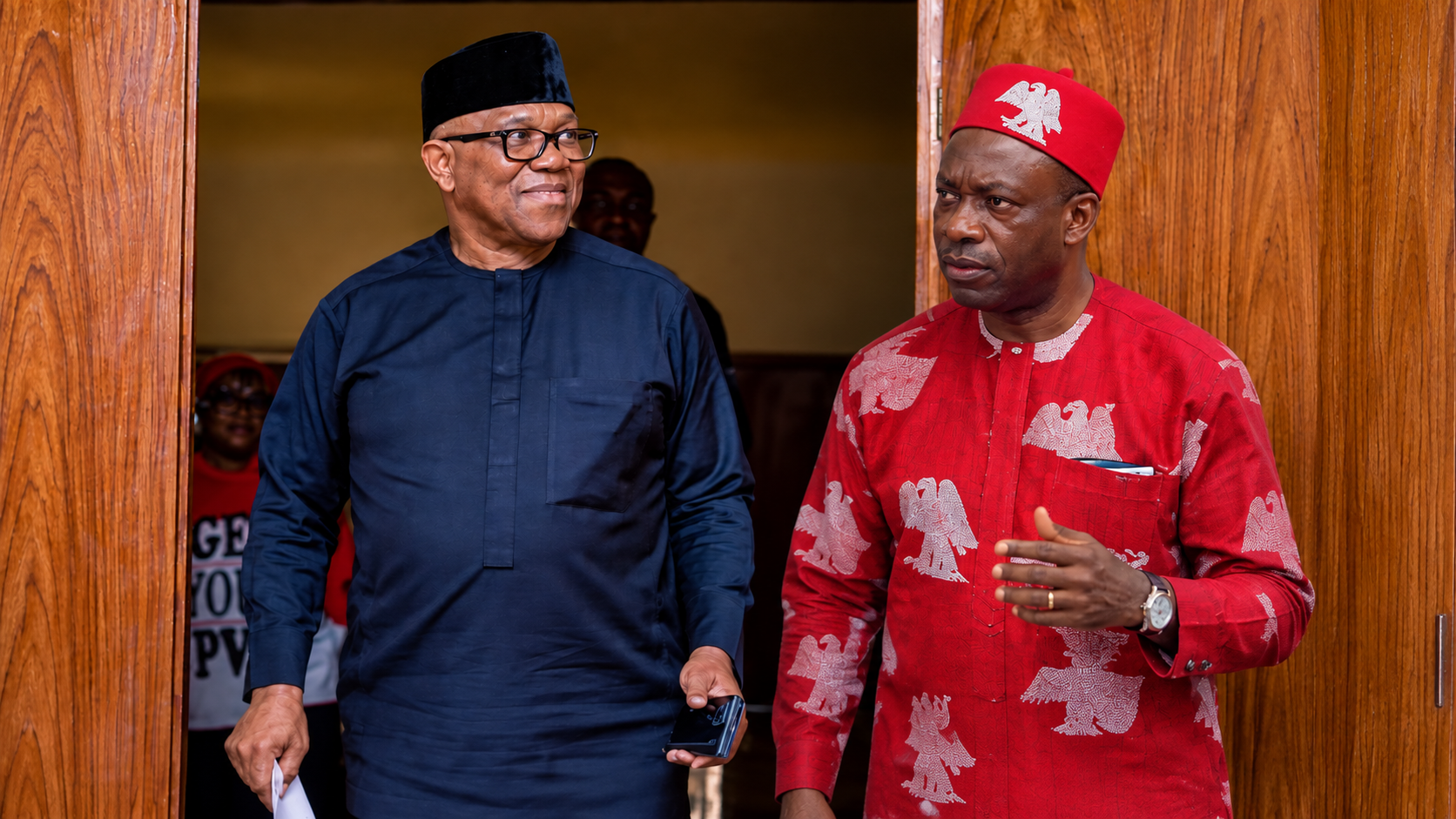
Peter Obi has again rejected claims that his administration left Anambra State with outstanding debts, insisting that when he left office in 2014 the state owed no salaries, gratuities, pensions or certified contractors and had substantial funds available. The Soludo administration disputes his account and says records show external loan obligations linked to Obi's tenure.
Peter Obi has intensified his public dispute with the Anambra State Government over his financial record as governor, insisting that he left the state without outstanding salary, pension, gratuity or certified contractor obligations and did not borrow from commercial banks during his eight years in office.
Obi, the presidential candidate of the Nigeria Democratic Congress, made the latest defense of his record during an interview on ARISE News on Thursday.
His comments followed allegations from the administration of Governor Chukwuma Soludo that Anambra continues to service financial obligations associated with previous administrations, including Obi's tenure.
Obi rejected the characterization of his administration as having left the state in debt.
“Let me categorically state again: I, Mr Peter Obi, did not approach any financial institution to borrow money or issue bonds on behalf of Anambra State in the eight years I was in government,” he said.
He also insisted that his administration had settled obligations that were due before he handed power to Willie Obiano in March 2014.
“On the day I left office, the government of Anambra State, which I headed, was not owing any salary, gratuity, or pension to those scheduled to be paid by the state government,” Obi said.
He added that his administration was not owing contractors or suppliers for completed work that had been properly certified and verified.
The former governor also challenged the way external financing associated with his administration has been presented in the continuing political dispute.
The Anambra State Government has argued that records show external loans contracted during Obi's tenure and says some obligations continued to be serviced after he left office.
The state government has cited eight external facilities associated with the period and said an outstanding balance calculated at about ₦127.4 billion, based on $123.77 million, remained as of June 30, 2026.
Obi disputes the interpretation.
He said some of the facilities being attributed to his government were concessionary multilateral development programmed arranged through the Federal Government and made available to qualifying states for specific projects.
According to Obi, Anambra did not independently approach commercial banks or the World Bank to obtain the facilities in the manner suggested by his political critics.
He cited the State Education Programmed Investment Project as an example, saying significant drawdowns occurred after his administration had already left office.
Obi argued that an approved loan facility should also be distinguished from the amount actually drawn and spent.
He said treating the entire approved value of a facility as debt attributable to his administration would amount to an inaccurate representation of the state's financial position at the time he left office.
The former governor went further by arguing that even if the entire amount being cited by the Anambra government were accepted for the purpose of argument, the state had sufficient financial assets to cover the obligation.
Obi told ARISE News that his administration left more than $150 million in funds and investments.
He argued that those assets placed Anambra in a strong financial position when he handed over power.
The figures and accounting treatment remain contested between Obi and the current Anambra administration.
The dispute has intensified in recent weeks as both sides release competing accounts of the state's finances during and immediately after Obi's tenure.
The Soludo administration maintains that Obi's claim of leaving Anambra without debt does not adequately account for external loan obligations.
Anambra Commissioner for Information and Value Reorientation Law Mefor has publicly challenged Obi's version of events, arguing that records show loans contracted during his administration.
The state government has also raised questions about alleged unpaid pensions, gratuities and other liabilities.
Obi has rejected those accusations.
He previously said his administration cleared more than ₦35 billion in historical gratuities and arrears and challenged the state government to produce evidence that his administration left outstanding payments that were due.
Obi has gone as far as saying he would stop campaigning if evidence established that his account was false.
Another element of the dispute concerns an ecological fund of more than ₦2.1 billion.
Obi says the money was received shortly before the end of his administration for an erosion project and was deliberately left untouched for the incoming government.
He has maintained that the ecological money was separate from the broader savings and investments he says his government left behind.
The political significance of the dispute has increased because Obi is contesting Nigeria's 2027 presidential election.
His supporters frequently point to his record in Anambra as evidence supporting his approach to public finance and governance.
His political opponents and the Soludo administration have challenged elements of that record, particularly his claims concerning savings and debt.
That makes the disagreement more than a historical accounting dispute.
It has become part of the wider political contest over how Obi's eight years as governor should be assessed by voters ahead of the presidential election.
The available claims remain contested.
Obi maintains that he did not take commercial bank loans or issue bonds, settled obligations that were due and handed over substantial financial assets.
The Anambra State Government maintains that external loan records and other liabilities complicate the description of the state as having been handed over entirely debt free.
Determining the complete financial position requires distinguishing between approved loan facilities, actual drawdowns, inherited obligations, concessionary multilateral financing, cash and investments held by the state and liabilities that were due at the date of handover.
For now, neither side is backing down.
And as Nigeria moves closer to the 2027 presidential election, Anambra's financial records from more than a decade ago have become part of a much larger battle over Peter Obi's political record.