
“I’M NOT EVEN SURE I’LL BE ALIVE BY 2027” PETER OBI MAKES STRIKING REMARK AS ELECTION BATTLE HEATS UP
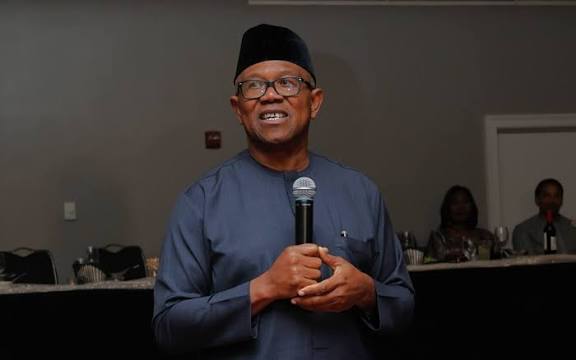
Peter Obi has made a striking comment about the uncertainty of his political future, saying he is “not even sure” he will be alive by Nigeria's 2027 general election while rejecting questions about possible political plans beyond the next election.
Peter Obi has made a striking remark about his political future, saying he is “not even sure” he will be alive by Nigeria's 2027 general election as he dismissed speculation about what he could do politically in 2031.
Obi made the comment during an interview on ARISE News on Thursday while discussing the 2027 presidential race and questions surrounding his longer-term political plans.
Asked about suggestions that he could consider another presidential bid in 2031, Obi rejected the idea of looking that far ahead.
“I’m not even sure I’ll be alive by 2027,” he said.
The former Anambra State governor argued that his immediate political focus was on Nigeria's next general election rather than calculations about another contest four years later.
The comment quickly attracted attention because of Obi's prominent position in Nigerian politics and the intensifying political contest ahead of 2027.
However, the context of the statement is important.
Obi did not, in the exchange, identify a specific threat, individual or organization that he believed was planning to harm him.
His statement therefore should not by itself be interpreted as evidence that he possesses information about a specific threat to his life.
Rather, the remark came as he emphasized the uncertainty of the future and questioned why he should make political calculations extending to 2031.
Obi's comments came during a wide-ranging interview in which he discussed his political ambitions, his record as governor of Anambra State and the developing contest ahead of Nigeria's next presidential election.
The former Labour Party presidential candidate is now seeking the presidency under the Nigeria Democratic Congress.
He has repeatedly maintained that his focus is on the 2027 election.
Questions about Obi's future have intensified as political alliances and campaign structures begin to take shape ahead of the vote.
His supporters continue to present him as an alternative to the country's established political leadership, while his opponents have increasingly challenged his record in Anambra and his policy positions.
Thursday's interview reflected that increasingly combative political environment.
Obi used the appearance to defend his record as Anambra governor, including his longstanding claim that he left the state in a strong financial position when he handed over power in 2014.
The administration of current Anambra Governor Chukwuma Soludo disputes aspects of Obi's account, particularly his description of the state's debt position.
Obi has maintained that his government did not borrow from commercial banks or issue bonds and that the state owed no outstanding salaries, gratuities, pensions or payments to certified contractors when he left office.
The debate over his Anambra record has become increasingly connected to the 2027 presidential contest.
Obi's remark about whether he would be alive by the election adds a more personal dimension to the conversation surrounding his political future.
But without additional evidence or a specific allegation from Obi, the statement should not be presented as confirmation that his life is currently under a particular threat.
Nigeria's political environment has historically involved security concerns for candidates, officials and campaign organisations, making statements about personal safety particularly sensitive.
For that reason, distinguishing between an expression about life's uncertainty and an allegation of a concrete security threat is important.
Obi did not announce that he was withdrawing from the race.
Nor did he indicate during the exchange that his political activities would be suspended because of security concerns.
Instead, he continued to frame 2027 as his immediate political priority.
His comments effectively rejected attempts to move the political conversation beyond the next election.
For Obi, the message was that discussions about 2031 are premature when even the circumstances surrounding 2027 remain uncertain.
As Nigeria's presidential contest develops, the remark is likely to generate political discussion.
But for now, the most precise interpretation is also the simplest.
Peter Obi says he is focused on 2027 and is unwilling to make assumptions about what his political future, or life itself, could look like four years beyond that election.