IRANIAN RIAL PLUNGES AFTER U.S. HITS SHADOW BANKING NETWORK WITH SWEEPING NEW SANCTIONS
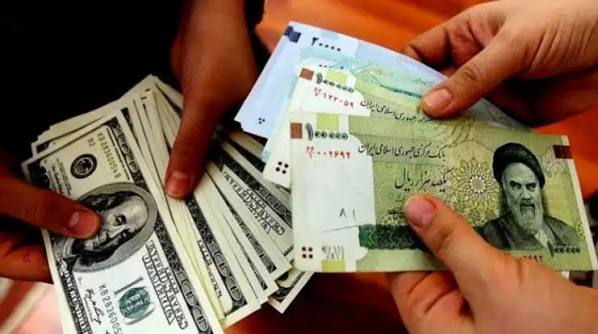
Iran’s rial fell sharply on the black market on Tuesday, November 24, after the United States sanctioned more than two dozen exchange houses, alleged front companies and individuals that Treasury says form part of a shadow-banking network overseen by Iran’s central bank. The dollar traded at around 2.82 million rials by Tuesday afternoon, compared with roughly 2.68 million a day earlier, while some market trackers later showed rates above 2.83 million rials. Washington also sanctioned the Iran Center for Exchange of Currency and Gold, saying it helps channel foreign-currency earnings from exporters to importers and supports tens of billions of dollars in trade, while Central Bank Governor Abdolnaser Hemmati rejected the U.S. characterisation and described the centre as a transparent platform used simply to register transactions.
Iran’s currency plunged sharply on the black market on Tuesday after the United States imposed a sweeping new round of sanctions on exchange houses, front companies and financial intermediaries that Washington says are part of a vast shadow-banking network used by Tehran to move billions of dollars around international sanctions. By Tuesday afternoon, the U.S. dollar was trading at around 2.82 million Iranian rials on the unofficial market, compared with roughly 2.68 million rials a day earlier, representing a decline of about five percent in the value of the Iranian currency within a matter of hours. Some market trackers later showed the dollar reaching approximately 2.83 million to 2.856 million rials, underscoring how quickly pressure intensified after the Treasury Department announced the latest restrictions. The euro also strengthened sharply against the rial, rising to around 3.07 million rials from approximately 2.94 million on Monday, according to market-monitoring websites commonly used by Iranians because official exchange rates remain substantially different from the prices available in the open market.
The sell-off followed an announcement from the U.S. Treasury Department on Monday, November 23, targeting more than two dozen Iranian exchange houses, alleged front companies and individuals under what Washington calls “Operation Economic Outcast,” a broader campaign designed to squeeze the financial networks that allow Iran to continue conducting international trade despite extensive American sanctions. Treasury said the targeted system is overseen by the Central Bank of Iran and relies on a web of local exchange companies, affiliated financial firms and foreign-based front companies operating across jurisdictions including the United Arab Emirates, Turkey and Hong Kong. According to U.S. officials, those networks are used to process international payments, convert revenue from oil and petrochemical exports into usable foreign currency and channel funds back into Iran while bypassing conventional banking channels that have largely been closed to Tehran because of U.S. sanctions.
The Treasury Department described the latest action as one of its most significant attempts this year to disrupt Iran’s remaining financial lifelines, alleging that exchange houses and so-called “rahbar companies” manage sanctions-evasion networks for Iranian banks and commercial clients. Treasury says the system allows thousands of cross-border transactions worth billions of dollars to move through foreign commercial accounts, enabling Iranian exporters and importers to continue trading even when direct access to the U.S. financial system is unavailable. The department argues that these networks are not simply private commercial arrangements but an essential part of Iran’s ability to sustain oil sales, industrial production, military procurement and international trade under sanctions. Iran rejects the broader U.S. portrayal of its financial system as illicit and maintains that many of the mechanisms targeted by Washington are ordinary commercial platforms necessary for conducting lawful trade in a heavily sanctioned environment.
Among the most politically sensitive targets was the Iran Center for Exchange of Currency and Gold, an institution that Washington says plays a crucial intermediary role in matching exporters who earn foreign currency abroad with importers that need foreign currency to purchase goods. Treasury said the centre helps guide tens of billions of dollars in trade-related flows to their ultimate destination inside Iran and noted that the Central Bank also uses financial instruments issued by the centre to facilitate international trade in currencies such as the Russian rouble and Chinese yuan rather than the U.S. dollar. The United States designated the centre under Executive Order 13902, which allows sanctions against entities operating in certain sectors of Iran’s economy, including the financial sector.
Iranian officials immediately rejected Washington’s interpretation of the centre’s role. Central Bank Governor Abdolnaser Hemmati said the United States appeared to have “run out of targets” and was now sanctioning an institution that he described as an ordinary and transparent transaction platform. According to the Tasnim news agency, Hemmati said the Iran Center for Exchange of Currency and Gold was merely a system for registering transactions and that its activities were visible rather than hidden. His response highlighted the central dispute between Tehran and Washington: the United States views the exchange infrastructure as part of a sanctions-evasion architecture, while Iranian officials argue that the same institutions are legitimate mechanisms for conducting trade in an economy that has been increasingly excluded from normal international banking channels.
The currency market appeared to side with the view that the sanctions would increase financial pressure, at least in the short term. The rial’s sudden decline pushed it toward fresh record lows on the open market, with one Tuesday report placing the dollar at approximately 2.856 million rials. The movement matters because the unofficial rate is the price that many Iranian households, businesses and traders actually encounter when they need hard currency for imports, travel, savings or protection against inflation. Iran operates multiple exchange-rate mechanisms, and the official central-bank rate is often significantly stronger than the free-market price, meaning the black-market rate is widely regarded as a more immediate indicator of public confidence in the currency.
The latest decline also reflects pressures that extend well beyond Monday’s sanctions announcement. Iran has been dealing with persistently high inflation, reduced access to foreign currency, restrictions on oil exports, difficulties repatriating overseas earnings and growing uncertainty over the ability of authorities to stabilise prices. The rial has repeatedly fallen to new lows over the past year as businesses and households seek dollars, euros, gold and other assets that may hold value more reliably than the domestic currency. A fresh sanctions announcement can therefore produce an immediate market reaction because traders fear that access to foreign exchange will become even more difficult, but the underlying weakness of the rial is the product of a much broader economic crisis rather than a single Treasury action.
That distinction is important because the timing of Tuesday’s decline strongly suggests that markets reacted to the new U.S. measures, but available reporting does not establish that sanctions alone caused the entire five-percent movement. Currency markets respond simultaneously to inflation expectations, political uncertainty, foreign-exchange supply, oil revenues and public sentiment, and the Iranian rial has been under sustained pressure for months. Even so, the proximity of the sell-off to Washington’s announcement indicates that traders interpreted the new measures as another threat to Iran’s ability to obtain and circulate foreign currency.
Treasury Secretary Scott Bessent used unusually aggressive language in announcing the sanctions, describing Iran’s shadow-banking system as one of the regime’s remaining financial lifelines and promising to continue targeting it. The Treasury Department said the campaign is designed to sever networks involved in sanctions evasion, oil revenue collection and international payments, while warning foreign financial institutions that they could themselves face sanctions exposure if they knowingly facilitate significant transactions for designated Iranian entities. The administration has framed the broader strategy as an attempt to isolate the Iranian government economically and limit the resources available for military programmes, weapons development and regional armed groups supported by Tehran. Iran, for its part, has repeatedly accused Washington of using economic sanctions to harm ordinary civilians and destabilise the country’s economy.
The new sanctions extend a campaign that Washington has intensified considerably during 2026. In May, Treasury targeted another group of Iranian currency-exchange houses and related companies, saying those institutions were helping sanctioned banks, oil exporters and military-linked organisations move billions of dollars in foreign currencies. The United States said Iranian exchange houses were particularly important because oil sales are often settled in Chinese yuan, creating a need to convert those earnings into other currencies that can be used for imports and international transactions. That makes foreign-exchange networks a strategic target for U.S. policymakers seeking to make sanctions enforcement more difficult to circumvent.
The November action went further by sanctioning a wider collection of Iranian and foreign-linked entities. Treasury identified Rahbar Bazargani Nesim Baharan Qeshm Company, or Nesim Baharan, as a company working on behalf of Bank Sarmayeh and accused it of coordinating transactions with exchange houses and front companies for Iranian clients, including petrochemical businesses. It also designated Mina Fashki and Partners Exchange Company and Mellat Exchange Company, together with senior individuals associated with those firms. Treasury said the entities were operating within Iran’s financial sector and helping facilitate transactions that U.S. sanctions are intended to restrict.
A separate group of companies based outside Iran was also targeted, illustrating the international reach of the networks Washington says it is trying to dismantle. Treasury named companies in Dubai including Grand Target Heavy Equipment and Machinery Spare Parts Trading, Recaz Star General Trading, Meethale Raw Materials Trading Company, Hemraj Trading, Ewan Al Madeena General Trading, OGA Global General Trading, Dexterous Global DMCC and Khore Al Hilal Goods Wholesalers Trading. It also sanctioned a Turkish company and Hong Kong-based Grandez Trading Limited, alleging that these entities functioned as front companies connected to Iranian exchange houses and moved large volumes of money for sanctioned Iranian clients.
Treasury said some of those firms had processed substantial sums. According to the department, Recaz Star General Trading sent and received hundreds of payments totalling more than $170 million involving individuals associated with Sadaf Exchange, while OGA Global General Trading allegedly handled millions of dollars connected to the National Iranian Tanker Company. Other companies were accused of facilitating transactions for Bank Sepah and Iranian petrochemical exporters. These allegations are U.S. government claims contained in the sanctions designation and have not necessarily been tested in independent judicial proceedings, meaning they should be distinguished from criminal convictions.
The Treasury Department separately announced that the Financial Crimes Enforcement Network had identified approximately $14.7 billion in financial activity between January 2025 and August 2026 that U.S. financial institutions flagged as potentially connected to Iranian shadow banking. FinCEN’s analysis was based on suspicious activity reports filed by regulated American institutions, which are required to report transactions or financial patterns that may involve money laundering, sanctions evasion or other risks. Treasury said those reports revealed networks involving the UAE, Hong Kong and Singapore and covering activities linked to oil, shipping and investment businesses, though suspicious activity reports are indicators for investigation and are not themselves proof that a crime occurred.
That distinction matters when assessing Washington’s larger claim that Iran maintains a global shadow-banking architecture. The U.S. government has accumulated extensive financial intelligence suggesting that Iranian entities use layered companies, foreign exchange houses and commercial accounts to continue international business, but not every flagged payment necessarily represents illegal conduct. Tehran argues that its companies have been forced into increasingly complicated financial arrangements because unilateral U.S. sanctions exclude them from normal trade and banking channels, while Washington argues that those same arrangements are deliberately designed to undermine sanctions and conceal the identity of ultimate beneficiaries. The disagreement is therefore not simply factual but deeply political, reflecting fundamentally different views of the legitimacy of the sanctions themselves.
For ordinary Iranians, however, the immediate concern is less about the legal classification of exchange houses than about what another decline in the rial means for household finances. A weaker currency raises the local cost of imported goods, including medicines, machinery, industrial inputs and consumer products, while also increasing the cost of foreign travel and education. Even domestic products can become more expensive when manufacturers depend on imported components or raw materials. In an economy already struggling with inflation, that creates a cycle in which expectations of further currency weakness can push businesses to raise prices pre-emptively and households to convert savings into foreign currency or gold, adding further pressure on the rial.
Food prices can also be affected indirectly because agricultural production depends on machinery, fertiliser, animal feed, transport equipment and other inputs exposed to currency movements. Iran produces substantial amounts of its own food, but the agricultural sector remains connected to international markets, particularly for specialised inputs. A sustained depreciation therefore risks reinforcing inflation even when the original trigger is financial rather than agricultural.
The impact is especially severe for salaried workers and pensioners whose incomes are paid in rials and do not automatically rise with the exchange rate. Every major depreciation reduces the international purchasing power of wages and savings, while domestic inflation can erode purchasing power further. That dynamic has contributed to public frustration with economic management and made currency fluctuations politically sensitive inside Iran.
For businesses, multiple exchange rates create additional complications. Companies with access to official or subsidised foreign currency may face very different costs from those forced to purchase dollars on the open market. That can distort investment decisions, create opportunities for arbitrage and make the real cost of imports difficult to assess. Iranian authorities have repeatedly attempted to reform or consolidate currency markets, but sanctions and shortages of hard currency have made that task extremely difficult.
The Iran Center for Exchange of Currency and Gold was partly designed to bring greater structure and transparency to this fragmented environment. Iranian authorities present it as a regulated marketplace where exporters and importers can match foreign-currency needs, allowing companies to conduct legitimate trade through monitored mechanisms rather than informal channels. That is precisely why Hemmati reacted so strongly to the U.S. designation, arguing that Washington was sanctioning an institution that Tehran views as part of formal economic management rather than clandestine banking.
The United States sees the same institution differently. Treasury argues that even if transactions are formally registered, the centre helps move foreign currency generated by Iran’s external trade through a financial system that ultimately supports sanctioned banks, state-linked enterprises and government priorities. The department says the centre acts as a “matchmaker” between exporters earning foreign currency and importers needing it, effectively helping channel funds back into the domestic economy despite U.S. restrictions.
This clash illustrates why sanctions enforcement has become increasingly focused on financial infrastructure rather than only individual banks or officials. Once a major bank is sanctioned, commercial activity can migrate to smaller institutions, exchange houses, brokers and companies in third countries. U.S. regulators therefore try to follow the networks that replace formal banking channels, which is why companies in Dubai, Hong Kong and Turkey are now repeatedly appearing in Iran-related sanctions actions.
The UAE is particularly significant because Dubai is one of the region’s largest trading and financial hubs and has long served as a commercial gateway for Iranian businesses. Geographic proximity, deep trading relationships and large Iranian expatriate communities make the Emirates an important place for legitimate Iran-related commerce, but those same features also create opportunities for companies seeking to move funds outside conventional banking channels. Washington has consequently increased pressure on firms it believes are serving as intermediaries for sanctioned Iranian institutions.
Hong Kong plays a different but similarly important role because of its connection to Asian banking, shipping and Chinese trade. Iran’s increasing economic dependence on China has made yuan-denominated transactions more significant, particularly in the oil sector, and companies based in Hong Kong can become useful intermediaries in cross-border trade. Treasury has repeatedly targeted such entities when it believes they are acting as fronts for Iranian banks, exporters or oil companies.
Turkey is also a natural commercial partner for Iran because the two countries share a border and maintain substantial trade despite political differences. Turkish companies can therefore appear in both legitimate bilateral commerce and sanctions-evasion investigations, requiring regulators to distinguish between ordinary trade and transactions involving designated Iranian entities.
This complex international network helps explain why Washington is increasingly using secondary sanctions as part of its strategy. Secondary sanctions are designed to deter non-American companies from doing business with sanctioned Iranian entities by threatening their access to the U.S. financial system. A company in Dubai or Hong Kong may therefore comply with U.S. restrictions even if its home government does not impose equivalent sanctions because losing access to dollar transactions or American banks could be commercially devastating.
The effectiveness of that strategy depends heavily on the continued importance of the U.S. dollar and American financial institutions. Even transactions that do not directly involve an American company can touch the U.S. system when they are denominated in dollars or cleared through correspondent banks. Iran has tried to reduce that vulnerability by using currencies such as the Chinese yuan and Russian rouble, but Washington argues that Tehran still depends on financial networks connected to global systems that can be disrupted through sanctions.
Iran’s response has increasingly emphasised economic relationships with countries willing to trade outside the dollar system. China remains the most important example because it is a major buyer of Iranian oil and a critical source of manufactured goods. Russia has also become more important as both countries face extensive Western sanctions. Bilateral trade mechanisms using local currencies can reduce exposure to the dollar, although they cannot completely eliminate the wider challenges created by restrictions on banking, shipping, insurance and technology.
The latest Treasury action therefore fits into a larger contest over whether the United States can continue using its financial power to isolate Iran while Tehran builds alternative commercial networks. The rial’s fall suggests that Iranian traders still believe U.S. sanctions can meaningfully affect access to foreign currency, even as officials insist the targeted institutions are legitimate and resilient.
The currency reaction may also reflect concerns that further sanctions are coming. Treasury officials have made clear that Operation Economic Outcast is not intended as a one-time action. The programme, announced in August, is designed to identify oil-related income, sanctions-evasion channels and networks that connect Iranian trade to foreign financial systems. Businesses dealing with Iran may therefore assume that entities not targeted today could face restrictions later, encouraging banks and commercial partners to become more cautious even before formal sanctions are announced.
That phenomenon, sometimes described as over-compliance, can magnify the economic impact of sanctions because companies may avoid legal transactions simply to reduce risk. International banks often choose not to handle Iran-related payments even when specific transactions may technically be permitted, particularly when the compliance costs are high or the legal environment is unclear. That reduces competition and makes legitimate trade more expensive.
Humanitarian trade is officially exempt from many U.S. sanctions, but Iranian officials have long argued that banking restrictions nevertheless complicate payments for medicines and other essential goods. Washington counters that humanitarian exemptions remain available and that the regime’s own economic choices and regional policies contribute substantially to the country’s financial difficulties. The dispute has persisted across multiple U.S. administrations and remains one of the most contentious aspects of sanctions policy.
The latest currency decline is likely to intensify that argument domestically inside Iran. Critics of the government can point to the rial’s weakness as evidence that economic management and foreign policy have failed to protect living standards, while government officials can blame Washington for deliberately targeting financial mechanisms needed for normal commerce. Both narratives contain elements that reflect real pressures, but neither alone fully explains the complexity of Iran’s economic situation.
Domestic monetary policy also matters. Persistent inflation can weaken confidence in the currency regardless of external sanctions, while fiscal deficits and rapid money-supply growth can create additional pressure. The Central Bank faces the difficult task of supporting economic activity while trying to prevent further depreciation, a challenge made harder when access to foreign reserves and export revenues is constrained.
Intervention in the currency market can temporarily stabilise exchange rates, but sustained support requires adequate foreign-currency reserves. If traders believe reserves are becoming harder to access or export revenues are being blocked abroad, attempts to defend the rial can become increasingly expensive.
The psychological component is equally important. Currency crises can accelerate when households begin to expect further declines because the expectation itself increases demand for dollars and gold. In that environment, even a sanctions announcement with limited immediate operational impact can produce a sharp market reaction if it changes perceptions about future access to foreign exchange.
Tuesday’s roughly five-percent move is therefore important not only because of its size but because it demonstrates how sensitive the Iranian market remains to geopolitical developments. A single Treasury announcement targeting financial infrastructure was enough to produce a rapid repricing of the dollar on the open market, reinforcing the perception that the rial remains vulnerable to external pressure.
The impact on gold is also relevant because Iranian households frequently use gold coins as a store of value when confidence in the currency falls. A weaker rial tends to push local gold prices higher, potentially reinforcing the shift away from cash savings and increasing inflation expectations.
That behaviour creates challenges for policymakers because efforts to restore confidence require more than administrative controls. Authorities can regulate exchange offices, restrict trading or intervene in markets, but lasting currency stability usually depends on inflation control, credible fiscal policy and reliable access to foreign earnings.
Iran’s economic authorities have repeatedly attempted to manage the currency through official trading platforms and regulated exchange mechanisms, which is why the U.S. decision to sanction the Iran Center for Exchange directly strikes at one of the tools Tehran uses to organise foreign-currency flows. Hemmati’s response suggests the government views the designation not merely as another sanctions measure but as an attack on the institutional framework it uses to manage external trade.
Washington’s perspective is precisely the opposite. Treasury argues that because the centre helps coordinate trade-related foreign exchange, it is an important node in the network that allows Iran to withstand sanctions. Targeting it is therefore intended to make the entire system less efficient and increase the cost of international transactions.
The disagreement will likely become an important test of the latest sanctions. If the Iran Center for Exchange continues operating with little disruption, Tehran may argue that Washington’s action was largely symbolic. If foreign partners begin avoiding transactions associated with the platform, the impact could become considerably more serious.
Foreign companies will now need to examine whether transactions involving the designated entities could expose them to U.S. sanctions. That review may cause delays or cancellations even in transactions that previously appeared routine, which could reduce the supply of foreign currency entering Iran.
Banks will be especially cautious because OFAC sanctions can create severe penalties for institutions that process prohibited transactions. Treasury has warned that financial institutions may risk sanctions exposure if they knowingly conduct or facilitate significant transactions for designated persons, including restrictions on access to U.S. correspondent accounts.
For Iran’s exporters, that can translate into difficulty receiving payment. An exporter may successfully sell oil, petrochemicals, metals or other goods abroad but still face challenges converting the proceeds or bringing them back into the domestic economy. Treasury explicitly says that one objective of the latest campaign is to prevent Iran from repatriating export earnings.
For importers, the consequences can appear in the opposite direction. If foreign currency becomes scarcer or more expensive, companies must pay more rials to purchase dollars or euros needed for international transactions. Those costs can then be passed on to consumers.
That transmission from sanctions to exchange rates and ultimately to household prices explains why currency movements receive such intense attention inside Iran. The rial is not merely a financial-market indicator; it is closely connected to the cost of everyday goods and the perceived stability of family savings.
The political consequences can therefore be significant. Economic hardship has historically contributed to protests and public dissatisfaction in Iran, particularly when currency depreciation combines with rising food prices and unemployment. Authorities are acutely aware that sudden exchange-rate movements can become politically destabilising if people believe their purchasing power is collapsing.
There is no evidence at this stage that Tuesday’s currency decline alone has triggered a new nationwide protest movement, and it would be premature to draw such a conclusion. The significance lies instead in the fact that the sanctions arrive in an economy already operating under substantial pressure.
The Trump administration appears to be betting that sustained financial pressure will reduce Tehran’s ability to fund military and regional activities while forcing difficult choices inside the government. Treasury’s language makes clear that the campaign is designed not merely to punish specific companies but to weaken the financial architecture supporting the Iranian state.
Iran argues that this strategy amounts to economic warfare and that ordinary citizens ultimately pay the price through inflation, shortages and currency weakness. That argument is likely to become more prominent if the rial continues falling.
The sanctions also illustrate how financial conflict has become one of the central instruments of modern geopolitical competition. Rather than relying solely on military force, governments can attempt to isolate adversaries by restricting banking access, targeting corporate networks and making counterparties fear penalties.
The United States possesses unusual leverage in this area because of the global role of the dollar and the importance of American banks, but that leverage has also encouraged sanctioned countries to seek alternatives. The long-term question is whether repeated use of financial sanctions strengthens U.S. power by deterring transactions or gradually encourages competitors to build systems that operate outside American control.
For Iran, that transition is already underway but remains incomplete. Trade in yuan and roubles can reduce exposure to the dollar, yet global finance remains deeply connected to U.S.-influenced banking and technology systems.
The immediate evidence from Tuesday’s market reaction suggests that Iran has not insulated itself from that pressure. The rial weakened sharply within a day of the latest sanctions, and traders moved quickly to higher dollar and euro prices.
At the same time, the Central Bank’s public response indicates that Tehran is attempting to contain the psychological impact by portraying the sanctions as increasingly desperate and disconnected from actual economic activity. Hemmati’s assertion that Washington has effectively exhausted meaningful targets is intended to suggest that the sanctions no longer represent a fundamentally new threat.
Whether markets accept that argument will be visible in the coming days. If the rial stabilises or recovers, Iranian officials may claim that the initial reaction was temporary. If it continues falling, pressure will grow on the Central Bank to intervene more aggressively or provide additional foreign currency.
The open-market rate will therefore remain one of the clearest indicators of how traders judge the effectiveness of the new measures.
What is firmly established at this stage is that Washington has imposed a substantial new sanctions package, Treasury has targeted both Iranian exchange institutions and foreign-linked companies, the Iran Center for Exchange of Currency and Gold is now directly sanctioned, and the rial reacted immediately by falling roughly five percent against the dollar on the unofficial market.
What remains contested is Washington’s characterisation of the targeted institutions. The United States describes them as components of a shadow-banking system used to evade sanctions and move billions of dollars, while Iran’s Central Bank says at least one of the most prominent targets is simply a legitimate transaction platform. Those positions represent competing claims, and the sanctions designation itself does not amount to a criminal conviction.
The wider economic implications will depend on how foreign banks, exchange houses, importers and exporters react. If they reduce dealings with Iranian counterparties, the restrictions could tighten foreign-currency supply further and increase pressure on the rial. If alternative channels quickly replace the sanctioned networks, the long-term effect may be more limited.
For Iranian households, however, that geopolitical contest is already being felt in a much simpler way. The dollar costs more rials than it did a day earlier, the domestic currency has again moved toward unprecedented lows, and fears of further inflation have intensified.
That is why Tuesday’s market reaction matters beyond financial traders. Every sustained fall in the rial has the potential to increase the price of imported goods, reduce the value of wages and savings and make already difficult household budgets even harder to manage.
The latest sanctions therefore represent more than another entry in the long history of U.S.-Iran confrontation. They are a direct test of whether Washington can still use financial restrictions to materially constrain Iran’s economy and whether Tehran can protect its currency and trade networks from an increasingly aggressive sanctions campaign.
For now, the first reaction has been unmistakable: Iran’s rial weakened sharply, traders rushed toward foreign currencies, and the dispute over the country’s financial system moved immediately from Treasury documents in Washington to exchange counters and household calculations in Tehran.