IRAN’S SECURITY CHIEF MEETS PUTIN IN MOSCOW, DELIVERS LETTER FROM SUPREME LEADER AS DIPLOMATIC EFFORTS CONTINUE
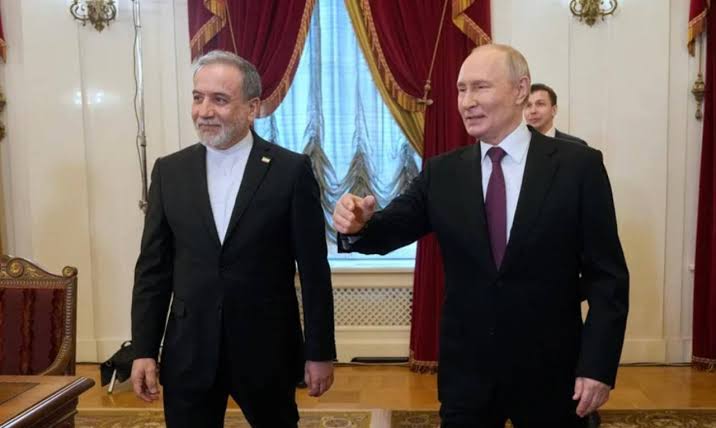
Iranian security chief Mohsen Rezaei met Russian President Vladimir Putin in Moscow on November 5 and delivered a letter from Supreme Leader Mojtaba Khamenei. The discussions covered regional security, post-war arrangements and a proposed gas pipeline between Russia and Iran. The letter’s contents were not disclosed. The meeting came as Qatar and other regional governments intensified mediation efforts to end the US-Israel war on Iran. Tehran says it will not resume negotiations or reopen the Strait of Hormuz until Washington meets its seven conditions, while the United States insists that Iran’s nuclear program must be addressed in any initial agreement.
VNTV | INTERNATIONAL NEWS | NOVEMBER 6, 2026
Iran’s security chief Mohsen Rezaei met Russian President Vladimir Putin at the Kremlin on Thursday, November 5, and delivered a message from Supreme Leader Mojtaba Khamenei as Tehran seeks Moscow’s support over regional security and the terms of a possible settlement to the war involving the United States and Israel. The meeting brought the conflict, the future of the Strait of Hormuz, sanctions and post-war security arrangements into discussions between two governments that have strengthened their strategic relationship in recent years.
Rezaei, secretary of Iran’s Supreme National Security Council, said the talks covered regional security, arrangements for the period after the war and cooperation between Russia and Iran. Iranian state media reported that he had delivered a letter from Khamenei to Putin, but neither the Iranian nor Russian side disclosed its contents. The Kremlin confirmed that the meeting took place but did not immediately publish a detailed account of the discussions.
The visit came as diplomatic efforts involving Qatar and other regional governments intensified, with negotiators attempting to establish conditions under which Washington and Tehran could resume talks and prevent another round of military operations. The two governments remain divided over the Strait of Hormuz, the American blockade of Iranian ports, sanctions, and the future of Iran’s nuclear program. Rezaei said Iran had presented Washington with seven conditions and would not negotiate or reopen the strait until those demands were implemented.
Rezaei said Khamenei had instructed him to deliver the message to Putin as soon as possible. According to the Iranian official, the Moscow visit had been planned nearly a month earlier but was postponed because of daily discussions about the military situation in the region. He did not explain whether the letter contained specific proposals for ending the war, requests for Russian assistance or instructions concerning future cooperation between the two governments. Its contents remain undisclosed, and there has been no public confirmation that Putin was asked to take a particular action.
Speaking after the meeting, Rezaei said important regional issues had been discussed and that the two sides had held significant conversations about post-war arrangements and regional security. He also said Putin had reiterated Russia’s readiness to support efforts to end the conflict. The Iranian official’s account presents Moscow as a potential diplomatic partner at a time when Tehran is seeking international backing for its position, although the Kremlin has not publicly confirmed the specific commitments described by Rezaei.
The meeting also addressed economic cooperation, particularly a proposed natural gas pipeline connecting Russia and Iran. Rezaei said the project could help address Iran’s gas shortages while creating an opportunity for Russia to supply gas to countries neighboring Iran. The proposal would expand energy cooperation between two countries that are both major producers of hydrocarbons but face restrictions on their access to international markets because of Western sanctions.
The Moscow discussions took place against a rapidly changing diplomatic and military situation. Qatar has intensified its mediation efforts, Iran has sent a nuclear proposal to the United States through Doha, and American officials are considering how to respond to Tehran’s demands. At the same time, President Donald Trump has not ruled out renewed military operations, and US forces remain deployed in the region as the naval blockade of Iranian ports continues.
The letter from Mojtaba Khamenei
The delivery of a direct message from Iran’s supreme leader to Putin gives the Moscow meeting significance beyond a routine discussion between senior officials. Rezaei is secretary of Iran’s Supreme National Security Council and serves as a senior figure in the country’s national security system. His role places him at the center of discussions involving military strategy, foreign policy and the government’s response to the conflict.
Khamenei’s decision to send a message through Rezaei indicates that Tehran wanted to communicate directly with the Russian president during a period of heightened diplomatic activity. However, the absence of information about the letter means its precise purpose cannot yet be established. It may have addressed the conflict, regional security, bilateral relations or the negotiations with Washington, but none of those possibilities has been confirmed as its specific content.
The message was delivered one day after Khamenei issued a written statement warning against concessions to the United States. In the statement, published on Wednesday, November 4, the supreme leader said there should not be even the slightest inclination toward submission to Washington. He also called for Iran to become stronger and reach what he described as a position of absolute deterrence.
The statement reflected Tehran’s continuing rejection of what it regards as American pressure during negotiations. Iran has maintained that any settlement must address the economic and security consequences of the war, including sanctions and the restrictions imposed on maritime traffic. Khamenei’s remarks also suggest that the leadership wants to maintain a position of military readiness while diplomatic discussions continue.
The timing of the letter is therefore relevant, but it does not establish that Iran and Russia have agreed on a joint response to the United States or that Moscow has committed itself to supporting Iranian military operations. Russia’s public position has emphasized diplomacy and an end to the conflict. Rezaei said Putin had expressed readiness to help bring the war to an end, but the Kremlin has not announced a new military commitment or a specific mediation initiative arising from the meeting.
Russia’s role is complicated by its relationship with both Iran and other international powers. Moscow has maintained close political and military ties with Tehran, while also pursuing its own strategic interests in the Middle East and its wider relations with the United States, European countries and Gulf governments. Supporting Iran diplomatically does not necessarily mean Russia will become directly involved in the conflict or accept every condition Tehran has placed on negotiations.
Iran’s seven conditions for negotiations
The Moscow meeting took place as Iran was publicly outlining conditions it wants Washington to meet before direct negotiations can resume. Rezaei said on Thursday that Tehran had communicated seven conditions to the United States and would not negotiate an end to the war or reopen the Strait of Hormuz until those conditions were implemented.
“On the issue of diplomacy, we have announced seven conditions to the Americans. As long as they do not execute our seven conditions, we will neither open the Strait of Hormuz nor have negotiations,” Rezaei said, according to Reuters.
Iranian officials have identified demands that include the lifting of US sanctions, the release of frozen Iranian assets held abroad and compensation for war damage. The full list of seven conditions has not been comprehensively published in the reporting available on the Moscow meeting, and the exact wording and sequencing of all the demands remain unclear. It would therefore be inaccurate to treat the publicly identified demands as a complete and definitive list.
The conditions place the economic consequences of the conflict at the center of Iran’s negotiating position. Sanctions have restricted Iran’s access to international financial systems and limited the ability of its companies to trade freely with foreign partners. The release of frozen assets would provide Tehran with access to funds held outside the country, while demands for reparations would require the United States to accept financial responsibility for damage caused during the war.
Washington has not accepted those conditions as the basis for an agreement. The US administration has insisted that Iran’s nuclear program must be included in any initial negotiations, rather than postponed until after other disputes are resolved. That position creates a major difference between the two governments because Tehran wants sanctions relief and other measures addressed before it proceeds with negotiations, while Washington is seeking commitments on the nuclear issue as part of the initial process.
The dispute over sequencing is particularly important. Iran’s position, as described by its officials, would require the United States to take significant steps before negotiations begin. Washington, by contrast, wants the nuclear issue addressed early enough to ensure that a diplomatic process does not leave the central security disagreement unresolved. Neither government has publicly indicated that it is prepared to abandon these positions.
A senior Iranian official told Reuters on November 5 that Iran had sent a nuclear proposal to the United States through Qatar. The official said the proposal would be discussed only after Washington met Tehran’s seven demands. The United States was reviewing the proposal, but the official did not provide further details about its contents.
The development suggests that communication between the two governments is continuing indirectly despite Rezaei’s statement that Iran will not enter negotiations before its conditions are met. The distinction may lie between transmitting proposals through intermediaries and beginning formal negotiations. Tehran can communicate its demands and receive a response without accepting the opening of direct talks under the terms Washington has proposed.
The existence of a nuclear proposal also indicates that the nuclear dispute remains part of the diplomatic process, even as Iran seeks to make sanctions, frozen assets, compensation and maritime access central to the initial stages of an agreement. The details of the proposal have not been made public, and it is not known whether it contains specific commitments concerning uranium enrichment, inspections or the stockpile of highly enriched uranium held by Iran.
Qatar’s mediation and the effort to prevent renewed fighting
Qatar has become an important channel for communication between Washington and Tehran as regional governments seek to prevent another escalation. Doha has maintained diplomatic relations with both countries and has previously acted as an intermediary in negotiations involving the United States and Iran. Its involvement in the latest discussions has focused on identifying a framework that could address immediate military and maritime issues while leaving more difficult questions for subsequent negotiations.
The Iranian nuclear proposal was transmitted through Qatar, according to the senior Iranian official who spoke to Reuters. The use of Doha as an intermediary reflects the difficulty of direct engagement between the two governments and the importance of having a channel through which proposals can be delivered and responses communicated.
Iranian Foreign Minister Abbas Araghchi has also held telephone conversations with officials from several regional countries, including Kuwait, Saudi Arabia, Oman, Qatar, Turkey and Jordan. Iranian state media said the calls focused on regional developments and diplomatic efforts to promote peace. The contacts demonstrate that Tehran is maintaining communication with neighboring and regional governments while seeking support for its position.
The diplomatic activity comes amid concerns that the conflict could resume after the US midterm elections. President Trump has declined to rule out renewed military operations, and American officials have continued to discuss the options available to Washington. A report by Reuters on November 5 said mediators were working to end the conflict amid fears that fighting could reignite after the elections.
The military situation remains uncertain. US forces continue to enforce a naval blockade of Iranian ports, while Iran has maintained restrictions on shipping through the Strait of Hormuz. The two measures have affected commercial traffic and increased pressure on energy markets. Any renewed fighting could further disrupt shipping and increase the risk of attacks on military installations, energy infrastructure and commercial vessels.
The diplomatic process is therefore attempting to address issues that are connected but not identical. The immediate questions include whether shipping can resume through Hormuz, whether the United States will lift its blockade, and whether Iran will agree to a framework for nuclear negotiations. A broader settlement would also need to address sanctions, frozen assets, security arrangements and the consequences of the military campaign.
The parties have not announced an agreement on any of these central issues. The transmission of a proposal through Qatar and the meeting between Rezaei and Putin indicate that diplomatic channels remain active, but they do not establish that a settlement is close or that the two governments have narrowed their differences sufficiently to begin formal negotiations.
The Strait of Hormuz remains a central point of disagreement
The future of the Strait of Hormuz is one of the most important issues in the negotiations because the waterway carries a substantial share of international oil and gas shipments. The narrow passage connects the Persian Gulf with the Gulf of Oman and the Arabian Sea, providing a route for energy exports from Iran, Iraq, Saudi Arabia, Kuwait, Qatar, the United Arab Emirates and other producers.
Iran’s restrictions on shipping have disrupted normal commercial movements through the strait. The United States has imposed a separate blockade on vessels entering and leaving Iranian ports, with US Central Command stating that the measure applies to ships of all nationalities travelling to or from those ports. Washington has said its blockade does not prevent vessels from transiting the strait between non-Iranian destinations.
Tehran has linked the reopening of Hormuz to the lifting of the American blockade and other demands. Rezaei’s statement that Iran will not reopen the waterway until its seven conditions are met reinforces the connection between maritime access and the wider negotiations. The position gives Iran a means of applying economic pressure because uncertainty over shipping affects oil exporters, energy importers, insurers and companies operating in the Gulf.
The effects extend beyond the countries directly involved in the war. China and India are major buyers of Gulf energy, while European and other international markets can also be affected by changes in supply and shipping costs. Restrictions on the strait can increase the cost of oil and gas, create delays in deliveries and force companies to seek alternative sources or routes.
The maritime dispute also creates risks for countries that depend on the stability of the Gulf. Iraq and Qatar rely heavily on the waterway for energy exports, while Saudi Arabia, the United Arab Emirates and Kuwait use it for significant volumes of their oil shipments. Some countries have alternative pipelines and export facilities that can bypass the strait for part of their production, but those routes cannot fully replace its capacity.
Iran’s position is that maritime restrictions cannot be separated from the wider conflict and the American measures against its economy. Washington, however, has treated the blockade as a means of restricting Iranian maritime trade while maintaining that international navigation between non-Iranian destinations should continue. These competing positions will need to be reconciled before normal commercial shipping can be restored.
Russia and Iran deepen energy cooperation
In addition to regional security and diplomacy, Rezaei said he and Putin discussed plans for a gas pipeline from Russia to Iran. The proposed project is intended to address Iran’s domestic gas shortages and create a route through which Russian gas could be sold to countries neighboring Iran.
The proposal reflects the energy relationship between two countries with substantial natural gas resources but different infrastructure and market challenges. Iran has some of the world’s largest natural gas reserves, yet it has faced domestic supply pressures, particularly during periods of high demand for heating and electricity. Production capacity, investment restrictions, infrastructure constraints and seasonal demand have all affected the country’s ability to meet consumption requirements.
Russia is one of the world’s largest natural gas producers and has been seeking alternative markets after Western sanctions and the loss of much of its traditional European gas trade. A pipeline arrangement with Iran could provide Moscow with an additional route into regional markets, depending on the pipeline’s design, capacity, financing and the availability of buyers.
The proposal would require substantial technical and commercial planning. A cross-border gas pipeline needs agreements covering construction, transit, pricing, infrastructure access and long-term supply commitments. The route would also need to account for existing pipelines and the capacity of neighboring countries to receive and distribute gas. Rezaei’s remarks indicate that the subject was discussed at the Kremlin, but neither side announced a completed agreement, construction timetable or confirmed investment commitment.
If implemented, the project could increase energy cooperation between Moscow and Tehran and create additional commercial links with neighboring markets. It could also deepen the two countries’ economic relationship at a time when both face Western sanctions. However, the project would encounter financial and technical challenges, particularly if companies involved in construction, financing or transportation faced restrictions connected to sanctions.
The gas pipeline proposal is not separate from the wider political relationship. Energy cooperation has become one of the areas in which Russia and Iran can develop long-term economic ties, while both governments seek to reduce the effects of Western restrictions. Their interests are not identical, however. Russia must consider its own export markets and infrastructure priorities, while Iran needs investment and reliable supplies to address domestic shortages.
The Kremlin has not published a detailed account of the proposed pipeline discussion. As a result, the scale of the project, the expected route and the countries that could receive Russian gas through Iran remain unclear.
A strategic partnership without a mutual defence guarantee
Russia and Iran have strengthened their relationship through diplomatic, military and economic cooperation over several years. In January 2025, the two countries signed a comprehensive strategic partnership treaty covering areas including trade, military cooperation, science, culture and education. The agreement entered into force in October 2025.
The treaty formalized a broad framework for cooperation but did not establish a mutual defence obligation comparable to the military alliance Russia signed with North Korea. This distinction is important in the context of the current war. Although Moscow and Tehran have expanded their strategic relationship, the treaty does not require Russia to enter a war on Iran’s behalf if the country is attacked.
Russia has offered diplomatic support to Iran and has criticized military action against the country. Putin has also indicated that Moscow is prepared to help end the conflict. But the public information available after the Rezaei meeting does not show that Russia has committed to direct military intervention or agreed to defend Iranian territory against future American or Israeli attacks.
The limits of the partnership are relevant because Tehran is seeking support at a time when it faces military pressure from two countries with substantially greater combined conventional military resources. Russian assistance could take several forms, including diplomatic backing, intelligence cooperation, military equipment, technical support and economic agreements. However, the extent of any assistance connected to the current war has not been publicly established by the Moscow meeting.
Iranian army spokesperson Mohammad Akraminia said on November 1 that Iran had purchased Russian Su-35 fighter jets and expected to receive them after the war ended. He told the Iranian news site Tabnak that the aircraft had originally been expected before the fighting began and that preparations and pilot training had been completed. The statement indicates that military procurement remains part of the wider relationship, although it does not establish how many aircraft have been purchased, when deliveries will occur or whether the arrangements have changed during the conflict.
The proposed fighter aircraft deal is significant because Iran’s air force has long relied on a mixture of older aircraft and systems acquired before the 1979 revolution, alongside domestically developed equipment. Modern fighter aircraft could improve some aspects of its air combat capability, but their operational value would depend on delivery numbers, training, maintenance, weapons integration and the wider structure of Iran’s air defense and command systems.
The timing of any delivery is also uncertain. Akraminia said the aircraft would arrive after the war, meaning that the announcement does not indicate an immediate change in Iran’s air force capabilities during the current conflict. Neither the Moscow meeting nor the public statements following it confirmed a new timetable for delivery.
Putin’s position and the limits of Moscow’s role
Putin’s meeting with Rezaei provides Iran with an opportunity to consult a major international partner while seeking to influence the diplomatic process. Russia has an interest in the future security arrangements of the Middle East and in maintaining its relationship with Tehran. It also has an interest in preventing a wider conflict that could affect energy markets, regional trade and its own strategic relationships.
Moscow’s public position has emphasized the need for an end to the fighting and continued diplomatic engagement. Rezaei said Putin reiterated Russia’s readiness to help end the war, but the Kremlin did not release a detailed statement describing the discussions or announce a new Russian initiative.
The absence of a public account from the Kremlin means that much of the available description of the meeting comes from Iranian officials and state media. While Russia confirmed that Putin and Rezaei met, the content of Khamenei’s letter and the specific commitments discussed remain undisclosed. The two sides may have discussed matters beyond those described by Rezaei, but there is no reliable public basis for assigning additional contents or agreements to the meeting.
Russia’s ability to influence Washington is also limited by the wider relationship between the two countries. Moscow and Washington have their own disputes, including over Ukraine, sanctions and international security. Russia may be able to provide diplomatic support or communicate with American officials, but it cannot guarantee that the United States will accept Iran’s conditions.
There is also a difference between Russia supporting an end to the war and supporting every element of Iran’s negotiating position. Moscow may favor a settlement that prevents further escalation without necessarily endorsing Tehran’s demands for sanctions relief, frozen assets or compensation. The absence of a detailed Kremlin account makes it difficult to determine how closely the two governments’ positions align on the specific terms of a settlement.
For Iran, the meeting offers a channel to seek political support and discuss longer-term security and economic cooperation. For Russia, it provides an opportunity to maintain influence in the region and strengthen ties with a partner that has become increasingly important to Moscow. Whether the relationship can produce practical assistance in the negotiations will depend on the decisions of Washington, Tehran and the regional governments involved in mediation.