
ITALY SUPREME COURT OVERTURNS CITIZENSHIP RESTRICTION GIVING NEW HOPE TO DESCENDANTS ABROAD
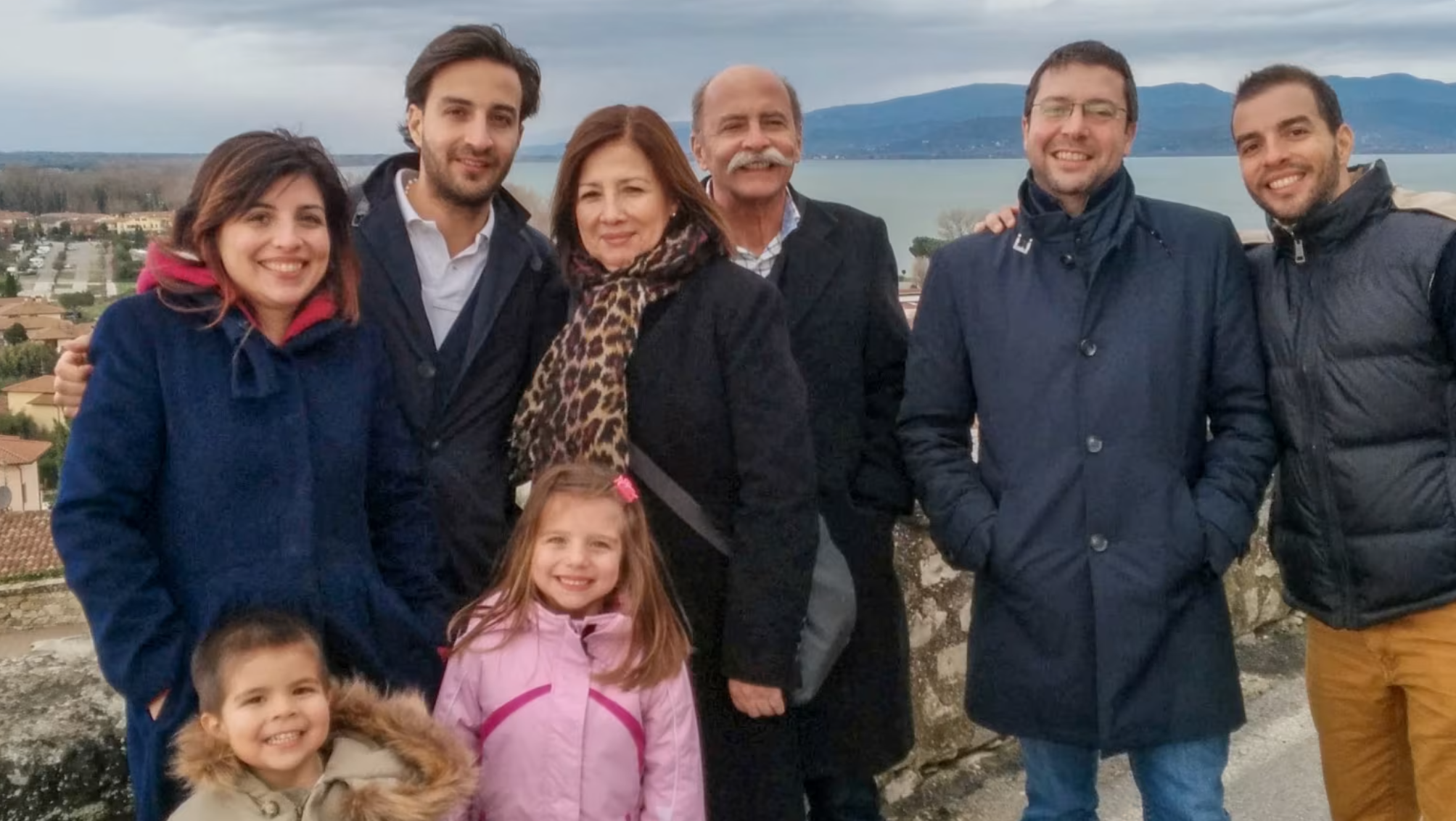
Italy's Supreme Court has overturned the controversial minor issue that blocked some descendants of Italian citizens from obtaining citizenship when an ancestor naturalized abroad while their child was still a minor. The landmark ruling followed a legal battle by Venezuelan Gustavo Monasteries and could affect citizenship claims across the Italian diaspora.
Italy's Supreme Court has overturned a major restriction on citizenship by descent, delivering a landmark victory for families whose claims to Italian citizenship had previously been blocked.
The ruling followed a lengthy legal battle brought by Venezuelan Gustavo Monasteries and members of his family, whose application had been rejected under what became known as the minor issue.
The decision by the Sezioni Unite, the highest level of Italy's Court of Cassation, overturned previous interpretations that prevented some descendants from claiming citizenship when an Italian ancestor naturalised in another country while their child was still a minor.
The ruling could have significant implications for descendants of Italians around the world, particularly families in the United States, Canada, Argentina, Brazil, Venezuela and other countries with large Italian diasporas.
However, the decision does not remove all restrictions introduced by Italy in recent years, meaning some descendants may still be unable to qualify.

VENEZUELAN FAMILY WINS YEARS LONG BATTLE
Monasterios, 47, pursued citizenship through his grandmother Rina Laveder, who emigrated from Italy's Veneto region to Venezuela.
His father Gustavo was born in 1944 while Laveder was still an Italian citizen. She later naturalised in Venezuela in 1956.
The family's citizenship claim nevertheless encountered difficulties because of historical rules concerning citizenship transmitted through women and, later, the minor issue.
Monasterios and members of his family filed their case in 2018.
Their claim was rejected in 2021 and their subsequent appeal failed in 2023.
They then took the case to the Court of Cassation through attorney Monica Restanio.
The Sezioni Unite ultimately accepted arguments challenging the minor issue and overturned the previous interpretation.
For Monasterios, the judgment meant recognition of an Italian identity that he said had remained an important part of his family for generations.
WHAT WAS THE MINOR ISSUE
The minor issue affected descendants whose Italian ancestors became citizens of another country while their children were still minors.
Under the interpretation, those children could be considered to have lost Italian citizenship alongside their parents, disrupting the citizenship line for subsequent generations.
The interpretation became particularly significant for Italian descendants across the Americas, where citizenship by birth is common.
Individual Italian judges began applying the interpretation in 2019.
A section of the Supreme Court supported it in 2023, and a government circular issued to Italian consulates in October 2024 further established its application to citizenship cases.
As a result, numerous descendants who previously believed they qualified for Italian citizenship found their applications blocked.
The latest Supreme Court ruling has now reversed that interpretation.
FAMILIES DIVIDED BY CHANGING RULES
The restrictions had major consequences for families who had already planned to relocate to Italy.
American Italian citizen Joseph Spinelle moved from Arkansas to Italy with his wife in early 2024 after spending years attempting to secure a consular appointment.
He was recognised as an Italian citizen and subsequently bought a home in Lecce.
Other members of his family had planned to follow him but later changes prevented them from obtaining citizenship through the same route.
The Supreme Court decision has renewed hope for families affected specifically by the minor issue, although additional citizenship restrictions remain.
OTHER RESTRICTIONS STILL REMAIN
The ruling does not mean that citizenship by descent has returned to its previous form for everyone.
Italy introduced further reforms in 2025 that restricted eligibility, including a two generation limit affecting some descendants.
Additional requirements were subsequently introduced concerning the citizenship status of Italian ancestors.
Those restrictions mean some families who benefit from the Supreme Court's rejection of the minor issue could still face other legal barriers.
Further court challenges are expected as lawyers representing descendants continue contesting aspects of the reforms.

THOUSANDS COULD BE AFFECTED
The decision is particularly significant because Italy has one of the world's largest diasporas.
For many applicants, citizenship by descent is not simply a route to an Italian passport but a way of formally reconnecting with family history and gaining the ability to live and work in Italy and elsewhere in the European Union.
Italian American Cheryl Ossola is among those whose citizenship case had been affected by the minor issue.
Ossola moved to Italy in 2018 and has continued pursuing recognition through the courts after earlier decisions went against her.
Her case before the Court of Cassation had been scheduled for October 2026 but was suspended.
Following the latest ruling, she hopes her claim and those of her children can now proceed without the minor issue blocking their citizenship line.
Australian Mitchell Bowden has similarly been pursuing recognition through his Italian grandmother, whose family left Istria following the Second World War.
For descendants like Bowden, the ruling keeps alive the possibility of reclaiming an Italian citizenship connection that families believed had been lost.
The broader impact will depend on how Italian courts and authorities implement the Supreme Court judgment and how it interacts with the separate restrictions introduced in 2025.
For Monasterios, however, the decision marks the end of a legal struggle lasting several years and a victory that could influence citizenship cases far beyond his own family.