
“IT’S NOT YET IGBO TURN” UMAHI BACKS TINUBU AND CHALLENGES PETER OBI TO RECORD FOR RECORD COMPARISON
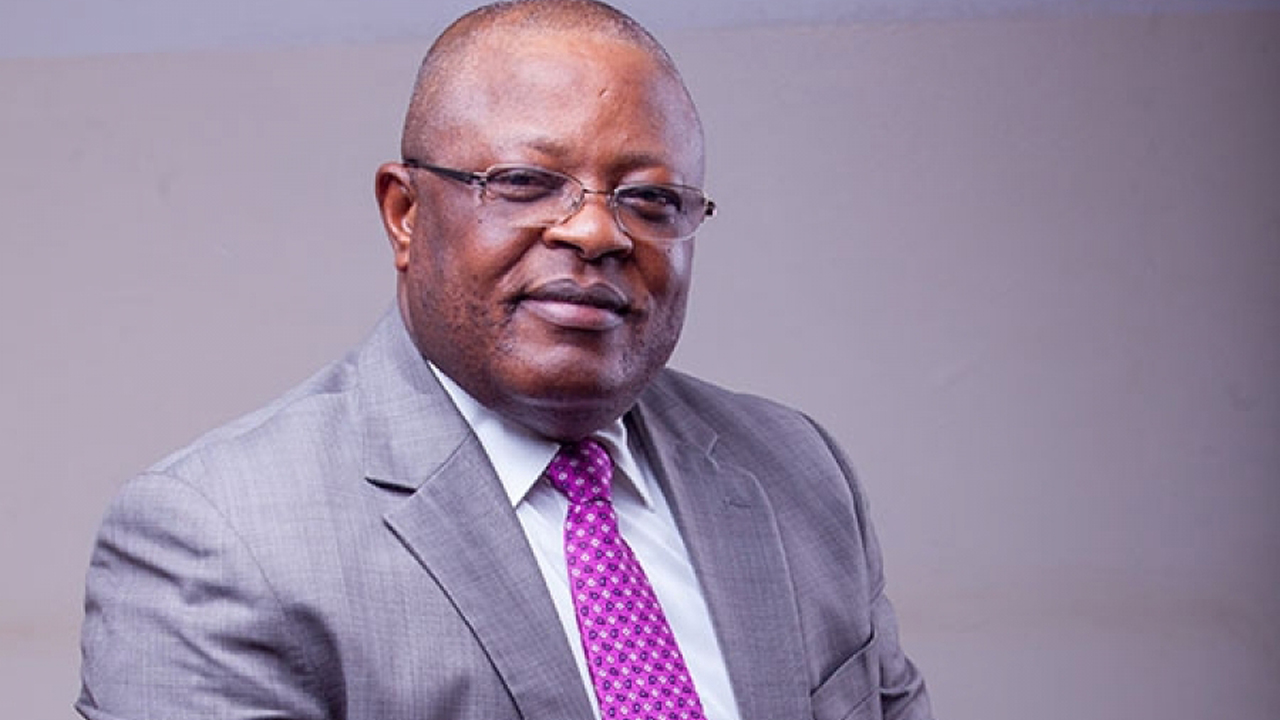
Works Minister Dave Umahi has stirred fresh debate over the 2027 presidency after declaring that it is not yet the turn of the Igbo to produce Nigeria's president, while challenging claims that Peter Obi is politically or intellectually superior to him.
Minister of Works Dave Umahi has waded into the increasingly heated debate over Nigeria's 2027 presidency, declaring that it is “not the turn of Igbos yet” to produce the country's president while strongly defending President Bola Tinubu's continuation in office.
Umahi made the remarks on Thursday in Benin City during the “Operation Rescue Benin-Asaba Road” event.
The former Ebonyi State governor said he believed the South-East would eventually produce Nigeria's president but argued that the political opportunity currently belonged to Tinubu.
“What we are saying is that it is not the turn of Igbos yet,” Umahi said.
He rejected suggestions that an Igbo politician could never become Nigeria's president, saying the region would eventually produce the country's leader.
But for 2027, Umahi made his own position clear, saying he believed Tinubu should remain in office.
“It is not yet our turn, it is the turn of President Bola Ahmed Tinubu,” he said.
The comments are Umahi's political opinion and do not reflect any constitutional or formal rotational rule governing who may contest Nigeria's presidency.
Nigeria's Constitution does not allocate the presidency to ethnic groups or geopolitical zones on a rotational basis, although zoning and power rotation have long played significant roles in negotiations within the country's political parties.
Umahi's remarks are therefore likely to feed into the continuing political debate surrounding the South-East's presidential ambitions ahead of the 2027 election.
The minister also used the appearance to respond directly to comparisons between himself and Peter Obi, the former Anambra State governor and presidential candidate of the Nigeria Democratic Congress.
Umahi rejected suggestions that Obi was politically, intellectually or professionally above him.
Responding to claims that Obi was not his “match”, Umahi said comparisons between the two politicians should be based on measurable records.
He questioned whether Obi had a stronger intellectual record, family background, record as governor or contribution to the South-East.
“Is it in intellectual capacity? Is it in what we have done for the people of South-East? Is it what we did when we were governors?” Umahi asked.
He challenged those making the comparison to place their respective records alongside each other and identify the areas in which they believed Obi had performed better.
The minister's remarks amount to a political challenge rather than an independent assessment of either man's performance.
Umahi served as governor of Ebonyi State from 2015 until 2023 before joining Tinubu's administration as Minister of Works.
Obi served as governor of Anambra State between 2006 and 2014, across periods interrupted by legal and political disputes.
Their records span different states, periods and economic circumstances, meaning comparisons between their administrations depend on the specific indicators being examined.
Umahi also described Obi as “a lucky person” while responding to criticism surrounding the former Anambra governor and his political supporters.
He said he did not believe reasonable people should insult Obi but argued that politicians who criticise the Tinubu administration should expect government officials to defend its record.
“If you are challenging President Bola Ahmed Tinubu and the president is working and is using us to work and you expect us to keep quiet, we are not keeping quiet,” Umahi said.
The remarks underline the increasingly direct political exchanges surrounding the 2027 presidential contest.
Umahi has emerged as one of the Tinubu administration's prominent political voices in the South-East and has repeatedly urged people in the region to support the President.
Earlier this week, the minister argued that South-East political and community leaders should more actively communicate what he described as the Tinubu administration's achievements in the region.
He also criticised Obi's presidential campaign and argued that greater awareness of the government's projects would affect Obi's support.
Those statements represent Umahi's partisan assessment as a member of the Tinubu administration rather than an independent measure of voter sentiment.
Thursday's comments came as Umahi discussed the Federal Government's intervention on the Benin-Asaba dual carriageway.
The minister announced that the government would redesign the 136 kilometre road using reinforced concrete pavement after problems with previous arrangements for the project.
But his remarks about the presidency and Obi quickly became the politically significant part of the appearance.
The question of presidential representation remains particularly sensitive in the South-East, which has not produced an elected Nigerian president since the country's return to civilian government in 1999.
Supporters of a South-East presidency have argued that allowing the region to produce a president would promote political inclusion and address what they regard as a longstanding imbalance.
Others maintain that voters and political parties should determine presidential candidates without treating geopolitical rotation as binding.
Umahi's position places him firmly within the argument that Tinubu should continue beyond 2027 rather than the presidency shifting to a South-East candidate at the next election.
Whether Nigerian voters agree with that position will ultimately be determined through the country's electoral process.
For now, Umahi's declaration has added another high-profile voice to the debate over zoning, South-East representation and the increasingly competitive politics surrounding Nigeria's 2027 presidential election.