JAPAN’S $21 BILLION US CHIP INVESTMENT RAISES QUESTIONS OVER WHO BENEFITS MOST FROM TRUMP TRADE AGREEMENT
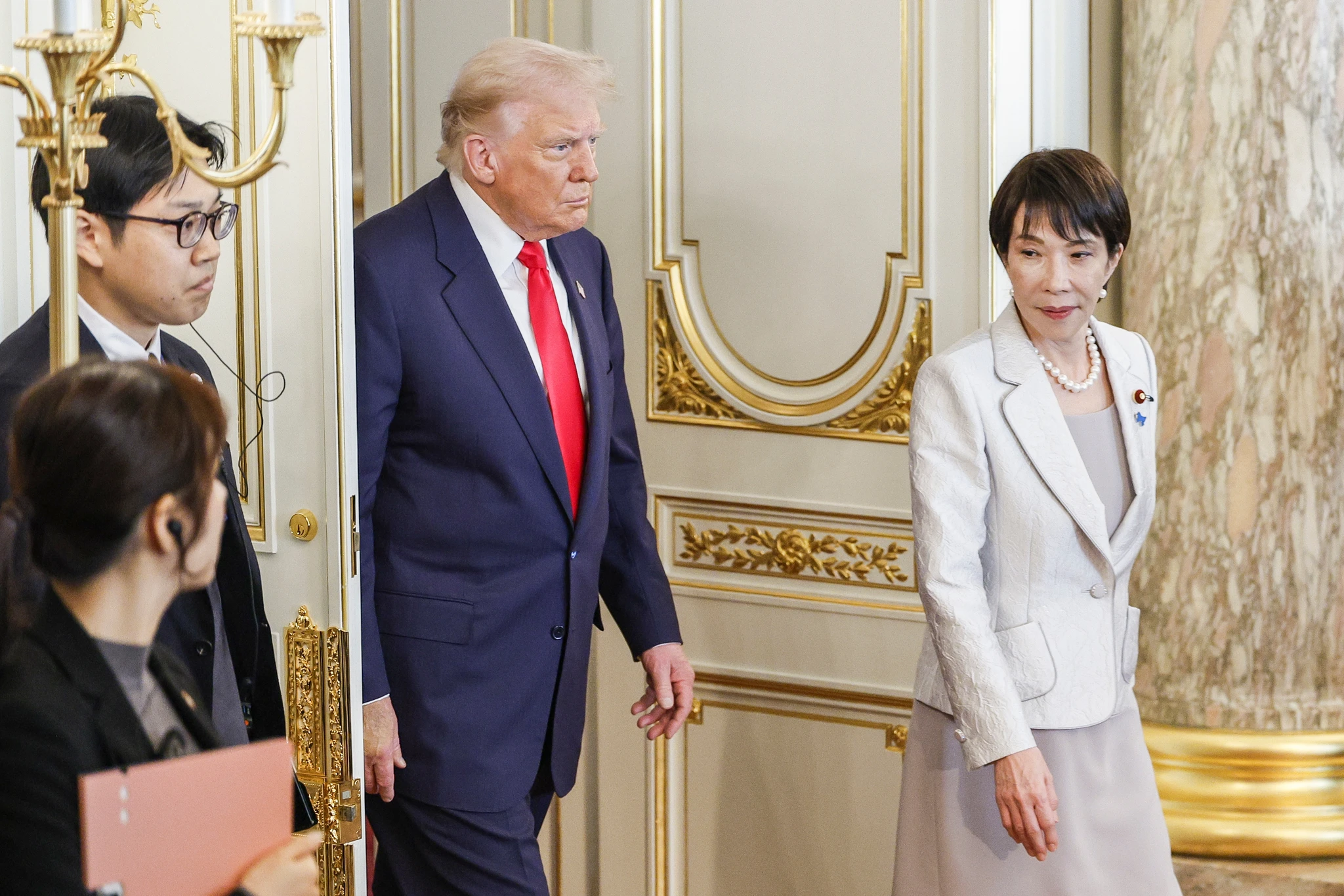
Japan’s commitment to provide up to $21 billion for two GlobalFoundries semiconductor factories in New York has raised questions about whether the project benefits American manufacturing more directly than Japan’s own technology industry. The investment forms part of Tokyo’s broader $550 billion agreement with the Trump administration and is expected to strengthen U.S. semiconductor capacity, create jobs and improve supply-chain security. Japan argues that its companies can benefit through equipment sales, investment returns and secure access to chip production, but analysts continue to question whether financing factories in the United States will do enough to rebuild Japan’s domestic semiconductor manufacturing capabilities.
Japan’s commitment to provide up to $21 billion for two new semiconductor factories in New York has triggered a wider debate over whether one of the biggest projects under Tokyo’s $550 billion investment agreement with the United States will significantly strengthen Japan’s own technology industry or primarily advance President Donald Trump’s effort to rebuild American chip manufacturing. The GlobalFoundries facilities, announced last week, will be developed at the company’s existing manufacturing site in Malta, New York, with Japanese capital supporting construction while GlobalFoundries supplies the technology and operates the plants. The project is being presented by both governments as a strategic investment in semiconductor security, but analysts cited by Reuters say the most immediate industrial benefits will be felt in the United States, where the factories, jobs, infrastructure and manufacturing capacity will actually be located.
The investment forms part of a much broader $550 billion Japanese commitment negotiated with the Trump administration during trade discussions intended to reduce tariff pressure on Japanese exports and preserve stable commercial relations between the two allies. Under the arrangement, Japan agreed to support large-scale investment projects inside the United States, while the American side secured substantial influence over which projects would receive backing. That structure has attracted scrutiny in Tokyo because Japan is simultaneously spending heavily to rebuild its own semiconductor industry after losing ground over several decades to Taiwan, South Korea and the United States in advanced chip production.
Japan was once one of the world’s dominant semiconductor powers, but its share of global chip manufacturing declined sharply as competition intensified and production shifted toward other parts of Asia. Japanese companies remain important suppliers of chipmaking equipment, specialised chemicals, silicon wafers and other materials, but the country no longer occupies the same leading position in advanced logic manufacturing that it held in the 1980s. Tokyo has therefore made semiconductor revival a major strategic priority, funding domestic projects and attracting foreign manufacturers in an attempt to rebuild production capacity and reduce dependence on overseas supply chains.
The GlobalFoundries project creates an obvious tension within that strategy because Japan is now committing a substantial amount of capital to factories located thousands of kilometres away from its own industrial base. Supporters of the agreement argue that semiconductor security cannot be measured only by where a factory is physically located, especially when the production takes place in a close allied country with deep commercial and defence ties to Japan. Critics respond that a factory in New York will still create most of its direct employment, infrastructure development, engineering expertise and tax benefits in the United States rather than in Japan.
GlobalFoundries says the project will involve two new semiconductor fabrication plants at its Malta campus. The first facility is expected to require roughly $10 billion and is intended to begin production later in the decade, while a second plant could follow under the same broader investment framework. When related infrastructure and development costs are included, the entire package could reach approximately $21 billion. The factories are expected to produce foundational and specialised chips used in sectors such as automotive manufacturing, communications, industrial equipment and infrastructure rather than focusing exclusively on the most advanced processors used in cutting-edge artificial intelligence systems.
That distinction matters because Japan’s domestic semiconductor ambitions are aimed not only at securing basic chip supplies but also at restoring advanced manufacturing capability. Tokyo has invested heavily in Rapidus, a state-supported chipmaker that is attempting to produce advanced logic semiconductors inside Japan. The government has also supported overseas companies building facilities on Japanese soil, including Taiwan Semiconductor Manufacturing Company, because policymakers believe that domestic production capacity is essential to economic security.
The concern raised by analysts is that financing large American factories may improve supply reliability without necessarily transferring manufacturing expertise back into Japan. If GlobalFoundries owns the technology, operates the plants and develops the workforce in New York, then Japan’s direct benefit may come mainly through access to production, investment returns and business opportunities for Japanese suppliers rather than through the creation of a stronger domestic manufacturing ecosystem.
Japanese officials argue that those indirect benefits are still substantial. Japanese semiconductor equipment manufacturers could sell machinery to the new facilities, while Japanese customers could secure access to production capacity in a politically reliable country. Companies such as Renesas Electronics, which supplies chips to the automotive and industrial sectors, may benefit from having additional production located within the United States at a time when supply chain disruption has become a major concern for manufacturers worldwide.
The pandemic-era chip shortage demonstrated how vulnerable global manufacturing can become when semiconductor production is concentrated in a small number of locations. Automobile factories were forced to reduce output, electronics companies struggled to secure components and governments became increasingly concerned about the geopolitical consequences of depending heavily on East Asian production hubs. The United States responded by aggressively encouraging companies to build factories domestically, while Japan launched its own programme of subsidies and strategic investment.
The new GlobalFoundries project therefore sits inside a much larger international competition over semiconductor capacity. Governments now regard chips not simply as commercial products but as strategic resources linked to national security, industrial competitiveness, defence systems and artificial intelligence. The United States wants more production on American soil because it sees dependence on foreign factories as a major vulnerability, while Japan wants to maintain secure access to chips without allowing its own manufacturing industry to decline further.
The United States stands to receive the most visible benefits from the New York project. The construction of two new fabs will create jobs, increase local investment, strengthen GlobalFoundries’ manufacturing capacity and support the development of a larger semiconductor cluster in the state. The factories could also attract equipment suppliers, engineering companies and research partnerships, creating economic activity beyond the facilities themselves. These so-called cluster effects are one of the main reasons governments compete so aggressively to attract semiconductor plants.
New York already has an established semiconductor ecosystem around GlobalFoundries’ Malta operations, meaning the Japanese-backed investment will strengthen an existing industrial base rather than create one from the beginning. That makes the project more commercially attractive because much of the necessary infrastructure, workforce experience and supply network already exists. From Washington’s perspective, the investment therefore advances both economic and national-security objectives by placing more semiconductor production inside the United States.
President Trump has promoted foreign investment commitments as evidence that his trade policy is bringing factories and capital back to America. His administration has repeatedly argued that tariffs and the threat of tariffs can persuade trading partners to invest directly in U.S. manufacturing rather than simply export products into the American market. The Japanese investment package fits neatly into that political narrative because billions of dollars that could otherwise have been deployed elsewhere will now finance industrial capacity on U.S. soil.
For Japan, however, the calculation is much more complicated. Tokyo is not simply deciding whether the New York project will generate a profitable financial return. It is also weighing the importance of maintaining favourable access to the American market, preserving the broader security alliance and avoiding damaging trade disputes with Washington. The United States remains one of Japan’s most important export destinations, particularly for automobiles, machinery and high-value manufactured products, making stable trade relations with Washington economically critical.
Japanese officials therefore view the $550 billion commitment as part of a broader strategic relationship rather than a collection of isolated investment projects. From that perspective, financing American semiconductor capacity may be worthwhile even if some of the industrial benefits accrue primarily to the United States, because the agreement also helps protect Japanese companies from more severe tariff pressure and reinforces political cooperation between the two governments.
That argument becomes more difficult when Japan’s own domestic financial pressures are considered. The country carries one of the largest public debt burdens among advanced economies while simultaneously facing rising social-security costs, an ageing population, increased defence spending and major industrial-policy commitments. Funding both domestic semiconductor revival and large overseas investments could become increasingly expensive, particularly if borrowing costs rise or economic growth remains weak.
Japan’s semiconductor strategy is already extremely capital intensive. Modern fabs cost billions of dollars to build and require continuous investment because manufacturing technology changes quickly. Even a facility completed successfully can become less competitive if new production processes emerge only a few years later. Governments therefore have to choose carefully where they allocate public support, especially when several domestic and overseas projects are competing for the same financial resources.
Rapidus illustrates the scale of that challenge. Japan is backing the company as part of an effort to restore advanced logic manufacturing, but establishing a world-class semiconductor producer from the ground up is technologically difficult and extraordinarily expensive. Rapidus must secure skilled workers, advanced equipment, customers and consistent financial support while competing against much larger and more established companies. Tokyo nevertheless considers the project strategically important because it could give Japan greater control over advanced chip production.
Against that background, the decision to finance two GlobalFoundries plants in New York naturally raises questions about opportunity cost. Every billion dollars committed to an American plant is capital that cannot simultaneously be used for another domestic fab, research facility, supplier or technology programme. The issue is therefore not whether the New York project has value, but whether it delivers enough strategic and financial benefit to justify directing such a large amount of money outside Japan while the country is still trying to rebuild its own manufacturing base.
The type of semiconductor production involved also affects that calculation. GlobalFoundries is a major producer of foundational and specialised chips rather than the most advanced processors used by leading artificial intelligence companies. These mature and specialised chips remain essential to cars, telecommunications equipment, industrial machines and defence systems, and shortages can cause serious disruptions. However, they do not necessarily provide Japan with the advanced manufacturing capabilities it is trying to develop through projects such as Rapidus.
This does not mean the GlobalFoundries investment lacks technological importance. Foundational semiconductors are strategically significant because modern economies depend on them in enormous quantities, and a shortage in relatively simple chips can halt production just as effectively as a shortage of advanced processors. The automotive industry learned that lesson during the pandemic, when factories were forced to reduce production because inexpensive electronic components were unavailable.
Japanese automakers and electronics companies could therefore benefit from secure access to production based in an allied country. That supply-security advantage may become more valuable if geopolitical tensions increase or if shipping routes in Asia face disruption. A fab in New York gives Japanese companies another source of components outside the regions most exposed to potential conflict.
Japanese equipment makers may also benefit directly. Companies such as Tokyo Electron occupy strong positions in the global market for semiconductor manufacturing machinery, while other Japanese firms supply speciality chemicals, photoresists, wafers and precision components. If the new GlobalFoundries facilities purchase significant amounts of Japanese equipment and materials, part of the investment will flow back into Japanese corporate revenue.
Even so, supplying equipment to an American factory is not the same as building an industrial ecosystem inside Japan. Semiconductor plants create local networks of engineers, universities, suppliers, research centres and specialised service companies that tend to develop around the physical manufacturing location. Those long-term benefits will primarily strengthen New York’s technology base rather than Japan’s.
The broader $550 billion investment agreement therefore remains politically sensitive. Critics have questioned how much control Japan retains over the direction of its own capital when the American president has significant influence over project selection. The concern is that investment decisions could be shaped as much by U.S. political priorities as by Japanese industrial strategy.
The Trump administration views that influence as one of the central achievements of the deal. Washington wants foreign governments to contribute directly to American manufacturing rather than simply promise future cooperation or purchase American products. By securing commitments tied to factories, infrastructure and technology, the administration can point to visible projects that support domestic employment and investment.
Tokyo’s political challenge is explaining why those same projects serve Japanese interests. The government must show that the investment protects export access, creates opportunities for Japanese companies, strengthens supply security and produces acceptable financial returns. If those benefits are not visible, critics may argue that Japan is financing American industrial policy at the expense of its own.
The New York factories may ultimately prove commercially successful. GlobalFoundries is an established manufacturer with significant experience, existing customers and a large production base at Malta. Building additional fabs next to an existing facility can reduce risk because utilities, transport infrastructure and a trained workforce are already available.
The company is also positioned in markets where demand remains strong. Automobiles, industrial systems and communications equipment require large volumes of specialised chips, and governments are increasingly concerned about ensuring reliable supplies of those components. If demand remains healthy, the factories could generate long-term returns for investors while strengthening allied supply chains.
However, the semiconductor industry is historically cyclical. Periods of shortage are often followed by waves of investment that eventually create excess capacity and lower prices. Governments around the world are currently subsidising new fabs at the same time, increasing the possibility that some projects could struggle if global demand does not grow as quickly as expected.
That risk makes the terms of Japan’s financing important. Strategic investments may be politically attractive, but taxpayers and institutional investors still need protection if the factories underperform. The ultimate value of the deal will therefore depend not only on how many factories are built but also on whether the investment generates sustainable financial and industrial returns.
The wider trade agreement also raises questions about how future projects will be selected. The $21 billion GlobalFoundries package represents only a fraction of Japan’s total $550 billion pledge, meaning many additional investments could follow in areas such as energy, technology, infrastructure and manufacturing. Each project will need to be assessed individually because the balance of benefits may differ significantly.
If future investments repeatedly create large numbers of American jobs while delivering only indirect benefits to Japan, political criticism in Tokyo could intensify. If Japanese companies gain substantial contracts, technology access and investment returns, the arrangement may become easier to defend. The final judgment on the trade agreement will therefore depend on the combined results of many projects rather than the GlobalFoundries investment alone.
The semiconductor deal nevertheless provides an early test case because it touches directly on one of Japan’s most important domestic industrial priorities. Tokyo has spent years arguing that rebuilding chip production at home is essential to national security and economic resilience. Financing American fabs at the same time creates an unavoidable question about whether those two goals can be pursued without one weakening the other.
Japanese policymakers insist that the strategies are complementary rather than contradictory. They argue that Japan needs both domestic production and diversified supply from trusted allies. In that framework, Rapidus and other Japanese fabs provide sovereign manufacturing capability, while GlobalFoundries and other overseas partners reduce the risk of relying too heavily on a single country or region.
That strategy makes sense in principle, but its success depends heavily on financial capacity. Japan must be able to fund domestic factories, overseas investments, defence commitments and social programmes without creating unsustainable fiscal pressure. If resources become constrained, competition between those priorities will become more intense.
The debate surrounding the GlobalFoundries project is therefore about more than semiconductors. It reflects a larger question facing Japan as it manages its relationship with the United States under Trump’s trade strategy. Tokyo wants to remain a close strategic ally while preserving enough economic autonomy to pursue its own industrial interests.
The United States, meanwhile, wants allies to contribute more directly to American manufacturing and reduce the country’s dependence on imported strategic goods. Those goals can overlap, but they are not always identical. The New York chip project shows how cooperation can produce shared benefits while still leaving each side with different priorities.
For Washington, the advantages are straightforward. The United States gains new factories, jobs, supply-chain capacity and greater control over semiconductor production. For Japan, the benefits are less visible but still potentially significant, including supply security, access to American production, opportunities for Japanese equipment makers, potential investment returns and protection of the broader trade relationship.
The central question is whether those indirect benefits are enough to justify the scale of the commitment. That answer will become clearer only as construction progresses, Japanese suppliers secure contracts, customers begin using the new capacity and the financial performance of the investment becomes known.
Until then, the $21 billion GlobalFoundries project will remain both a symbol of close U.S.-Japan economic cooperation and a source of debate over who gains the most from the arrangement. It represents a major success for Trump’s effort to attract foreign capital into American manufacturing, while also forcing Japan to explain how investing so heavily in U.S. chip production supports its own ambition to rebuild a competitive domestic semiconductor industry.
The larger $550 billion agreement will ultimately be judged on whether Japan can achieve both objectives at the same time. If Tokyo succeeds in strengthening its domestic semiconductor base while also securing reliable production from the United States, the strategy could prove complementary and resilient. If domestic projects struggle while American manufacturing expands with Japanese financing, critics may conclude that the balance of the agreement tilted too far toward Washington.
For now, the GlobalFoundries investment stands as one of the clearest examples of how Trump’s trade policy is reshaping economic relationships with major allies. Japan is contributing billions of dollars to American industrial expansion in return for a more stable trade relationship and access to secure semiconductor production, but the long-term question remains whether that bargain will strengthen both countries equally or leave Japan financing part of America’s technology revival while still fighting to rebuild its own.