JD VANCE VOWS IRAN WILL NOT BECOME A ‘FOREVER WAR’ AS US MILITARY PRESENCE GROWS IN MIDDLE EAST
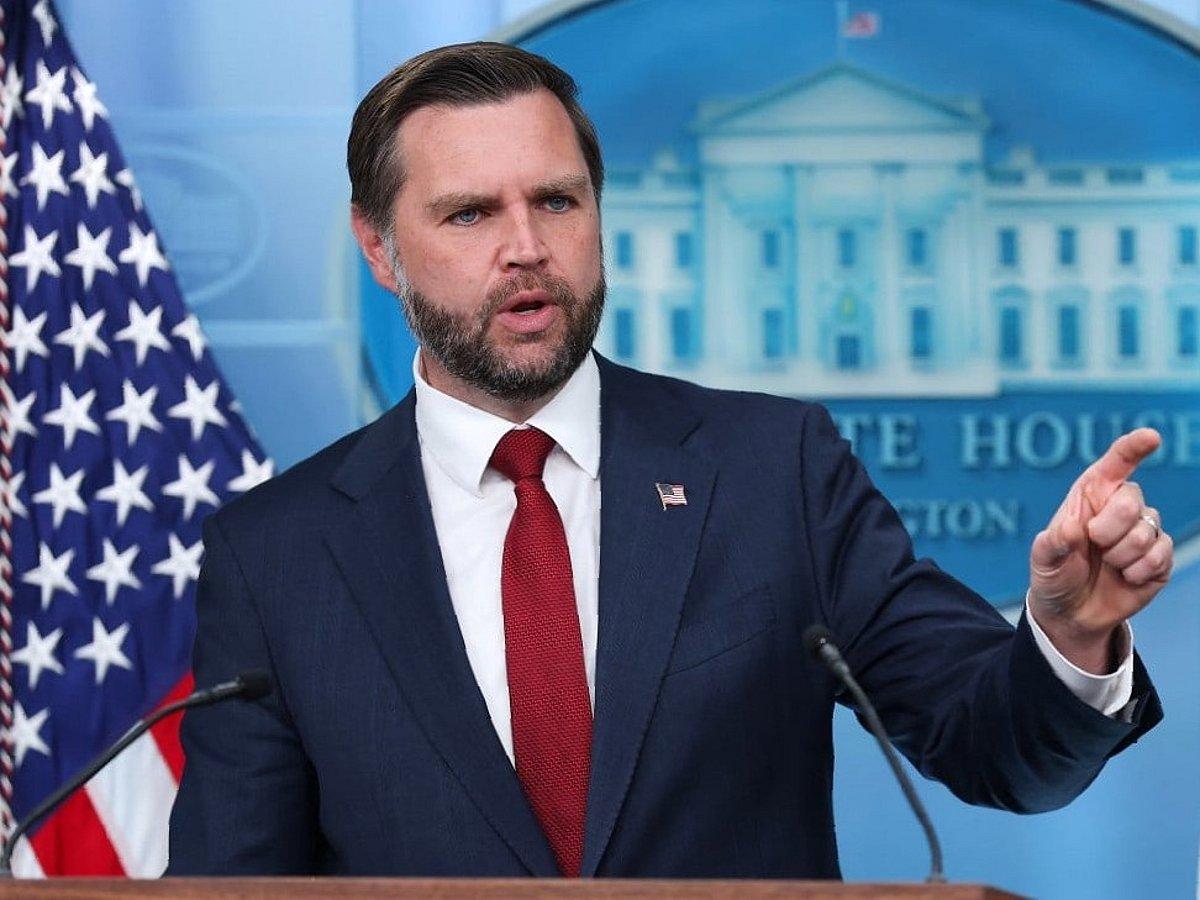
U.S. Vice President JD Vance has promised that President Donald Trump will not allow the conflict with Iran to become a “forever war,” saying Washington will not accept a 10- or 15-year military commitment or “frankly even a two-year commitment.” His comments on November 16 came as the U.S.-Iran confrontation entered its ninth month, a third American aircraft carrier arrived in the Middle East and fresh security incidents were reported around the Strait of Hormuz. Vance defended the original U.S. strikes as necessary to confront Iran’s nuclear program but insisted that the administration intends to accomplish its objectives and eventually withdraw rather than remain indefinitely. The declaration comes amid renewed diplomatic activity involving Iran, Oman and Pakistan and reports that Trump may refrain from additional major strikes if Tehran and the Iran-backed Houthis avoid further provocations, although no formal timetable for ending U.S. military operations has been announced.
U.S. Vice President JD Vance has promised that the increasingly prolonged American confrontation with Iran will not become another open-ended Middle Eastern conflict, insisting that President Donald Trump intends to achieve Washington’s objectives and then bring the military commitment to an end rather than leave American forces locked into years of fighting. Speaking in an interview with Fox News host Laura Ingraham on Monday, November 16, Vance sought to reassure Americans uneasy about the direction of a conflict that has now stretched across much of 2026, saying the administration had been elected in part on a promise to avoid the type of indefinite foreign military engagements that defined the wars in Iraq and Afghanistan. “He is not going to let this become a forever war,” Vance said of Trump, while arguing that the administration still believes Iran’s nuclear program represented a threat serious enough to justify military action.
Vance went further than a general promise to avoid an indefinite conflict, explicitly rejecting the idea that the United States would remain militarily committed against Iran for another decade or even for another two years. He said the administration would not allow the operation to become a 10- or 15-year engagement and added that Washington would not accept “frankly even a two-year commitment,” placing a clearer political marker around the administration’s stated intention to wind down the conflict before it evolves into the kind of generational war that Vance has repeatedly criticised throughout his political career. At the same time, he did not provide a specific withdrawal date or describe exactly what military, diplomatic or nuclear conditions would have to be met before the administration could declare its objectives accomplished, leaving a significant gap between the promise of an eventual exit and the uncertain conditions currently confronting U.S. forces in the region.
The remarks come at an especially sensitive moment because the war has become increasingly difficult for the administration to reconcile with its earlier promise to avoid prolonged American military involvement overseas. The conflict began on February 28, when the United States and Israel launched major strikes against Iran, targeting nuclear and military infrastructure and setting off a cycle of retaliation that expanded across the Middle East. Iran responded by attacking U.S. and allied positions and disrupting shipping around the strategically critical Strait of Hormuz, while Washington increased its military presence and conducted further strikes against Iranian military targets. A Pakistan-mediated ceasefire and framework agreement temporarily reduced the scale of the fighting during the middle of the year, but the arrangement failed to produce a durable settlement, and both sides have since traded accusations and military action over alleged violations.
Vance has been one of the most prominent administration figures defending that contradiction. Long before becoming vice president, he was known as a critic of what he regarded as unnecessary or poorly defined U.S. military interventions, repeatedly arguing that Washington should avoid entering conflicts without a clear objective and exit strategy. That record has made his role in defending the Iran campaign politically significant, particularly among voters who supported Trump because of his pledges to end prolonged foreign wars. Vance attempted to draw a distinction between opposing indefinite military occupations and ruling out the use of American military power altogether, arguing that the administration believed it could act forcefully against a direct security threat without repeating the mistakes of previous decades.
The vice president defended the initial decision to strike Iran by focusing heavily on Tehran’s nuclear program, saying Trump believed it had to be destroyed and describing that program as a threat to the United States. Iran has consistently maintained that its nuclear activities are intended for peaceful purposes, while the United States and Israel have argued that Tehran’s enrichment capability and nuclear infrastructure could eventually give it the ability to develop a weapon. That fundamental disagreement has remained at the centre of negotiations throughout the conflict and continues to complicate attempts to produce a permanent settlement.
In an October interview with Reuters, Vance said any agreement ending the conflict would require Iran to make a “meaningful” reduction in its uranium enrichment capability rather than simply provide assurances about future behaviour. He acknowledged at the time that negotiations were complicated by uncertainty inside Washington over how Iranian decision-making was functioning following months of conflict and political upheaval. The comments demonstrated that while Vance has repeatedly called for an end to prolonged fighting, the administration remains unwilling to accept a settlement that leaves Iran with the nuclear infrastructure Washington considers strategically dangerous.
The contradiction has become increasingly difficult to manage because the American military footprint in the Middle East has grown rather than contracted in recent days. On November 16, U.S. Central Command confirmed that the USS Theodore Roosevelt had arrived in the region, bringing the number of American aircraft carriers operating there to three alongside the USS George H.W. Bush and USS George Washington. U.S. officials have described the Theodore Roosevelt deployment as part of a scheduled rotation, and the three carrier groups are not expected to remain simultaneously in the region indefinitely, but the concentration of naval power nevertheless underscores the scale of Washington’s military commitment at the same moment its vice president is promising that the conflict will not become permanent.
The renewed deployment has also increased attention on President Trump’s next move. Reuters reported on November 14 that Trump had told senior advisers he might hold off on additional attacks against Iran if Tehran and the Iran-backed Houthis in Yemen avoided new provocations against the United States. The report suggested that Trump had not reached a final decision over whether to resume major military operations and that he continued to alternate between threats of renewed escalation and indications that he wanted to bring the conflict toward a conclusion. That uncertainty has made Vance’s promise particularly significant because it effectively commits the administration publicly to an exit even as military planners continue preparing options for further action.
The Strait of Hormuz remains one of the most dangerous unresolved parts of the confrontation. The narrow waterway between Iran and Oman is one of the world’s most important energy corridors, carrying a significant share of internationally traded oil and liquefied natural gas. Disruptions there have repeatedly pushed energy markets higher during the conflict and raised fears that a wider escalation could produce global economic consequences extending far beyond the Middle East. The United States has made freedom of navigation through the strait one of its central objectives, while Iran has used threats against maritime traffic as leverage in its confrontation with Washington.
Those dangers were underlined again on November 16 when the United Kingdom Maritime Trade Operations agency reported that a tanker travelling outbound through the Strait of Hormuz had been struck by an unknown projectile, causing a fire in the engine room. The crew was reported safe, but the cause of the incident had not been publicly established at the time of the initial report. That episode followed previous claims and counterclaims involving mines, missiles and attacks on commercial shipping, reinforcing concerns that even if large-scale U.S.-Iran strikes temporarily pause, maritime incidents could still trigger another cycle of escalation.
Diplomatic efforts have continued alongside the military confrontation. Iranian Foreign Minister Abbas Araghchi travelled from Islamabad to Muscat on Monday for consultations involving regional mediators seeking a way out of the standoff. Pakistan and Oman have both played important diplomatic roles during previous rounds of indirect negotiations between Washington and Tehran, and the movement of Iranian officials between those capitals has been closely watched for signs that another framework agreement could emerge.
Earlier negotiations produced a provisional framework in June, but that arrangement quickly began to unravel as the two sides accused one another of violating commitments and failed to resolve disagreements over nuclear enrichment, sanctions and freedom of navigation through the Strait of Hormuz. Vance played a leading role in those negotiations, giving him an unusually direct position in both defending the military campaign and attempting to negotiate its end. His latest remarks therefore carry greater weight than a conventional political reassurance because he has been personally involved in the diplomatic process the administration hopes can eventually replace military pressure.
The vice president’s position has also evolved publicly as the conflict has dragged on. In May, less than three months after the fighting began, Vance used a White House briefing to insist that the Iran campaign would not become a “forever war,” telling reporters that the United States would accomplish its mission and return home. That promise has now been repeated several times, including during an October 30 Fox News town hall in Texas, where he told a Republican voter concerned about U.S. involvement in another Middle Eastern war that Trump would not allow the conflict to become indefinite. The repeated assurances demonstrate that the administration recognises the political sensitivity surrounding the duration of the war, but they also reveal how the definition of a short conflict has become more difficult as the months pass without a final settlement.
By September, Vance was publicly resisting even the terminology used to describe the fighting, arguing that the seven-month confrontation should not necessarily be called a war despite the presence of tens of thousands of U.S. troops in the region and continued military exchanges with Iran. He said major American combat operations had ended and described Washington’s immediate objective as preventing Tehran from interfering with commercial shipping, while declining to predict exactly when the confrontation would end. Reuters reported at the time that renewed Iranian attacks and U.S. retaliation were continuing despite periods of relative calm.
That ambiguity has become a political vulnerability for the administration. Vance himself publicly questioned the cost and political consequences of the Iran conflict following the November midterm elections, when Democrats captured control of both chambers of Congress. Reuters reported on November 4 that Vance distanced himself from aspects of Trump’s war policy and questioned whether the conflict had been worth its political and economic cost, while arguing that it had contributed to Republican electoral losses. His subsequent promises that the conflict will not become permanent therefore come amid both strategic debate inside the administration and clear domestic political pressure to demonstrate that there is an achievable endpoint.
Congressional opposition has also strengthened as the conflict has continued. Democratic lawmakers and some Republicans have questioned whether the administration has adequately explained how the war ends, how much longer American forces will remain engaged and whether the scale of military operations requires clearer congressional authorisation. During early Senate debates over the conflict, critics warned that the absence of a defined end state could produce exactly the kind of open-ended engagement Trump and Vance had promised voters they would avoid.
Supporters of the administration counter that refusing a prolonged occupation does not require Washington to abandon military force when it believes American security interests are threatened. Vance has repeatedly made that argument, saying criticism of Iraq- and Afghanistan-style conflicts should not be confused with a belief that the United States should never use its armed forces. From that perspective, the Iran operation is presented as a limited campaign intended to eliminate nuclear and military threats rather than a nation-building project involving the long-term occupation of Iranian territory.
Whether that distinction holds will depend heavily on how the next stage of the conflict develops. The United States has already been militarily involved for roughly nine months, diplomatic agreements have failed to produce a lasting settlement and Washington has continued deploying significant naval and air power to the region. The administration has also left open the possibility of further strikes if Iran attacks U.S. personnel, shipping or regional allies. Those realities mean the conflict can remain substantial even without a ground occupation or a formal declaration of war.
The arrival of a third carrier therefore creates a particularly striking contrast with Vance’s pledge. Aircraft carrier strike groups provide the United States with enormous offensive capability, including fighter aircraft, missile defence and long-range strike options, and their deployment gives Trump greater flexibility if he chooses to intensify military operations. At the same time, a larger American military presence can increase the number of potential targets for Iranian retaliation and create more opportunities for miscalculation or accidental escalation.
The broader regional environment remains unstable as well. The conflict has involved attacks against U.S. and allied facilities in Gulf countries, Iranian retaliation, operations involving Tehran-backed groups and repeated threats to commercial shipping. The Council on Foreign Relations’ Global Conflict Tracker currently characterises the confrontation as an interstate war with a worsening status and a high impact on U.S. interests, noting that a durable settlement has remained elusive despite mediation efforts.
Iran has also continued to dispute the legitimacy of international pressure surrounding the conflict. Tehran has accused the United States and Israel of initiating aggression and has argued that international institutions have treated Iranian military actions differently from those carried out against Iran. Iranian officials have simultaneously resisted demands for unrestricted nuclear monitoring while the conflict remains active, arguing that inspections cannot proceed normally while facilities remain under threat of attack. Those positions continue to complicate negotiations because Washington considers nuclear verification central to any durable agreement.
The political stakes for Trump are substantial because avoiding prolonged wars was one of the central themes of his foreign-policy message. His administration has repeatedly presented itself as a break from the Washington establishment that led the United States into decades-long wars after the September 11 attacks. For the Iran conflict to continue deep into 2027 without a clear conclusion would therefore expose Trump to accusations that he has reproduced the very foreign-policy pattern he criticised.
Vance faces an even more personal political dilemma because opposition to open-ended military commitments has been one of the most consistent themes of his own public identity. A former Marine who served in Iraq, he has often invoked his military experience while arguing that American leaders should be cautious about committing troops without clearly defined goals. His remarks to Ingraham echoed that history, portraying his resistance to indefinite war as part of a promise made directly to voters.
At the same time, the vice president has made clear that his opposition to “forever wars” does not amount to pacifism. He has defended the initial military attack on Iran, supported efforts to destroy nuclear facilities and repeatedly argued that Washington must be willing to use force when American interests are directly threatened. His argument is therefore centred on duration and purpose rather than on military action itself: force can be justified, in his view, if the objective is limited, achievable and followed by an exit.
The unresolved question is what Washington currently considers “victory.” Eliminating or substantially reducing Iran’s ability to enrich uranium has been one objective. Securing commercial navigation through Hormuz has been another. Preventing attacks on American troops and regional allies has also become central. Yet each goal creates a potential reason for the military mission to continue if Tehran refuses to comply, making an exit strategy more complicated than the administration’s rhetoric sometimes suggests.
Vance’s insistence that even a two-year commitment would be unacceptable therefore creates a measurable political standard. The conflict began in February 2026, meaning his statement suggests the administration expects a resolution well before early 2028, when the Trump administration would be approaching the end of its term. The New York Post interpreted the remarks as a promise that Trump would bring the conflict to a conclusion before leaving office, although Vance himself did not announce a specific date for American disengagement.
There is also an important distinction between ending major combat operations and ending the broader U.S.-Iran confrontation. Washington and Tehran have been strategic adversaries for nearly five decades, and even a negotiated end to the current fighting would not necessarily eliminate sanctions, intelligence operations, proxy competition or disputes over Iran’s nuclear program. Vance acknowledged that history during his October town hall, noting that the United States had been dealing with Iran for 47 years even though direct military involvement in the current conflict had lasted only months.
That means the administration could plausibly declare the war over while still maintaining a significant military presence in the Gulf. American forces have operated across the Middle East for decades, and U.S. naval deployments near the Strait of Hormuz long predate the current conflict. The true test of Vance’s promise may therefore be whether combat operations end and whether the extraordinary military buildup associated with the 2026 war is reduced rather than whether every American military asset leaves the region.
Energy markets will also play a major role in the pressure for a settlement. The Strait of Hormuz is critical to global oil flows, and threats to shipping have repeatedly pushed prices higher during the conflict. Prolonged instability can affect fuel prices, shipping costs and inflation far beyond the region, giving both the United States and its allies strong economic incentives to prevent another period of sustained escalation.
Regional governments have similarly pushed for restraint because Gulf states can become direct targets when hostilities expand. Several have hosted American military facilities while simultaneously maintaining economic and diplomatic relationships with Iran, forcing them to navigate a difficult balance between security cooperation with Washington and a desire to avoid becoming battlefields in a prolonged U.S.-Iran confrontation.
For Tehran, the current moment also presents difficult choices. Continuing attacks against shipping or American facilities risks provoking another major round of U.S. strikes, while concessions on enrichment could be portrayed domestically as surrender after months of war. Iranian officials therefore face pressure to preserve strategic leverage while preventing further damage to military infrastructure and the economy.
That dynamic helps explain why regional mediators remain central. Oman has a long history of facilitating communication between Washington and Tehran, while Pakistan has become an increasingly important intermediary during the current conflict. Diplomatic progress will likely require both sides to accept compromises they have so far resisted, particularly on enrichment, sanctions relief and guarantees surrounding shipping.
The latest tanker incident illustrates how fragile that process remains. Even an attack whose perpetrator has not yet been identified can create pressure for retaliation if governments believe their vessels or personnel have been deliberately targeted. Misidentification, proxy attacks or disputed responsibility could therefore derail diplomacy even when senior officials are attempting to reduce tensions.
Vance’s remarks should consequently be understood as both a foreign-policy pledge and a domestic political message. He was assuring voters that the administration remains committed to avoiding another Iraq or Afghanistan while simultaneously defending a military campaign that has already lasted substantially longer than many supporters originally expected.
The tension between those two positions will become increasingly difficult to manage if no negotiated agreement emerges. Every additional deployment, retaliatory strike and shipping incident adds to the perception that the confrontation is becoming structurally embedded rather than temporary.
The administration has not yet announced a formal timetable for ending operations, and Vance did not provide one in his interview. His promise therefore remains an expression of intent rather than a detailed withdrawal plan. What happens next will depend largely on whether Trump chooses to resume significant strikes, whether Iran reduces attacks against American interests and shipping, and whether diplomatic channels through Oman, Pakistan and other intermediaries can produce a workable agreement.
Trump’s reported willingness to hold off on additional attacks if Iran avoids new provocations provides one possible opening. If that restraint holds on both sides, negotiations could receive space to develop without another immediate military escalation. If new attacks occur, however, the administration has preserved the option of using the substantial forces already positioned in the region.
For Americans who supported Trump and Vance because they opposed prolonged overseas conflicts, the coming months may therefore become an important test of the administration’s credibility. Ending a war is considerably more complicated than promising not to prolong one, particularly when strategic objectives remain unresolved and adversaries retain the capacity to retaliate.
Vance’s latest statement nevertheless leaves little ambiguity about the political commitment he wants Americans to hear: the administration does not intend for Iran to become another generational American war. He has now repeated that promise at multiple points during the conflict and attached it directly to Trump’s leadership.
What remains unanswered is how the United States will reach the endpoint Vance is promising. Washington continues to demand meaningful nuclear concessions, Iran continues to resist conditions it views as unacceptable, the Strait of Hormuz remains dangerous and American military power in the region remains substantial.
Those contradictions mean the most important part of Vance’s pledge may not be the declaration that the war will end but the increasingly urgent question of what the administration is prepared to accept in order to end it.
For now, the United States is simultaneously pursuing diplomacy, maintaining overwhelming military options and warning Tehran against further attacks. That strategy gives Trump considerable flexibility, but it also means the path out of the conflict remains uncertain.
Vance is betting that the administration can convert military pressure into a negotiated or strategic conclusion before the conflict begins to resemble the wars he and Trump spent years promising not to repeat. Whether that promise can be fulfilled will depend not only on decisions in Washington but also on Tehran, regional mediators, developments in the Strait of Hormuz and the unpredictable possibility of another military escalation.
The vice president’s words therefore amount to both reassurance and a deadline of sorts for his own administration. After nearly nine months of fighting, Americans have heard again that this will not become a “forever war.” The next phase will determine whether Washington can turn that promise into an exit strategy rather than simply repeat it as the conflict continues.