JONATHAN SAYS DISHONEST LEADERS MADE NIGERIA A GLOBAL LAUGHING STOCK. HIS OWN RECORD IS NOW ON TRIAL TOO
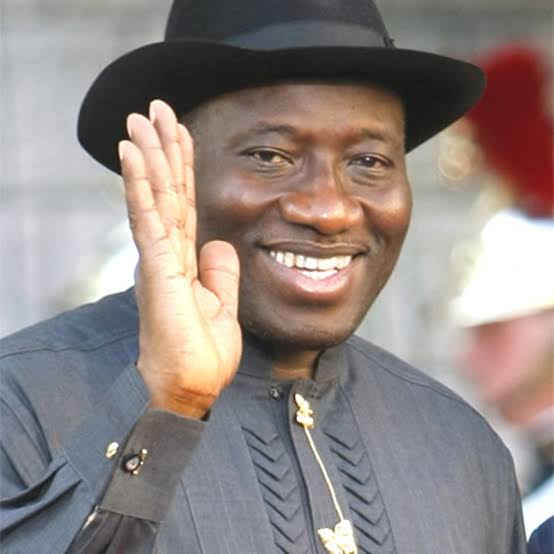
Former President Goodluck Jonathan has reportedly accused Nigerian politicians of dishonesty in leadership. He said their broken promises have turned the country into a laughing stock around the world. He made the remarks on Saturday in Abuja, where he gave the keynote address at the third edition of the Paul Alaje Colloquium, themed "The Brand Nigeria." According to reports of the speech, Jonathan said Nigeria was once respected as a major global player but has lost standing because leaders make promises they do not keep. He called for reform of electoral credibility and political culture. He also urged changes to how parties recruit leaders and said internal party democracy must be strengthened so that competence and character count for more than money and patronage. His diagnosis will resonate with millions of Nigerians frustrated by poverty, insecurity and costly politics. But it also invites scrutiny of his own presidency, which ran from 2010 to 2015 and was marked by both landmark electoral reforms and serious corruption controversies. The speech comes as Nigeria heads toward the 2027 general elections, with the country's global image under strain and public trust in politics at a low ebb.
Few Nigerians would argue with the substance of what Goodluck Jonathan reportedly said in Abuja on Saturday. The harder question is whether they will accept it from him.
Speaking at the third edition of the Paul Alaje Colloquium, an annual policy forum convened by economist Paul Alaje, the former president delivered a blunt verdict on the people who run Nigeria. The theme of the event was "The Brand Nigeria." Jonathan, according to reports of his keynote address, said the brand had been badly damaged, and he named the culprits plainly.
"Nigeria is a laughing stock because of dishonest leaders," he was quoted as saying. "We must reform our electoral credibility and a political culture that is more inclusive, rewards ideas, character and competence rather than money, patronage and sectional interests."
He reportedly lamented that a country once respected as one of the world's important nations had lost that standing. In his telling, the cause was not mainly oil prices, global shocks or foreign hostility. It was a political class that makes promises to voters and fails to keep them. He warned that Nigeria would keep struggling to make progress as long as politicians continued to deceive the public. He also called for reforms to political and leadership recruitment, stressing the need to strengthen internal party democracy so that competence, character and credibility decide who rises to power.
It was a sharp intervention from a man who rarely speaks so directly about domestic politics. Since leaving office in 2015, Jonathan has built a quieter public profile. He has worked as an election observer and mediator across Africa, led regional diplomatic missions and spoken often about peace and democracy. Rarely has he described Nigeria's political class in such stark moral terms. That makes the remarks newsworthy in themselves. It also makes them complicated.
Jonathan is not an outside critic. He spent more than a decade at the top of Nigerian politics. He was deputy governor and then governor of Bayelsa State. He became vice president in 2007, acting president in early 2010 and president in May 2010 after the death of Umaru Musa Yar'Adua. He won a full term in 2011 and governed until 2015. When he speaks about dishonest leaders, many Nigerians will hear a confession as much as a critique. Others will hear a former insider who has finally found a freedom to say what power once made difficult.
Both readings deserve attention, because the real value of his speech lies less in who said it than in what it reveals about the country's long crisis of political trust.
Start with the charge itself. The idea that Nigeria has become a global laughing stock is a painful one, but it is not new. Nigerians have heard versions of it for decades, often from foreign leaders. In 2016, former British Prime Minister David Cameron was caught on camera describing Nigeria and Afghanistan as "possibly two of the most corrupt countries in the world." The remark caused outrage at home, but many Nigerians privately conceded that it reflected how the world saw them. In 2018, reports emerged that US President Donald Trump had described Nigerians in disparaging terms during a White House meeting. Again there was anger, and again a quiet acknowledgment that the country's reputation was fragile.
That reputation shows up in hard data and daily experience. Nigeria has long ranked in the lower tier of Transparency International's Corruption Perceptions Index. Nigerian travelers face some of the toughest visa scrutiny in the world. In 2025, the United States sharply cut the validity of most non-immigrant visas for Nigerians, limiting many to a single entry over three months. Late that same year, Washington placed Nigeria back on its list of countries of particular concern over religious freedom, a move Abuja rejected but could not ignore. Nigerian passports draw extra checks at airports. Nigerian bank transfers trigger extra compliance reviews. Online fraud by a small minority has become a global stereotype attached to a whole nation.
None of this is fair to the overwhelming majority of Nigerians. The country is home to some of Africa's most dynamic entrepreneurs, artists, scientists and professionals. Afrobeats stars fill stadiums from London to Los Angeles. Nollywood is one of the largest film industries on earth. Nigerians lead global institutions, including Ngozi Okonjo-Iweala at the World Trade Organization. Nigerian doctors, nurses, engineers and academics are pillars of health systems and universities abroad. Diaspora remittances run into the tens of billions of dollars a year.
That is exactly the paradox Jonathan appeared to be pointing at. Nigeria's people often perform brilliantly abroad. Its state too often performs poorly at home. The world admires Nigerian talent and doubts Nigerian institutions. The brand is strong at the level of culture and individual excellence. It is weak at the level of governance, which is the level that most shapes how other governments, investors and lenders treat a country.
The phrase "Brand Nigeria" has its own history. In 2009, Information Minister Dora Akunyili launched a national rebranding campaign under the slogan "Good People, Great Nation." It aimed to restore pride at home and improve the country's image abroad. The campaign drew mockery from critics who argued that no slogan could fix a reputation built on real failures. Their point was simple. A country cannot advertise its way out of bad governance. It has to govern its way out.
Jonathan's reported remarks seem to accept that logic. He did not call for a new marketing push. He called for honesty, credible elections and better recruitment of leaders. In other words, he located the problem not in perception but in performance. That is the right diagnosis. The question is whether Nigeria's political class, which includes his own party colleagues, allies and successors, has any incentive to act on it.
Consider the central accusation: leaders make promises and fail to keep them. Nigerian elections have long been fought on grand pledges. Candidates have promised steady electricity, an end to fuel queues, security in every state, millions of jobs, free education, new railways and a stronger naira. Some progress has been made in places. But the gap between campaign promises and lived reality remains vast.
Nigeria still struggles to generate and distribute enough electricity for a population of more than 200 million people. Millions of households and businesses rely on generators. Insecurity has spread across much of the country, from banditry and kidnapping in the North-West to insurgency in the North-East and separatist violence in parts of the South-East. Inflation has eroded incomes. The naira has lost much of its value since 2023. The World Bank and other institutions estimate that a large share of Nigerians live below the national poverty line. Young people, who make up most of the population, face high unemployment and underemployment. Many have chosen to "japa," leaving the country in search of opportunities abroad.
When voters are promised transformation and receive hardship, trust collapses. Turnout tells part of that story. In the 2023 presidential election, turnout was roughly 27 percent, one of the lowest in Nigeria's democratic history and among the lowest in the region. Many young people who registered with enthusiasm, energized partly by the 2020 #EndSARS protests, came away disillusioned by delays, glitches and disputes over results. When citizens stop believing elections can change their lives, democracy loses its most important resource.
Jonathan's call to "reform our electoral credibility" therefore lands on a real wound. And here, fairly, his own record deserves credit.
Whatever critics say about his presidency, Jonathan oversaw some of the most important electoral reforms in Nigeria's history. In 2010, he appointed Professor Attahiru Jega, a respected academic with a reputation for independence, as chairman of the Independent National Electoral Commission. Under Jega, INEC rebuilt the voter register using biometric data. It introduced permanent voter cards and, for the 2015 elections, smart card readers to verify voters. Those reforms reduced some of the most blatant forms of rigging, such as multiple voting and ballot stuffing with fictitious names. The 2011 elections, while still flawed, were widely judged better than the deeply discredited 2007 polls.
Then came 2015. Jonathan lost the presidential election to Muhammadu Buhari, and before the final results were even formally announced, he called Buhari to concede. It was the first time in Nigeria's history that a sitting president had lost an election and accepted defeat peacefully. In a country where many feared post-election violence, his concession was praised across Africa and the world. He famously argued that his political ambition was not worth the blood of any Nigerian.
That moment remains his strongest moral claim. It is one reason he has been in demand as an election observer and mediator in countries such as Mali, Guinea and others facing political crises. When Jonathan talks about electoral credibility, he can point to a real contribution.
But the irony begins where that credit ends. Jonathan's presidency also became a byword for the very problems he now condemns.
His administration faced persistent allegations of large-scale corruption. In 2014, then Central Bank Governor Lamido Sanusi raised alarm over billions of dollars in oil revenue he said had not been remitted to the federation account by the national oil company. The figure he initially cited was about $20 billion, later revised as reviews continued. Sanusi was suspended from office shortly afterward, a move critics saw as punishment for blowing the whistle. The government disputed his figures, and a forensic audit later found that a substantial but smaller sum needed to be refunded. The episode still shaped public perception of his government.
After Jonathan left office, the arms procurement scandal widely known as "Dasukigate" erupted. Investigators alleged that about $2.1 billion meant for buying weapons to fight Boko Haram had been diverted or misused through the office of the National Security Adviser, Sambo Dasuki. Dasuki denied wrongdoing, and the legal process dragged on for years amid controversy over his prolonged detention. But the allegation that money meant to protect soldiers and civilians had been mismanaged at the height of an insurgency did lasting damage to the image of Jonathan's government.
In 2013, Jonathan granted a state pardon to Diepreye Alamieyeseigha, a former Bayelsa governor and his former political boss, who had been convicted of corruption-related charges. The pardon drew criticism at home and from foreign partners, including the United States. It was cited as evidence that political loyalty could outweigh accountability.
In 2014, Jonathan made comments during a media chat that critics summarized as "stealing is not corruption." He argued that much of what Nigerians called corruption was common stealing. His defenders said he was making a technical point about legal categories. But the remark became one of the most quoted lines of his presidency, and it fed the impression that his government did not treat graft with sufficient seriousness.
There was also the abduction of 276 schoolgirls from Chibok in April 2014. The government's slow and confused initial response drew global condemnation and sparked the #BringBackOurGirls campaign, which drew support from figures as prominent as Michelle Obama. For many people around the world, the image of Nigeria in 2014 was the image of a state that could not protect its children. If Nigeria became a laughing stock, critics will say, some of that laughter started on Jonathan's watch.
None of this invalidates what he said in Abuja. A former leader can be right about a problem he helped create, or failed to solve. Indeed, some of the most credible critiques of political systems come from those who have seen their failures from the inside. But it does shape how his message will be heard. Many Nigerians will ask a pointed question: where was this clarity when he held the power to act on it?
There is another layer to that question. Speculation about a possible Jonathan return to presidential politics has surfaced periodically in recent years, with some politicians urging him to run again. Any such bid would face a constitutional hurdle. A 2018 amendment to the Constitution states that a person sworn in to complete another's term cannot be elected for more than a single term. Jonathan completed Yar'Adua's term and then won election in 2011. A Federal High Court ruling in 2022 suggested the amendment could not be applied retroactively to him, but the question has never been fully settled at the highest level. Jonathan has not declared any intention to run in 2027. Still, in a pre-election season, any sweeping speech by a former president on leadership and honesty will be read by some as positioning, whether or not that is his intent.
Set the personal questions aside, and the policy substance of his remarks becomes clearer. Jonathan reportedly identified three linked problems: dishonest leadership, weak electoral credibility and a political culture that rewards money, patronage and sectional interests instead of ideas and competence. He proposed two main fixes: reform of how leaders are recruited and stronger internal democracy within parties.
That focus on recruitment is the most important part of his speech, and the least discussed in Nigerian politics.
In most democracies, the quality of leaders depends heavily on how parties choose their candidates. In Nigeria, that process is broken in ways that ordinary voters rarely see in full. Party primaries are often decided not by members but by delegates, and delegates can be bought. In the run-up to the 2023 elections, widespread reports described delegates receiving large sums of money, sometimes in US dollars, to vote for particular aspirants. The cost of simply entering the race was staggering. The ruling All Progressives Congress set its presidential nomination and expression-of-interest forms at ₦100 million. The Peoples Democratic Party, Jonathan's former party, charged ₦40 million. For governorship, Senate and House seats, the costs were lower but still far beyond the reach of most Nigerians.
The effect is to filter out talent before voters ever get a say. A brilliant teacher, doctor, engineer or community organizer without access to vast sums or powerful patrons has little chance of winning a major party ticket. The people who do get through are often those with money, those backed by godfathers, or those willing to owe favors to the people who funded them. Once in office, many of them spend their time recovering their investment and repaying their sponsors. That is not an accident of individual bad character. It is the logical outcome of a system that prices leadership like an auction.
Jonathan's reported reference to "patronage and sectional interests" points to a second distortion. Nigerian politics is shaped by powerful informal arrangements. The rotation of the presidency between North and South, zoning of party offices, ethnic balancing and religious calculations all influence who gets nominated. Some of these arrangements were designed to hold a diverse federation together and prevent any group from feeling permanently excluded. They have real value. But they can also become excuses to choose candidates based on where they come from rather than what they can do. When identity becomes the main qualification, competence becomes optional.
Internal party democracy is the other side of the problem. Nigeria's major parties are often described not as ideological organizations but as electoral vehicles. Members switch parties easily, sometimes in large waves, depending on who controls power and resources. Governors, senators and lawmakers have crossed from opposition parties to the ruling party, often citing vague reasons. Opposition parties have regrouped into new coalitions ahead of 2027. Party platforms are rarely the basis of real debate. Disputes over primaries regularly end up in court, and courts sometimes decide who the legitimate candidate is. When parties cannot manage their own internal contests fairly, it is hard to expect them to run the country fairly.
If Jonathan wants parties to reward ideas, this is where change must start. Real internal democracy would mean transparent membership registers, direct primaries or genuinely accountable delegate systems, caps on nomination fees, enforceable rules on campaign finance and independent dispute resolution. It would mean party conventions where policies are debated, not just where candidates are crowned. It would mean consequences for buying delegates, with prosecutions rather than shrugs.
The legal framework already contains some of these tools. Nigeria's Electoral Act sets limits on campaign spending and contains provisions on party primaries. But enforcement has been weak. Spending limits are routinely ignored. Vote-buying, both at primaries and on election day, is widely reported and rarely punished. INEC has limited capacity to police party finances. Anti-corruption agencies have occasionally arrested people for vote-buying, but high-level prosecutions are rare. Laws that are not enforced shape behavior only in the sense that they teach politicians the rules can be broken safely.
Electoral credibility also depends on what happens after votes are cast. The Electoral Act of 2022 was hailed as a major reform. It gave legal backing to the Bimodal Voter Accreditation System, which uses fingerprints and facial recognition to verify voters, and to the electronic upload of polling unit results to INEC's online result viewing portal. Many Nigerians believed that this would finally make results transparent and tamper-resistant. Then, during the 2023 presidential election, uploads of presidential results to the portal were delayed. INEC blamed a technical glitch. Opposition parties alleged manipulation. The courts upheld the outcome, ruling that the law did not make electronic transmission mandatory in the way the petitioners argued. Legally, the matter was closed. Politically, many voters concluded that even reforms could be bent when the stakes were highest.
That experience goes to the heart of Jonathan's warning about dishonesty. Electoral systems run on trust as much as technology. If citizens believe the process is manipulated, they disengage, protest or turn to more dangerous forms of political expression. If politicians believe they can win through money, influence and post-election litigation rather than persuasion, they have little reason to keep promises. Dishonest leadership and weak electoral credibility feed each other. Leaders who did not need to earn votes honestly see little reason to govern honestly.
Here, Nigeria's neighbor offers an instructive comparison. Ghana is far from perfect. It faces its own problems with corruption, vote-buying, debt and economic hardship. But it has built a stronger tradition of peaceful transfers of power. In December 2024, the ruling party candidate conceded defeat to John Mahama soon after results showed a clear opposition victory. Ghanaian institutions, including the electoral commission, are not immune to criticism, yet they have earned enough trust that losing parties generally accept outcomes. That stability has helped Ghana's international image, even through its debt crisis and IMF program.
Nigeria and Ghana share history, culture and a long, often affectionate rivalry. Ghanaians follow Nigerian politics closely, because Nigeria's stability affects the whole of West Africa. When Nigeria falters, the region feels it through trade, migration, security and confidence in the ECOWAS bloc. Nigeria is the largest economy and most populous nation in the region. It has long presented itself as West Africa's anchor. But leadership in a region depends on example as well as size. A country that cannot run credible primaries or keep its own promises struggles to lecture others on democracy. That matters at a time when ECOWAS has been weakened by military coups and the departure of Mali, Burkina Faso and Niger from the bloc.
Jonathan understands that regional dimension better than most Nigerian politicians. He has spent years trying to resolve political crises in West Africa. He has seen how military juntas exploit public anger at corrupt civilian leaders. He has watched young people in some countries cheer soldiers who overthrew elected governments. Those coups did not happen because citizens hate democracy. They happened partly because many citizens had stopped believing that democracy, as practiced by their leaders, delivered honesty or results. His warning about dishonest leaders may be partly shaped by that experience. Where civilian politics loses credibility, more dangerous alternatives begin to look attractive.
That is the deepest implication of his remarks. Nigeria's leadership credibility problem is not only an embarrassment abroad. It is a risk at home. A democracy that consistently fails to deliver honest leadership erodes its own legitimacy. Citizens begin to see elections as rituals for choosing which group gets to share the national cake. They see politicians as people who speak one language during campaigns and another in office. Over time, that cynicism becomes a political force of its own.
What would genuine reform look like? Jonathan's speech, as reported, offered broad principles rather than a detailed program. But those principles point toward specific steps.
The first is to reduce the cost of entry into politics. Lower nomination fees, stricter campaign spending limits and transparent party financing would open the field to candidates who have ideas but not fortunes. Public funding for parties, tied to strict disclosure rules and audit requirements, could reduce dependence on wealthy sponsors. None of this will work without enforcement, which means INEC and anti-corruption agencies need the resources and independence to pursue violations at every level, including within the ruling party.
The second is to make vote-buying genuinely risky. That means prosecuting both buyers and sellers, protecting whistleblowers, and creating a dedicated electoral offenses commission, a proposal that has been discussed for years but has not been fully realized. When the people who buy delegates or voters face real jail time, the economics of politics begin to change.
The third is to lock in transparency in results management. Electronic transmission of results from polling units should be clearly mandatory in law, with clear consequences when systems fail. Results from every polling unit should be publicly available in real time. Election disputes should be resolved quickly, consistently and on the basis of clear rules, so that courts are not seen as the final arena where elections are truly decided.
The fourth is to rebuild parties as genuine institutions. That means internal elections that members can trust, real policy platforms and some discipline against carpet-crossing for convenience. Parties should be able to tell voters what they stand for beyond who their candidate is. When parties stand for something, politicians who betray those principles pay a price.
The fifth, and hardest, is accountability for broken promises. Voters can punish leaders at the ballot box only when elections are credible. Between elections, accountability depends on a free press, independent courts, active legislatures and a vibrant civil society. Nigerian journalists and civil society groups have shown great courage, often at personal risk. But they need protection, access to information and institutions that respond when wrongdoing is exposed. A Freedom of Information Act exists. It needs to be honored in practice.
There is also a cultural dimension that Jonathan reportedly hinted at when he called for a political culture that rewards character. Nigerian society often celebrates wealth without asking where it came from. Politicians with questionable records are welcomed home with parades. Communities sometimes reward those who bring patronage rather than those who build institutions. Religious leaders, traditional rulers and community elders have enormous influence over how voters judge politicians. If they continue to honor the powerful regardless of conduct, no electoral law will fix the culture on its own.
That cultural challenge brings the conversation back to Jonathan himself. If honesty is to become a political value, it must include honesty about the past. Nigeria's former leaders, across parties and generations, have rarely offered full public reckonings with their own failures. They prefer to speak about what went wrong in general, or what went wrong under others. Jonathan's speech would carry far more weight if it were accompanied by a frank account of what he would do differently, what he regrets and what he learned from the controversies of his presidency.
That is not a demand for self-flagellation. It is a recognition that credibility is built partly through accountability. Few things would do more for Brand Nigeria than a political class willing to say plainly: we made promises we did not keep, and here is how we will change the system so that our successors cannot do the same.
Jonathan's supporters will argue that he has already shown more integrity than most. He conceded power peacefully. He has avoided the bitter post-presidency feuds that have consumed some former leaders. He has worked to strengthen democracy in other countries. They will say his record on elections earned him the right to speak about electoral credibility, and that critics who focus only on his failures ignore the precedent he set in 2015.
His critics will counter that a single act of grace in defeat does not erase years of governance marred by corruption allegations, insecurity and weak accountability. They will say that dishonesty in leadership is not just a matter of other politicians' promises, but of a system that Jonathan led and benefited from.
Both sides have a point. And that is precisely why his remarks matter. They capture the contradiction at the heart of Nigerian politics. The people with the most experience of power are often the most compromised by it. The people with the cleanest records often have the least access to it. Reform must somehow come from within a system whose beneficiaries have little reason to change it.
The 2027 elections will test whether that contradiction can be eased. Political realignments are already underway. Parties are positioning, coalitions are forming and potential candidates are testing the waters. Voters will again hear sweeping promises about the economy, security and jobs. The question Jonathan has raised is whether they will also hear honest accounts of what can be achieved, how, and at what cost. If they do not, turnout may fall further and trust may erode even more.
There is a lesson in the theme of the colloquium itself. A brand, in the commercial sense, is a promise. When a company makes a promise and keeps it, its brand grows stronger. When it breaks promises, no advertising campaign can save it. Nations are not companies, but the logic applies. Nigeria's international reputation is the sum of the promises its leaders make and keep, to their citizens and to the world. Every broken pledge to fix electricity, every unexplained missing fund, every disputed election and every abducted child who is not rescued chips away at that brand.
Jonathan has diagnosed the problem with unusual bluntness. Nigeria, he reportedly said, is a laughing stock because of dishonest leaders. Many Nigerians will agree. Many will also note that the diagnosis is easier to make from a podium than from the presidential villa. The real measure of his speech will not be whether it is applauded in Abuja. It will be whether it helps push a political class that includes his allies, successors and rivals toward the reforms he described.
Until that happens, the world will keep watching Nigeria with a familiar mix of admiration for its people and doubt about its leaders. And Nigerians will keep asking the question that hangs over every speech of this kind: if those who held power knew what was wrong, why did so little change while they held it?