KANO GOVERNOR ABBA YUSUF FACES DIVORCE SUIT AS REPORTS LINK WIFE’S DEPARTURE TO SECURITY ARRESTS
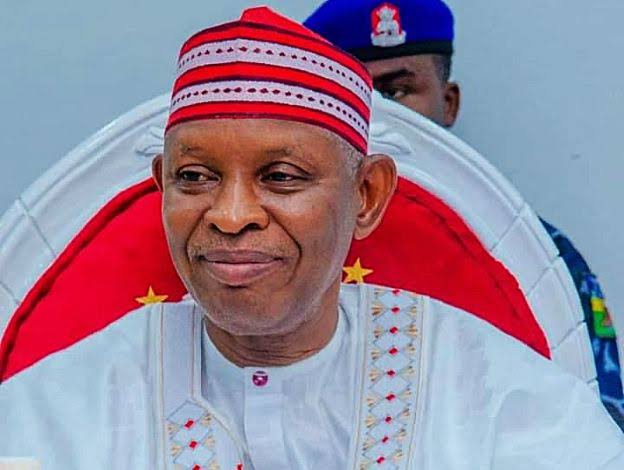
Zainab Musa Kwankwaso, identified in multiple reports as the second wife of Kano State Governor Abba Kabir Yusuf, has reportedly filed for dissolution of their approximately 20-year marriage at the Upper Area Court in Gudu, Abuja. The suit is registered as CV/97/26, and Yusuf has reportedly been summoned to appear on Tuesday, November 17, 2026. Media reports based on the court filing say she is seeking divorce through khul’i and has offered to return the dowry. Kano News
KANO, NIGERIA — Kano State Governor Abba Kabir Yusuf is facing a highly sensitive divorce case in Abuja after his second wife, Zainab Musa Kwankwaso, asked an Upper Area Court in Gudu to dissolve their roughly 20-year marriage, while separate reports say three security personnel attached to her were detained after she left the governor’s residence without her usual security detail. The case, registered as CV/97/26, has drawn unusual public attention because it combines a private marital breakdown with the political rupture between Yusuf and his former political mentor Rabiu Musa Kwankwaso, although there is currently no verified evidence establishing that the political feud caused the marriage to collapse.
Court documents reported by several Nigerian news organizations indicate that Zainab has asked the court to end the marriage through khul’i, an Islamic procedure through which a wife may seek dissolution of a marriage, ordinarily with an offer to return the dowry or another form of compensation agreed under Islamic law. The civil summons reportedly directs Governor Yusuf to appear before the Upper Area Court on Tuesday, November 17, giving the case an immediate legal timetable and moving a dispute that had previously remained largely within the family into the public judicial system.
The particulars of claim, as reproduced by media organizations that say they obtained or reviewed the filing, describe the marriage as having broken down beyond reconciliation. Zainab reportedly told the court that mutual care, affection and emotional connection had disappeared from the relationship and that previous attempts to restore harmony had failed. She is also reported to have expressed willingness to refund the dowry paid at the time of the marriage, a step consistent with the khul’i procedure under Islamic matrimonial law.
Reports say the couple married on July 29, 2006, and have six children together. Zainab is consistently identified as Governor Yusuf’s second wife, but Nigerian media have published conflicting descriptions of her precise family relationship to former Kano governor Rabiu Musa Kwankwaso. Some reports describe her as Kwankwaso’s daughter, while others identify her as his niece and the daughter of his late elder brother. Because of those inconsistencies, any definitive description of that relationship should be treated cautiously until the original court papers or the family clarify it publicly.
The most politically and institutionally sensitive element of the story concerns what happened after Zainab left the Kano Government House. Several reports say she departed on or around October 28, traveled first to a Kwankwaso family residence on Miller Road in Kano and then left for Abuja without her police orderly and other security escorts. Accounts of the incident say that security authorities subsequently began asking how the governor’s wife had left the residence without the personnel assigned to protect her becoming aware of the movement.
Sunday PUNCH reported that three security personnel attached to Zainab were subsequently arrested, citing a member of the Kwankwasiyya political movement who said he was aware of the detentions. Other reports similarly say an orderly and additional personnel were taken into custody for questioning. The exact identities of those detained, where they are being held, whether they have been formally arrested under criminal law, and what specific offense or breach of duty they are suspected of committing have not been publicly established.
That distinction is crucial because the Kano State Police Command has not confirmed the reported arrests. When contacted by Sunday PUNCH, police spokesman Abdullahi Kiyawa declined to discuss the matter, saying it was already before a court and that the command would not comment on issues pending before the judiciary. His response did not amount to a confirmation or denial that security personnel had been detained, leaving a significant gap between media reports and the official police record.
The Kano State Government has also not issued a detailed public statement addressing either the divorce suit or the security claims. Commissioner for Information Ibrahim Waiya did not respond to requests for comment cited in the reports, meaning Governor Yusuf’s own account of the marital dispute and the circumstances surrounding Zainab’s departure has not yet been placed on the public record.
That absence of an official response makes it particularly important to separate the confirmed legal process from unverified allegations. The divorce action itself is supported by the reported court summons, the case number and multiple media accounts based on the filing. The alleged arrests, by contrast, remain media reports that have not been independently confirmed by police or supported by publicly available detention records or charges.
The case has attracted heightened political attention because of the dramatic deterioration in the relationship between Yusuf and Kwankwaso during 2026. Yusuf won the Kano governorship in 2023 on the platform of the New Nigeria Peoples Party and was widely regarded as one of the most important political protégés of Kwankwaso, whose Kwankwasiyya movement has dominated a significant part of Kano politics for years.
That alliance unraveled when Yusuf moved toward the ruling All Progressives Congress. In January 2026, Kwankwaso publicly denied reports that he had authorized or supported the governor’s planned defection and insisted he remained committed to the NNPP. The disagreement quickly developed into a much broader struggle over party loyalty, political control and the future of the Kwankwasiyya movement.
Yusuf eventually left the NNPP and formally joined the APC later that month, saying his decision was taken in the best interests of Kano State and citing prolonged internal crises in his former party. Kwankwaso’s camp reacted strongly, with the NNPP saying the former governor and many supporters felt betrayed by Yusuf’s move. The split also triggered resignations and political realignments among officials who had previously belonged to the same movement.
The former allies have since exchanged increasingly sharp political messages. Kwankwaso has publicly questioned Yusuf’s electoral prospects after joining the APC, while ruling-party figures in Kano have defended the governor and insisted he remains politically strong. The dispute has therefore moved well beyond the relationship between two politicians and become part of the larger contest over who controls one of Nigeria’s most electorally important states ahead of 2027.
The timing of Zainab’s divorce suit inevitably invites speculation because of those political tensions, but no credible evidence reviewed for this article establishes that Kwankwaso directed, encouraged or caused the filing. Nor has Zainab publicly said that her marital decision was motivated by Yusuf’s defection to the APC. Reports based on the court documents instead describe a prolonged breakdown involving affection, care and emotional connection within the marriage.
A member of the Kwankwasiyya Movement who spoke to Sunday PUNCH also declined to speculate about why Zainab wanted the divorce, saying the reason was known to her. That restraint is significant because it contrasts with attempts on social media to turn the case into a purely political confrontation between Yusuf and Kwankwaso.
The same caution applies to reports that family members helped Zainab leave the governor’s residence. Some outlets have published claims that she traveled through Kwankwaso-linked residences or that members of the family were later questioned, but those accounts have not been fully documented through official police statements. Until authorities provide a clear chronology, those details should remain attributed rather than presented as established fact.
The legal mechanism Zainab is reportedly using also deserves context. Khul’i is recognized within Islamic family law as a route through which a woman may seek release from a marriage she no longer wishes to continue, often by returning the mahr or dowry given by the husband. Nigerian Area Courts applying Islamic personal law regularly hear such matters, particularly in predominantly Muslim northern states and in the Federal Capital Territory where parties seek dissolution through Islamic legal principles.
A khul’i application does not automatically mean one spouse has committed misconduct. It can be based on a wife’s conclusion that the marriage has become intolerable or that she can no longer fulfill marital obligations sincerely. The focus is therefore different from a conventional fault-based proceeding in which a petitioner must necessarily prove adultery, violence or another specific offense.
That distinction matters because public discussion around high-profile marriages often moves quickly toward accusation. The reports reviewed for this article do not establish allegations of domestic violence, infidelity or criminal behavior by either Yusuf or Zainab. The reported pleadings focus instead on breakdown, absence of mutual affection and a desire to end the union.
Governor Yusuf’s appearance on November 17 could clarify whether he intends to contest the application, accept dissolution, seek reconciliation or raise procedural objections. Until that hearing occurs, the court has not determined the case and the marriage remains legally in existence.
If the governor chooses not to oppose a khul’i dissolution and the court is satisfied with the applicable requirements, the process could proceed relatively quickly. If disputes arise over the dowry, custody, maintenance or other marital issues, however, the matter could become more complicated and extend beyond a simple dissolution order.
The couple’s six children will inevitably make the family consequences more significant, although no reliable report has yet detailed their ages, custody arrangements or whether any such issues form part of the current application. Those matters involve the privacy of children and should not be speculated upon without court records or statements from the parties.
The security aspect of the dispute raises a separate institutional question because personnel assigned to protect a governor’s spouse operate under formal command and responsibility structures. If officers genuinely lost contact with a protected person under circumstances regarded as a security breach, authorities could reasonably open an internal inquiry into how the movement occurred. That would not, however, automatically establish criminal wrongdoing by the personnel.
The difference between administrative questioning, internal detention, disciplinary action and formal arrest is particularly important. Nigerian reports have used the word “arrested,” but police have not publicly stated whether the three personnel are suspects in a crime or simply subjects of an internal security investigation. Without that clarification, it would be premature to state that they committed any offense.
Questions may also arise over whether a legally competent adult who decides to leave a marital residence can properly be described as having “disappeared” or been “smuggled out,” language used in some reports. Zainab’s reported decision to leave appears to have been voluntary, and no official allegation of abduction has been made publicly. The central security issue, if any, would therefore concern protective procedures rather than ownership or control over her personal movement.
That nuance is especially important given the status of the people involved. A governor and his family are entitled to security protection, but such protection does not eliminate the personal autonomy of adult family members. Any investigation into how Zainab left the residence must therefore be distinguished from suggestions that she required permission to leave her husband.
The political backdrop makes that distinction even more sensitive. Yusuf’s break with Kwankwaso already transformed private relationships within a long-standing political network into matters of public debate. The divorce case now risks becoming another arena through which rival political camps attack each other even though the underlying dispute is fundamentally matrimonial.
The Kwankwasiyya movement remains one of the strongest organized political structures in Kano, built over years around Kwankwaso’s political identity and his characteristic red-cap symbolism. Yusuf rose through that network and benefited enormously from its electoral machinery when he contested the governorship.
His defection to the APC therefore had consequences far beyond a routine party switch. For many Kwankwasiyya loyalists, the move represented a rupture with the political organization that had brought him to power. For Yusuf and his supporters, joining the APC was presented as a strategic decision intended to improve Kano’s relationship with the federal government and reduce internal party conflict.
The January split demonstrated how personal and political loyalties can overlap in Nigerian politics. Officials and supporters were forced to decide whether their loyalty was primarily to Yusuf as governor, to Kwankwaso as movement leader or to the NNPP as a party organization.
The latest marital case adds another layer because Zainab belongs to the same extended family network that has historically been politically connected to Yusuf. That reality will make it difficult to keep the proceedings entirely outside political interpretation even if the reasons for divorce are purely personal.
Responsible coverage therefore requires resisting any assumption that the divorce is an extension of the APC-NNPP conflict. A political rift and a marital breakdown can occur simultaneously without one necessarily causing the other, and there is currently no verified statement from Zainab saying her husband’s political choices led her to court.
The same restraint should apply to Governor Yusuf. The filing of a divorce application does not itself establish wrongdoing by him, and the reported particulars do not accuse him of a criminal offense. His legal rights include responding to the application and presenting his own position before the court.
The November 17 hearing could provide the first direct indication of how he intends to handle the matter. A personal appearance by a serving state governor before an Area Court in Abuja would attract intense media attention, although it remains possible that legal representation, jurisdictional issues or procedural applications could influence how the case proceeds.
The governor’s public office also creates questions about jurisdiction and immunity, but matrimonial proceedings are distinct from criminal prosecution. Nigeria’s constitutional immunity for sitting governors generally protects them from certain civil and criminal proceedings while in office, but the exact application to a matrimonial dissolution initiated by a spouse can involve specific legal interpretation and procedural questions for the court.
No authoritative court ruling in this particular case has yet addressed that issue, and it would be premature to assume either that immunity will block the case or that it has no relevance. Lawyers representing the parties may raise the question once the matter formally comes before the judge.
The case could therefore become legally significant beyond the immediate personal dispute, particularly if the governor challenges the court’s jurisdiction or relies on constitutional protections. If he does not, the matter may remain comparatively narrow and proceed under Islamic family law.
The security personnel reportedly detained also remain entitled to due process. Until police identify them, state any allegations and determine whether charges are appropriate, they should not be portrayed as having assisted wrongdoing. Their professional obligations may be reviewed, but the public record currently contains too little verified information to determine what, if anything, they did improperly.
The Kano Police Command’s decision not to comment because the matter is before a court also creates ambiguity because the alleged security inquiry and the divorce proceeding are not necessarily the same legal matter. More information will be needed to understand whether the police are treating the reported movement from Government House as an internal security concern, a criminal investigation or simply an administrative issue.
That information may emerge after Tuesday’s hearing, particularly if lawyers refer to the circumstances surrounding Zainab’s departure. Court documents could also resolve the conflicting descriptions of her relationship to Kwankwaso and provide a clearer account of the marriage history.
Until then, the most firmly established elements of the story remain limited. Zainab Musa Kwankwaso has reportedly filed a divorce application before the Upper Area Court in Gudu, Abuja, under case number CV/97/26; the governor has reportedly been summoned for November 17; the marriage dates back approximately two decades; and reports say she is seeking dissolution through khul’i while offering to return her dowry.
The alleged arrest of three security personnel is credible enough to report because it appears across multiple Nigerian outlets and was acknowledged by a political source familiar with the matter, but it remains unconfirmed by police. No charges have been announced and no official explanation has been provided for their detention.
The wider political conflict between Yusuf and Kwankwaso is similarly verified but should remain contextual rather than causal. Yusuf’s January defection from the NNPP to the APC broke one of Kano’s most powerful political alliances and triggered open criticism from Kwankwaso’s camp, but no available evidence proves that the divorce was initiated as retaliation for that move.
That distinction will become increasingly important if political supporters attempt to weaponize the case. Matrimonial disputes involving public figures can quickly become vehicles for misinformation, especially where family and political networks overlap as closely as they do in Kano.
For Yusuf, the immediate challenge is both personal and political. A governor preparing for another major election cycle now faces public scrutiny of a private relationship at the same time he is attempting to consolidate his position within a new political party.
For Zainab, the legal action represents an assertion that she no longer wants to remain in the marriage and is prepared, according to the reported filing, to fulfill the financial requirement attached to the form of Islamic divorce she is seeking.
For Kwankwaso and the wider Kwankwasiyya movement, the case creates an uncomfortable intersection between family privacy and a political conflict that is already consuming much of Kano’s public life.
The November 17 proceedings may clarify some of the uncertainty, but they are unlikely to eliminate political speculation entirely. What matters for responsible reporting is keeping the legal facts separate from the assumptions surrounding them.
At present, the court case is real, the marriage is clearly in serious difficulty and the governor has reportedly been summoned to respond. The arrest story remains less settled because police have neither confirmed the detentions nor explained the circumstances.
Until those details emerge, the most accurate description is that a deeply personal divorce case involving Kano’s governor has become entangled with unresolved questions over security procedure and an already bitter political rupture, creating one of the most sensitive intersections of family, power and politics in Nigeria’s current election season.