KANO POLICE ARREST EIGHT AFTER APC-NDC CLASH IN BICHI LEAVES FIVE INJURED, 13 VEHICLES VANDALISED
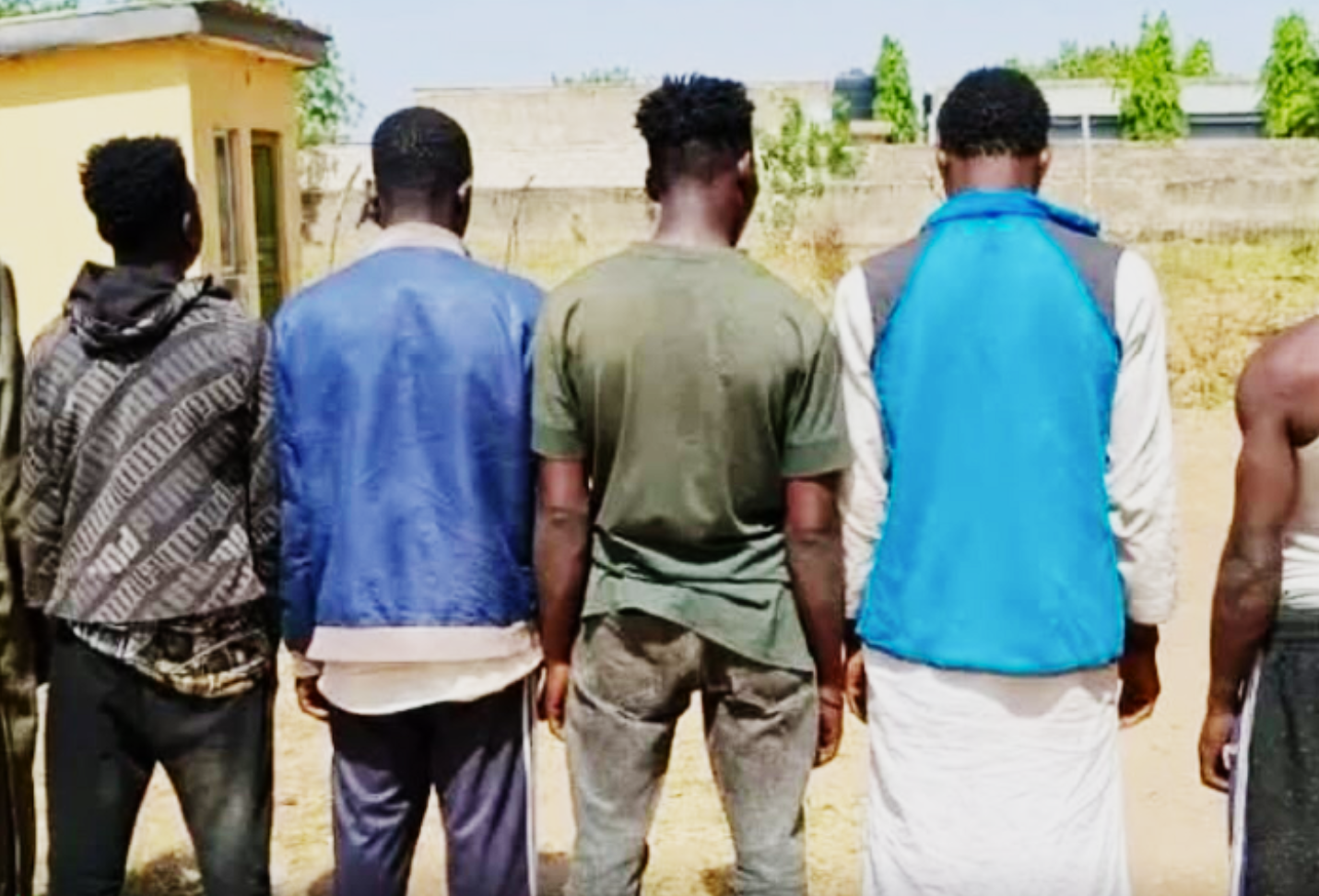
The Kano State Police Command has arrested eight suspects following a violent clash between APC and NDC supporters in Bichi Local Government Area on November 15, confirming that five people were injured, 13 vehicles were vandalised and campaign banners and billboards were destroyed before officers restored calm. Police recovered cutlasses, sticks and other items from the suspects and transferred them to the State Criminal Investigation Department in Bompai for further investigation, while Commissioner of Police Ibrahim Adamu Bakori warned political parties against violence. The NDC has described the incident as an attack on the convoy of vice-presidential candidate Rabiu Musa Kwankwaso and initially reported about seven damaged vehicles, but Kano police have not publicly determined which side initiated the violence or identified any sponsor, making those questions central to the continuing investigation.
KANO, NIGERIA — The Kano State Police Command has arrested eight suspects following a violent political clash between supporters of the All Progressives Congress and the NDC in Bichi Local Government Area, confirming that five people were injured and 13 vehicles were vandalized during an incident that has intensified concerns about political violence as Nigeria moves deeper into the 2027 election season. The confrontation occurred at about 4:45 p.m. on Sunday, November 15, according to a statement issued on Monday by Police Public Relations Officer CSP Abdullahi Haruna Kiyawa, who said officers were deployed immediately after receiving reports of fighting within Bichi township. Police said campaign banners, billboards and vehicles belonging to political actors were damaged before security teams brought the situation under control, while the eight suspects were taken into custody and later transferred to the State Criminal Investigation Department in Bompai for further investigation and possible prosecution.
The police account is significant because it provides the first official law-enforcement version of an incident that had initially been described by NDC officials as a targeted attack on the convoy of former Kano State Governor Rabiu Musa Kwankwaso, the party’s vice-presidential candidate for the 2027 election. Kwankwaso’s political allies said his convoy and that of the NDC governorship candidate in Kano, Aminu Abdussalam Gwarzo, came under attack as they moved through Bichi following campaign activities in several local government areas. According to the campaign’s account, the convoy had earlier visited Tofa, Rimin Gado, Kabo, Gwarzo, Shanono and Bagwai without serious disruption before encountering hostility on entering Bichi. The NDC side alleged that youths blocked sections of the route, threw stones and later attacked vehicles near the local government secretariat, leaving supporters injured and damaging several cars.
Kano police have not adopted that version in full. Instead, the command has described what happened as a clash between supporters of the two political parties, a formulation that stops short of assigning responsibility for who started the violence. That distinction is important because the competing political narratives remain sharply different. NDC officials and presidential candidate Peter Obi have presented the incident as an attack on Kwankwaso and his entourage, while Kano State Information Commissioner Sanusi Bature Dawakin Tofa initially rejected reports that the convoy had been deliberately attacked and accused the Kwankwasiyya movement of manufacturing the story for political sympathy. The subsequent police confirmation that violence did occur, that people were injured and that vehicles and campaign materials were damaged establishes that the disturbance itself was real, but it does not by itself prove the NDC’s allegation that one political side planned or initiated the confrontation.
Police said the eight suspects were arrested after officers restored calm in the area, and several items were recovered as exhibits. According to Kiyawa, those items included one locally identified weapon described as a “Gariyo,” two cutlasses, two hard sticks, a bottle containing solution and a substance locally referred to as “Suck and Die.” The command has not yet publicly explained which suspect was allegedly found with which item, nor has it identified the political affiliation of the eight arrested individuals. That means it would be premature to describe the suspects as APC members, NDC members or sponsored political thugs unless investigators later establish those links. The suspects remain accused persons and have not been convicted of any offense, while police say they will be charged in court after the investigation is completed.
The official casualty and damage figures are also more precise than the initial political accounts. Peter Obi said earlier on Monday that reports reaching him indicated that several members of Kwankwaso’s entourage were injured and about seven vehicles were vandalised. The Kano police later put the total number of injured people at five and the number of vandalized vehicles at 13, suggesting that damage extended beyond the vehicles counted by the NDC campaign team. Police also confirmed that campaign banners and billboards belonging to political parties were destroyed during the confrontation. The five injured people were taken to hospital for treatment, although the command did not immediately disclose their identities, the severity of their injuries or whether all of them belonged to one political camp.
The Commissioner of Police in Kano State, Ibrahim Adamu Bakori, condemned the violence and warned political parties and their supporters that the command would not tolerate activities capable of threatening public peace before, during or after the political season. The warning reflects growing concern among security agencies about the possibility that campaign competition could escalate into organized street violence as parties intensify mobilization ahead of the 2027 elections. Kano has historically been one of Nigeria’s most politically competitive and electorally significant states, and the combination of strong party loyalties, influential political movements and large campaign crowds creates a security environment in which even localized confrontations can quickly assume wider political significance.
The Bichi incident is particularly sensitive because Kwankwaso remains one of the most influential political figures in Kano. A former two-term governor, former senator and former presidential candidate, he continues to command a large following through the Kwankwasiyya political movement and is now running alongside Peter Obi on the NDC presidential ticket in the 2027 election. That makes any violence involving his convoy politically consequential far beyond Bichi itself, especially when rival parties are already competing aggressively for influence in Kano and across the North-West. Obi’s reaction reflected that wider concern, with the NDC presidential candidate warning that political disagreement must not be allowed to become physical violence and calling on the police to identify and prosecute those responsible, including any person found to have financed or sponsored the attack.
Obi’s demand for investigation, however, should be distinguished from an official finding of sponsorship. At present, police have announced arrests and recovered exhibits but have not publicly named any political leader, party official or sponsor as responsible for the violence. There is also no police statement establishing that the attack was centrally directed by the APC, the NDC or any campaign organization. Those questions remain part of the investigation, and the evidence collected by the State Criminal Investigation Department will determine whether prosecutors eventually pursue charges connected only to assault, property damage and possession of weapons or whether investigators uncover evidence of organized political sponsorship.
The Kano State Government’s earlier rejection of the NDC account adds another layer of political tension. Information Commissioner Sanusi Bature Dawakin Tofa described claims of an attack on Kwankwaso’s convoy as fictitious before the police later confirmed that an APC-NDC confrontation had indeed occurred in Bichi. His statement did not prevent authorities from subsequently acknowledging the violence, but it illustrates how quickly political actors attempted to define the narrative before investigators had publicly established the facts. That sequence reinforces the importance of treating party statements as claims rather than settled conclusions, especially during an election period when footage, damage estimates and allegations of responsibility can become powerful campaign tools.
The current police account also leaves several important questions unanswered. It is not yet clear how the confrontation began, whether one group had blocked the road before the other arrived, whether the eight suspects were arrested at the scene or afterward, or whether additional arrests are expected. Police have also not publicly released a detailed sequence showing when campaign materials were destroyed, when vehicles were attacked or whether the clashes occurred at one location or across several points in Bichi. Those details will matter if investigators are to determine whether the violence developed spontaneously between rival supporters or whether there was prior planning by any group.
The incident comes at a time when political parties across Nigeria are increasing public rallies, candidate movements and grassroots mobilization ahead of the 2027 general elections. Such activities inevitably place additional pressure on state police commands because campaign convoys can attract thousands of supporters and move through communities where rival parties have their own structures. Security planning therefore requires more than responding after violence begins. Police must coordinate routes, separate rival gatherings where necessary, protect campaign materials and ensure that one party’s movement through an area does not become an opportunity for confrontation with another.
Kano carries particular risk because political rivalry in the state is often deeply personal and highly mobilized. Major political leaders maintain powerful grassroots organizations, and rival supporters frequently interpret disputes through broader questions of loyalty, identity and control of local political space. That does not mean violence is inevitable, but it means even incidents involving billboards, convoys or access to campaign venues can become serious quickly if political leaders fail to restrain supporters. The police warning after the Bichi clash is therefore as much directed at party leadership as it is at ordinary supporters because campaigns can help lower tensions by making clear that intimidation and retaliation will not be tolerated.
The destruction of campaign banners and billboards is also politically significant. Although property damage may appear less serious than physical injury, attacks on campaign materials can serve as an early warning sign of escalating political hostility. In competitive areas, the removal or destruction of posters is often interpreted by supporters as an attempt to deny opponents visibility or political space, and retaliatory behavior can follow. The challenge for police is to treat such incidents as potential triggers for wider violence rather than minor campaign disputes, particularly when supporters are already carrying weapons or moving in large convoys.
The recovery of cutlasses, sticks and other items from the arrested suspects makes the Bichi case more serious because it suggests at least some participants were equipped with objects capable of causing significant harm. Police will now need to establish whether those items were carried into the confrontation deliberately, whether they were used during the violence and whether forensic or witness evidence links particular suspects to specific injuries or property damage. Those findings will be critical if the command follows through on its promise to prosecute the accused rather than simply detain and release them after political pressure subsides.
The investigation also represents an important test of police neutrality. Both the APC and NDC have strong political interests in how the incident is portrayed, and whichever side believes the investigation is unfair could accuse the command of partisanship. The most effective way to avoid that outcome will be for police to release factual updates based on evidence, clearly identify charges when they are filed and avoid adopting the rhetoric of either party. Transparency will be especially important if investigators establish that suspects from both sides participated in the violence or if evidence points toward organizers beyond the eight people already arrested.
For the injured victims, the immediate concern remains treatment and accountability. The police statement confirmed that all five were taken to hospital, but there has been no detailed medical update. It is also unclear whether the figure includes every person who sustained minor injuries or only those requiring formal treatment. NDC officials had initially referred to several injured members of Kwankwaso’s entourage, meaning further clarification may be needed if more people later present for medical care or provide statements to investigators.
The damage count may also evolve. The NDC campaign said it had seen about seven damaged vehicles, while police subsequently confirmed 13 vehicles vandalised in the wider clash. That difference is not necessarily contradictory because the campaign’s count may have referred specifically to vehicles within Kwankwaso’s entourage, whereas the police figure appears to cover the entire confrontation. A full inventory of damaged vehicles and destroyed campaign property would help establish the scale of the incident and whether both political camps suffered losses.
What is already established is that the confrontation was serious enough to require police intervention, produce injuries, damage significant property and lead to arrests. It also occurred during a politically sensitive period involving a nationally prominent vice-presidential candidate and a state with major electoral importance. Those factors make the Bichi clash more than a routine public-order incident and explain why the investigation is likely to attract continued national attention.
The broader political lesson is that Nigeria’s 2027 campaign season is entering a period in which rhetoric and street mobilization must be managed carefully. Political leaders have the right to campaign freely and supporters have the right to assemble, but those rights depend on the ability of rivals to occupy the same political space without resorting to violence. Every confrontation that goes unpunished increases the risk that supporters elsewhere will believe intimidation is an acceptable campaign strategy, while credible investigation and prosecution can help establish that political competition remains subject to ordinary criminal law.
For Kano police, the immediate responsibility is therefore twofold: complete the Bichi investigation and prevent retaliation. The command has said the area is relatively calm and that security monitoring is continuing, which will be important because politically charged incidents can produce follow-up clashes if supporters mobilize around arrests, injuries or damaged campaign property. Police will also need to protect future rallies and convoy movements in Bichi and neighboring local government areas to prevent another confrontation between the same political networks.
For the parties, the incident creates a responsibility to separate campaign messaging from accusations that have not yet been proven. The NDC is entitled to demand accountability for what it says was an attack on its convoy, while APC figures are entitled to reject allegations they believe are false, but neither side should treat disputed claims as justification for mobilizing supporters against rivals. The evidence gathered by investigators, witness accounts and any available video footage should determine culpability rather than party statements alone.
The Bichi clash therefore remains an active criminal investigation as well as a political controversy. Eight suspects are in custody, five people are confirmed injured, 13 vehicles were vandalised and campaign materials were destroyed, but the most politically important question — who initiated or organized the violence — has not yet been answered publicly by police. Until that finding emerges, the responsible conclusion is that supporters of rival parties clashed in Bichi and that competing claims about a targeted convoy attack remain under investigation.
The handling of the case will now be watched as an early test of how Nigerian security agencies intend to respond to election-related violence ahead of 2027. If the investigation is transparent, evidence-driven and followed by prosecution where appropriate, it could help deter similar incidents. If political pressure overwhelms the process or responsibility remains permanently unresolved, the Bichi violence could become another example of how campaign intimidation escapes accountability. With one of Nigeria’s most politically important states already witnessing injuries, damaged vehicles and arrests months before the election, the warning for political leaders and security authorities is clear: the cost of allowing campaign rivalry to become physical confrontation can escalate quickly, and preventing that escalation will require enforcement that is both firm and visibly impartial.