KEBBI UNDER ATTACK AS SUSPECTED LAKURAWA GUNMEN KILL POLICE INSPECTOR, 11 OTHERS AND FORCE RESIDENTS TO FLEE
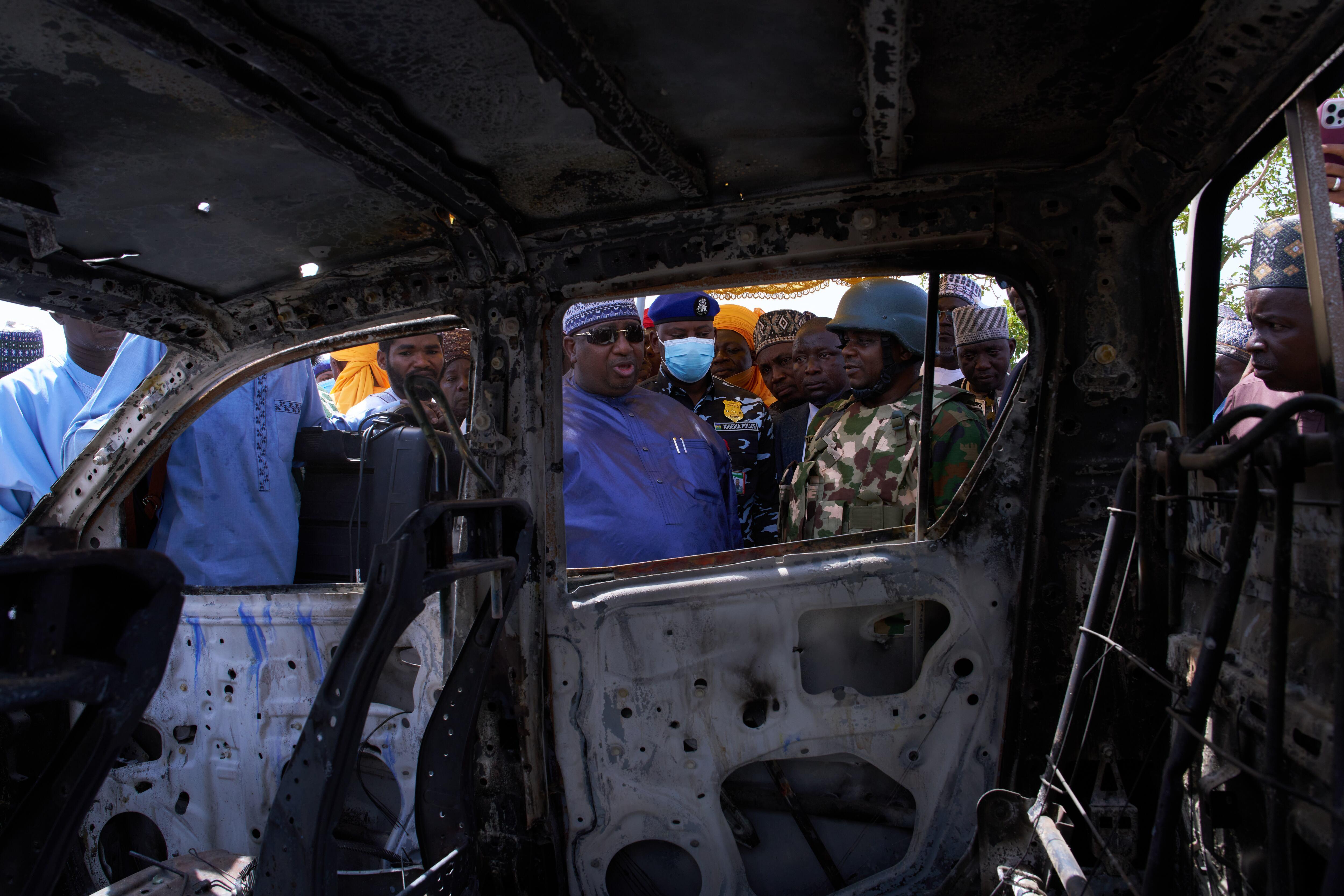
Suspected Mamudawa/Lakurawa militants have killed 12 people, including a police inspector, in attacks across communities in Koko-Besse Local Government Area of Kebbi State. Police say five people were killed on October 26 and seven more on October 28, while homes were burned, shops looted and residents forced to flee. Additional Police Mobile Force personnel, tactical units and joint security teams have been deployed for clearance, search-and-rescue and confidence-building operations. Residents have reported a higher casualty figure, but the police-confirmed toll remains 12. The Guardian Nigeria
At least 12 people, including a police inspector, have been killed in a series of deadly attacks on communities in Kebbi State as suspected Mamudawa/Lakurawa fighters intensified violence across parts of the Koko-Besse riverine axis, forcing residents to abandon their homes and prompting a major security deployment. The Kebbi State Police Command says the attacks occurred over several days rather than in a single incident, with five people killed on October 26 and seven others, including the police inspector, killed during subsequent attacks on October 28. The latest violence has deepened fears across rural communities already struggling with armed attacks, reprisal killings, cattle-rustling accusations and the growing presence of militant groups operating around the northwestern border areas of Nigeria.
Police spokesperson SP Bashir Usman said the attacks affected communities around Karwa, Kestu and Waiwayi, with the police inspector losing his life while responding to the violence. The attackers were described by the command as suspected Mamudawa/Lakurawa terrorists, a group whose operations have increasingly become a serious security concern in Kebbi and neighbouring areas. Police said joint security teams engaged the assailants and repelled some of the attacks, but not before civilians were killed, homes were set ablaze, motorcycles and other property were destroyed, and shops were looted of food and other supplies.
The death of the police inspector has drawn particular attention because he was reportedly killed while security forces were trying to contain the attackers and restore order in the affected communities. His identity had not been publicly released at the time of the initial police confirmation, with authorities saying investigations and necessary procedures were still underway. The killing underscores the growing risks faced by police officers and other security personnel operating in parts of northwestern Nigeria where armed groups have become increasingly mobile, heavily armed and capable of attacking rural communities before withdrawing into difficult terrain.
Police say the situation did not begin with the October 28 attacks alone. Earlier tensions had already been building in the Besse and Shanga riverine areas after rumours of cattle rustling and an impending Lakurawa assault triggered mobilisation by local vigilantes known as Yan Sakai. On October 22, vigilantes reportedly entered Samanaji Market and killed three Fulani traders while injuring others, including a police inspector who had been deployed with officers attempting to restore calm. Subsequent reprisals then spread across nearby settlements, creating a cycle of violence in which communities began fleeing for fear that they could be attacked next.
The security picture became more dangerous in the days that followed as suspected Lakurawa fighters reportedly launched assaults across the Karwa, Kestu and Waiwayi axis. Police said five people were killed during an October 26 attack before another seven deaths were recorded on October 28, bringing the officially confirmed toll from those incidents to 12. The dead included the police inspector, while several communities experienced burning, looting and displacement. The pattern suggests a rapidly deteriorating situation in which militant attacks and communal reprisals are beginning to overlap, making it increasingly difficult for residents to distinguish between terrorism, revenge violence and local armed conflict.
Residents have offered accounts suggesting the true death toll may be higher than the official figure. Some locals told journalists that more than 20 people may have died across the affected communities, while others described entire settlements being abandoned after residents saw houses burning and heard gunfire. Police, however, have urged the public to rely on verified information and have maintained the official figure of 12 deaths for the October 26 and 28 attacks. Until authorities complete investigations and reconcile casualty reports from different villages, the higher community estimates remain unconfirmed.
The attackers reportedly struck with considerable force, burning homes and motorcycles and breaking into shops to take food and valuables before withdrawing. Residents said some of the raids happened with little warning, leaving villagers with limited time to escape. In communities where insecurity has already disrupted farming and trade, the destruction of homes and food supplies can have consequences long after the gunmen leave because families may lose both shelter and the resources needed to survive or restart livelihoods.
The Kebbi State Police Command has responded by deploying additional Police Mobile Force personnel, tactical units and conventional officers to work with other security agencies across the affected areas. Commissioner of Police Umar M. Hadejia has ordered clearance operations, search-and-rescue efforts and confidence-building patrols aimed at restoring security and encouraging displaced residents to return when conditions permit. Police say teams are also conducting investigations and pursuing those responsible for the attacks.
The decision to deploy additional personnel reflects the seriousness with which authorities now view the widening insecurity. Rural communities in Kebbi face a difficult security environment because many settlements are separated by long distances, poor roads and open terrain that can allow armed groups to move quickly between villages. Security forces often face the challenge of responding after attackers have already struck and withdrawn, making intelligence, local cooperation and permanent security presence particularly important.
The suspected involvement of Lakurawa has heightened concern because the group has emerged as a growing threat across parts of Kebbi and Sokoto states. Nigerian security authorities have described Lakurawa as an armed extremist organisation operating around border communities, with fighters linked to attacks on civilians, security personnel and rural settlements. The group has benefited from the porous nature of some international border areas and from instability across parts of the wider Sahel, where militant organisations and armed networks have expanded their activities.
The organisation is sometimes referred to as Mamudawa/Lakurawa in official and local reporting, and authorities have linked it to attacks involving killings, livestock theft and intimidation of local populations. While Nigerian security forces have launched operations against the group, its ability to carry out repeated attacks indicates that the threat has not been eliminated. The geography of northwestern Nigeria, combined with neighbouring instability in the Sahel, provides armed groups with routes and remote areas that can be difficult to monitor continuously.
Kebbi’s location makes the state particularly sensitive to those security pressures. It shares international borders with Niger and Benin and domestic boundaries with several Nigerian states, creating important trade routes but also making effective border surveillance more difficult. Communities in remote areas can become vulnerable when armed groups cross through poorly monitored terrain or exploit local grievances and economic hardship.
The latest killings also show how easily militant activity can become entangled with long-standing disputes between farmers, herders, vigilantes and local communities. Rumours of cattle theft or imminent attacks can trigger armed mobilisation before authorities establish what actually happened, creating an environment in which retaliatory violence spreads quickly. Once people begin fleeing and homes are burned, fear can become a powerful driver of further conflict even when the initial information was incomplete or exaggerated.
Police have specifically warned residents against circulating unverified narratives capable of increasing panic or provoking additional reprisals. That warning follows viral videos and social-media claims describing attacks and casualties across the area, some of which police say did not accurately distinguish between terrorist violence and earlier communal clashes. Authorities are attempting to separate the different incidents as part of their investigation while preventing rumours from worsening tensions between ethnic and occupational groups.
The displacement of residents remains one of the most serious consequences of the violence. Families from affected communities have reportedly moved toward safer towns, including Koko, after fearing that further attacks could follow. Displacement places additional strain on neighbouring communities because people fleeing violence need food, shelter and basic services while also leaving behind farms, livestock and businesses that may be damaged or stolen in their absence.
For rural households dependent on agriculture, even a temporary evacuation can have serious economic effects. Crops may go unharvested, livestock can be stolen and local markets may close if traders fear travelling through insecure roads. As insecurity persists, these disruptions can increase food prices and reduce household income, creating a humanitarian problem in addition to the immediate security crisis.
The Kebbi government and federal security agencies now face pressure to restore enough confidence for displaced residents to return safely. That will require more than temporary patrols. Communities will want a sustained security presence, improved intelligence gathering and faster response capacity, especially in areas where militants have demonstrated an ability to strike repeatedly.
The killing of a police inspector also raises concerns about whether local security units have sufficient personnel, equipment and protection when confronting heavily armed attackers. Police officers in rural areas often operate with limited numbers and may have to wait for reinforcement from tactical formations located farther away. When attackers arrive in large groups or use superior firepower, ordinary police units can quickly find themselves overwhelmed.
Joint operations with the military and other security agencies therefore remain central to the response. Kebbi police say current operations involve coordination across agencies, with tactical teams working together to dominate the affected areas and prevent further attacks. Such cooperation is particularly important against groups whose activities cross local-government and state boundaries.
Security forces will also need accurate intelligence from communities. Residents can provide information about unusual movements, suspected camps and routes used by armed groups, but cooperation depends heavily on trust. Villagers who fear retaliation may hesitate to share information if they do not believe security forces can protect them afterward.
The authorities must therefore combine offensive operations with measures that reassure communities and reduce the risk of collective reprisals. Treating entire ethnic or occupational groups as suspects can deepen grievances and create further instability, particularly in areas where herders, farmers and traders have lived together for generations despite periodic disputes.
The current violence has already shown how dangerous that dynamic can become. The October 22 killing of Fulani traders at Samanaji Market reportedly triggered reprisals that contributed to wider displacement before suspected Lakurawa attacks added another layer of violence. Without careful investigation, communities may blame each other for attacks actually carried out by criminal or militant groups, increasing the risk of further revenge killings.
Authorities will therefore need to distinguish criminal responsibility at the individual level rather than allowing broad accusations to drive security operations. Arrests and prosecutions based on evidence can help reduce the sense that communities must defend themselves through vigilante action, while indiscriminate punishment can have the opposite effect.
The wider Lakurawa threat has become a national security concern because it demonstrates how insecurity in the Sahel can spill into northwestern Nigeria. Armed groups moving through border regions can exploit weak state presence and difficult terrain while building relationships with local criminal networks or recruiting among economically marginalised populations. Nigeria has already spent years confronting insurgency in the northeast and banditry in the northwest, and the emergence of additional militant networks risks stretching security resources further.
The government has repeatedly promised to strengthen operations in vulnerable border communities, but the latest Kebbi attacks show the challenge remains significant. Military offensives may disrupt camps and kill fighters, yet sustained security requires intelligence, border control, local policing and economic support for communities that might otherwise become vulnerable to militant influence.
The attacks also have implications for ongoing development projects in the region. Earlier in October, suspected Lakurawa fighters attacked a construction site connected to the Sokoto-Badagry Superhighway project in Maiyama Local Government Area, killing security personnel and an expatriate worker. That incident demonstrated that militants are capable of targeting not only villages but strategic infrastructure and workers involved in major federal projects.
Repeated attacks could discourage contractors, disrupt construction timelines and increase security costs. In regions already struggling with limited infrastructure, that creates a vicious cycle in which insecurity delays development while underdevelopment leaves communities more isolated and vulnerable.
The Kebbi authorities therefore face both an immediate security emergency and a longer-term governance challenge. Protecting villages is essential, but so is ensuring that rural communities remain connected to markets, schools, healthcare and government services. Areas where the state appears absent can become easier for armed groups to intimidate or exploit.
For the families of those killed, however, broader policy debates offer little immediate comfort. Twelve people are officially confirmed dead in the recent attacks, including a police inspector who died while responding to the violence. Homes have been burned, shops looted and families displaced, leaving communities to deal with both grief and uncertainty about whether the attackers will return.
The police have promised continued operations and say the situation is being monitored closely. Investigations are expected to determine the identities of the attackers, clarify the full casualty figures and establish links between the different incidents that have occurred across the riverine communities.
For now, the official position remains that suspected Mamudawa/Lakurawa terrorists were responsible for the October 26 and 28 attacks in which 12 people died, while earlier vigilante and reprisal violence had already destabilised the area. That overlapping pattern makes the crisis especially dangerous because security forces are dealing simultaneously with militant attacks, communal retaliation and displacement.
The coming days will show whether the additional deployments can prevent further violence and allow residents to return home. A sustained reduction in attacks would offer evidence that security operations are regaining control, while additional raids would deepen concern that armed groups have established enough presence to continue striking communities despite increased patrols.
What is already clear is that Kebbi’s security crisis can no longer be viewed as a collection of isolated village attacks. The repeated killings, destruction of property, displacement of residents and death of a police officer point to a wider threat developing across parts of the state’s rural and border communities.
The immediate priority for authorities is to prevent another attack, protect displaced residents and pursue the gunmen without allowing reprisals to create further victims. Beyond that, the government must confront the deeper conditions that have allowed militant and communal violence to take root across the region.
Until those conditions are addressed, families living across affected parts of Koko-Besse and neighbouring communities are likely to remain caught between fear of armed groups, mistrust between communities and the uncertainty of whether security forces can arrive quickly enough when the next attack begins.