KENYAN CULT LEADER SERVING 200-YEAR PRISON SENTENCE FOUND GUILTY OF ADDITIONAL CHILD CRUELTY AND ASSAULT OFFENSES
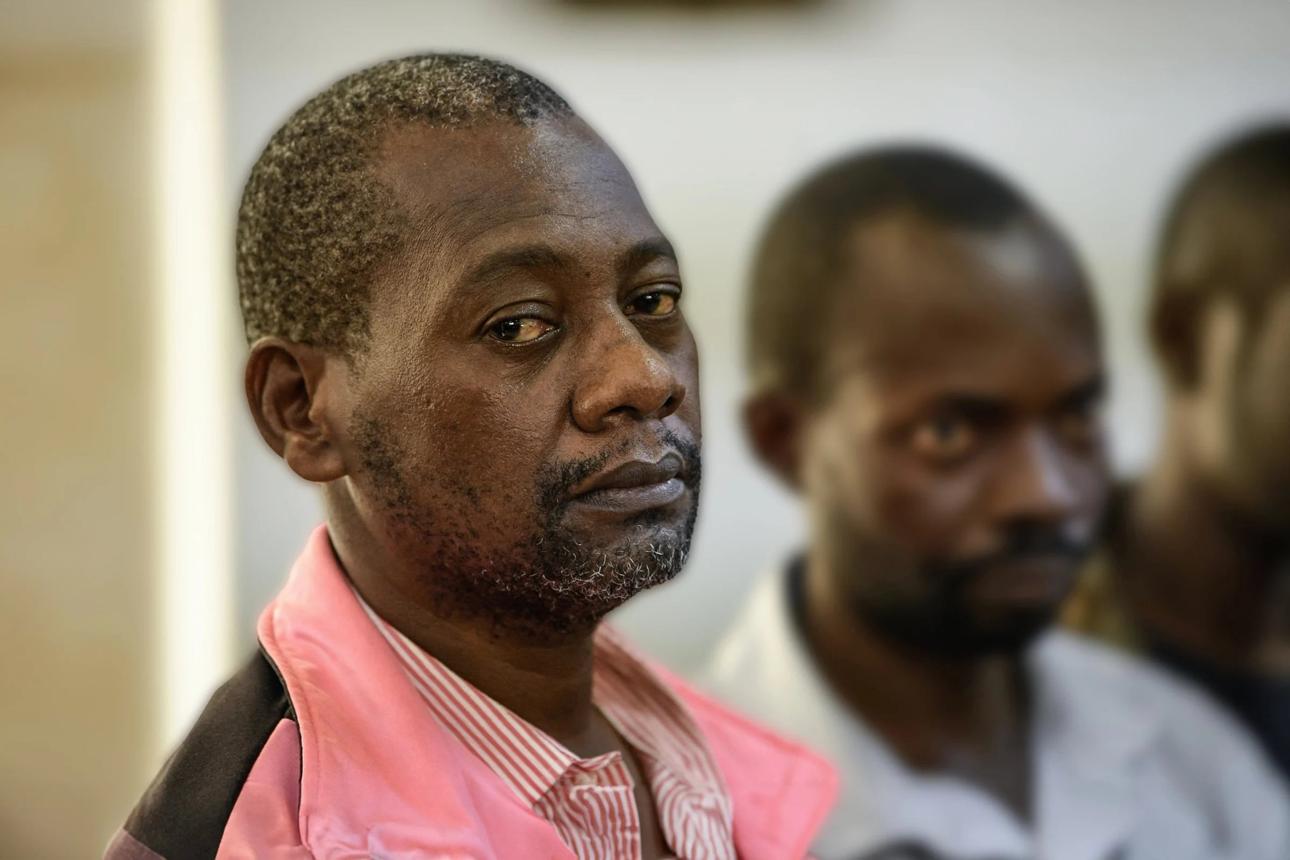
Kenyan cult leader Paul Nthenge Mackenzie, already serving a 200-year prison sentence for the murder of 190 children and one adult, has been convicted of five counts of cruelty to a child and one count of assault causing actual bodily harm by the Tononoka Children's Court in Mombasa. Eleven of his followers were also convicted of offenses involving children in Shakahola Forest between 2020 and 2023, while 24 defendants were acquitted. Principal Magistrate N. Chepchirchir scheduled mitigation proceedings for December 3, with sentencing expected on December 17, 2026. In a separate development on Thursday, November 26, Mackenzie was also convicted of terrorism-related offenses, further expanding the criminal consequences arising from the Shakahola tragedy.
Kenyan cult leader Paul Nthenge Mackenzie, who is already serving a reported 200-year prison sentence over the deaths of 190 children and one adult, has been convicted of additional offenses involving cruelty to children and assault in connection with the Shakahola Forest tragedy. A Children's Court in the coastal city of Mombasa found Mackenzie guilty on Wednesday, November 25, 2026, of five counts of cruelty to a child and one count of assault causing actual bodily harm. Eleven of his followers were also convicted over offenses committed against children between 2020 and 2023 in Shakahola Forest, located in Kenya's Kilifi County. The latest convictions represent another significant development in the legal proceedings arising from a religious movement whose activities prompted widespread public concern about child protection, religious extremism and institutional oversight in Kenya.
According to the prosecution, children living within the religious community were subjected to prolonged fasting, denied adequate food and water, physically assaulted and deprived of access to education. Prosecutors maintained that these practices were imposed under the guise of religious teachings, exposing vulnerable children to serious physical and psychological harm. The Office of the Director of Public Prosecutions described the ruling as another landmark conviction in the continuing pursuit of accountability for offenses committed within the Shakahola community. The latest judgment establishes additional criminal responsibility for the treatment of children, separate from the offenses for which Mackenzie is already serving his lengthy prison sentence.
The case has placed particular emphasis on the vulnerability of children raised within highly restrictive religious communities, where decisions concerning their nutrition, education, healthcare and daily activities may be controlled by adults exercising considerable spiritual authority. Unlike adults who independently choose to undertake religious fasting, children depend on their caregivers to ensure that their fundamental nutritional and developmental needs are met. The prosecution's case focused on conduct that violated those responsibilities, establishing that religious justification does not exempt individuals from criminal liability for cruelty or assault against children.
The latest developments also include a separate terrorism-related conviction on Thursday, November 26. Reuters, the Associated Press and Kenyan media confirm the child cruelty convictions, while sentencing in that case is scheduled for December 17. The complete article incorporates both developments.
Kenyan cult leader Paul Nthenge Mackenzie, who is already serving a 200-year prison sentence for the murder of 190 children and one adult, has been convicted of additional offenses involving cruelty to children and assault in connection with the Shakahola Forest tragedy. A Children's Court in the coastal city of Mombasa found Mackenzie guilty on Wednesday, November 25, 2026, of five counts of cruelty to a child and one count of assault causing actual bodily harm. Eleven of his followers were also convicted over offenses committed against children between 2020 and 2023 in Shakahola Forest, located in Kenya's Kilifi County. The legal proceedings intensified further on Thursday when a separate court convicted Mackenzie of terrorism-related offenses, marking another significant development in Kenya's continuing efforts to establish criminal accountability for the activities of his religious movement.
The latest child cruelty judgment was delivered by Principal Magistrate N. Chepchirchir at the Tononoka Children's Court in Mombasa, following extensive proceedings involving testimony from numerous witnesses and evidence concerning the treatment of children within the Good News International Church community. Prosecutors established that children had been subjected to serious abuse and denied fundamental protections under circumstances in which religious teachings were used to justify their treatment. The convictions have reinforced concerns about the vulnerability of children living in communities where spiritual leaders exercise extensive authority over their followers. Mackenzie and the other individuals convicted in Wednesday's proceedings are expected to return to court for mitigation hearings on December 3, ahead of sentencing scheduled for December 17.
Kenya's Office of the Director of Public Prosecutions welcomed the judgment as another important conviction arising from the Shakahola investigations. The prosecution maintained that children had suffered physical abuse, inadequate nutrition and educational deprivation while living within the religious community. The case was intended to establish individual criminal responsibility for those offenses rather than treating every member of the church as automatically responsible for the actions of its leadership. The distinction became particularly important during the trial because several defendants faced different allegations based on their respective conduct and involvement in the community.
The Children's Court proceedings initially involved 39 defendants facing a total of 17 charges connected to offenses committed in Shakahola Forest. The allegations included cruelty to children, assault, torture and violations of children's educational rights. Prosecutors presented testimony from 76 witnesses, while several defendants and expert witnesses provided evidence during the defense proceedings. The extensive judicial examination reflected the complexity of establishing responsibility for offenses committed within a community that had operated away from ordinary public scrutiny.
Among those convicted alongside Mackenzie were Smart Deri Mwakalama and Stephen Sanga Muye, who were found guilty of assault and child cruelty offenses. Other defendants received convictions involving cruelty to children, while several were found guilty of interfering with children's access to education. The differentiated verdicts demonstrate that the court examined the specific allegations against individual defendants rather than imposing identical criminal responsibility on everyone associated with the religious organization. Twenty-four defendants were acquitted and ordered to be released unless their continued detention was required in connection with separate legal proceedings.
The magistrate also acquitted the defendants of the specific torture charges brought against them, concluding that prosecutors had not satisfied the statutory requirements associated with those offenses. Under the applicable legal framework, establishing the charged torture offenses required evidence of the necessary connection to a public officer or someone acting on behalf of such an official. The acquittals on those particular charges do not negate the separate findings of cruelty and assault established by the court. Instead, they illustrate the importance of distinguishing between conduct that may be described as torture in ordinary language and the precise legal elements required to obtain a conviction for a particular statutory offense.
The magistrate rejected arguments suggesting that religious motivation could excuse conduct otherwise established as criminal. That conclusion addresses a fundamental issue underlying the Shakahola prosecutions, namely whether religious convictions can justify actions that violate the rights and physical safety of children. While individuals are entitled to hold religious beliefs, those protections do not automatically exempt them from criminal laws governing their treatment of other people. The judgment reinforces the principle that spiritual authority must be exercised within the boundaries established by legislation protecting vulnerable individuals.
The convictions come less than three weeks after Mackenzie received his 200-year prison sentence in a separate murder case. That judgment, delivered earlier in November, represented a major development in the criminal proceedings that followed the discovery of numerous bodies in Shakahola Forest in April 2023. The latest child cruelty convictions address additional offenses committed within the community and establish accountability for violations that extend beyond the murder charges. The distinction between the cases is significant because each set of proceedings concerns particular criminal acts, victims and legal requirements.
On Thursday, November 26, the legal consequences facing Mackenzie intensified further when a Kenyan court found him guilty of terrorism-related offenses in another case connected to the Shakahola tragedy. His spouse and a senior associate were also convicted on five counts in the consolidated proceedings, according to Kenyan media reporting. The terrorism-related case is separate from Wednesday's Children's Court judgment, although both arose from investigations into the activities of the same religious movement. The additional convictions demonstrate the breadth of the criminal investigations undertaken by Kenyan authorities since the discovery of the tragedy.
The Shakahola case first attracted widespread attention in April 2023 when investigators began examining the circumstances surrounding deaths within a remote religious community in Kilifi County. Subsequent investigations brought national and international scrutiny to the Good News International Church, an organization led by Mackenzie whose teachings had become increasingly associated with harmful religious practices. Kenyan authorities launched extensive criminal investigations, forensic examinations and legal proceedings involving Mackenzie and numerous individuals connected to the church. The discoveries generated widespread demands for accountability and greater protection of people living within isolated religious communities.
For families affected by the tragedy, the criminal proceedings have represented a prolonged effort to establish what happened to their relatives and determine who should be held responsible. The process has involved investigations, identification procedures, witness testimony and separate prosecutions addressing different categories of offenses. Although the convictions cannot reverse the suffering experienced by affected families, they provide a formal judicial acknowledgment of criminal wrongdoing. The continuing proceedings also demonstrate the considerable time required to investigate complex cases involving numerous defendants and allegations spanning several years.
Wednesday's judgment is particularly important because it recognizes the rights of children who were subjected to abuse and deprivation within the community. Children depend upon adults to provide food, education, healthcare, shelter and protection from violence, making them especially vulnerable when those responsibilities are compromised by individuals exercising spiritual or parental authority. Their legal protections apply regardless of the religious convictions held by their caregivers or the teachings promoted by the organizations to which their families belong. The convictions consequently reinforce the obligation of adults to protect children from practices that endanger their physical and psychological well-being.
The deprivation of education established in several of the cases also highlights the broader consequences of the religious community's activities. Education provides children with opportunities for intellectual development, social interaction and access to institutions capable of identifying safeguarding concerns. When children are removed from educational environments and prevented from receiving appropriate instruction, the consequences can extend throughout their lives. The court's convictions involving educational rights recognize that harm to children is not limited to physical injuries but can also encompass conduct that deprives them of essential developmental opportunities.
Kenya's constitutional framework recognizes the importance of protecting children from abuse, neglect, harmful cultural practices and violence. Article 53 of the Constitution establishes specific rights for children, including access to basic education, nutrition, shelter and healthcare. It also identifies the best interests of the child as a primary consideration in matters concerning children. Those protections provide an important legal foundation for government intervention when religious practices, family arrangements or other circumstances expose children to serious harm.
The Shakahola prosecutions have renewed national discussion about the relationship between religious freedom and public accountability. Kenya has a diverse religious landscape in which churches and other faith-based organizations play important roles in education, healthcare, community development and charitable activities. Religious freedom remains a constitutionally protected right, allowing individuals to practice their beliefs and participate in religious communities. However, the exercise of that freedom does not remove the responsibility of authorities to investigate criminal conduct or intervene when the rights of vulnerable individuals are threatened.
The distinction between legitimate religious practice and criminal abuse is especially important in public discussions surrounding the case. Religious fasting, for example, is practiced voluntarily across numerous faith traditions and is not inherently unlawful. Criminal liability arises where conduct violates applicable laws, including those protecting children from abuse, neglect and harmful deprivation. The legal significance of the Shakahola judgments therefore concerns the specific offenses established by the courts rather than the criminalization of religious devotion generally.
The case has also placed attention on the responsibilities of religious institutions and their leadership structures. Religious organizations frequently operate through systems of trust in which followers rely on spiritual leaders for guidance concerning personal, family and community matters. That relationship can provide substantial benefits where leadership is exercised responsibly, but it can also create vulnerabilities when individuals misuse their authority. Effective institutional safeguards, accessible complaint mechanisms and accountability procedures are important in preventing the exploitation of people who place considerable confidence in religious leaders.
Following the discovery of the Shakahola tragedy, Kenyan authorities faced questions about whether existing regulatory and law enforcement arrangements were sufficient to identify serious problems within religious organizations. The case contributed to discussions about possible reforms concerning the registration, supervision and accountability of faith-based institutions. Those discussions have involved the difficult task of strengthening protections against abuse without imposing unnecessary restrictions on legitimate religious activities. Any regulatory framework must distinguish between lawful beliefs and conduct that violates criminal legislation or threatens public safety.
The role of local authorities and child protection agencies has also become an important consideration in the wider response to the tragedy. Effective safeguarding requires cooperation among educational institutions, healthcare providers, social services departments and law enforcement agencies. Each institution may possess information relevant to identifying situations where children are being neglected or exposed to harmful environments. Strengthening communication between those organizations can help authorities respond appropriately when credible concerns emerge.
For surviving children, recovery involves challenges extending beyond the conclusion of criminal proceedings. Individuals who have experienced prolonged abuse or deprivation may require continuing medical assistance, psychological support, educational opportunities and stable living arrangements. Appropriate rehabilitation services can help address developmental interruptions and provide opportunities for children to rebuild their lives in safer environments. The criminal accountability established by the courts remains important, but it represents only one component of the wider response required to address the consequences of the tragedy.
The distinction between criminal responsibility and institutional reform is similarly important for the families and communities affected by Shakahola. Prosecuting individuals responsible for offenses provides a mechanism for accountability, while reforms to safeguarding procedures address the circumstances that may allow similar abuses to remain undetected. Neither objective can fully substitute for the other. A comprehensive response requires both fair criminal proceedings and sustained attention to the protection of vulnerable people.
The separate convictions involving Mackenzie's followers also demonstrate that responsibility for criminal conduct within an organization is not necessarily limited to its most prominent leader. Individuals who participate in offenses may face liability for their own actions, regardless of their position within a religious hierarchy. At the same time, membership of an organization does not automatically establish guilt, as demonstrated by the acquittals entered during Wednesday's proceedings. Establishing individual responsibility remains an essential requirement of a fair criminal justice system.
The court's forthcoming mitigation hearings will provide the convicted defendants with an opportunity to present information relevant to sentencing. Kenya's Probation and Aftercare Service is expected to prepare reports to assist the magistrate in determining appropriate penalties. The court will then consider the applicable legal provisions, the circumstances of the offenses and other relevant sentencing factors. Until the sentences are formally imposed, the additional duration of imprisonment facing Mackenzie and his co-defendants in the child cruelty case remains undetermined.
Mackenzie's existing 200-year prison sentence should therefore be distinguished from the penalties that may arise from his latest convictions. The November murder judgment remains a separate judicial determination, while the Children's Court must establish the appropriate punishment for the offenses proven in its proceedings. The sentencing arrangements arising from the separate terrorism-related case will also be determined through the relevant judicial process. It would consequently be premature to calculate a combined prison term before the courts have issued their additional sentencing orders.
The latest judgments have brought renewed attention to the extraordinary complexity of the legal response to the Shakahola tragedy. Investigators and prosecutors have pursued different categories of criminal conduct through separate proceedings, each requiring the presentation of evidence sufficient to establish the relevant offenses. The convictions obtained in successive cases demonstrate that accountability extends beyond a single judgment, while the acquittals on certain charges reinforce the necessity of applying appropriate evidential standards. For affected families, the continuing process remains an important part of establishing a comprehensive judicial record of the wrongdoing.
As Kenya prepares for the next stage of sentencing, the Shakahola case continues to raise fundamental questions about child protection, institutional accountability and the responsibilities associated with religious leadership. Mackenzie's additional convictions establish criminal liability for further offenses against children, while Thursday's terrorism-related judgment expands the legal consequences confronting him and his associates. The courts' remaining decisions will determine the penalties associated with those convictions, but the broader responsibility of protecting vulnerable individuals extends beyond the conclusion of the trials. For Kenya, the enduring significance of the case will lie not only in the punishment imposed on those responsible but also in the strength of the measures established to prevent comparable abuses and ensure that religious authority is never permitted to override the fundamental rights and safety of children.