
KIIR SIGNS CONTROVERSIAL ELECTION LAW AHEAD OF SOUTH SUDAN'S FIRST NATIONAL VOTE
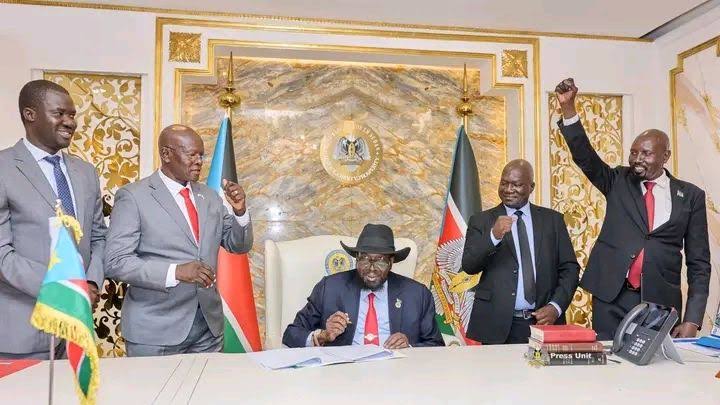
President Salva Kiir has signed amendments to South Sudan's election law removing requirements for a permanent constitution and national census before elections. The changes clear a major legal hurdle for the planned December 22 vote, potentially the country's first national election since independence in 2011, but opposition groups have rejected the amendments.
South Sudanese President Salva Kiir has signed major amendments to the country's election law, removing requirements for a permanent constitution and national census to be completed before elections and clearing a significant legal hurdle ahead of a planned December 22 vote.
The election, if held as scheduled, would be South Sudan's first national vote since the country gained independence in 2011.
Kiir signed the amendments to the National Elections Act on Monday, hours after they were approved by parliament.
The government says the changes are necessary to harmonise the country's electoral laws with its transitional constitution and allow preparations for the long delayed election to proceed.
The amendments have been rejected by a major opposition coalition, however, adding to political disagreements surrounding the planned vote.
ELECTIONS DELINKED FROM CONSTITUTION AND CENSUS
Under previous arrangements, South Sudan was expected to complete a permanent constitution and conduct a national population census before holding elections.
The amended legislation removes that requirement.
Presidential Affairs Minister Africano Mande Gedima said the changes were intended to align the National Elections Act with the country's transitional constitution and eliminate provisions that made elections dependent on completion of the constitution making process and census.
Kiir's office described the signing as another major milestone towards holding the December election.
The move follows earlier changes to South Sudan's transitional constitutional framework and the 2018 peace agreement.
OPPOSITION REJECTS CHANGES
The South Sudan Opposition Alliance has rejected the amendments.
The coalition, which was a signatory to the 2018 peace agreement, argues that the changes were made without adequate consultation among the parties to the agreement.
The disagreement adds to wider concerns surrounding the political environment ahead of the vote.
South Sudan's political transition has been repeatedly extended since the 2018 peace agreement brought an end to years of civil war.
KIIR TO REMAIN IN OFFICE THROUGH ELECTION PERIOD
The amended legislation also addresses how the government will operate during the election period.
Under the new law, the incumbent executive leadership will remain in office with full constitutional powers throughout the election period until a newly elected president assumes office.
The legislation also provides for the First Vice President and other vice presidents to leave office within three months before election day.
The National Legislative Assembly will be reduced to 270 members from its current expanded transitional membership.
State assemblies will have 58 members, while legislative councils in administrative areas will have 20 members.
RIEK MACHAR REMAINS DETAINED
The political environment surrounding the election is complicated by the situation involving Kiir's longtime rival Riek Machar.
Machar, leader of the main opposition SPLM IO, has been under house arrest since March 2025.
He is currently on trial on charges including treason and murder.
Machar denies the charges.
His political movement has been a central participant in the power sharing arrangements established under the 2018 peace agreement.
ELECTION COMMISSION LEADERSHIP CHANGED
The latest amendments also come days after Kiir replaced the head of South Sudan's National Elections Commission.
Abednego Akok Kacuol was removed as chairman without a public explanation and replaced by Gabriel Bol Deng Majok, who had served as the commission's secretary general.
The timing of the change, approximately three months before the scheduled election, has generated criticism and questions about preparations for the vote.
Some South Sudanese political analysts have argued that changing the commission's leadership so close to the election could complicate preparations.
VOTER REGISTRATION HAS NOT STARTED
Despite the December 22 election date approaching, voter registration has not yet begun.
That leaves South Sudan facing substantial logistical challenges before polling day.
Election authorities must register voters, prepare polling locations, distribute electoral materials, train officials and establish systems for counting and reporting results.
Security also remains a significant concern in parts of the country.
The United Nations has warned that elections conducted without sufficient safeguards and inclusive political dialogue could increase political tensions.
SOUTH SUDAN HAS NEVER HELD A NATIONAL ELECTION SINCE INDEPENDENCE
South Sudan became independent from Sudan in July 2011 following a referendum.
The country descended into civil war in 2013 after fighting erupted between forces loyal to Kiir and those aligned with Machar.
A peace agreement signed in 2018 eventually established a transitional power sharing government.
National elections have repeatedly been postponed as authorities struggled to complete provisions of the peace agreement, including constitutional reforms, security arrangements and preparations for elections.
The December 22 vote is intended to end that prolonged transitional period.
DECEMBER VOTE ENTERS CRITICAL PHASE
The signing of the amended election law removes one of the major legal barriers to holding the election.
It does not resolve the political, logistical and security challenges surrounding the process.
The government maintains that the changes are necessary to ensure South Sudan finally holds elections after years of delays.
Opposition groups argue that altering key elements of the peace agreement without sufficient consensus risks undermining confidence in the process.
With only months remaining before December 22 and voter registration yet to begin, attention will now turn to whether electoral authorities can complete preparations for South Sudan's first national election as an independent country.