KLOPP CALLS FOR INFANTINO TO BE REPLACED AS FIFA LEADERSHIP CRISIS DEEPENS AHEAD OF 2027 ELECTION
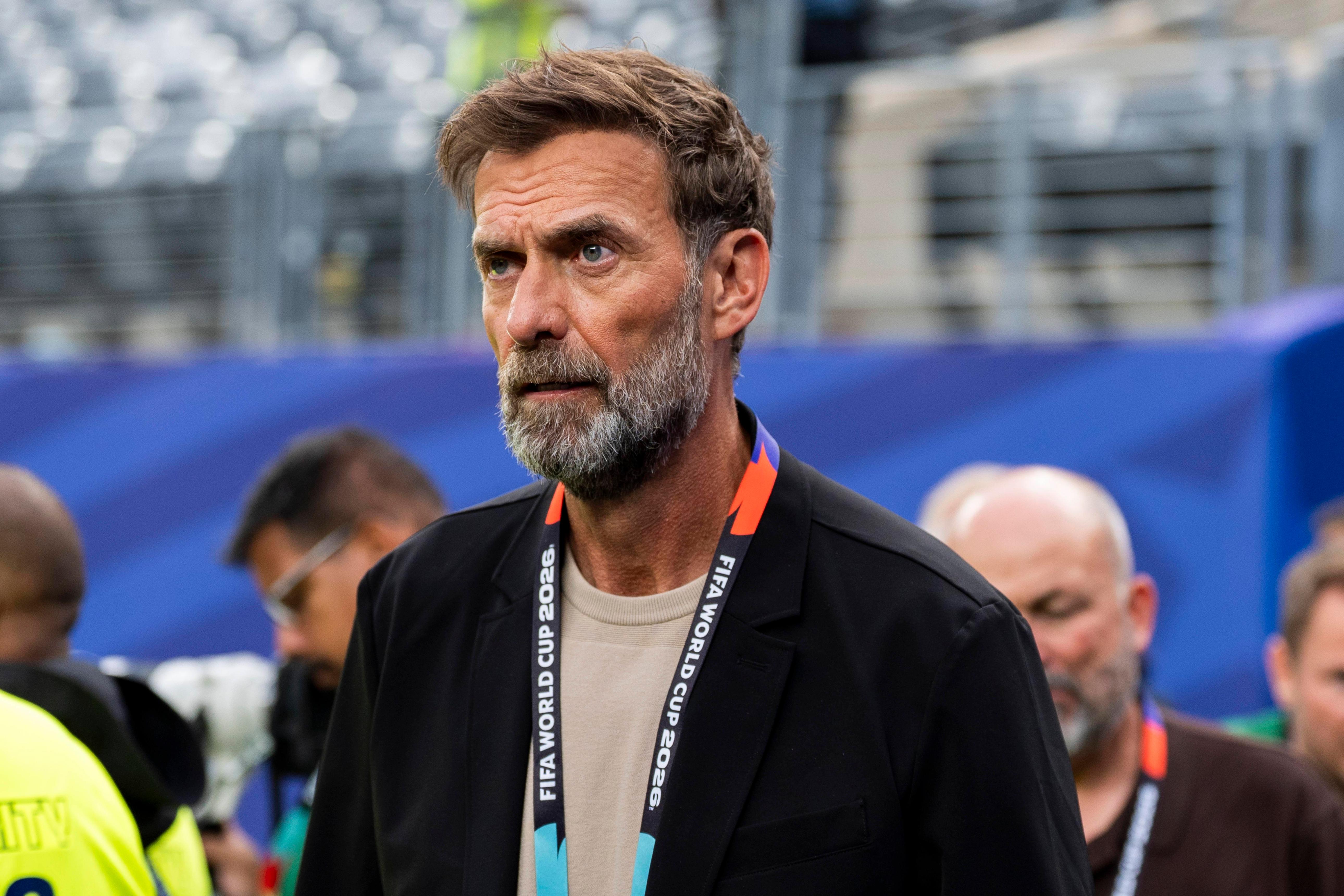
Jürgen Klopp has publicly called for Gianni Infantino to be replaced as FIFA president, saying world football’s governing body has become worse under Infantino than it was during the final years of Sepp Blatter, as pressure intensifies ahead of the March 2027 presidential election. Klopp’s intervention comes amid a wider governance crisis triggered by the abandoned FIFA Forward Enterprise commercial-rights project, with UEFA and many European associations demanding new leadership, major leagues calling for stronger institutional checks and presidential challengers preparing before the November 18 nomination deadline. Infantino has rejected resignation talk, apologized for mistakes surrounding the withdrawn project, established a governance-review process and continues to argue that he retains strong global support, including a recent endorsement from the Asian Football Confederation.
ZURICH, SWITZERLAND — Jürgen Klopp has dramatically intensified the pressure on FIFA President Gianni Infantino by publicly calling for new leadership at world football’s governing body, declaring that FIFA has become worse under Infantino than it was during the troubled final years of former president Sepp Blatter and arguing that football needs a leader motivated by the long-term interests of the game rather than commercial or political considerations. Klopp’s intervention, delivered as he prepared Germany for Nations League action against the Netherlands, comes at one of the most politically volatile moments in FIFA’s modern history, with European federations openly demanding leadership change, former players and administrators joining calls for reform, rival candidates preparing for the March 2027 presidential election and Infantino attempting to rebuild support after one of the most damaging governance controversies of his decade in office.
Klopp did not limit his comments to criticism of individual FIFA decisions. He directly questioned whether Infantino should continue leading the organization and said a change at the top would make sense. He also argued that football should be able to find a better candidate among people who understand the game deeply and do not approach the FIFA presidency primarily through financial or commercial interests. His comparison with the Blatter era was particularly striking because Infantino originally came to power in 2016 promising to restore confidence in FIFA after corruption investigations, arrests and institutional scandals had badly damaged the organization’s reputation.
That history gives Klopp’s remarks unusual weight. Blatter led FIFA for 17 years before leaving office during a major corruption crisis, and Infantino was elected as part of a reform era intended to strengthen transparency, governance and institutional credibility. FIFA continues to argue that Infantino’s presidency has delivered stronger finances, expanded development funding and greater global participation, but critics increasingly say the concentration of power around the president has reproduced some of the governance problems FIFA claimed to have left behind.
The latest crisis centers largely on the now-abandoned FIFA Forward Enterprise project, a proposal that would have created a new commercial entity controlling significant rights connected to FIFA competitions, including the World Cup, with outside investors able to acquire a minority stake. Critics estimated the proposed structure could have involved tens of billions of dollars in commercial assets over time and accused Infantino of advancing the project without adequate consultation with the FIFA Council, confederations and other major stakeholders.
The proposal collapsed within days after strong opposition from UEFA, the Asian Football Confederation, Concacaf and major football institutions. Those critics argued that the World Cup and other FIFA competitions should not be partially commercialized through structures they believed would reduce transparency and give external investors too much influence over football’s most valuable properties. The criticism was not simply about whether private capital should be involved. It was also about process, with opponents arguing that such a major transformation of FIFA’s commercial structure should never have been advanced without broader approval.
Infantino eventually abandoned the proposal and later apologized to the FIFA Council for mistakes in the way it had been handled. FIFA subsequently confirmed that the project had been permanently withdrawn and established a working group to examine possible governance reforms. Infantino has said football institutions should learn from mistakes and improve rather than turn disagreements into an institutional war, and he continues to insist that the organization remains committed to serving its member associations.
For European football leaders, however, the apology did not close the issue. UEFA and many of its national associations have argued that the crisis exposed deeper weaknesses in FIFA’s governance model, including excessive presidential authority, inadequate consultation and insufficient institutional checks. European representatives have called for clearer separation of powers among FIFA’s president, council, bureau, congress and general secretariat, greater transparency around commercial decision-making and stronger mechanisms preventing major proposals from being driven by one office.
UEFA has gone further by openly calling for new FIFA leadership. European national associations meeting in Monaco and later Berlin said confidence in the current leadership had been broken and argued that governance reform alone would not be enough. Their position is that FIFA requires a new president capable of rebuilding trust across confederations and restoring a system in which major decisions are made institutionally rather than through presidential authority.
Klopp’s intervention therefore adds one of football’s most recognizable personalities to a campaign that was already well advanced. His status matters because he is not speaking as a federation president involved directly in FIFA politics but as one of the most influential coaches of his generation. He built his reputation through high-profile managerial spells with Borussia Dortmund and Liverpool before moving into a broader leadership role within German football, and his comments are likely to resonate with supporters, players and coaches who may pay less attention to internal federation politics.
His criticism also follows earlier clashes with FIFA over decisions during the 2026 World Cup. Klopp publicly condemned the controversial reversal of a disciplinary decision involving United States forward Folarin Balogun after political lobbying connected to the American administration. He argued at the time that football’s disciplinary system must remain independent and that powerful political figures should not be able to influence sporting sanctions.
That episode became one of several controversies cited by European football bodies when demanding stronger safeguards around FIFA decision-making. Critics argued that individual disciplinary cases must be insulated from political interference and that FIFA’s credibility depends on applying rules consistently regardless of the profile of the player, team or government involved.
FIFA has rejected suggestions that Infantino has acted improperly in the broader governance disputes and has repeatedly accused some opponents of attempting to undermine the organization through allegations, political pressure and misinformation. In an official statement in August, FIFA said its president had been democratically elected by member associations and that anyone seeking to replace him should do so through the established electoral process rather than through external pressure.
That argument reflects one of Infantino’s strongest institutional defenses. FIFA is not governed directly by clubs, players or European leagues. Its president is elected by 211 national football associations, each with one vote regardless of the country’s population, commercial power or footballing strength. That structure gives smaller associations significant influence and means opposition from Europe, even if overwhelming, is not sufficient by itself to remove a president.
Infantino has used that global electoral structure effectively throughout his presidency. He has significantly increased FIFA development funding to member associations and repeatedly emphasized the need to distribute football revenue beyond Europe’s richest leagues. Supporters in Africa, Asia, the Caribbean, Oceania and other regions often view those investments as evidence that FIFA under Infantino has become more responsive to countries historically excluded from the sport’s commercial wealth.
That support has become central to the current leadership battle. The Asian Football Confederation, which had initially joined European and North American criticism of Infantino during the summer crisis, reversed course in October and endorsed him for another term. AFC President Sheikh Salman bin Ibrahim Al Khalifa said Asian football was prepared to move forward after disagreements and backed Infantino’s continuation in office.
That endorsement strengthened the president’s position considerably because Asia has 47 FIFA member associations. FIFA elections are won through national federation votes, and a united Asian bloc combined with substantial African and other regional support could outweigh opposition from Europe.
The Confederation of African Football has also publicly indicated strong support for Infantino, although reports suggest not every African federation is equally enthusiastic. Some senior African football figures have explored alternative candidates, and a number of federations are said to be considering different options. The existence of those conversations shows that Infantino’s support cannot be treated as automatic even in regions where confederation leaders have backed him.
Europe, meanwhile, is looking for a credible challenger capable of attracting votes beyond UEFA’s 55 associations. That requirement is important because a candidate perceived purely as Europe’s choice could struggle to build support in Africa, Asia and the Americas, particularly where football associations believe European institutions already exercise disproportionate commercial influence over the global game.
French Football Federation President Philippe Diallo has emerged as one of the most serious possible candidates being discussed around UEFA. He has previously criticized Infantino’s leadership and accused FIFA’s current direction of damaging trust and unity. European officials are considering whether a figure such as Diallo could appeal beyond Europe, particularly among French-speaking African federations and other associations seeking reform without handing control of FIFA to the continent’s wealthiest football powers.
Former Switzerland defender Ramon Vega has already been campaigning for the presidency and says he intends to challenge Infantino. Vega has criticized the proposed FIFA Forward Enterprise structure and argues that the organization needs leadership with direct playing experience, business competence and greater institutional accountability. Former Japanese football official Kozo Tashima has also been associated with the presidential race, although the final candidate field remains unsettled.
The nomination deadline is November 18, making the current week particularly important. FIFA’s statutes require candidates to secure endorsements from at least five member associations and satisfy eligibility requirements before they can formally contest the presidency. That means potential challengers have only a short period remaining to convert political discussions into actual nominations.
Klopp himself has not announced a presidential campaign and there is no indication he intends to become a candidate. His role in the debate is therefore different. He is lending public authority to the argument that leadership change is necessary while leaving the institutional task of finding and nominating a successor to national associations and football administrators.
His comments also come at a moment when criticism extends beyond federations. Major European leagues, including the Premier League, La Liga, Serie A and Bundesliga, have jointly called for extensive FIFA governance reform and argued that decisions under Infantino have threatened established structures within football. Their concerns include the expansion of FIFA competitions, an increasingly congested match calendar, commercial pressures and the balance of power between clubs, leagues and the global governing body.
Calendar expansion has been one of the longest-running sources of tension. FIFA has enlarged the World Cup, introduced an expanded Club World Cup and continued developing additional competitions and youth tournaments. FIFA argues these changes increase global participation, create more opportunities for countries and clubs outside Europe and generate additional revenue that can be reinvested in football development.
European leagues and players’ representatives argue that the schedule is reaching unsustainable levels. Clubs already compete in domestic leagues, cup competitions, continental tournaments and international windows, while top players are being asked to participate in more matches with shorter recovery periods. Critics say FIFA has expanded tournaments without giving sufficient weight to player welfare or the domestic competitions that employ players throughout the year.
FIFA rejects the characterization that it is acting irresponsibly and argues that a global governing body must balance interests beyond Europe. It has repeatedly emphasized that most countries do not have access to the commercial resources available to the Premier League or other elite competitions and that global tournaments generate funds needed to develop football elsewhere.
That disagreement reveals the deeper structural struggle beneath the current leadership crisis. The dispute is not simply about Infantino’s personality. It is also about who controls football’s commercial future, how revenue is distributed and whether the world game should be shaped primarily by FIFA, continental confederations, national federations, clubs, leagues or players.
European institutions generate much of football’s global club revenue, but FIFA’s democratic structure gives every national association an equal presidential vote. That creates a persistent tension between economic power and electoral power. European clubs may dominate global broadcasting markets, but a small national federation in the Caribbean or Pacific has the same FIFA presidential vote as England, Germany or France.
Infantino has built much of his political strategy around that reality, emphasizing development funds and global inclusion. His supporters say that approach has challenged a football system historically dominated by wealthy European interests. His critics argue the same financial relationships risk creating political dependence because member associations receiving large development grants may be reluctant to oppose the president responsible for expanding those funds.
FIFA has announced plans to increase investment across its member associations substantially, with billions of dollars allocated to development programs. Infantino presents those investments as evidence that FIFA’s strong financial position is being returned to the game rather than accumulated centrally.
Opponents say development funding must be protected regardless of who occupies the presidency and should not become part of an electoral loyalty system. UEFA officials have specifically argued that FIFA’s reserves belong to member associations collectively and that a leadership change should not threaten legitimate development support.
That issue could become decisive during the presidential campaign. Many smaller federations rely heavily on FIFA funding for pitches, training centers, youth programs, women’s football and administrative infrastructure. Any candidate seeking to defeat Infantino will therefore need to convince those associations that reform will not result in reduced financial support.
The leadership debate has also become entangled with FIFA’s political relationships. Infantino has developed close ties with numerous heads of government and frequently appears alongside political leaders at major football events. Critics argue that some of those relationships blur FIFA’s statutory commitment to political neutrality.
The controversy surrounding the United States and the 2026 World Cup intensified those concerns. The tournament was hosted across the United States, Canada and Mexico, and FIFA worked closely with the American administration on security, immigration and logistics. Critics accepted that government cooperation was necessary for organizing the event but objected when the relationship appeared to extend into disciplinary or symbolic football decisions.
The FIFA Peace Prize has also become a focus of criticism. European officials have questioned the process through which the award was created and administered and have asked whether FIFA should involve itself in political symbolism beyond its sporting responsibilities. UEFA has included questions about the prize among a wider series of demands for information from FIFA.
The organization’s response has been mixed. FIFA has accepted that mistakes were made in how some decisions were communicated and has established review processes, but it continues to defend Infantino’s legitimacy and rejects claims that the institution is fundamentally compromised.
In October, Infantino addressed the FIFA Council and apologized specifically for errors surrounding the Forward Enterprise proposal. The Council established a working group to examine governance reforms, and FIFA has invited member associations to contribute recommendations about how the organization should operate differently in the future.
Infantino referred to that process again this week while addressing the ASEAN Football Federation, telling members that everyone should participate and that FIFA must always seek to improve. His message is that reform is possible under existing leadership and that the organization does not need to replace its president in order to correct weaknesses.
Klopp clearly disagrees. His comments suggest he believes the problem has moved beyond individual reforms and now requires a different person at the top. By saying FIFA had become worse under Infantino than under Blatter, he framed the current crisis not as a series of correctable mistakes but as evidence that the reform era itself has failed.
That is an extremely serious accusation given FIFA’s recent history. Blatter’s departure followed one of the most damaging corruption scandals in international sport, involving criminal investigations, senior officials and allegations that undermined confidence in World Cup governance. Infantino’s election was supposed to mark a break with that era.
There is no equivalent finding that Infantino personally committed the criminal conduct associated with the scandals of the Blatter period, and Klopp’s comparison should therefore be understood as a judgment about governance and leadership rather than an allegation that the two men engaged in identical wrongdoing.
That distinction is essential. Infantino has not been convicted of corruption, and some recent allegations made against him have been corrected or withdrawn. The Times, for example, issued an apology in October over inaccurate reporting concerning an alleged second salary and property ownership, and FIFA has used that episode to argue that some criticism surrounding the president has crossed from legitimate scrutiny into misinformation.
FIFA says it welcomes legitimate criticism but will challenge inaccurate claims. That position is important in assessing the leadership debate because the existence of a serious governance dispute does not make every allegation about the president true.
The central verified dispute remains institutional. Infantino proposed a major commercial restructuring that triggered intense opposition, withdrew it after backlash, apologized for mistakes in the process and now faces organized calls for reform and replacement. Those facts alone are sufficient to explain the current crisis without relying on unproven personal accusations.
The situation became even more serious last week when a United States federal judge rejected an attempt by FIFA-linked entities to intervene in UEFA’s effort to obtain documents for a possible Swiss criminal complaint concerning the Forward Enterprise proposal. The ruling does not establish criminal wrongdoing by Infantino or anyone else, but it allows UEFA’s evidence-gathering effort to continue without the intervention FIFA entities had sought.
UEFA’s legal strategy demonstrates how far the dispute has escalated. What began as disagreement over a commercial proposal has become a confrontation involving governance reviews, legal inquiries, presidential succession and threats to the institutional unity of world football.
At various points during the summer, confederations even discussed whether future competitions could be organized outside FIFA structures if the governance crisis could not be resolved. Those discussions did not produce a breakaway system, and UEFA later suspended moves that could have affected participation in FIFA tournaments after FIFA permanently abandoned the Forward Enterprise proposal.
The possibility that football’s governing institutions could fracture, however, showed the seriousness of the dispute.
Recent developments suggest the immediate risk of a full institutional split has reduced, but the leadership question remains unresolved. European football is still searching for a presidential candidate, Infantino remains determined to stand, and other confederations are deciding whether their previous support or opposition will continue into the March vote.
Klopp’s intervention therefore arrives at a strategically important moment. Candidate nominations are about to close, and prominent public voices can influence whether national associations believe there is enough momentum behind an alternative to justify supporting one.
At the same time, public popularity does not automatically translate into FIFA votes. National associations ultimately control the election, and many have relationships with FIFA based on years of development funding, political cooperation and tournament participation.
Infantino is clearly aware of that advantage. He has dismissed speculation that he might resign and has repeatedly emphasized the support he says exists across the global membership. After receiving the AFC endorsement, he presented the decision as evidence that disagreements can be resolved through dialogue and that FIFA remains united beyond the European criticism dominating headlines.
His reelection campaign will likely focus heavily on financial results. FIFA’s revenues and reserves have grown substantially during his presidency, and the organization says development investment has increased dramatically since 2016. Infantino also points to the expansion of women’s football, youth competitions, infrastructure projects and World Cup participation as evidence of a successful global strategy.
Opponents will argue that financial growth cannot compensate for governance weaknesses. Their central message is that an organization controlling billions of dollars and the world’s most valuable sporting event requires stronger institutional checks precisely because its economic power has increased.
The March election may therefore become a referendum not only on Infantino but on the structure of FIFA itself. One side will argue that football has expanded globally, revenues have increased and development investment has reached more countries. The other will argue that those achievements have occurred alongside an unhealthy concentration of decision-making power.
Klopp’s comments sharpen that divide because he is speaking from the perspective of football culture rather than federation administration. His argument is essentially that the game should be led by people whose primary loyalty is to football’s sporting future.
Infantino would reject the implication that his own priorities are anything else. FIFA consistently describes his presidency as dedicated to making football genuinely global and ensuring that every country has opportunities historically concentrated among a small number of wealthy nations.
That debate will now move from public criticism toward an actual election.
If a strong challenger emerges before the November 18 deadline, the March vote could become the most competitive FIFA presidential contest since Infantino first took office. If opposition remains fragmented among multiple candidates, Infantino could benefit from divisions among those seeking to replace him.
UEFA therefore faces a strategic decision. Supporting the wrong candidate or allowing several challengers to split the anti-Infantino vote could weaken the very campaign for change it has spent months building.
The emergence of Philippe Diallo as a possible European-backed candidate reflects that calculation. UEFA needs someone able to attract support outside Europe and avoid being portrayed as the representative of wealthy leagues trying to reclaim control from the rest of the football world.
Ramon Vega and other candidates face the same challenge. Criticizing FIFA governance may gain attention, but winning requires relationships with federations across six confederations and confidence that development funding and sporting opportunities will continue under new leadership.
For players and supporters, however, the institutional mechanics may feel distant. Many are more concerned about match congestion, political interference, ticket prices, tournament expansion and whether football’s governing bodies listen to those who actually play and watch the sport.
That public frustration helps explain why Klopp’s comments have generated such attention. He has articulated concerns in direct language that federation documents and legal statements often avoid.
His message was simple: FIFA needs change.
Whether the people who actually elect FIFA’s president agree remains uncertain.
What is already clear is that Infantino enters the final months before the 2027 election under significantly greater pressure than at any previous point in his presidency. He still possesses powerful institutional support, particularly outside Europe, but the coalition seeking to replace him now includes major federations, league organizations, football administrators and prominent figures such as Klopp.
The next decisive moment arrives with the candidate deadline. Once the final field is known, the leadership crisis will become an electoral contest rather than an abstract debate about reform.
Until then, Infantino remains FIFA president, has not resigned and continues to campaign for another term. Klopp’s demand for replacement does not alter that legal or institutional reality.
It does, however, deepen the political reality surrounding the presidency.
A decade after Infantino was elected to rebuild FIFA following the collapse of the Blatter era, one of football’s most respected coaches is now publicly arguing that the organization has moved in the wrong direction and should start again with somebody else.
That alone shows how far FIFA’s current crisis has progressed.
The final judgment will belong to the 211 national associations when they vote in March 2027. Between now and then, the central contest will be over whether Infantino can persuade them that his record of global investment and expansion outweighs the governance controversies of the past year, or whether critics can build a credible alternative leadership coalition strong enough to translate public pressure into votes.
For world football, the stakes extend well beyond one man’s future. The debate is now about the balance between commercial growth and institutional accountability, between presidential authority and collective governance, and between the global distribution of football wealth and the need for confidence in the institutions controlling it.
Klopp’s intervention has made that debate louder, but it did not create it. FIFA’s leadership struggle was already underway.
What he has done is give it one of its most recognizable voices.