KWAME NKRUMAH’S ELDEST SON GAMAL DIES IN CAIRO AFTER PROLONGED ILLNESS
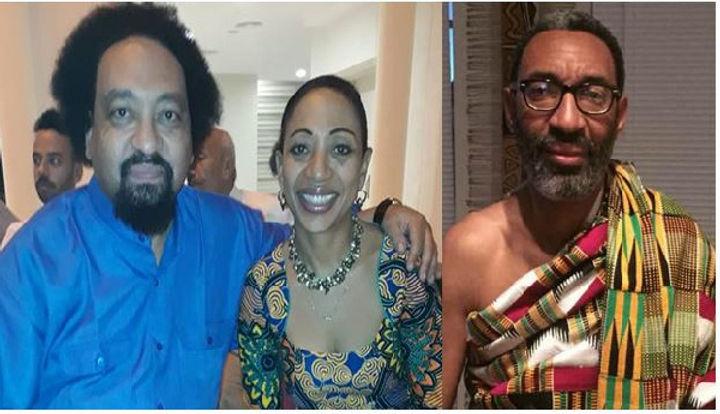
Gamal Gorkeh Nkrumah, the eldest son of Ghana’s founding President Kwame Nkrumah, has died in Cairo after a prolonged illness. The family says he had been receiving care at a rehabilitation center following a stroke and died peacefully on October 14. A veteran journalist and editor associated with Al-Ahram Weekly, Gamal spent decades writing about African and international affairs. Family sources say he will be buried in Egypt on October 17 in accordance with Islamic traditions.
Gamal Gorkeh Nkrumah, the eldest son of Ghana’s founding President Osagyefo Dr Kwame Nkrumah and a respected journalist and Pan-African intellectual, has died in Cairo, Egypt, after a prolonged illness, closing a life spent at the intersection of Ghanaian political history, Egyptian public life and African journalism. The Nkrumah family confirmed his death on Thursday, saying he passed away peacefully while receiving care at a rehabilitation center following a stroke.
Gamal died on Wednesday, October 14, in Cairo, where he had spent much of his adult life and professional career. Family sources cited by Ghanaian media said he is expected to be buried in Egypt on Saturday, October 17, in keeping with Islamic traditions. The family has asked for privacy as relatives mourn and has said additional memorial arrangements and opportunities for public tribute will be announced later.
His death has drawn attention in both Ghana and Egypt because Gamal occupied a distinctive place in the history of the two countries. Born in Accra in 1958 to Kwame Nkrumah and his Egyptian wife, Fathia Nkrumah, he grew up carrying one of the most recognizable political names in modern African history while also building a professional identity independent of his father’s presidency and legacy.
Rather than pursuing frontline partisan politics in Ghana, Gamal established himself primarily as a journalist, writer and commentator. He became closely associated with Al-Ahram Weekly, the English-language publication of Egypt’s Al-Ahram media organization, where he wrote extensively on African politics, international affairs, the Middle East, decolonization, Pan-Africanism and the continent’s place in the global political system.
Al-Ahram, mourning his death, described him as a veteran journalist whose career with the publication stretched across decades. Colleagues highlighted his work on African and international affairs and his longstanding interest in the political struggles, development challenges and aspirations of African societies. His writing frequently linked contemporary events to the historic questions of sovereignty, colonialism, economic independence and African cooperation that had also defined much of his father’s political life.
The Nkrumah family described Gamal as a man of intellectual curiosity, independent thought and quiet conviction who remained committed throughout his life to justice, human dignity, African unity and international solidarity. The family said that while he carried forward aspects of Kwame Nkrumah’s ideological legacy, he developed his own reputation through his journalism, scholarship and personal principles rather than simply relying on the family name.
His career placed him in a unique position to observe Africa from Cairo, one of the continent’s major political and cultural capitals. Egypt and Ghana had developed particularly close political ties during the era of Kwame Nkrumah and Egyptian President Gamal Abdel Nasser, when both governments became leading voices in anti-colonial politics, African liberation and the wider Non-Aligned Movement. Gamal’s own life reflected that relationship in personal form, as the Ghanaian son of an African independence leader and an Egyptian mother who spent much of his professional life interpreting African and global affairs from Egypt.
Gamal’s mother, Helena Ritz Fathia Nkrumah, generally known as Fathia Nkrumah, was Egyptian. Her marriage to Kwame Nkrumah became one of the most prominent cross-national relationships of Africa’s independence period, symbolizing the close ties that Nkrumah sought to build between sub-Saharan Africa and North Africa during the struggle against colonial rule. Gamal’s upbringing therefore placed him within both Ghanaian and Egyptian cultural worlds from an early age.
He later pursued advanced academic work at the School of Oriental and African Studies in London, where biographical accounts say he earned a doctorate in political science. His academic background complemented the analytical character of his journalism, which often went beyond daily political developments to examine the deeper historical and ideological forces shaping African states and their international relationships.
His writing career also distinguished him from other members of the Nkrumah family who became more directly involved in Ghanaian public life. His sister, Samia Nkrumah, later entered active politics, serving as Member of Parliament for Jomoro and eventually as chairperson of the Convention People’s Party, the political organization founded by their father. His brother Sekou Nkrumah became known as a writer, commentator and political activist in Ghana.
Gamal, by contrast, remained closely associated with journalism and intellectual commentary, particularly from Cairo. His work at Al-Ahram Weekly gave him a platform to write not only about Ghana but about conflicts, diplomatic developments, social movements and economic changes across the African continent and beyond. That wider focus allowed him to establish a public identity that was connected to the Nkrumah legacy without being confined by it.
The family’s statement said Gamal spent his final period receiving medical care in Cairo after suffering a stroke. He was being treated at a rehabilitation center as part of his recovery from the condition, but his health had been affected by a prolonged illness. The family did not provide extensive medical detail beyond confirming the stroke and the rehabilitation care he received before his death.
The family expressed gratitude to the medical professionals and caregivers who looked after him during his illness, describing their support as important in ensuring he was treated with dignity. It also thanked the governments and people of Ghana and Egypt for the assistance and solidarity extended to the family during his illness and after his death.
News of his passing spread quickly through Ghana on October 15, with political figures, journalists and members of the Pan-African community paying tribute. Emmanuel Armah Kofi Buah, Member of Parliament for Ellembelle, the area associated with Kwame Nkrumah’s ancestral roots, described Gamal as an accomplished journalist and committed Pan-Africanist who remained connected to his father’s vision of African unity.
The response also reflected the enduring significance of the Nkrumah name in Ghanaian political life. More than five decades after Kwame Nkrumah’s death, his political philosophy, economic record, overthrow and Pan-African agenda continue to generate intense debate. Gamal’s death therefore carries both a personal dimension for the family and a historical significance because he belonged to the generation that directly connected Ghana’s independence era to the present.
Kwame Nkrumah led the Gold Coast to independence from Britain on March 6, 1957, creating modern Ghana as the first sub-Saharan African colony to achieve independence in the postwar wave of decolonization. He later became Ghana’s first president in 1960 and emerged as one of the continent’s most influential advocates of political and economic integration. His presidency ended in a military coup in February 1966 while he was outside the country.
Nkrumah spent his final years in exile in Guinea, where President Ahmed Sékou Touré named him co-president in an honorary political arrangement. He died in 1972. His ideas on continental government, African industrialization, liberation movements and resistance to foreign domination continued to influence political movements long after his death.
For Gamal, that legacy was impossible to escape, but family members and colleagues repeatedly emphasized that he developed his own intellectual voice. His journalism often engaged critically with African governments, international powers and changing global alliances rather than functioning simply as a defense of his father’s political record.
Al-Ahram’s tribute emphasized his contribution to African journalism and his role in strengthening the intellectual relationship between Egypt and the rest of the continent. The Egyptian publication said his life represented the deep historical and human connection between Ghana and Egypt, two countries whose relationship was strengthened dramatically during the Nkrumah and Nasser era.
His death also removes one of the relatively few African journalists whose personal biography crossed so directly between West Africa and North Africa. At a time when African media institutions often operate within national or regional boundaries, Gamal’s career consistently treated the continent as a connected political space, writing about developments in West Africa, North Africa, the Horn, Southern Africa and the international system affecting them.
That perspective closely reflected the Pan-African tradition in which he was raised. Kwame Nkrumah argued that the political independence of individual African countries would remain incomplete without economic cooperation and continental unity. Gamal did not simply reproduce that argument, but much of his reporting and commentary remained concerned with Africa’s collective position in global politics, foreign intervention, regional instability and economic dependence.
His professional life also demonstrated the long historical relationship between journalism and African political thought. From the anti-colonial newspapers of the independence era to later publications analyzing post-colonial governments, African journalism has frequently served as a forum for debates over sovereignty, identity, development and international power. Gamal’s work belonged to that tradition while being shaped by his unusual personal connection to one of the continent’s central independence figures.
His passing comes at a time when renewed debates over Pan-Africanism, economic sovereignty and Africa’s relationship with major global powers have returned to the center of political discussion across the continent. Questions about foreign debt, military partnerships, regional organizations, trade, resource control and political integration echo many of the themes that Gamal examined throughout his career.
For the Nkrumah family, however, the immediate moment is primarily one of private loss. The statement announcing his death focused as much on his character as on his public achievements, remembering him for his kindness, wisdom and commitment to the principles he valued. The family said his passing represented a loss not only to relatives but also to colleagues, friends and readers who had followed his work over many years.
The expected burial in Egypt reflects the country where Gamal spent a large portion of his life and where his mother’s family roots were established. Family sources have said the burial will take place on October 17 in accordance with Islamic tradition, while separate memorial arrangements may later allow people in Ghana and elsewhere to honor his life.
No detailed public funeral program had been released at the time of reporting, and the family has asked that its privacy be respected. Additional arrangements could include memorial activities in Ghana, particularly because of the historical importance of the Nkrumah family and Gamal’s connection to Ghanaian public life, but no such program should be considered confirmed until the family makes a formal announcement.
His death leaves Samia Nkrumah, Sekou Nkrumah and other relatives carrying forward one of the most closely watched family legacies in Ghanaian history. Their political and intellectual paths have often differed sharply, but Gamal’s journalism represented one of the clearest links between the family’s historical inheritance and contemporary international affairs.
The immediate focus now turns to the burial in Egypt and any memorial plans that follow. For Ghana, his death represents the loss of a journalist whose career carried the Nkrumah name into a different arena from electoral politics, while for Egypt it marks the passing of a longtime member of the Al-Ahram journalistic community. His life connected two countries that played major roles in Africa’s independence and Pan-African movements, and his work continued to examine many of the political questions those movements left unresolved.
Gamal Gorkeh Nkrumah will therefore be remembered not only as the son of Ghana’s first president but as a journalist and intellectual who spent decades writing about Africa on his own terms. As his family prepares for his burial and later memorials, attention is likely to remain on both the historic weight of his surname and the independent body of work he created in Cairo, where he developed a career devoted to understanding Africa, its politics and its relationship with the wider world.