
MAHAMA DIRECTS GH¢1 BILLION ALLOCATION FOR NEW NATIONAL HOUSING FUND IN 2027 BUDGET
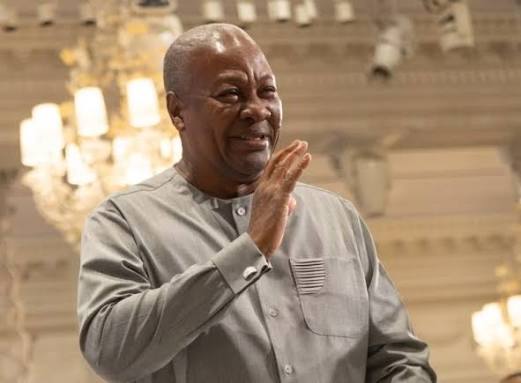
President John Dramani Mahama has directed the Finance Ministry to allocate GH¢1 billion in Ghana’s 2027 budget toward a proposed GH¢3 billion National Housing Fund. The initiative is expected to provide targeted financing to help eligible Ghanaians complete unfinished homes, although key details including interest rates, eligibility requirements and the source of the remaining GH¢2 billion have yet to be fully announced.
President John Dramani Mahama has directed the Ministry of Finance to provide GH¢1 billion in the 2027 national budget as the first major public allocation toward a proposed GH¢3 billion National Housing Fund, an initiative the government says will provide targeted financing to help Ghanaians complete unfinished residential projects and expand access to housing finance across the country.
The planned fund is intended to address one of the most visible features of Ghana’s housing crisis: thousands of partially completed homes that remain unoccupied for years because owners are unable to secure affordable financing to finish construction. Under the emerging framework, the government intends to create a dedicated financing mechanism that can support eligible households and individuals with stalled projects rather than concentrating exclusively on large state-built housing estates.
Mahama’s directive means the Ministry of Finance is expected to make provision for GH¢1 billion in the 2027 budget, with the wider National Housing Fund envisioned at approximately GH¢3 billion once additional financing is mobilized. The administration has not yet released all of the operational rules governing eligibility, interest rates, repayment terms or the institutions that will administer the fund, making the 2027 budget and subsequent implementation documents critical to determining how the program will work in practice.
The initiative represents a significant shift in emphasis from the traditional model of government housing intervention, under which the state either directly constructs housing units or partners with private developers on large residential projects. The proposed fund would instead attempt to unlock existing housing stock that is already under construction but has been trapped at various stages because owners lack the money required to complete roofing, plastering, electrical work, plumbing, finishing or other essential components.
That approach could potentially bring homes into use more quickly than beginning entirely new housing projects, particularly in areas where structures are already substantially completed. Ghana’s housing deficit has remained a persistent economic and social problem for years, while incomplete private developments are common in Accra, Kumasi and other rapidly growing urban areas.
The government’s argument is that a targeted credit scheme could convert some of those unfinished structures into habitable homes without requiring the state to bear the full cost of construction. Instead of government building every unit itself, public money could be used to provide financing that households repay over time, potentially allowing the same capital to support additional beneficiaries as loans are recovered.
The success of that model, however, will depend heavily on how the fund is structured. Housing finance in Ghana has historically been constrained by high interest rates, relatively short mortgage tenors, income documentation requirements and the limited number of households able to qualify for conventional bank lending. If the National Housing Fund simply reproduces commercial lending conditions, many of the households struggling to complete homes may remain unable to participate.
The administration will therefore have to determine whether the proposed financing will be subsidized, partially guaranteed by the state or provided through concessionary interest rates. Those decisions will affect both the affordability of the program and the burden it places on public finances.
The question of who qualifies will be equally important. A household that has completed 70 percent of a modest home but lacks funds for finishing work presents a different risk profile from someone with an early-stage structure requiring substantial additional investment. Government will need a transparent system for assessing projects, verifying ownership, estimating completion costs and determining whether applicants have enough income to repay any financing provided.
Land-title verification will be another major issue. Ghana’s housing and property markets have long faced problems involving disputed ownership, multiple sales, incomplete documentation and delays in land registration. A national financing program cannot safely lend against residential projects without reliable proof that applicants legally own the land and structures receiving public support.
The fund may therefore require coordination between housing authorities, financial institutions, local assemblies and land agencies before money is released. That administrative architecture could become one of the most important determinants of whether the scheme operates efficiently or becomes slowed by bureaucracy.
Mahama’s decision to place GH¢1 billion in the 2027 budget gives the initiative a clearer fiscal foundation than a policy announcement without identified funding. Even so, that initial allocation would represent only one-third of the proposed GH¢3 billion fund, leaving government to explain where the remaining financing will come from.
Possible sources could include additional government appropriations, pension funds, development-finance institutions, commercial banks or other private investors, although the administration has not yet publicly finalized the funding mix. The terms on which those additional contributors participate will matter because investors will generally expect returns and safeguards against default.
If pension funds are eventually involved, regulators and trustees would need to ensure that housing investments meet risk and return requirements designed to protect contributors’ retirement savings. Similar considerations would apply to banks or other private institutions asked to provide capital alongside government.
The proposed fund arrives at a time when housing affordability has become increasingly difficult for many Ghanaians. Construction costs have risen significantly over recent years as cement, steel, imported fittings, labor and transportation became more expensive. Currency depreciation during previous periods of economic instability also increased the local cost of imported building materials and equipment.
Even where inflation has moderated, construction prices do not automatically return to earlier levels. Many households that began building when materials were significantly cheaper have found themselves unable to complete projects after costs rose faster than their incomes.
Ghana’s incremental building culture makes that problem particularly visible. Unlike markets where most families purchase completed homes using long-term mortgages, many Ghanaians acquire land and build gradually as money becomes available. Construction can therefore stretch across several years, with work stopping whenever household finances become tight.
The system allows people without access to mortgages to build over time, but it also creates enormous amounts of capital locked inside incomplete structures. A partially completed home provides little or no immediate housing value while still representing years of household savings.
The National Housing Fund appears designed partly to address that inefficiency. By offering additional financing at the point where a project is close enough to completion, government could potentially help households convert existing investment into usable housing.
That would not by itself solve Ghana’s housing deficit. Many lower-income households do not own land or unfinished houses and would therefore receive little direct benefit from a completion-financing program. Government would still need separate interventions involving affordable rentals, social housing, serviced land and lower-cost housing development for people who cannot enter the property market independently.
That limitation will be important when assessing the initiative. A National Housing Fund focused heavily on unfinished privately owned homes could primarily benefit lower-middle-income and middle-income households with existing property assets rather than the poorest citizens.
The administration may therefore need to explain how the fund fits within a broader national housing strategy. One part of the system could support completion of private homes, while other programs address renters, low-income workers and households without land.
Mahama has previously emphasized the need for new financing models rather than relying solely on government construction projects. Ghana’s history with state housing has produced several developments that were delayed, abandoned or left incomplete after changes of government, funding problems or disputes over contracts.
Those experiences have made housing policy politically sensitive. Governments routinely announce large housing programs, but many projects have struggled to deliver the number of units originally promised or to offer them at prices accessible to ordinary workers.
A revolving financing mechanism could potentially reduce some of those risks because government would not need to manage every construction site directly. The state’s role would instead focus on financing, regulation and oversight while households or contractors complete individual projects.
That model introduces different risks. Loan defaults could weaken the fund, politically connected applicants could receive preferential access, and poorly assessed projects could consume public money without producing completed homes. Strong governance will therefore be essential.
The administration will need to establish clear criteria for loan approval and publish enough information for Parliament and the public to evaluate who benefits. Independent auditing could also be important because a GH¢3 billion fund would represent a substantial pool of public and potentially private capital.
Housing programs are particularly vulnerable to political pressure because demand far exceeds available supply. If thousands of applicants compete for limited financing, government will need a transparent method of prioritization.
Income thresholds, project-completion percentages, geographic distribution and household circumstances could all become factors in eligibility. The final design may also need to determine whether applicants can receive support for only one property, preventing investors with multiple unfinished houses from absorbing resources intended for ordinary homeowners.
Another question is whether the fund will finance only owner-occupied homes or also support small-scale rental developments. Ghana faces an acute rental-housing problem, particularly in major urban centers where tenants can be required to pay large amounts of rent in advance.
Supporting completion of unfinished rental properties could increase supply and potentially ease some pressure on rents, but it could also attract commercial property investors seeking access to subsidized capital. Policymakers will need to decide how much of the program should be directed toward individual homeowners compared with landlords and developers.
The impact on the construction industry could be significant if implementation reaches scale. Completing thousands of stalled projects would create demand for cement, steel, tiles, electrical materials, plumbing equipment, furniture and labor. That could support jobs among artisans, contractors, suppliers and small businesses connected to residential construction.
The government may view that multiplier effect as part of the economic rationale for the fund. Money used to complete homes does not remain only in real estate; it moves through supply chains and supports employment in related industries.
At the same time, a large injection of housing finance could place upward pressure on construction-material prices if supply does not expand with demand. Government may therefore need to coordinate housing policy with domestic production of cement, steel and other building materials to avoid financing becoming absorbed by higher prices.
The exchange rate will also influence affordability. Many fixtures, fittings and specialized building products are imported, meaning a weaker cedi can raise construction costs quickly. A housing-finance program offering fixed loan amounts could become less effective if material prices rise substantially during construction.
Interest-rate conditions will matter as well. Ghana’s broader financial system has historically made long-term housing lending difficult because banks face relatively high funding costs. Mortgages therefore often carry rates beyond what many households can comfortably afford.
If government wants the National Housing Fund to offer genuinely affordable credit, it may need to absorb part of that financing cost or secure lower-cost long-term capital from other sources.
That introduces a fiscal trade-off. Subsidized housing loans can make home completion possible for households that would otherwise be excluded, but the subsidy must ultimately be financed by taxpayers or through lower returns to the institutions supplying capital.
The government will therefore need to explain how much public support is embedded in each loan and how repayment risks will be managed. Transparent accounting will be important to prevent the scheme from developing hidden liabilities similar to those that have affected some state-backed programs in the past.
Another implementation challenge will be property valuation. Before financing an unfinished project, the fund or participating financial institution would need to determine the value of the land, current construction, cost of completion and likely value once finished.
Those assessments can become expensive if every application requires physical inspection. Government may need standardized systems using certified valuers and local professionals to keep administrative costs manageable.
The program could also benefit from digital monitoring. Applicants might be required to submit construction milestones, while financing could be released in stages rather than as a single lump sum. That would reduce the risk that money intended for housing completion is diverted to other purposes.
Stage-based disbursement is common in construction finance because lenders can verify that earlier work has been completed before releasing additional funds. A similar system could make the National Housing Fund more sustainable, although it would require enough technical staff to inspect projects across the country.
Regional fairness will be another consideration. Accra and Kumasi contain large concentrations of unfinished residential property, but housing pressures also affect rapidly growing towns and regional capitals. If most financing flows to Greater Accra, the program could face criticism that it is not truly national.
Government may therefore consider regional allocations or other mechanisms to ensure that eligible projects outside the largest urban areas receive support.
The housing fund could also interact with planning enforcement. Some unfinished homes have been constructed without proper permits or on land not zoned for residential development. Public financing cannot reasonably be used to complete structures that violate planning regulations or create safety risks.
Applicants may therefore be required to regularize permits before qualifying, potentially encouraging greater compliance with local planning rules.
That could create another benefit if the system is designed well. Linking access to affordable financing with proper documentation may encourage homeowners to complete land registration, building permits and other legal requirements that are often ignored during incremental construction.
The fund’s political appeal is clear because unfinished houses are visible across virtually every part of Ghana. Many families can point directly to projects that have remained at roofing or finishing stage because of financial constraints. A program promising to unlock those homes is therefore easier for the public to understand than more abstract housing-finance reforms.
The harder task will be ensuring that expectations do not exceed the resources available. Even GH¢3 billion would cover only a fraction of Ghana’s total housing need. If average financing per household were substantial, the number of beneficiaries could be limited relative to national demand.
Government will therefore need to present the National Housing Fund as one component of a broader strategy rather than a complete solution to the housing deficit.
The GH¢1 billion proposed for 2027 will also have to compete with other demands on the national budget. Ghana continues to manage significant public-finance constraints after its recent debt crisis and restructuring, and every major new program must be weighed against spending on education, health, infrastructure, debt service and social protection.
That fiscal context makes the design of the fund particularly important. A revolving loan system that recovers capital can potentially be more sustainable than direct grants, but only if repayment performance remains strong and administrative costs are controlled.
Mahama’s directive gives the initiative political backing at the highest level, but much of the practical work remains ahead. The Finance Ministry must determine how the GH¢1 billion allocation fits within the 2027 fiscal framework, while housing authorities will need to develop eligibility rules, loan structures, oversight mechanisms and a strategy for raising the additional GH¢2 billion needed to reach the envisioned fund size.
Parliament will also have a role once the budget is presented. Lawmakers will be able to examine the appropriation, question the financing assumptions and demand details about how the program will operate. If legislation or new regulatory structures are required, further parliamentary approval may be necessary.
The most important test will come after the budget announcement, when applicants begin trying to access the money. Ghana has launched ambitious housing initiatives before, and public confidence will depend on whether the new fund delivers financing transparently and converts incomplete structures into actual homes.
If the program can provide affordable long-term credit, verify genuine projects and recover enough repayments to recycle capital, it could create a useful financing channel between conventional mortgages and slow self-financing. If interest rates remain high, eligibility is too restrictive or political interference shapes access, the fund could struggle to make a meaningful difference despite its headline size.
The GH¢1 billion 2027 allocation therefore represents the beginning of the policy rather than its final achievement. The government has identified unfinished housing as a pool of potentially usable homes and proposed a GH¢3 billion financing mechanism to help unlock it, but the affordability of the loans, the source of the remaining capital and the safeguards governing access have not yet been fully established.
Those details will determine whether the National Housing Fund becomes a durable part of Ghana’s housing-finance system or another initiative that struggles to match the scale of the country’s housing challenge. The 2027 budget will provide the first major test by showing how the initial GH¢1 billion is financed, what conditions will govern its use and whether the administration can translate the president’s directive into a transparent program capable of bringing stalled homes into occupation without creating unsustainable liabilities for the state.