
MAHAMA SAYS CABINET REJECTED $100 MILLION US HEALTH COMPACT OVER “HUMILIATING” CONDITIONS
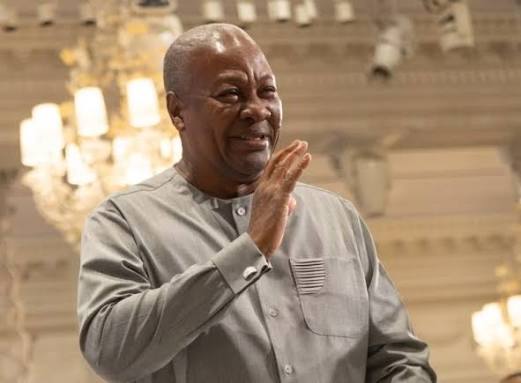
President John Dramani Mahama says Ghana's Cabinet swiftly rejected a proposed $100 million United States health compact after the Ministry of Health raised concerns over provisions involving Ghana's pathogen profile, medical records, counterpart funding and the inspection of imported medicines and medical products by the Food and Drugs Authority.
President John Dramani Mahama has revealed new details about Ghana's decision to reject a proposed $100 million health compact with the United States, describing conditions attached to the agreement as humiliating and unacceptable to his government.
Speaking during an engagement with the Council on Foreign Relations in New York, Mahama said the proposed compact was reviewed by Ghana's Ministry of Health before being presented to Cabinet.
According to the President, the Ministry prepared a Cabinet Information Paper that identified several provisions the government considered problematic.
Among the concerns, Mahama said the proposed agreement required Ghana to provide the United States with the country's pathogen profile and medical records.
He questioned why Ghana should be required to provide another country with such information as a condition of the health arrangement.
Mahama also said Ghana would have been required to provide counterpart funding under the compact.
But another provision that raised concern involved the regulatory treatment of medicines and medical products entering Ghana under the program.
According to Mahama, such products would not have been subject to inspection by Ghana's Food and Drugs Authority.
The FDA is Ghana's national regulator responsible for ensuring the safety, quality and efficacy of medicines and other regulated health products entering or being distributed in the country.
Mahama said Cabinet rejected the compact rapidly after considering the conditions.
He described the proposed arrangement as humiliating.
HEALTH MINISTRY FLAGGED CONDITIONS
The proposed compact was intended to provide approximately $100 million in health support following major changes to US foreign assistance and the scaling back of programs previously funded through the United States Agency for International Development.
Ghana's Ministry of Health reviewed the proposed arrangement before the government made its final decision.
According to Mahama's account, the concerns included providing Ghana's pathogen profile, access to medical records, a requirement for counterpart funding and restrictions affecting Ghana's ability to independently inspect medicines and medical products entering under the program.
For the President, those conditions raised broader questions about sovereignty and Ghana's control over its health system.
Mahama said the compact was rejected in what he described as record time during the Cabinet meeting.
The President said the Health Minister was subsequently instructed to inform the US Ambassador that Ghana would not proceed with the proposed arrangement.
CONCERNS OVER HEALTH DATA
The disclosure about medical records and pathogen information adds a significant data sovereignty dimension to the disagreement.
Medical records can contain sensitive personal health information, while national pathogen profiles can provide detailed information about diseases circulating within a population and the public health challenges confronting a country.
Mahama's remarks suggest his administration was uncomfortable with the extent of information Ghana would have been expected to provide under the proposed compact.
However, the full text of the proposed agreement has not been publicly released in the reports reviewed, meaning the precise scope, safeguards and intended uses of the requested information cannot be independently assessed from Mahama's description alone.
The President's account therefore represents the Ghanaian government's explanation for rejecting the agreement.
FDA PROVISION RAISES REGULATORY QUESTIONS
Mahama's disclosure concerning Ghana's FDA could prove particularly significant.
The President said medicines and medical products entering Ghana under the proposed arrangement would not have been subjected to inspection by the FDA.
For Ghana, accepting such a provision could have raised questions over the authority of its domestic regulator and the standards governing medical products entering the country.
Mahama presented the issue as one of the reasons Cabinet concluded that the compact was unacceptable.
The President did not suggest that Ghana was opposed to receiving international health assistance.
Instead, his argument centered on the conditions attached to the proposed funding and whether Ghana should accept those conditions in exchange for financial support.
GHANA FACES PRESSURE AFTER US AID CUTS
The dispute comes against the backdrop of significant changes to American development assistance.
Ghana has been affected by cuts to US supported health programs following changes to USAID and other international health financing initiatives.
Mahama said earlier this year that Ghana had lost approximately $78 million in healthcare funding following the closure of USAID programs, affecting areas including maternal health, malaria, nutrition and HIV interventions.
His administration has subsequently promoted greater African ownership of health financing and policy through the Accra Reset initiative.
The initiative advocates stronger domestic health systems and reduced dependence on external assistance while maintaining international partnerships.
Mahama has argued that changes in global development assistance demonstrate the risks countries face when essential health programs depend heavily on foreign funding.
GHANA US HEALTH RELATIONSHIP
Ghana and the United States have maintained extensive health cooperation for decades.
American assistance has supported programs addressing HIV, malaria, maternal health, disease surveillance and other public health priorities.
The rejection of this particular compact does not mean Ghana has ended health cooperation with Washington.
Instead, the disagreement centers on the terms of the proposed replacement arrangement.
Whether Washington and Accra will renegotiate the compact or develop an alternative health financing agreement remains unclear.
The US government had not provided a detailed public response to Mahama's latest description of the disputed provisions in the reporting reviewed.
The absence of the complete proposed compact also means important questions remain about the exact language surrounding medical records, pathogen information and FDA inspection.
For now, Mahama's position is clear.
His government was prepared to forgo approximately $100 million in proposed health support rather than accept conditions Cabinet considered incompatible with Ghana's sovereignty and control over its health system.