MAHAMA VOWS TO JUSTIFY GHANAIANS’ TRUST AS GH¢148.4M TECHIMAN CASHEW FACTORY PREPARES TO OPEN
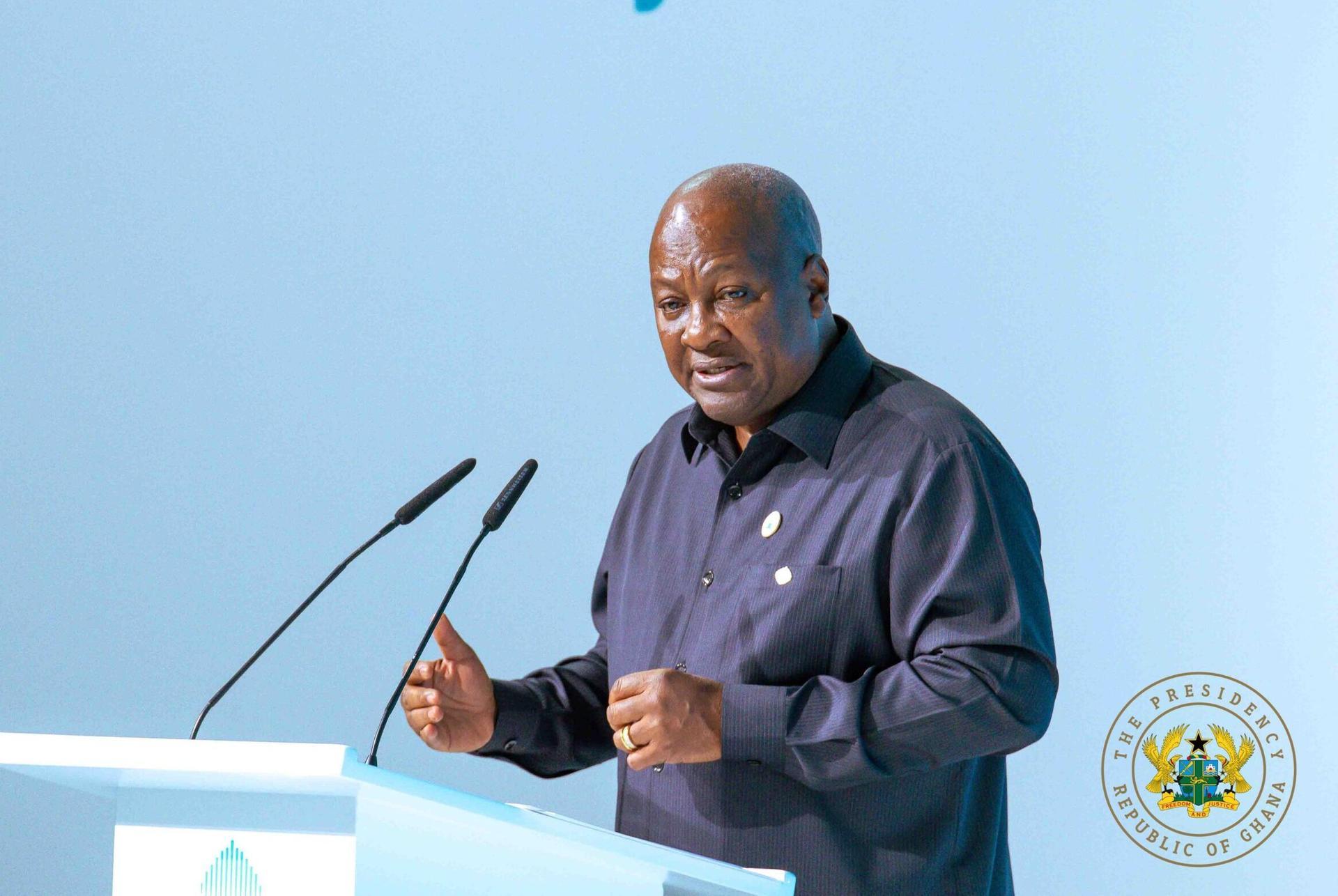
President John Dramani Mahama has assured Ghanaians that his administration will govern in a manner that justifies the trust placed in the NDC, making the pledge as he congratulated newly elected party executives and urged unity following the governing party’s regional elections. Later today, he is scheduled to commission the GH¢148.4 million Nadkansco Cashew Processing Factory in Techiman, a Ghana EXIM Bank-financed private facility with capacity to process 100 metric tonnes of raw cashew daily, an outgrower network of 6,000 farmers and hundreds of workers already undergoing training, as the government pursues a broader policy of processing more Ghanaian tree crops locally rather than exporting them raw.
ACCRA/TECHIMAN, GHANA President John Dramani Mahama has pledged that his administration will govern in a manner that justifies the confidence Ghanaians placed in the National Democratic Congress, linking his government’s political mandate to a broader promise of economic delivery as he prepares to commission a GH¢148.4 million cashew processing factory in Techiman later today. Mahama made the assurance after the NDC completed another major phase of its internal reorganisation, congratulating newly elected branch, constituency and regional executives while urging defeated aspirants and their supporters to put internal rivalry behind them and preserve party unity. His message comes at a moment when the governing party is simultaneously reorganising itself for future elections and attempting to demonstrate that its return to government is producing tangible economic outcomes, with the Nadkansco Cashew Processing Factory in Bono East being presented as a major example of the administration’s push to move Ghana away from exporting raw agricultural commodities and toward domestic processing, industrial jobs and higher-value exports.
In his message to the party, Mahama said the recently concluded regional executive elections marked the completion of the NDC’s grassroots reorganisation ahead of the election of national officers in December. He congratulated those elected at branch, constituency and regional levels and appealed to those who lost internal contests to rally around the winners rather than allow factional divisions to weaken the party. The President described the elections as a family contest and urged members to sustain the solidarity required to govern effectively and prepare for future electoral battles. He then turned from party organisation to the performance of his administration, telling supporters and the wider public that his government would continue managing national affairs in a way that justified the trust placed in it by Ghanaians. That assurance is politically significant because it frames the NDC’s electoral mandate not simply as a partisan victory but as an obligation to convert public confidence into measurable improvements in jobs, production, infrastructure, incomes and public services.
The NDC’s regional elections were held over the weekend as part of a wider leadership renewal exercise that has already moved through branch and constituency levels. Several incumbent regional chairpersons retained their positions, while others were defeated by challengers, demonstrating both continuity and internal competition inside the governing party. In Greater Accra, Benjamin Danso defeated incumbent Emmanuel Nii Ashie-Moore, while other contests also produced changes in regional leadership. In the Central Region, the result was particularly close, with lawyer Obeng Inkoom narrowly defeating incumbent Richard Kofi Asiedu by five votes, a result Asiedu has indicated he may challenge over alleged irregularities. The exercise is expected to culminate in the party’s National Congress in December, when national officers will be elected and the NDC’s internal leadership structure will be completed ahead of the next phase of governance and long-term political preparation.
Mahama’s call for unity reflects the political difficulty governing parties often face once internal elections create winners and losers with competing networks. Regional executives control important grassroots structures, influence mobilisation and can shape how government achievements or failures are communicated at the constituency level. Internal division could therefore complicate the President’s effort to maintain political cohesion while his administration attempts to deliver on campaign promises. By urging defeated candidates to accept the outcome and rally behind the new executives, Mahama is seeking to prevent local rivalries from evolving into factional struggles that could distract the party from governance or weaken its future electoral organisation.
The timing of the message is particularly notable because Mahama is travelling to Techiman on the same day to commission a major agro-processing facility backed by the Ghana Export-Import Bank. The Nadkansco Cashew Processing Factory represents the kind of project the administration increasingly wants associated with its broader economic strategy: Ghanaian agricultural commodities being processed locally rather than shipped abroad in raw form while other countries capture the higher margins available through manufacturing, packaging and finished-product exports. The plant, owned by Nadkansco Processing Limited and financed by Ghana EXIM Bank, has an installed capacity of 100 metric tonnes of raw cashew nuts per day, equivalent to approximately 30,000 metric tonnes annually when operating continuously. Government Communications Minister Felix Kwakye Ofosu says the main investment is valued at GH¢148.4 million, with an additional GH¢12 million committed to workforce development and capacity building.
Government officials say the facility could eventually create as many as 1,500 direct jobs at full operational capacity, although separate reporting on the plant’s shift structure has cited an initial direct workforce of roughly 450 employees operating across three shifts. What is confirmed is that about 600 prospective workers are currently undergoing training in preparation for operations, suggesting that employment will increase as production scales. The company has also developed an outgrower network involving approximately 6,000 cashew farmers, with 1,200 of those farmers already receiving training funded through Ghana EXIM Bank. That supply network is intended to link small and medium-scale producers directly with a domestic processor capable of buying large volumes of raw cashew, potentially creating a more stable market for farmers while ensuring the factory has enough supply to operate efficiently.
The plant’s location in Techiman is strategically important because Bono East and surrounding regions form part of Ghana’s most productive cashew belt. Ghana’s Tree Crops Development Authority estimates national raw cashew production at roughly 260,000 metric tonnes in 2025 and projects production could remain above 200,000 tonnes annually even as seasonal conditions change. Bono, Bono East and Ahafo together account for a substantial share of national output, making Techiman a logical location for large-scale processing. By positioning industrial capacity closer to production areas, the factory could reduce transport costs, improve market access for farmers and support related businesses involved in packaging, logistics, warehousing and export.
The commissioning also fits directly into Mahama’s stated policy of reducing Ghana’s dependence on exporting raw cashew, shea and rubber. At the Ghana Tree Crops Investment Summit in February, the President declared that the country could no longer continue exporting valuable agricultural commodities in raw form only to import processed products at significantly higher prices. He said government wanted 50 to 60 percent of major tree crops processed locally and invited investors that had traditionally bought raw Ghanaian cashew for export to consider establishing processing operations inside the country. His argument was that value addition should create jobs in Ghana, strengthen foreign exchange earnings and allow the country to capture more of the final export value from agricultural products already grown by Ghanaian farmers.
That strategy responds to a longstanding structural weakness in Ghana’s cashew industry. The country produces significant volumes of raw nuts, yet domestic processing has historically remained far below national production. Industry data indicate that Ghana had around 65,000 metric tonnes of installed cashew processing capacity in 2025, but only about 15,000 tonnes were actually processed, meaning much of the available industrial capacity was underused while large quantities of raw nuts continued to leave the country. Adding another plant with capacity of around 30,000 tonnes therefore increases processing potential, but the real test will be whether Nadkansco can secure enough raw material, maintain competitive purchasing prices, operate continuously and sell processed kernels profitably in international markets.
That distinction is important because commissioning a factory does not automatically guarantee sustained industrial success. Ghana has experienced cases in which agro-processing facilities opened with considerable political attention but later struggled because of inadequate raw-material supply, working-capital shortages, high energy costs, maintenance problems or weak export markets. Nadkansco’s viability will depend on whether its 6,000-farmer outgrower network can supply consistent volumes and whether financing arrangements give the plant enough working capital to buy raw cashew during harvest periods when traders and exporters are competing aggressively for produce.
The company will also need to compete with raw-nut exporters who may be able to offer farmers attractive cash prices, particularly when international demand is strong. That is why the government’s wider policy toward raw exports matters. Mahama’s administration has signalled that it intends to prioritize domestic processing and potentially restrict the export of unprocessed cashew, but any such transition must be managed carefully. An abrupt restriction without enough functioning processing capacity could reduce competition for farmers’ produce and put downward pressure on farmgate prices. Conversely, if processors are efficient and well financed, greater local demand could strengthen farmer incomes while creating industrial jobs and increasing the value of exports.
The Tree Crops Development Authority has already attempted to improve farmer protection through minimum producer pricing and greater regulation of the sector. It has also stressed the need for traceability and better data on farms, production levels and market participants. Those reforms could become increasingly important if Ghana seeks to build a large domestic processing industry because processors need reliable information about production volumes and quality, while international buyers are placing greater emphasis on traceable and sustainably produced agricultural commodities.
Nadkansco therefore sits at the intersection of agriculture and industrial policy. The project is not merely a factory that converts raw cashew into kernels; it is also a test of whether Ghana can integrate farmers, processors, financiers, exporters and skills development into one functioning value chain. If the plant operates near capacity, it could absorb a meaningful portion of Ghana’s raw nut production and strengthen Techiman’s position as an agro-industrial centre. If it struggles to secure raw materials or sustain operations, it would reinforce questions about whether Ghana’s industrialisation policy is focusing enough on the economic conditions required to keep factories running after commissioning ceremonies are over.
Ghana EXIM Bank’s role in financing the plant is equally significant because the bank was created to support businesses capable of increasing exports and reducing dependence on imported products. By committing GH¢148.4 million to the factory and another GH¢12 million to training and capacity building, GEXIM is effectively betting that cashew processing can generate sufficient economic and export value to justify major public-backed financing. Chief Executive Sylvester Adinam Mensah inspected the facility ahead of the opening and expressed confidence that it was ready to begin production and could stimulate employment and economic activity in Techiman and surrounding communities.
That investment will inevitably attract scrutiny over performance. Publicly supported industrial projects should ultimately be assessed through production volumes, export earnings, loan repayment, job creation and the number of farmers benefiting from stable market access. Government officials have highlighted the headline value of the plant and its projected employment, but the most important figures will emerge over the next several years: how many tonnes are actually processed, how many workers remain employed, how much foreign exchange is earned and whether the 6,000-member outgrower network receives reliable and competitive prices.
The factory also has wider implications for Ghana’s balance of trade. Raw commodity exports generally generate less value than processed products because much of the manufacturing, packaging, branding and retail margin is captured outside the producing country. Ghana’s challenge is familiar across Africa: countries export cocoa beans, cashew nuts, minerals and other primary commodities while importing finished products or watching manufacturers elsewhere earn more from the same inputs. Mahama’s value-addition strategy seeks to retain a larger share of that economic activity domestically.
Cashew is especially attractive because global demand for processed nuts remains substantial, and Ghana already has a relatively established production base. Processing generates multiple products, including edible kernels and cashew shell derivatives that can themselves be used industrially. A well-developed local processing industry could therefore create value beyond the initial kernel export while encouraging investment in packaging, food manufacturing and related industries.
The government’s policy also has a rural-development dimension. Cashew farming provides income for hundreds of thousands of people, particularly in the middle and northern belts, and stronger local processing could create additional employment closer to farming communities rather than concentrating economic opportunities in Accra and other major cities. Techiman already serves as an important agricultural trading centre, so a large processing plant could reinforce the local economy through trucking, storage, services and household spending by factory workers.
For Mahama, the political symbolism of commissioning the facility on the same day he promises to justify the NDC’s mandate is difficult to miss. His government is effectively presenting industrial investment as evidence of what responsible use of political trust should look like. Rather than limiting the promise to speeches, the administration is likely to frame factories, roads, agriculture programmes and employment initiatives as measurable proof that voters’ confidence is being translated into development.
That narrative will face close scrutiny from the opposition New Patriotic Party, which will likely argue that the origins and financing history of individual projects must be accurately acknowledged and that commissioning a facility should not automatically be treated as evidence of successful economic transformation. Ghana’s major political parties routinely dispute ownership of projects that span different administrations, particularly when financing, construction and commissioning occur under different governments. The important factual issue in the Nadkansco case is that the facility is owned by Nadkansco Processing Limited and financed by Ghana EXIM Bank, meaning the project is not a government-owned factory even though public development financing has played the central role in bringing it to operation.
That distinction does not diminish the significance of the government-backed investment, but it provides a clearer understanding of how the project fits into Ghana’s industrial policy. The state is using a public financial institution to support private productive capacity rather than directly operating the plant. If successful, such financing can mobilize private-sector expertise while using state resources to overcome the high cost of establishing export-oriented factories. If unsuccessful, however, it can expose public funds to losses, which is why transparency over financing terms and performance remains important.
Mahama’s promise to justify the trust placed in the NDC therefore extends beyond party unity or one factory opening. His administration is asking Ghanaians to evaluate it through whether the economy becomes more productive, whether investments generate employment and whether public institutions use resources effectively. The President’s message to NDC executives also carries an implicit warning that internal party success will mean little if government performance disappoints the public that returned the party to power.
The NDC’s current reorganisation shows that the party is already looking toward its longer-term political future, but Mahama’s public message emphasizes that future electoral strength must be built on performance. Regional and national executives may organise supporters and mobilise votes, but the government must still provide outcomes capable of persuading citizens that their confidence was justified. That relationship between party organisation and state performance is likely to become increasingly important as the administration moves deeper into its term.
The Techiman commissioning provides a concrete case through which that promise can be tested. The factory has substantial installed capacity, significant public-backed financing, an existing farmer network and hundreds of workers already in training. The ingredients for a meaningful agro-industrial project are therefore present. The question is whether those elements translate into sustained production rather than a short-lived opening ceremony.
If Nadkansco reaches its projected 100-tonne daily capacity, maintains a dependable outgrower network and sells processed cashew competitively, the plant could contribute significantly to Ghana’s effort to reduce raw exports and create jobs around agricultural production. It could also encourage other investors to build processing plants closer to farming regions, strengthening the case for a more industrialised tree-crops sector.
If the project operates far below capacity, however, the same problems affecting existing processors could persist. Ghana already has significant unused processing capacity, which suggests that simply constructing more factories will not solve the entire problem. Access to finance, reliable raw-material supply, energy prices, international competition, machinery maintenance and export logistics are all essential to making processing commercially viable.
That reality makes the training component particularly important. The GH¢12 million allocated to workforce and farmer capacity building indicates recognition that industrial infrastructure alone is insufficient. Processing requires technicians, quality-control specialists, machine operators, supervisors and workers able to meet international food-safety requirements. Farmers also need training to improve yields and quality so processors receive raw materials suitable for competitive export markets.
The 1,200 farmers already trained under GEXIM support are therefore as important to the value chain as the factory workers. Better farming practices can increase productivity, reduce post-harvest losses and improve nut quality, allowing farmers to earn more while helping processors obtain better raw materials. Expanding that training across the full 6,000-farmer network could become one of the most important determinants of the plant’s success.
There is also a wider environmental and land-use dimension to cashew expansion. Cashew is relatively resilient in drier conditions and has become an increasingly important cash crop in parts of Ghana, but rapid expansion must be balanced against food production and local land rights. Tree-crop policies work best when farmers see them as an additional source of stable income rather than a system that forces them to abandon food crops or lose control over land.
Government will therefore need to manage growth in the sector carefully if its processing targets are to be met. The long-term objective is not simply to produce more raw cashew but to build a value chain in which farmers, processors and exporters all remain commercially viable.
For the people of Techiman and Bono East, the immediate expectations are more straightforward. Residents will want the factory to provide real jobs, purchase cashew from local farmers and generate new business opportunities. The government’s employment figures will be tested by how many workers are actually placed on payroll and how quickly production scales beyond the training phase.
For Ghana EXIM Bank, success will be measured by whether the investment strengthens export earnings and supports a sustainable business capable of meeting its financial obligations. For the Mahama administration, the project will be judged politically as part of its wider promise to move Ghana from raw commodity dependency toward value-added production.
Those tests explain why the factory matters beyond the GH¢148.4 million headline. It is a demonstration project for an economic philosophy that places domestic processing at the centre of Ghana’s agricultural transformation. Mahama has repeatedly argued that Ghana should not remain a supplier of cheap raw materials to factories in other countries while importing expensive finished products and struggling with youth unemployment at home.
The President’s latest message about justifying public trust gives that philosophy a direct political dimension. Ghanaians entrusted the NDC with government, he says, and the administration must demonstrate through its conduct and results that the trust was not misplaced. In that context, the Techiman plant represents one of the practical outcomes the government will point to as evidence of its development agenda.
But the ultimate judgment will not be made on commissioning day. It will come months and years later, when the level of production, jobs, farmer incomes and exports can be measured against the promises being made now. Ghana has commissioned enough projects over successive governments for citizens to understand that an opening ceremony is only the beginning of an economic story, not its conclusion.
Mahama’s challenge is therefore larger than opening another factory. His administration must ensure that public-backed investments survive commercially, that agricultural policies protect farmers, that industrial projects generate sustainable employment and that the wider economy creates enough opportunity for citizens to feel the benefits of economic recovery in their daily lives.
That is also why his appeal for NDC unity is closely connected to his promise of responsible governance. A governing party divided by internal contests could struggle to communicate or implement its agenda effectively, while a united party that fails to deliver economically would still risk losing public confidence. Mahama is attempting to address both sides at once: consolidate the political organisation and demonstrate tangible development.
As he travels to Techiman later today, the symbolism will be clear. The President who has just told his party that government must justify Ghana’s trust will stand at a major new processing plant financed through a state-backed development bank and present it as part of a national shift toward production and value addition.
Whether that symbolism becomes lasting economic reality will depend on what happens after the ribbons are cut, the speeches end and the machines begin running. If the factory can process its projected volumes, keep hundreds of workers employed, support thousands of farmers and export higher-value Ghanaian cashew products, it could become a strong example of the industrial transformation Mahama says his government intends to deliver. If it fails to operate sustainably, it will instead become another reminder that public trust is justified not by announcements but by results.
For Mahama and the NDC, that is ultimately the standard their own message has established. The government has promised to justify the confidence of Ghanaians, and projects such as Nadkansco will increasingly provide the evidence by which that promise is judged.