MELANIA TRUMP BRINGS RUSSIAN AND UKRAINIAN OFFICIALS TO WHITE HOUSE AFTER BROKERING HUMANITARIAN CEASEFIRE
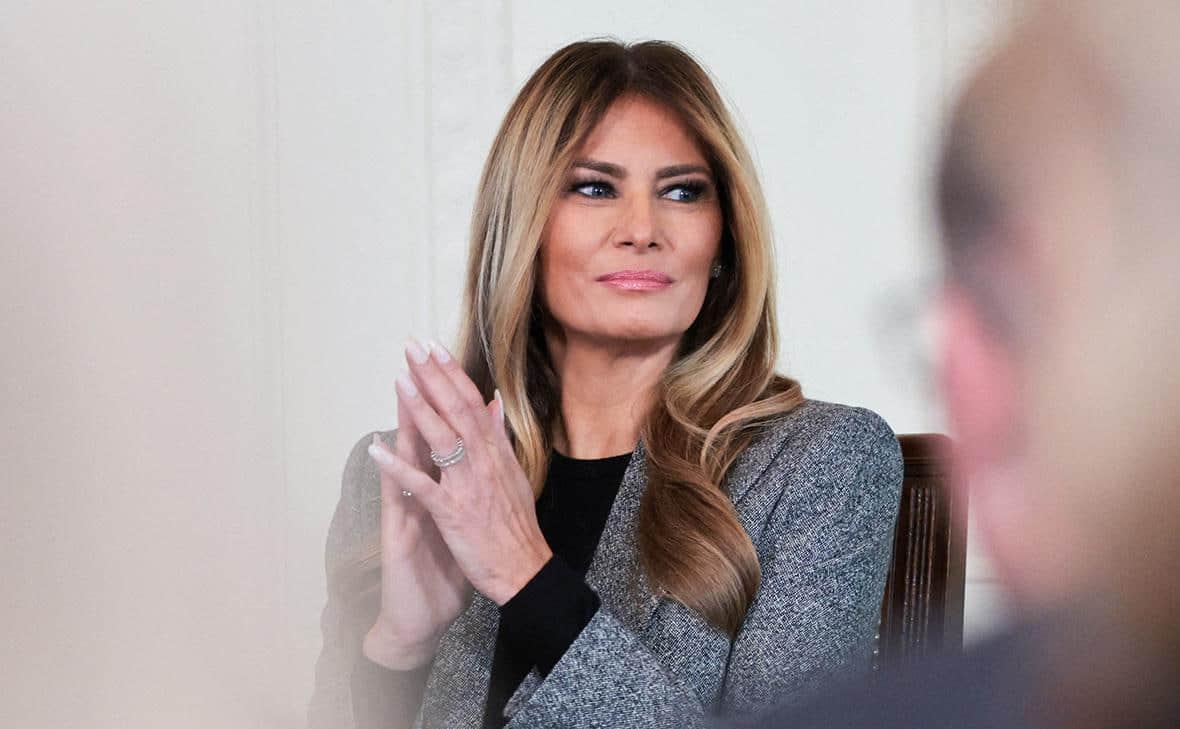
U.S. First Lady Melania Trump brought Russian and Ukrainian representatives together at the White House on November 5, following a six-day humanitarian ceasefire in Oleshky, in Ukraine's Russian-occupied Kherson region. The agreement allowed humanitarian supplies to enter the area and nearly 800 civilians to evacuate. Melania urged both countries to build on the operation and prioritize civilian protection, while Ukrainian representatives honored her with the Order of Princess Olga, First Class. The temporary ceasefire expired on November 1, and the meeting did not produce a wider peace agreement. New U.S.-mediated talks are expected in Abu Dhabi on November 10 and 11.
U.S. First Lady Melania Trump brought Russian and Ukrainian representatives together at the White House on Thursday, November 5, 2026, following her reported role in securing a temporary humanitarian ceasefire that allowed nearly 800 civilians to leave the war-affected town of Oleshky in Ukraine's southern Kherson region. Addressing officials from both countries, Melania called for the protection of civilians to take precedence over the divisions of war, urging Moscow and Kyiv to build on the limited agreement and pursue a more enduring path toward peace.
“Undeniably, the lives of innocent people must transcend the divisions of war,” she said during the White House gathering, which brought together representatives of two countries that have remained at war since Russia launched its full-scale invasion of Ukraine in February 2022. Melania described the humanitarian operation in Oleshky as a demonstration of what cooperation could achieve when both sides agreed to prioritize civilian protection, adding that the temporary ceasefire should serve as a starting point for further diplomatic engagement rather than an isolated achievement.
The meeting followed a six-day localized ceasefire in and around Oleshky, a town under Russian occupation in the Kherson region. The temporary suspension of hostilities was intended to allow humanitarian assistance to reach residents and provide a safe passage for civilians who wanted to leave the area. Food, clean water and medical supplies were delivered during the operation, while nearly 800 people were evacuated to locations where they could receive greater protection and assistance.
The ceasefire was particularly significant because Oleshky has remained close to the front line since Russian forces occupied parts of southern Ukraine. The town's remaining residents have faced prolonged shortages of essential supplies, disrupted electricity and water services, damaged infrastructure and the continuing threat of military attacks. The humanitarian situation became increasingly difficult for older residents and people with medical needs who had been unable or unwilling to leave their homes during earlier phases of the conflict.
According to information published by the White House, Melania became aware of the severity of the situation in September and directed her representative, Marc Beckman, to establish contact with Russian and Ukrainian officials. She said both countries agreed to work with her as an intermediary after previous efforts to arrange a localized ceasefire had failed. The discussions focused on securing the delivery of humanitarian aid, identifying safe evacuation routes and coordinating the movement of civilians who wanted to leave the town.
Melania said her role was formalized through written agreements drafted and signed by representatives of both countries on October 23. She described an extensive planning process that involved humanitarian, military and government officials from Russia and Ukraine, with discussions covering demining operations, aerial images, road conditions, hospital access, transport vehicles and medical resources. The arrangements were designed to reduce the danger facing civilians and establish practical procedures for delivering assistance and evacuating people from an area where ordinary movement had become extremely dangerous.
The First Lady said she remained involved throughout the planning and implementation of the operation, working through communication channels previously established during efforts to reunite children separated from their families by the war. She credited Russian and Ukrainian officials for cooperating on the arrangements and said the operation would not have been possible without their willingness to coordinate across the military and political divisions separating the two countries.
The White House said the previous communication efforts had helped facilitate the reunification of six groups involving 34 children from Russia and Ukraine. Those humanitarian contacts provided an existing channel through which Melania's representative could approach both governments and begin discussions about the situation in Oleshky. The latest initiative expanded that work from family reunification to a broader operation involving humanitarian supplies, civilian evacuation and temporary arrangements to suspend military activity in a specific area.
At Thursday's gathering, Russian President Vladimir Putin's special envoy, Kirill Dmitriev, attended alongside Russian Human Rights Commissioner Yana Lantratova. Ukraine was represented by David Arakhamia, leader of President Volodymyr Zelenskyy's Servant of the People parliamentary faction, and Dmytro Lubinets, Ukraine's parliamentary commissioner for human rights. Their presence placed officials from both countries in the same room at the White House, providing a rare public opportunity for representatives of the two sides to acknowledge a jointly implemented humanitarian arrangement.
Dmitriev thanked Melania for her involvement and described her contribution as significant in helping secure the ceasefire. He also said Putin had personally given instructions connected to the operation and conveyed the Russian president's appreciation for her efforts. The comments highlighted Moscow's willingness to publicly recognize the First Lady's intermediary role, although they did not amount to a commitment by the Kremlin to extend the truce or accept a wider settlement of the war.
Ukrainian representatives also acknowledged the humanitarian importance of the operation. Arakhamia and Lubinets participated in the White House event, while Ukraine presented Melania with the Order of Princess Olga, First Class, an honor awarded by President Zelenskyy in recognition of her work. The award was presented as an acknowledgment of her contribution to the evacuation and humanitarian arrangements in Oleshky.
During her remarks, Melania emphasized the importance of allowing civilians to make decisions about their safety without being forced to remain in dangerous conditions because of military or political considerations. She described the experiences of families who had spent years living under the threat of explosions, drones, missiles and landmines, arguing that the ability to walk through familiar streets, access medical care and obtain basic necessities should not be treated as an extraordinary privilege.
“Imagine a young child confined to her home, unable to dream of her future because she lives in constant fear,” she said, describing the psychological consequences of prolonged conflict on children and other vulnerable residents. She argued that people should be able to live without constantly watching the sky for attacks or scanning the ground for mines, and urged the representatives gathered at the White House to consider the human consequences of decisions made during wartime.
The humanitarian operation was particularly important given the dramatic decline in Oleshky's population since the beginning of Russia's full-scale invasion. Before the war, the town had approximately 24,000 residents. The White House estimated that between 1,700 and 2,000 people remained, including a significant proportion of elderly residents and approximately 50 children. The figures were not based on a recent formal census, as a reliable demographic count has not been conducted in the town since 2022.
The destruction of the Kakhovka Dam in June 2023 further complicated conditions in the region. Flooding affected large parts of the surrounding area, with the White House estimating that approximately 90 percent of Oleshky's territory had been flooded. The disaster damaged homes, roads and essential infrastructure, while the continuing military conflict made recovery and reconstruction extremely difficult. Residents who remained in the town faced the combined effects of displacement, damaged services, restricted movement and limited access to humanitarian assistance.
The evacuation of nearly 800 people therefore represented a significant humanitarian development, although it did not resolve the wider problems facing Oleshky or the thousands of civilians affected by the conflict elsewhere in Kherson. The temporary agreement provided a limited period during which aid workers and other personnel could reach vulnerable residents and help those who wished to leave. It did not change control of the town, settle the territorial dispute or establish a permanent security arrangement.
The ceasefire also ended on November 1, after six days, and was not extended into a broader suspension of hostilities. That distinction is important because the White House gathering took place after the temporary arrangement had expired. While Melania urged both countries to use the experience as a foundation for further cooperation, neither side announced a new agreement restoring the ceasefire across Oleshky or establishing a wider pause in the fighting.
The end of the truce has also raised questions about whether similar humanitarian arrangements can be repeated in other communities affected by the war. Ukraine's representatives used the White House event to call attention to the possibility of additional operations that could protect civilians and facilitate evacuations. However, the public response from the two delegations did not establish that Russia and Ukraine had agreed to extend the Oleshky arrangement or replicate it elsewhere.
The political significance of Thursday's meeting was also limited by the fact that it was not a comprehensive peace negotiation between the Russian and Ukrainian governments. The officials who attended were involved in humanitarian, political and human rights matters, but the central issues dividing Moscow and Kyiv remain unresolved. Those issues include territorial control, security guarantees, the future of occupied Ukrainian regions, military withdrawals and the conditions under which a lasting settlement could be reached.
The White House gathering nevertheless took place at a time when the United States was preparing to facilitate another round of talks between Russia and Ukraine in Abu Dhabi on November 10 and 11. Those discussions are expected to address the broader conflict, making the humanitarian initiative in Oleshky an additional diplomatic development ahead of the planned negotiations. The localized ceasefire may offer a practical example of how limited agreements can be negotiated even when the larger political dispute remains unresolved.
Melania's role has attracted particular attention because first ladies do not ordinarily conduct formal diplomatic negotiations between governments at war. Her involvement in the Oleshky initiative was presented by the White House as an unusual humanitarian intervention in which she independently established communication with both sides and worked through her representative to coordinate the agreement. The administration described the gathering as an unprecedented occasion in which an American First Lady personally brought representatives of two nations actively at war together at the White House for diplomacy.
However, the claim that her initiative represents the first such occasion in American history is a characterization made by the White House, rather than an independently established historical assessment. The broader diplomatic context also involves other individuals and institutions that have called for humanitarian access and civilian protection. Pope Leo XIV, for example, had also urged the parties to permit humanitarian assistance and evacuations in the affected region. The operation therefore took place against a wider background of international pressure for relief, even as the White House emphasized Melania's intermediary role.
Ukraine's President Zelenskyy has also questioned the broader significance of temporary pauses in fighting when they are not accompanied by a lasting commitment to peace. His position reflects Kyiv's longstanding argument that Russia's leadership has the power to determine whether hostilities continue or stop in areas under its control. The Ukrainian government has maintained that humanitarian arrangements are important but cannot substitute for a political settlement that protects Ukraine's sovereignty and security.
The meeting also carried significance for U.S.-Russia relations. Dmitriev's presence in Washington represented an opportunity for renewed contact between Russian and American officials amid a period of strained relations over the war. President Donald Trump separately met with Putin's envoy at the White House, although he did not meet with the visiting Ukrainian representatives at the First Lady's event. Trump indicated that he had discussed the broader situation and suggested that a wider agreement involving Ukraine and potentially European security remained possible.
The distinction between the First Lady's humanitarian meeting and the separate political contact involving the president is important. Melania's gathering focused on the localized ceasefire and the protection of civilians, while the wider discussions involving the administration concern the political and security issues required to end the war. The participation of Russian and Ukrainian officials in the same White House event did not mean that the two governments had resumed comprehensive negotiations or reached an agreement on the future of occupied Ukrainian territory.
Before concluding the gathering, Melania presented letters she had personally written to Putin and Zelenskyy. She asked Dmitriev and Arakhamia to deliver the messages to their respective presidents, describing them as part of her effort to encourage further cooperation and preserve the communication established during the Oleshky operation. The letters were intended to reinforce her appeal for both leaders to build on the humanitarian achievement and consider a wider commitment to protecting people affected by the war.
The White House event also included the presentation of historical objects selected by the First Lady as symbols of peace and diplomatic cooperation. Among them was a late eighteenth-century medicine chest that had been removed from the White House after British forces burned the building during the War of 1812. Melania also presented an 1899 ceremonial cup associated with diplomatic efforts to bring the Spanish-American War to an end. The objects were intended to illustrate how former adversaries can eventually establish cooperation after periods of conflict.
Despite the symbolic significance of the meeting, the humanitarian situation in Oleshky remains uncertain. The evacuation of nearly 800 people provided relief to those who were able to leave, but many residents remain in the area, and the expiry of the ceasefire means that the temporary protection provided by the arrangement cannot be assumed to continue. The town's damaged infrastructure, limited services and proximity to the front line remain serious obstacles to the delivery of sustained assistance.
The next major diplomatic development is expected to be the planned U.S.-mediated talks between Russian and Ukrainian representatives in Abu Dhabi. Whether the humanitarian contacts established through Oleshky can contribute to those discussions remains unclear. The two governments continue to hold sharply different positions on the future of Ukraine, and the localized agreement did not address the military and territorial issues at the center of the war.
For Melania, the immediate significance of the initiative is that Russian and Ukrainian officials cooperated on a humanitarian operation that allowed aid to enter a dangerous area and gave hundreds of civilians an opportunity to leave. Her appeal at the White House was that the experience should not end with the expiry of the temporary ceasefire, but should encourage further efforts to protect people whose lives have been disrupted by the conflict.
The meeting has created an additional channel for humanitarian engagement at a time when broader negotiations remain difficult. Whether it produces further ceasefires, additional evacuations or a more sustained diplomatic process will depend on decisions by the Russian and Ukrainian governments. For now, the Oleshky operation stands as a limited humanitarian agreement that demonstrated cooperation was possible on a specific civilian protection objective, even as the wider war continues without a comprehensive settlement.