NETANYAHU OFFERS TO SHARE POWER WITH EISENKOT IN ROTATING ISRAELI PREMIERSHIP AS COALITION DEADLINE APPROACHES
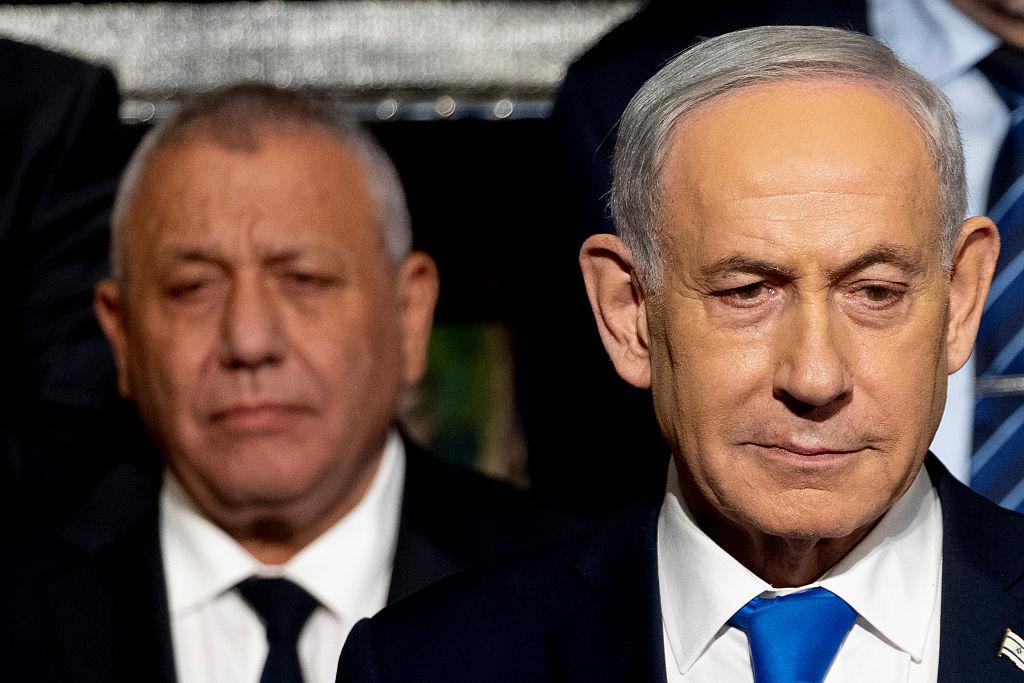
Israeli caretaker Prime Minister Benjamin Netanyahu has offered to allow his principal political rival, Gadi Eisenkot, to serve first as prime minister under a proposed rotating premiership arrangement aimed at establishing a national unity government. The announcement on Saturday, November 28, 2026, comes ahead of Eisenkot's December 6 deadline to form a new administration following Israel's inconclusive October 27 parliamentary election. Eisenkot has already concluded coalition agreements with Yisrael Beiteinu and the Democrats while continuing negotiations with other political organizations. Netanyahu's proposal has received mixed reactions, with Yair Lapid and Yair Golan expressing skepticism while Finance Minister Bezalel Smotrich welcomed the initiative. No formal agreement has been reached, and disagreements concerning military conscription, political accountability and coalition membership remain unresolved.
Israeli caretaker Prime Minister Benjamin Netanyahu has offered to relinquish the premiership temporarily under a proposed national unity government with his principal political rival, Gadi Eisenkot, in a significant development that could reshape Israel's political leadership following last month's inconclusive parliamentary election. Netanyahu announced on Saturday, November 28, 2026, that he was prepared to allow Eisenkot to serve as prime minister during the initial period of a power-sharing arrangement while he assumes the position of alternate prime minister, marking a notable concession from Israel's longest-serving political leader as negotiations to establish the country's next government enter their final stages.
The proposal comes just eight days before the December 6 deadline granted to Eisenkot by Israeli President Isaac Herzog to assemble a governing coalition. The former Israeli military chief and leader of the centrist Yashar party declared on Friday that he intended to complete the formation of a new government within the original mandate period, rejecting the possibility of requesting an additional 14 days to conclude negotiations. His announcement increased pressure on Netanyahu's right-wing Likud party, which has been conducting discussions with Eisenkot's representatives while remaining outside the coalition agreements already concluded with other political organizations.
In a statement published on social media, Netanyahu argued that his responsibilities as a national leader required him to reconsider his insistence on retaining the premiership. Although he maintained that his position as leader of Israel's largest parliamentary party would ordinarily justify his continued leadership of a national unity administration, he indicated that the country's security circumstances warranted a different approach.
“My responsibility as a leader requires me to set everything aside,” Netanyahu declared, announcing his willingness to accept an arrangement under which Eisenkot would become prime minister first while he occupies the alternate position during the initial part of the government's term.
The announcement represents Netanyahu's most explicit public concession since negotiations began following the October 27 parliamentary election. Israeli media had previously reported that Likud representatives were considering a rotation agreement that would permit Eisenkot to lead the government during its first two years before transferring the premiership to Netanyahu for the remainder of the term. However, a comprehensive agreement establishing the duration of each leader's tenure, the distribution of ministerial responsibilities and the legal safeguards governing the proposed transfer of power has not been publicly released.
Netanyahu presented his offer as an attempt to establish a government capable of addressing what he described as existential security threats confronting Israel. He maintained that a broad political partnership would provide greater stability than an administration dependent on a narrow parliamentary arrangement. His proposal nevertheless received an immediate skeptical response from several politicians associated with Eisenkot's prospective coalition, some of whom accused the caretaker prime minister of attempting to preserve his political influence rather than facilitating a genuine transfer of leadership.
Former Prime Minister Yair Lapid, a senior figure in the B'Yachad political alliance, rejected Netanyahu's proposal and questioned whether the Likud leader could be trusted to honor another power-sharing agreement. Lapid argued that a government led by Eisenkot should first be sworn into office before discussions concerning its potential expansion to include Likud could be undertaken.
Yair Golan, chairman of the left-wing Democrats party, also criticized the announcement and called on Eisenkot and his prospective coalition partners to proceed with efforts to establish a government without Netanyahu. Golan has consistently maintained that the election provided an opportunity to replace the incumbent administration and that incorporating its leadership into another government could undermine commitments made to voters during the campaign.
Finance Minister Bezalel Smotrich, a prominent figure associated with Netanyahu's outgoing government, offered a different assessment. Smotrich welcomed the proposed rotation agreement, describing the initiative as genuine and indicating that he was prepared to serve as a guarantor of commitments established between Netanyahu and Eisenkot. He urged the parties involved in coalition negotiations to consider forming a broader administration rather than pursuing a minority government dependent on support from Arab-led political organizations.
Former Prime Minister Naftali Bennett has also expressed support for exploring a national unity arrangement led initially by Eisenkot, although his public response has been accompanied by caution concerning Netanyahu's willingness to comply with any eventual agreement. Bennett's position illustrates the divisions within the broader political grouping seeking to establish Israel's next government, particularly over whether removing Netanyahu should take precedence over efforts to create a larger parliamentary majority.
As of Saturday evening, Eisenkot had not publicly accepted Netanyahu's proposal, and no jointly signed agreement establishing a rotating premiership had been announced. Reuters reported that a spokesperson for Eisenkot's Yashar party did not immediately respond to a request for comment following Netanyahu's statement. Consequently, the announcement remains a political offer rather than a concluded coalition arrangement, and the future composition of Israel's government has yet to be determined.
The latest developments follow weeks of negotiations triggered by the October 27 election, which produced a fragmented Knesset and left neither Netanyahu nor Eisenkot with an independently sufficient parliamentary majority. Netanyahu's outgoing political alliance secured 53 seats, while the parties broadly associated with Eisenkot obtained 48. Arab-led political organizations collectively secured 19 seats, giving them a potentially important role in determining whether an alternative government can obtain parliamentary approval.
Israel's parliament consists of 120 members, with a conventional governing majority requiring the support of at least 61 lawmakers. The election result therefore created a situation in which both major political groupings would need to obtain additional parliamentary support or negotiate an arrangement involving parties that had not initially been considered part of their respective alliances.
Following consultations with the parliamentary factions, Herzog announced that representatives accounting for 67 members of the Knesset had recommended Eisenkot to receive the mandate to form a government. Netanyahu received recommendations from factions representing 46 lawmakers, while the remaining parliamentary representatives declined to endorse either contender.
The difference between receiving 67 recommendations and establishing a coalition supported by 67 lawmakers has become particularly important during the negotiations. A recommendation submitted to the president indicates a preference concerning who should receive the initial opportunity to form a government, but it does not necessarily constitute a commitment to join that individual's administration or support every aspect of its proposed programme.
Eisenkot's presidential mandate therefore provided him with the constitutional opportunity to negotiate a government without resolving the disagreements that had previously prevented the opposition parties from establishing a parliamentary majority. His efforts have required discussions with political organizations representing substantially different positions concerning national security, religious policy, economic administration and the participation of Arab citizens in Israel's political institutions.
During the past week, Eisenkot concluded coalition agreements with Avigdor Liberman's right-wing secular Yisrael Beiteinu party and Golan's left-wing Democrats. The arrangements demonstrated that organizations with different ideological backgrounds could establish areas of cooperation, although their combined parliamentary strength remained insufficient to create a conventional majority without additional partners.
Liberman's participation is particularly significant because of his longstanding disagreements with Netanyahu and the influence exercised by ultra-Orthodox religious parties within successive Israeli governments. The former defense minister has previously opposed arrangements that allow religious political organizations to obtain extensive concessions concerning military service and public funding.
The Democrats, meanwhile, have emphasized the importance of establishing a government committed to institutional reforms, accountability for security failures and changes to policies pursued by Netanyahu's administration. The party's leadership has also expressed greater willingness than some of its prospective partners to consider parliamentary cooperation with Arab-led political organizations.
Those differences have complicated efforts to establish a unified coalition programme. Although removing Netanyahu from the premiership has provided a common political objective for several participating organizations, their positions concerning the composition and policies of the next government remain substantially different.
Eisenkot's party announced its coalition agreement with Yisrael Beiteinu earlier in the week, while negotiations with the Democrats briefly encountered difficulties following Golan's objections to continuing discussions with Likud. The Democrats subsequently reached an agreement with Yashar on Thursday, November 26, providing further evidence of progress toward establishing an alternative administration.
Nevertheless, the agreements have not eliminated the underlying disagreements concerning the role of Netanyahu and the participation of other political parties. Golan's criticism of Saturday's proposal demonstrates that incorporating Likud into the prospective government could require Eisenkot to reconsider aspects of the relationships he has already established with other coalition partners.
Eisenkot has also been conducting negotiations with United Torah Judaism and Shas, two ultra-Orthodox political organizations that have historically played important roles in determining the composition of Israeli governments. Their combined parliamentary strength could provide the additional support required by the political grouping associated with Eisenkot, although discussions involving those organizations have encountered substantial disagreements concerning military conscription.
The question of military service for ultra-Orthodox Jewish men has become one of the most politically contentious issues confronting Israel. Longstanding arrangements exempting many religious students from compulsory military service have faced growing opposition from sections of Israeli society, particularly following the increased military demands associated with the country's security operations in recent years.
Secular political organizations have argued that military and national service requirements should be distributed more equally among eligible citizens. They maintain that exemptions affecting substantial sections of the population place disproportionate responsibilities on individuals who undertake compulsory service or are repeatedly called upon to serve as military reservists.
Ultra-Orthodox political representatives have defended arrangements allowing religious students to continue their studies, arguing that the preservation of religious education occupies an important position within their communities. They have also expressed concerns that compulsory military service could interfere with religious practices and undermine the institutions responsible for maintaining their cultural traditions.
The disagreement has produced recurring legislative disputes and contributed to instability within previous Israeli governments. Court decisions concerning the legal basis of exemptions have increased pressure on political leaders to establish a more comprehensive framework capable of addressing both military requirements and religious considerations.
Eisenkot has identified legislation expanding military or national service obligations as an important condition in his coalition negotiations. Reports have indicated that discussions with United Torah Judaism have produced agreement on certain principles, although no complete and publicly available legislative settlement has been announced.
The ability to establish an arrangement acceptable to both secular and ultra-Orthodox political organizations remains uncertain. Any proposed legislation would need to address questions concerning eligibility, implementation schedules, enforcement and the consequences of failing to comply with service requirements. Those details could have substantial implications for the willingness of different parties to participate in the next government.
The alternative possibility of forming an administration with parliamentary support from Arab-led political organizations presents another set of challenges. The Joint List, an alliance of three Arab parties, secured 11 seats in the October election, while the United Arab List, commonly known as Ra'am, obtained eight.
Their combined representation constitutes a historically significant parliamentary presence and reflects the participation of Palestinian citizens of Israel in the country's democratic institutions. Their involvement in government formation negotiations nevertheless remains politically controversial, particularly among parties that oppose formal coalition arrangements with organizations they consider insufficiently aligned with their national security positions.
Eisenkot has previously rejected forming a government that includes Arab-led parties, while Liberman has also expressed opposition to such an arrangement. These positions have complicated the parliamentary options available to the Yashar leader because the support of the Arab-led parties would otherwise provide a numerical basis for overcoming the divisions separating Netanyahu's alliance from the opposition grouping.
Golan has advocated greater consideration of cooperation with Arab political representatives, arguing that excluding those parties could unnecessarily limit opportunities to establish an alternative administration. His position reflects broader disagreements within Israeli politics concerning the participation of Arab citizens in national decision-making and the conditions under which their elected representatives should exercise influence over government formation.
The controversy involves an important distinction between including a political organization within a governing coalition and receiving its parliamentary support from outside the administration. A minority government can, under certain circumstances, obtain parliamentary approval without every supporting party formally holding ministerial positions.
Such an arrangement would nevertheless depend on the willingness of the participating organizations to support the government during confidence votes and other important parliamentary proceedings. Its ability to maintain stability would also depend on whether outside supporters continued endorsing the administration when controversial legislation or major policy decisions were considered.
For Eisenkot, negotiations concerning a minority government could provide another mechanism for securing parliamentary approval without accepting every demand advanced by potential coalition partners. However, the political disagreements surrounding outside support from Arab-led organizations mean that the feasibility of such an arrangement remains uncertain.
Netanyahu's offer consequently emerges within a political environment characterized by several competing possibilities rather than a simple choice between a Likud-led administration and an Eisenkot-led government. The Yashar leader must consider the demands of his existing coalition partners, the conditions advanced by religious parties and the potential consequences of accepting a rotation agreement with the incumbent prime minister.
Netanyahu's willingness to serve second represents a substantial change from the position he traditionally maintained during previous negotiations concerning the distribution of executive authority. Throughout much of his political career, the Likud leader has emphasized his experience in government and his party's parliamentary strength as grounds for retaining the premiership.
His latest statement indicates that he is prepared to modify that position in order to establish a national unity government, although the broader conditions he would attach to such an arrangement remain unclear. It has not been established whether Netanyahu would require the inclusion of every political organization associated with his outgoing coalition or whether he would accept Eisenkot's proposals concerning changes to government composition.
Those questions are particularly important because Eisenkot accused Likud on Friday of deliberately delaying coalition negotiations. The Yashar leader maintained that Netanyahu's representatives had failed to present meaningful compromises and had rejected several proposals intended to distinguish a future unity administration from the existing government.
Among the matters identified by Eisenkot were the establishment of a state commission of inquiry into the failures surrounding the October 7, 2023, Hamas-led attacks, changes to the participation of controversial political figures in the government and legislation addressing military and national service requirements.
The former military chief argued that a national unity government could not simply reproduce the existing administration while transferring the premiership temporarily to another individual. He maintained that meaningful cooperation would require substantive changes in governance and policy, rather than an agreement limited to the distribution of senior political offices.
Likud representatives have defended the importance of establishing a government capable of maintaining political stability and responding to Israel's security challenges. Netanyahu has presented his latest offer as evidence that he is willing to compromise on the question of leadership, although disagreements concerning other coalition conditions remain unresolved.
The relationship between the proposed premiership rotation and the wider policy programme will therefore become an important component of subsequent negotiations. An agreement concerning who occupies the prime minister's office at different stages of the parliamentary term would not automatically establish common positions concerning national security, judicial reform, religious affairs or the country's relationships with international partners.
Israel has previous experience with arrangements involving a rotating premiership, providing important historical context for evaluating Netanyahu's proposal. In 1984, following an inconclusive parliamentary election, the Labor alignment led by Shimon Peres and Likud under Yitzhak Shamir established a national unity government in which both leaders agreed to share the premiership during different periods.
Peres served as prime minister during the initial stage of the administration before transferring the position to Shamir in 1986. The arrangement demonstrated that rival political organizations could maintain a functioning government while honoring an agreement to exchange executive leadership, although the circumstances confronting Israel at that time differed considerably from those surrounding the current negotiations.
More recently, Netanyahu entered a rotation agreement with former military chief Benny Gantz in 2020 following a prolonged period of political deadlock. The arrangement was established after Israel held three parliamentary elections within approximately one year, with neither Netanyahu nor his opponents initially securing sufficient support to establish a stable administration.
The 2020 agreement provided for Netanyahu to serve as prime minister during the first stage of the government's term, while Gantz assumed the newly established position of alternate prime minister. Gantz was expected to take over the premiership after 18 months, subject to the legal and political arrangements governing the coalition.
Israel's Basic Law governing the government was amended to establish a formal legal framework for such arrangements. The legislation recognized the position of alternate prime minister and created procedures through which the designated successor could assume executive leadership at a predetermined date without requiring an entirely new government formation process.
However, the Netanyahu-Gantz administration collapsed before the scheduled transfer of power occurred. Disagreements concerning the passage of government budgets contributed to the dissolution of the Knesset, resulting in another parliamentary election in March 2021. Gantz consequently never assumed the premiership under the rotation arrangement.
That experience remains particularly relevant to the skepticism expressed by several of Eisenkot's prospective coalition partners. Critics of Netanyahu have cited the collapse of the previous agreement as a reason to demand stronger guarantees before entering another arrangement that depends on a future transfer of executive authority.
The historical circumstances do not establish that Netanyahu would necessarily fail to honor a new agreement. Nevertheless, they demonstrate why the legal design of a rotation government, including provisions governing budgets, parliamentary dissolution and the responsibilities of both leaders, can be as important as the initial political commitment.
Israel subsequently experienced another rotation arrangement involving Bennett and Lapid following the March 2021 election. Their coalition brought together political organizations representing substantially different ideological positions, united primarily by the objective of establishing an alternative to Netanyahu's government.
Bennett initially occupied the premiership, while Lapid served as alternate prime minister and foreign minister. Following the coalition's eventual collapse and the dissolution of parliament in 2022, Lapid assumed the premiership under the terms governing the arrangement, remaining in office until Netanyahu returned to power after the November 2022 election.
The Bennett-Lapid experience demonstrates that rotation provisions can produce an actual transfer of executive authority even when the political coalition itself encounters instability. It also illustrates the importance of clearly establishing what happens when a government dissolves before its scheduled rotation date.
For Eisenkot and Netanyahu, any future agreement would need to address comparable legal and administrative questions. Those could include the authority exercised by the alternate prime minister, the distribution of ministerial portfolios, the procedures governing changes to the coalition and the consequences of an early parliamentary election.
The Israeli prime minister exercises substantial responsibility over the government's strategic direction, while major decisions frequently involve cabinet members, security institutions and parliamentary oversight. A power-sharing arrangement could introduce additional requirements for coordination between rival political blocs, particularly when decisions concern issues on which their policy positions differ.
Such disagreements could become especially consequential in matters involving military operations, diplomatic negotiations and national security planning. Israel continues to confront significant regional security challenges, including tensions involving Iran, armed organizations operating in neighboring territories and the continuing consequences of conflict involving Palestinians in Gaza and the occupied West Bank.
The composition of the next government could influence the country's approach to those issues, although neither Netanyahu nor Eisenkot has released a complete common security programme as part of the proposed unity arrangement. It would therefore be premature to assume that a rotation government would necessarily produce particular changes in military operations or foreign policy.
Eisenkot brings considerable military experience to the negotiations. He served as chief of staff of the Israel Defense Forces between 2015 and 2019, overseeing the country's military establishment during a period marked by regional security challenges and continuing tensions involving Iran and armed organizations.
Following his retirement from military service, he entered national politics and subsequently became involved in the emergency government established after the October 7 attacks. He participated in the wartime decision-making structure before withdrawing alongside other members of the National Unity political grouping in 2024 amid disagreements concerning the direction of government policy.
His experience within both military and civilian institutions has become an important component of his political profile. Throughout his campaign and subsequent coalition negotiations, Eisenkot has emphasized the need for accountability concerning national security failures, a more structured decision-making process and greater cooperation among political organizations.
Netanyahu, meanwhile, has occupied the premiership for longer than any other leader in Israel's history, serving during multiple periods since first assuming office in 1996. His political career has been shaped by extensive involvement in national security policy, relations with the United States, economic reforms and debates concerning Israel's relationship with the Palestinians.
The prospect of temporarily transferring the premiership to Eisenkot would therefore represent an important development in the political competition between two figures whose professional backgrounds are closely associated with national security. Their disagreements extend beyond personal leadership ambitions and encompass differing assessments of government accountability, military policy and the role of coalition partners in national decision-making.
One of the most sensitive subjects in the negotiations remains Eisenkot's demand for a formal state commission of inquiry into the events of October 7, 2023. The proposal reflects continuing public demands for a comprehensive examination of the political, military and intelligence failures that preceded the attacks and the government's subsequent response.
A state commission of inquiry would operate under Israel's established legal framework and could examine evidence, obtain testimony and establish findings concerning the conduct of relevant institutions. Disagreements have persisted over the structure, timing and independence of such an investigation, particularly given the political consequences that its eventual conclusions could carry.
Netanyahu has faced sustained criticism from opposition politicians and families affected by the October 7 attacks over the government's handling of accountability and security policy. He has defended aspects of his administration's actions and has emphasized the importance of maintaining national security while responding to the continuing regional threats confronting Israel.
The establishment of a commission remains one of the substantive policy questions that could determine whether Eisenkot considers a unity agreement acceptable. A concession concerning the order of the premiership rotation does not necessarily resolve disagreements about how the investigation would be established or what authority it would possess.
The political negotiations are also taking place against the background of Netanyahu's longstanding criminal trial. The Likud leader has faced charges involving bribery, fraud and breach of trust, allegations that he has consistently denied. The proceedings have remained a significant feature of Israeli political debate, generating disagreements concerning the relationship between judicial accountability and executive leadership.
The existence of the criminal proceedings does not establish the outcome of the trial or automatically determine the legality of Netanyahu's continued participation in government. However, the case has influenced the positions adopted by political organizations that oppose serving in an administration in which Netanyahu retains substantial executive authority.
Any future power-sharing arrangement would consequently operate within a political environment where judicial questions continue attracting public attention. The coalition parties would need to establish whether their cooperation extends to matters involving legal and institutional reform or whether those questions would remain subject to separate parliamentary and judicial processes.
The immediate procedural challenge remains Eisenkot's December 6 deadline. Under Israel's system of government formation, the president grants a designated member of parliament an initial period of 28 days to assemble an administration. The president can authorize an additional period of up to 14 days under the applicable framework.
Eisenkot's declaration that he intends to complete the process without requesting an extension has increased attention to the negotiations taking place during the coming week. His commitment represents a stated political objective rather than confirmation that every agreement necessary for establishing the next government has already been secured.
If he succeeds in obtaining the required support, Eisenkot would be expected to notify Herzog and advance toward the parliamentary proceedings necessary to install the new administration. The proposed government would need to present its composition and programme in accordance with the relevant constitutional procedures.
If Eisenkot fails to establish a government within his mandate and does not obtain or request an extension, Herzog could assign the responsibility to another member of the Knesset. Netanyahu remains among the political figures who could potentially receive such a mandate, depending on the president's consultations and assessment of the parliamentary circumstances.
Further failure to establish a government could eventually result in another election, extending a period of political uncertainty that has already complicated the distribution of executive authority. Netanyahu would ordinarily continue performing caretaker responsibilities until a successor administration is formally installed.
Israel experienced comparable difficulties between 2019 and 2022, when repeated parliamentary elections and unsuccessful coalition negotiations produced prolonged political instability. Those circumstances demonstrated how a fragmented parliament can prevent the immediate formation of a government even when individual parties receive substantial electoral support.
A return to elections would require political organizations to resume campaign preparations while government institutions continued operating under transitional arrangements. It would also extend uncertainty concerning budgets, legislative priorities and the composition of the administration responsible for managing the country's security and diplomatic responsibilities.
For the time being, Netanyahu's offer has created another possibility within the existing negotiations without establishing that a political agreement has been reached. Eisenkot must determine whether the proposal is compatible with the commitments he has made to his existing partners and whether Likud is willing to accept the wider policy concessions he considers necessary.
The response from the Democrats, Yisrael Beiteinu, B'Yachad and the ultra-Orthodox parties will remain important because their positions could influence the parliamentary arrangements available to the Yashar leader. Their differing reactions demonstrate that the formation of Israel's next government cannot be resolved solely through a personal agreement between Netanyahu and Eisenkot.
With the December 6 deadline approaching, the central question is whether the competing political organizations can establish a government possessing sufficient parliamentary support and a workable policy programme. Netanyahu's willingness to serve second has introduced a significant concession concerning executive leadership, but unresolved disagreements over military conscription, accountability, coalition membership and the distribution of political authority continue to complicate negotiations. Until Eisenkot formally accepts the proposal or announces an alternative coalition, Netanyahu remains Israel's caretaker prime minister, and the future leadership of the country remains undecided.