
NEWSOM DEMANDS CONGRESS ACT AFTER TRUMP SAYS IRAN COULD “TAKE OUT” LOS ANGELES AND SAN DIEGO

California Governor Gavin Newsom is demanding congressional action after President Donald Trump said Iran could “take out” Los Angeles and San Diego during remarks about the war and higher fuel prices. The White House says Trump was not inviting an attack but arguing that confronting Iran is necessary to prevent American cities from ever facing a nuclear threat.
California Governor Gavin Newsom is demanding that Congress respond after President Donald Trump made remarks at a campaign rally suggesting Iran could “take out” Los Angeles or San Diego while he defended the costs associated with the continuing conflict with Tehran, comments that triggered condemnation from Democratic leaders in California and criticism from at least some Republicans while forcing the White House to insist that the president’s words were being misunderstood.
“An American president is talking about Los Angeles and San Diego being ‘taken out.’ Where the hell is Congress? This is dangerous. The time to stand up is NOW,” Newsom wrote as the backlash expanded Tuesday. His intervention followed an earlier statement in which he described Trump as “deranged and dangerous” and accused the president of speaking about two of the country’s largest metropolitan areas in a way that no commander in chief should.
The controversy began during Trump’s Monday night campaign rally in Grand Island, Nebraska, where he was campaigning ahead of the November midterm elections and discussing the ongoing war with Iran, its effect on energy prices and his argument that the conflict was necessary to prevent Tehran from developing a nuclear weapon capable of threatening the United States.
Trump told the crowd that higher prices associated with the war were temporary and represented what he considered a relatively small sacrifice for keeping the United States and the wider world safe. During that portion of the speech, his remarks shifted abruptly toward the possibility of an Iranian attack on an American city.
“It’s a small price to pay for keeping the world safe, keeping our country safe,” Trump said. “They can take out a city. Let them take out Los Angeles. Let them take out San Diego. This is a very small price to pay.”
The wording immediately created controversy because, taken literally, the president appeared to describe the destruction of two major American cities as an acceptable cost of the war. Members of the audience could be heard cheering during that portion of the remarks, adding to the reaction when video of the speech began circulating widely online.
The White House disputes that interpretation and says Trump was not encouraging Iran to attack California or saying that the destruction of American cities would be an acceptable sacrifice. White House Communications Director Steven Cheung said the president was making the opposite argument: that the conflict with Iran was necessary to prevent Tehran from eventually obtaining the ability to threaten cities such as Los Angeles and San Diego with nuclear weapons.
Cheung said the reaction to the comments was “not rooted in reality” and argued that Trump had been describing what could happen if a nuclear-armed Iran were allowed to emerge. According to the administration’s explanation, the “small price to pay” referred to higher gasoline and energy costs caused by the war rather than the loss of American cities.
That interpretation is supported to some extent by the broader context of Trump’s remarks. Immediately before mentioning Los Angeles and San Diego, the president was discussing elevated prices and arguing that temporary economic pain was preferable to allowing Iran to develop nuclear weapons. Trump has made similar arguments in previous speeches, repeatedly saying that higher fuel prices are insignificant compared with the consequences of an adversary eventually possessing a nuclear weapon capable of striking the United States.
His wording in Nebraska, however, was sufficiently unclear that California officials from across the political spectrum rejected it almost immediately, arguing that a president should not speak casually about the possibility of an American city being destroyed regardless of the intended point.
Newsom went further than most, turning the remarks into a direct challenge to Congress and questioning why federal lawmakers were not responding more forcefully. He later said California was directing its emergency preparedness operation to actively monitor potential threats in case foreign actors interpreted the president’s comments differently from the explanation later offered by the White House.
The governor’s office argued that the issue could not simply be dismissed as another political dispute because Los Angeles and San Diego together represent millions of residents, major military installations, ports, economic infrastructure and communities that would be central to any national response to an external attack.
Los Angeles Mayor Karen Bass also condemned the president’s remarks and said the responsibility of an American president is to protect the country rather than use language that could be interpreted as inviting or minimizing an attack on American lives. Bass said statements involving threats against major cities carry consequences beyond partisan politics because they can affect public confidence and potentially be heard by hostile governments.
San Diego Mayor Todd Gloria delivered a similarly direct response, saying San Diego was neither collateral damage nor expendable and rejecting any suggestion that the city could represent a “small price to pay.”
That reaction carries particular weight in San Diego because of the city’s unusually large military presence. The region is home to major Navy and Marine Corps facilities as well as tens of thousands of active-duty personnel, military families and veterans. Several California politicians responding to Trump’s comments emphasized that San Diego is not simply a Democratic-controlled coastal city but one of the most strategically important military communities in the United States.
California Senator Alex Padilla criticized the remarks in that context, arguing that Trump was discussing the possibility of an attack on American soil while U.S. service members were already involved in the conflict with Iran. Padilla said a commander in chief should be focused on protecting American communities rather than using rhetoric that could suggest their destruction was tolerable.
Representatives Sara Jacobs and Scott Peters, both of whom represent the San Diego area, issued their own condemnations. Jacobs said her constituents, including active-duty service members, veterans and military families, could not be treated as acceptable collateral damage. Peters emphasized San Diego’s deep military connection and rejected the idea that the city could ever be characterized as a price worth paying in a broader war.
The criticism was not entirely partisan. Jim Desmond, a Republican candidate for Congress in San Diego County and a Navy veteran, said he “vehemently” disagreed with Trump’s remarks while still supporting a strong American position toward Iran. Desmond argued that the first responsibility of the commander in chief is to protect Americans and the homeland and said no American city should ever be treated as expendable.
That Republican criticism is important because the White House and Trump’s political allies have otherwise accused Democrats and news organizations of deliberately stripping the president’s comments from their context. Their argument is that Trump was describing the catastrophic danger of allowing Iran to obtain a nuclear weapon, not volunteering California cities for destruction.
A review of the fuller section of the speech shows why the disagreement has centered so heavily on interpretation. Trump was discussing the economic cost of the war when he described higher prices as “a small price to pay for keeping the world safe, keeping our country safe.” He then moved immediately into his remarks about an enemy being able to “take out a city” and named Los Angeles and San Diego before again calling the cost “a very small price to pay.”
The sequence leaves the president’s syntax open to conflicting readings, even though his previous statements about Iran provide additional context for what he was attempting to argue. In earlier remarks, Trump has said the United States must prevent Iran from developing missiles and nuclear weapons capable of hitting American territory and has described temporary economic disruption as preferable to facing such a threat.
Fact-checking organizations reviewing the Nebraska speech have cautioned against the strongest interpretation offered by some of Trump’s critics. The president did not clearly call on Iran to bomb Los Angeles or San Diego, and the surrounding comments suggest he was attempting to argue that preventing a nuclear-capable Iran justified the economic costs Americans were experiencing.
That does not resolve the political problem created by the words he chose. A sitting president referring to specific American cities being “taken out,” particularly during an active military conflict, carries a different weight from ordinary campaign rhetoric. Critics argue that the commander in chief has access to intelligence and national security information unavailable to the public and therefore has a responsibility to speak with precision when discussing foreign threats against American territory.
The dispute has consequently moved beyond the literal question of what Trump intended and into a broader debate over presidential language during wartime. Newsom’s demand to know “where the hell is Congress” reflects an argument that lawmakers have an independent constitutional responsibility to scrutinize the conduct of a president overseeing an ongoing conflict, particularly when that conflict could create risks to the American homeland.
Congress holds significant constitutional authority over war, military funding, oversight and national security, even though presidents exercise broad operational powers as commander in chief. The balance between those powers has been contested under administrations of both parties, particularly as presidents have increasingly relied on existing authorizations, executive authority and broad interpretations of their commander-in-chief powers to conduct military operations without a new formal declaration of war.
Trump’s conflict with Iran has intensified that debate. Democrats have repeatedly questioned the legal basis, duration and strategic goals of the campaign, while the administration argues that its military actions are necessary to eliminate threats posed by Tehran and protect American interests.
The administration has also defended the war in economic terms, acknowledging that energy prices have risen while insisting that those increases are temporary and far less consequential than allowing Iran to emerge with a credible nuclear weapons capability.
Iran has long denied that it seeks a nuclear weapon, although it has enriched uranium to levels far beyond those normally required for civilian energy production. Western governments and international inspectors have spent years monitoring the program, while disagreements over Tehran’s intentions and how quickly it could produce a weapon have remained central to diplomacy and military planning.
Trump has argued that the danger was sufficiently serious to justify military action and has repeatedly suggested that his administration prevented a future catastrophe. His critics dispute both the necessity of the war and some of the intelligence claims used to justify it.
The controversy over Los Angeles and San Diego comes against that much larger strategic disagreement, but it also intersects with domestic American politics in a particularly sensitive way. California has been one of Trump’s most frequent political targets, and his administration has repeatedly clashed with Newsom and other state leaders over immigration enforcement, deployment of federal forces, environmental rules, transportation policy and a wide range of other issues.
Trump has frequently criticized Los Angeles and other Democratic-led California cities in speeches, often portraying them as examples of failed liberal governance. Newsom, who has emerged as one of the president’s most aggressive Democratic opponents, has increasingly used those confrontations to challenge Trump nationally.
That history contributed to the immediate reaction to the Nebraska comments. Critics did not hear the names Los Angeles and San Diego as random examples. They viewed them through years of political conflict between Trump and California, particularly after disputes involving the deployment of National Guard troops and Marines within the state.
The White House rejects attempts to connect the remarks to any desire to harm California and insists that the administration’s position is precisely the opposite: that its military policy toward Iran is intended to make an attack on any American city less likely.
That distinction is important in reporting the controversy. Trump’s exact words are not in dispute, but their intended meaning is. The president said Iran could “take out” a city and then named Los Angeles and San Diego. His critics interpreted the sentence as treating an attack on those cities as an acceptable cost, while the White House says the “small price” he was discussing was higher fuel prices and that the references to California were examples of what the administration says its Iran policy is designed to prevent.
The political fallout nevertheless continued after the clarification. California officials argued that the need for White House aides to explain the president’s meaning after the speech demonstrated the problem with the remarks in the first place.
Newsom escalated his response by saying the comments were dangerous enough for California to take precautions. The governor said he had directed the state’s emergency preparedness center to monitor the situation for any indication that hostile foreign actors might view the remarks as an opportunity or invitation to threaten California.
There has been no publicly confirmed intelligence showing that Iran has changed its targeting plans because of Trump’s remarks, and California has not announced a specific new Iranian threat to Los Angeles or San Diego. Newsom’s action is therefore precautionary rather than a response to evidence that an attack is imminent.
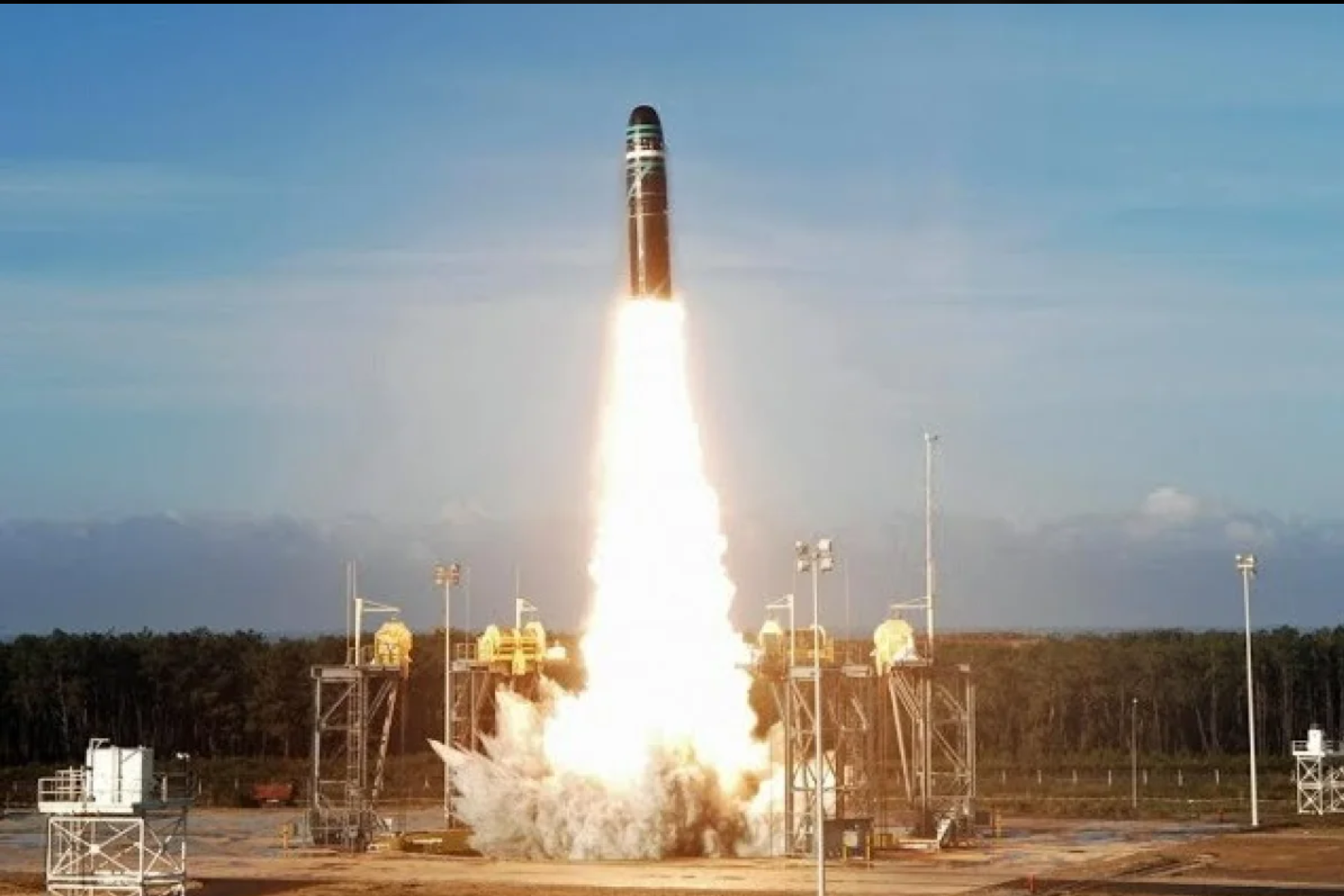
Iran also does not currently possess a publicly demonstrated intercontinental ballistic missile capable of reliably striking the continental United States from Iranian territory. Experts have long warned that Tehran could potentially seek such a capability in the future, particularly if its missile and nuclear programs continue to develop, but assessments of how quickly that could happen vary substantially.
That technical reality is part of the disagreement over Trump’s argument. The White House says preventing Iran from ever reaching that point justifies the current military campaign. Critics argue that the administration has exaggerated the immediacy of the threat while creating new risks through a wider war.
The political consequences of the president’s remarks may become clearer as the United States moves closer to the midterm elections. Trump was in Nebraska campaigning when he made the comments, and both parties are fighting over congressional control at a time when the Iran war, energy prices, inflation and the president’s conduct are becoming increasingly important campaign issues.
California itself is unlikely to become competitive at the presidential level because of the controversy, but several congressional races in the state could matter to control of the House of Representatives. The fact that a Republican congressional candidate such as Desmond publicly rebuked Trump illustrates the political difficulty the remarks may create for candidates trying to support the administration’s broader security policies without defending every statement made by the president.
Newsom’s question about Congress therefore carries both constitutional and electoral dimensions. Democrats want Republican lawmakers to publicly address whether they accept the president’s language, while Republicans must decide whether to defend Trump’s intended argument, criticize his wording or attempt to move the discussion back toward Iran’s nuclear capabilities.
For now, Congress has not taken any formal institutional action specifically in response to the Los Angeles and San Diego remarks. Individual members have condemned the president, but Newsom’s demand for Congress to “stand up” goes further than what has occurred so far and leaves open what action he believes lawmakers should take beyond public criticism and oversight.
Some Trump critics outside Congress have raised impeachment or the Twenty-Fifth Amendment, but neither process has emerged as an organized congressional response to this episode. Impeachment would require action by the House and a subsequent trial in the Senate, while the Twenty-Fifth Amendment involves the vice president and Cabinet in circumstances concerning a president’s ability to discharge the powers and duties of the office.
Those mechanisms should not be confused with ordinary congressional oversight. Lawmakers can hold hearings, demand briefings, question administration officials, restrict or condition military funding and debate war-powers measures without invoking removal from office.
The immediate issue is therefore less about whether Congress possesses tools to respond than whether enough members believe Trump’s remarks or the wider conduct of the Iran conflict require additional action.
The White House is attempting to close that question by insisting that the president’s intended meaning is obvious when the entire speech is considered. Trump, according to his aides, was saying Americans are temporarily paying more for energy because his administration chose to confront Iran rather than allow Tehran to develop the ability to threaten the United States with nuclear weapons.
Newsom and other California officials are rejecting the idea that context eliminates the seriousness of the wording. Their argument is that presidents carry a responsibility to speak differently from ordinary campaign figures when discussing foreign attacks on American soil, particularly when the country is already engaged in hostilities with the government being discussed.
That disagreement is likely to persist because it involves two separate questions. One concerns what Trump meant, and the surrounding context provides substantial evidence that he was discussing the danger he believes a nuclear-armed Iran would pose rather than explicitly calling for an attack on California. The second concerns whether a president should ever use language as ambiguous as “let them take out Los Angeles” and “let them take out San Diego” while making that argument.
It is the second question that has driven the political backlash even after the White House explanation.
Newsom is now using that distinction to place pressure on Congress, while California officials are treating the remarks seriously enough to increase monitoring without claiming that an Iranian attack is imminent. Republican criticism from Desmond has also complicated attempts to dismiss the entire reaction as partisan outrage, although most of the strongest condemnation continues to come from Democratic officials.
The episode leaves the White House defending the president’s intended argument while California leaders focus on the words that were actually spoken. Trump’s administration says its war policy is designed to ensure that Iran can never threaten an American city with a nuclear weapon. Newsom and other critics say that goal does not excuse a president speaking about Los Angeles and San Diego in terms that could reasonably be heard as describing their destruction as an acceptable cost.
What Congress does with the controversy remains uncertain. Individual lawmakers are already speaking, but there has been no formal congressional response specifically to the president’s remarks. Newsom’s demand has therefore turned what began as a disputed passage in a Nebraska campaign speech into a broader test of whether lawmakers believe presidential rhetoric during an active war is itself a matter requiring congressional scrutiny.