NIGERIA CONFIRMS FIRST EBOLA CASE IN MORE THAN A DECADE AS 44 CONTACTS ARE PLACED UNDER MONITORING IN ABUJA
Nigeria has confirmed its first Ebola case in more than a decade after a woman who recently travelled through East Africa tested positive for the Bundibugyo strain in Abuja. The patient is in isolation and receiving treatment, while authorities have identified 44 contacts, including healthcare workers and close contacts, for monitoring. Nigeria is currently treating the infection as an imported case rather than confirmed community transmission. The exact location where the woman contracted Ebola remains under investigation, with Uganda disputing suggestions that the infection necessarily originated there.
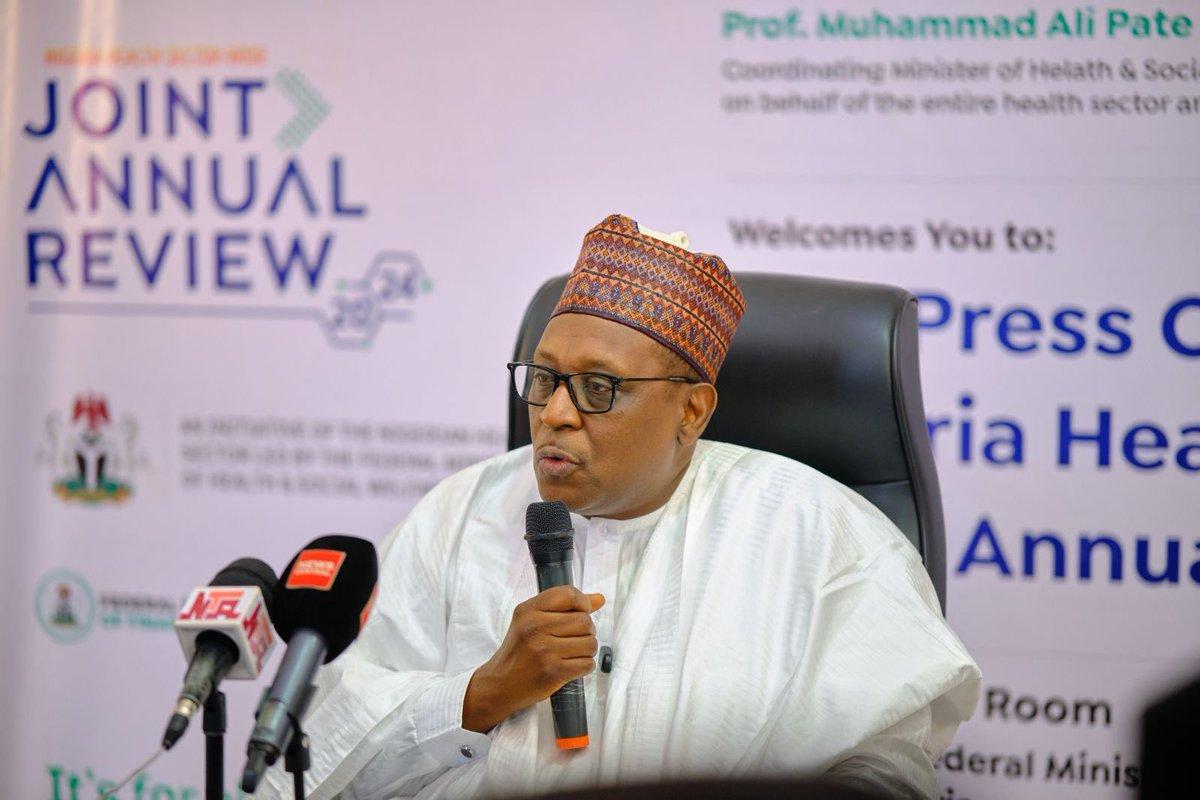
Nigeria has confirmed its first Ebola case in more than a decade after laboratory testing identified the Bundibugyo Ebola virus in a woman who recently arrived in Abuja from East Africa, triggering an intensified public-health response in Africa’s most populous country. Coordinating Minister of Health and Social Welfare Professor Muhammad Ali Pate confirmed the case on Tuesday, October 20, saying the patient had been isolated and was receiving medical treatment while health authorities traced people who may have been exposed to her. At least 44 contacts have already been identified, including healthcare workers, caregivers, patients and travel contacts, while authorities are also using the passenger manifest from her international journey to identify anyone else who may require monitoring.
The case is Nigeria’s first confirmed Ebola infection since the country successfully contained the virus during the 2014 West African epidemic. Nigeria recorded 19 confirmed cases and one probable case during that outbreak, with eight deaths, before the World Health Organization declared the country free of Ebola transmission on October 20, 2014. The latest confirmation therefore represents a significant public-health development for Nigeria but should not be described as the country’s first-ever Ebola case, because Nigeria dealt with and contained an imported outbreak 12 years ago.
The World Health Organization said the latest patient is a woman with a recent travel history to Uganda and confirmed that laboratory testing identified the Bundibugyo strain on October 20. According to the WHO timeline, the woman’s symptoms began on October 7 after she had arrived in Nigeria earlier that month, and she sought medical care at a private facility in Abuja on October 11. Her illness was initially treated as a more common febrile condition before suspicion eventually shifted toward Ebola because of her travel history and failure to improve as expected.
Nigeria Centre for Disease Control officials said the woman arrived in Abuja on October 5 after travelling through East Africa and later developed malaria-like symptoms. She was tested for Ebola on October 19 after health workers learned more about her recent travel history, and the positive result was confirmed the following day. The delay between the beginning of symptoms and Ebola testing is now one of the issues public-health experts are watching closely because infected people become capable of transmitting Ebola after symptoms begin, meaning contacts during that period require careful identification and follow-up.
The patient remains isolated in Abuja and is receiving treatment, while infection-prevention measures have been strengthened at the private hospital where she was initially treated. Health authorities are now examining which healthcare workers, patients and caregivers may have had direct contact with her or with contaminated bodily fluids during the period before Ebola was suspected. This is especially important because healthcare workers can face heightened exposure when caring for an infected patient before the disease has been recognised and full protective procedures have been introduced.
Pate said 44 people had already been identified as contacts and would remain under public-health observation for approximately three weeks, corresponding with Ebola’s maximum 21-day incubation period. The group includes healthcare workers and the patient’s close contacts, while the authorities are also tracing passengers from her journey into Nigeria. The Health Minister said the government is currently treating the case as an imported infection rather than evidence of community transmission, although that classification could change if additional infections are identified among people who did not have a clear epidemiological connection to the patient.
Nigeria’s health authorities have emphasised that the confirmation of one imported case does not automatically mean a wider outbreak is occurring in Abuja. Contact tracing is designed precisely to prevent that outcome by finding anyone who may have been exposed, monitoring them daily and isolating them rapidly if symptoms develop. The success of the response will therefore depend heavily on whether authorities can identify every significant contact and maintain effective monitoring throughout the full incubation period.
The Federal Government has urged anyone contacted by public-health teams to cooperate fully and provide accurate information about their movements and interactions. Health officials are particularly concerned about passengers who may have travelled with the patient or people who encountered her during the period after symptoms developed. Pate said authorities had obtained the relevant travel manifest and were working through it to identify potentially exposed passengers, although officials believe the woman was not symptomatic during the international flight into Nigeria, which would reduce the likelihood of transmission during the journey itself.
Ebola does not normally spread through casual contact with an infected person before symptoms begin. Transmission occurs through direct contact with the blood or other bodily fluids of a symptomatic infected person, or through objects and surfaces contaminated with those fluids. That means public-health investigators will focus most closely on contacts who cared for the patient, shared living spaces with her or had direct exposure after she began showing symptoms.
The Federal Ministry of Health has asked hospitals across Nigeria to maintain a high level of vigilance and immediately report suspected cases. Healthcare workers have been advised to consider recent travel history when assessing patients with fever, severe weakness, headache, vomiting, diarrhoea, muscle pain or other symptoms compatible with Ebola, particularly if the patient has recently travelled through areas affected by the regional outbreak. Officials are also emphasising strict infection-prevention procedures because early recognition and isolation can dramatically reduce the possibility of transmission inside healthcare facilities.
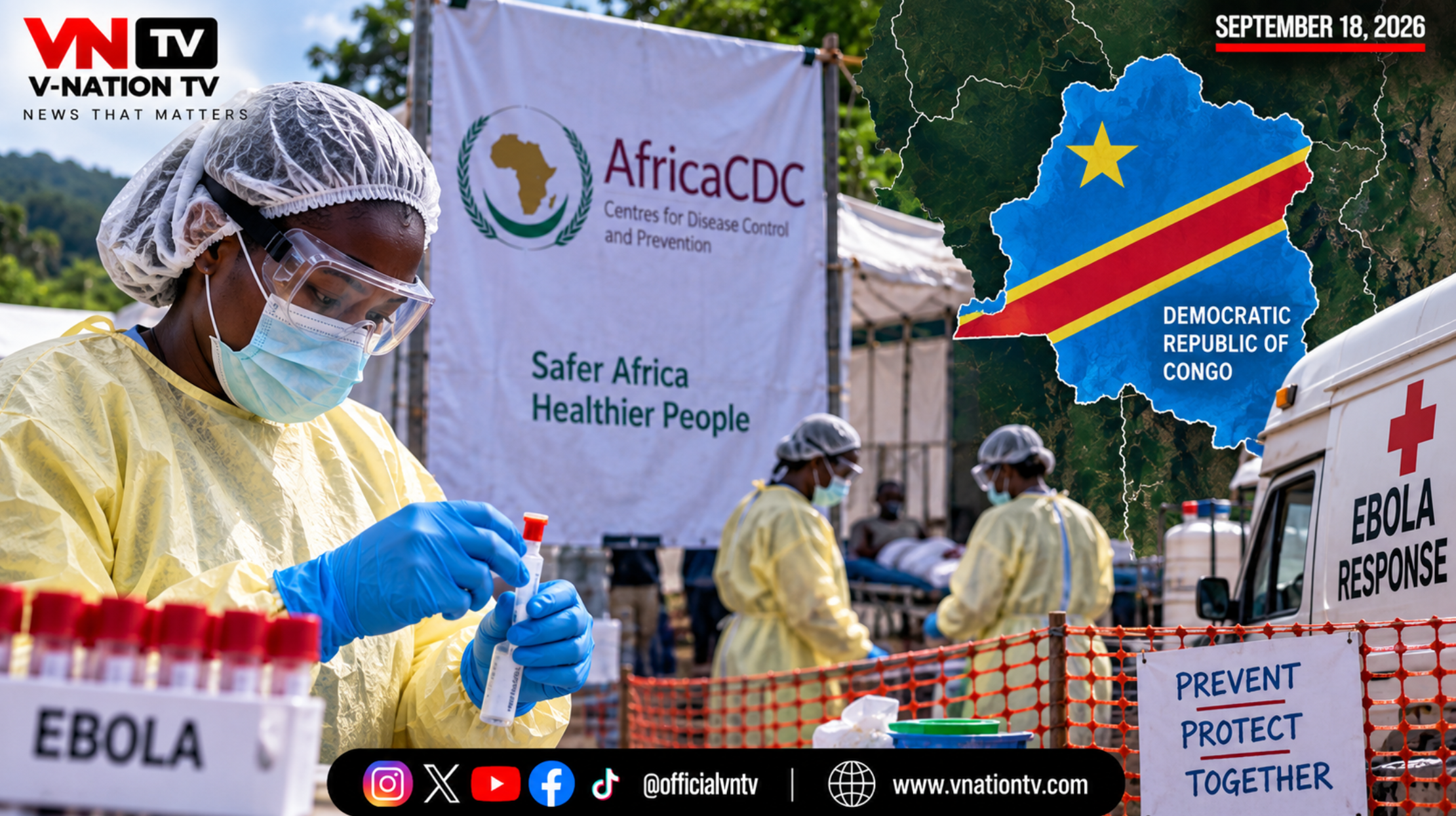
The confirmed virus is the Bundibugyo species of Ebola, which differs from the Zaire Ebola virus responsible for several earlier major outbreaks. The current regional outbreak began in the Democratic Republic of Congo in May 2026 and has expanded rapidly across several provinces, creating growing concern about cross-border transmission. WHO says the strain involved has no approved vaccine or treatment specifically licensed for widespread use, making early detection, isolation, supportive clinical care, infection control and contact tracing especially important.
The scale of the outbreak in Congo has made Nigeria’s imported case particularly significant. More than 9,000 infections and thousands of deaths have been reported in the DRC since the outbreak began, with transmission spreading across multiple provinces. Health authorities have described the regional situation as one of the fastest-moving Ebola emergencies recorded and have warned that repeated movement across national borders could allow the virus to reach countries far from the original epicentre.
Nigeria is now one of several countries to report imported or linked infections during the wider outbreak. Kenya has confirmed multiple cases connected to an imported patient, while Uganda previously recorded cases before authorities declared the country Ebola-free after completing the required period without new transmission. France has also reported an imported case linked to the wider outbreak, illustrating how international travel can move infections far beyond the immediate outbreak zone.
There is currently disagreement over where the Nigerian patient acquired the infection. Nigerian health officials initially described her as having arrived from Uganda and said they presumed exposure may have occurred there based on her travel history. Uganda’s Health Ministry has strongly challenged that interpretation, saying the woman had travelled in the Democratic Republic of Congo and merely transited Uganda while asymptomatic before continuing her journey to Nigeria.
Ugandan authorities said travel through the country does not establish that infection occurred there and stressed that Uganda had no confirmed active Ebola cases at the time of the woman’s transit. They also said preliminary information indicated she had recently travelled to eastern Congo for business, although Nigerian authorities have not independently confirmed the full Congo travel history. The exact location of exposure therefore remains under investigation, and responsible reporting should avoid stating conclusively that she contracted Ebola in Uganda.
WHO has adopted the same cautious position, saying investigations are continuing to reconstruct the woman’s full travel and exposure history and determine the most likely source of infection. The organisation describes the Nigerian case as imported because the evidence indicates exposure occurred outside Nigeria, but it has not publicly assigned the infection definitively to Uganda.
That distinction matters because disease surveillance and diplomatic communication depend on accurate identification of where transmission occurred. If the woman was infected in Congo and merely passed through Uganda, then describing Uganda as the source could create unnecessary public fear or travel consequences for a country that had already been declared free of active transmission. If exposure did occur elsewhere, investigators will need to identify that location so additional contacts can be traced.
The Abuja case has also raised concern because Nigeria is highly connected domestically and internationally. The Federal Capital Territory receives large numbers of travellers by air and road, and Abuja serves as a major centre for government, diplomacy, commerce and regional travel. A delayed diagnosis in such a city creates more complex contact-tracing demands than an isolated rural case because the number of potential interactions can be considerably larger.
Public-health experts have therefore emphasised speed rather than panic. Dr Ayoade Alakija, a Nigerian physician involved in international health policy, described the spread of Ebola from East and Central Africa into West Africa as a serious regional escalation and warned that the delay between symptom onset and diagnosis increased the number of people who might need to be investigated. Her concern centres on the mobility of modern African cities and the possibility that infected people may travel significant distances before receiving an accurate diagnosis.
Africa Centres for Disease Control and Prevention has responded by calling for an extraordinary virtual meeting of African health ministers on October 28 to discuss the regional spread and strengthen collective action. Africa CDC Director General Jean Kaseya has said the disease is now affecting multiple regions of the continent and requires high-level political leadership, stronger surveillance and coordinated cross-border response.
The meeting is expected to focus on information sharing, laboratory capacity, surveillance, contact tracing, protection of health workers and preparedness at major transport hubs. The rapid geographic spread of the outbreak has exposed weaknesses in border screening because Ebola can be difficult to detect among travellers who have not yet developed symptoms.
Nigeria had already begun increasing Ebola preparedness before the Abuja case was confirmed. The NCDC raised surveillance levels in September after the worsening situation in Congo and introduced enhanced health declaration requirements for travellers arriving from countries considered at risk. Port Health Services, airport authorities and the NCDC have been conducting risk-based surveillance, while an Ebola response structure had been prepared in anticipation of the possibility that an imported case could reach Nigeria.
The NCDC has now activated its incident management system to coordinate the national response. This structure brings together epidemiologists, laboratory specialists, clinicians, infection-prevention teams, communications experts and state-level health officials under a unified emergency framework. The aim is to ensure that laboratory testing, contact tracing, patient management, supplies and public information are coordinated rather than handled separately by different agencies.
WHO is supporting Nigeria with case investigation, tracing, infection-prevention measures and essential supplies including personal protective equipment. The organisation has also advised countries across the region to maintain laboratories capable of safely testing suspected cases, keep rapid response teams ready and ensure both public and private hospitals can recognise possible Ebola infections quickly.
Private healthcare facilities are particularly important in the Nigerian response because the Abuja patient initially sought care outside the public hospital system. This means outbreak preparedness cannot be limited to government treatment centres. Doctors and nurses in private clinics must also recognise suspicious travel histories, isolate possible cases and alert public-health authorities quickly.
The current patient’s initial malaria-like symptoms illustrate the diagnostic difficulty. Fever, weakness, headache and body pain are common in many tropical illnesses and can easily be attributed to malaria, typhoid fever or other infections. Without a detailed travel history, Ebola may not be suspected immediately, particularly in a country that has not recorded a case for more than a decade.
That makes clinical questioning one of the strongest tools available to health workers. Asking where a patient has travelled during the previous three weeks, whether they have been in contact with sick people and whether they visited regions reporting Ebola can help doctors decide when ordinary fever requires additional testing and isolation.
Nigeria’s previous experience in 2014 provides some reassurance because the country successfully stopped Ebola after an infected traveller arrived in Lagos. Patrick Sawyer, a Liberian-American official, flew into Lagos while ill in July 2014 and triggered a cluster that ultimately produced 20 confirmed and probable cases. Nigerian authorities responded with aggressive contact tracing, isolation and surveillance, eventually tracking hundreds of contacts and stopping the outbreak within months.
The 2014 response became an internationally recognised example of rapid outbreak control in a densely populated African city. Health authorities used an emergency operations centre originally developed for polio eradication and adapted it to Ebola, enabling teams to track contacts systematically and respond quickly when symptoms appeared.
Pate has invoked that history in reassuring Nigerians that the country has experience managing Ebola. He said Nigeria’s public-health system learned important lessons from 2014 and has stronger surveillance and emergency-response infrastructure today. At the same time, he has urged the public not to become complacent because successful containment depends on early reporting and cooperation from contacts.
There are important differences between 2014 and the current situation. Nigeria now has more developed laboratory capacity and outbreak-management systems, but the present regional outbreak involves the Bundibugyo species and is spreading across several countries simultaneously. The international movement of people has also increased, giving the virus more opportunities to travel before cases are detected.
The current outbreak is therefore being treated as both a national emergency-preparedness challenge and a broader continental threat. Nigeria’s success or failure in containing the imported case will matter well beyond Abuja because uncontrolled transmission in Africa’s most populous country could significantly increase the complexity of the regional response.
Authorities are especially focused on healthcare-worker protection. Ebola outbreaks can accelerate rapidly when doctors, nurses and support staff become infected because health workers interact with many patients and colleagues before their illness is recognised. The 44 identified contacts include a substantial number of healthcare personnel, making daily monitoring and proper protective equipment critical.
The patient’s spouse is also among the identified contacts. Reuters reported that her husband is a Swiss national living with her in Abuja, illustrating that the investigation includes household exposure as well as medical contacts. People sharing a home with a symptomatic patient can face significant risk if they assist with care or handle contaminated materials.
Health authorities will monitor contacts for fever and other symptoms throughout the incubation window. A contact who remains well for the full 21 days after their last possible exposure is generally considered no longer at risk from that exposure. Anyone who becomes symptomatic must be isolated immediately and tested.
This process can be demanding because contact tracing requires daily communication, accurate records and cooperation from each person involved. If even one high-risk contact becomes unreachable, public-health teams may have difficulty interrupting transmission before that person interacts with others.
Pate has therefore asked people not to conceal travel histories or possible exposures. Fear and stigma can make individuals reluctant to report symptoms, but officials warn that delayed disclosure increases the risk to families, healthcare workers and communities.
The government has also appealed for calm because panic can create harmful behaviour. During earlier Ebola outbreaks, misinformation caused people to avoid hospitals, use dangerous supposed remedies or discriminate against individuals from affected countries. Health authorities are trying to prevent a repeat by emphasising that Ebola spreads through specific forms of direct contact and is not transmitted simply by being near someone who is healthy and asymptomatic.
Public communication will be especially important because the announcement is likely to revive memories of the 2014 West African epidemic, which killed more than 11,000 people across Guinea, Liberia and Sierra Leone. Nigeria avoided a large-scale epidemic at the time, but public fear was intense and rumours spread rapidly.
Authorities will therefore need to provide regular updates on the patient’s condition, the number of contacts being monitored and whether any secondary cases are detected. Transparent information can help prevent speculation while giving health facilities and communities clear guidance.
The Federal Government has already said the NCDC’s toll-free number 6232 is available around the clock for people seeking information or reporting suspected cases. Individuals who believe they have had contact with a possible Ebola patient are being advised to call health authorities rather than arriving unannounced at crowded hospitals, where an undiagnosed infection could expose additional people.
WHO currently advises against imposing blanket travel or trade restrictions on affected countries. The organisation’s position is that screening, surveillance and rapid case investigation are more effective than broad border closures, which can disrupt economies and make outbreak response more difficult by limiting movement of medical personnel and supplies.
However, countries are expected to strengthen monitoring at airports and land borders. Nigeria’s ports of entry will therefore remain a major focus in the coming weeks as health officials watch for travellers arriving from areas experiencing active transmission.
The Abuja case is also likely to intensify regional debates about airport screening. The infected woman was reportedly asymptomatic while travelling, demonstrating one of the limits of temperature checks and symptom-based screening. A traveller in the incubation period can pass through multiple airports without showing any signs of disease.
This means border screening must be combined with post-arrival surveillance and accurate travel declarations. Authorities need to know where travellers have been so they can contact them later if an outbreak is discovered or if they develop symptoms.
The precise travel history of Nigeria’s patient is still being reconstructed. Reuters reported that she travelled to Abuja via Addis Ababa, while Ugandan authorities say she had been in eastern Congo before passing through Uganda. Establishing her itinerary could identify additional passengers or communities requiring follow-up outside Nigeria.
International cooperation will therefore be essential. Nigeria may need to share passenger information with Ethiopia, Uganda, Congo and other countries depending on the route, while foreign health agencies may have relevant information about people she encountered before reaching Abuja.
The situation also illustrates why diseases do not remain confined by national borders. A virus emerging in one part of Congo can reach East Africa, West Africa or Europe through ordinary commercial and personal travel, making regional preparedness necessary even in countries with no active local transmission.
For Nigeria, the next 21 days will be particularly important. If the 44 identified contacts and any additional passengers remain symptom-free through their monitoring periods, authorities will have stronger evidence that the imported case was contained. If secondary infections appear, the response will expand rapidly and officials will need to determine whether those cases are limited to known contacts or indicate wider transmission.
The distinction between imported infection and community transmission is therefore crucial. Nigeria currently has one confirmed imported case, not a confirmed community outbreak. That status should only change if evidence shows the virus has spread beyond the known chain of exposure.
The government’s decision to isolate identified contacts and increase infection-control measures is intended to prevent exactly that progression. Public-health containment depends on acting aggressively before multiple infections emerge rather than waiting for a large outbreak to become visible.
Hospitals throughout Nigeria have now been instructed to maintain a high index of suspicion. This does not mean every fever should be treated as Ebola, but patients with compatible symptoms and relevant travel or exposure history require immediate evaluation.
The Federal Capital Territory faces particular pressure because it must manage the known case while maintaining ordinary healthcare services. Hospitals cannot allow fear of Ebola to prevent treatment of malaria, maternal emergencies, injuries or other illnesses, meaning isolation procedures must be targeted and well organised.
The government will also need to protect patient confidentiality. Publishing identifying details about the infected woman or the 44 contacts could expose them to harassment and discourage others from cooperating with future tracing efforts. Authorities have therefore released only limited personal information while focusing on the epidemiological facts.
Economic concerns may emerge if additional cases are detected, particularly around travel, hospitality and business activity in Abuja. During major outbreaks, fear can reduce movement even when official restrictions are not imposed. Transparent containment measures will therefore matter not only for public health but also for confidence in the capital.
Nigeria’s large population makes the current response particularly important internationally. Health officials have repeatedly warned that uncontrolled transmission in a major Nigerian city would require far more resources than containing a single imported case. The country’s domestic transport links could also allow infected people to travel quickly between states if cases are not identified early.
For that reason, state governments outside Abuja are expected to remain alert even though no infections have been confirmed elsewhere in Nigeria. Surveillance systems need to recognise possible cases among travellers leaving the Federal Capital Territory as well as people arriving directly from affected countries.
The Africa CDC crisis meeting scheduled for October 28 will provide another indication of how seriously continental health authorities view the spread. Ministers are expected to discuss surveillance failures, preparedness, vaccines, treatment research and financing at a time when international health budgets remain under pressure.
Funding shortages have become a major concern in the regional response. Ebola containment requires laboratory reagents, protective clothing, treatment units, trained staff, transport and large contact-tracing teams. If outbreaks expand across multiple countries simultaneously, those resources can be stretched quickly.
Research into vaccines and treatments for the Bundibugyo strain has therefore taken on new urgency. Existing Ebola vaccines have primarily targeted other species, particularly Zaire Ebola virus, and researchers are conducting trials aimed at improving protection against Bundibugyo.
Until more effective specific medical countermeasures are widely available, traditional outbreak-control tools remain the foundation of the response. Those tools include isolation, supportive medical treatment, safe handling of bodily fluids, contact tracing, protective equipment and community cooperation.
Nigeria’s 2014 success shows these methods can work even in a large urban environment. The challenge now is applying them quickly enough after the delayed recognition of the Abuja patient.
The most important confirmed facts are that Nigeria has recorded one imported case of Ebola Bundibugyo virus disease in Abuja, the patient is isolated and receiving treatment, and 44 contacts have been identified for monitoring. Investigators are continuing to reconstruct her travel history, and the precise country where she became infected has not yet been established conclusively.
The case should therefore be treated seriously but accurately. Nigeria has not announced widespread community transmission, and health authorities have not declared a nationwide Ebola outbreak involving multiple local cases. The country is dealing with one confirmed imported infection while actively trying to prevent secondary spread.
Nigeria’s experience over the coming days will show whether that containment effort succeeds. For a country that earned international praise for stopping Ebola rapidly in 2014, the latest case represents both a major test and an opportunity to demonstrate that the surveillance, laboratory and emergency-response systems built since then can again prevent a dangerous imported virus from becoming a national epidemic.