NIGERIAN ARMY RESCUES 16 ABDUCTED PEOPLE IN NIGER STATE, RECOVERS AK-47 RIFLES, RPG BOMBS AND 33 MOTORCYCLES
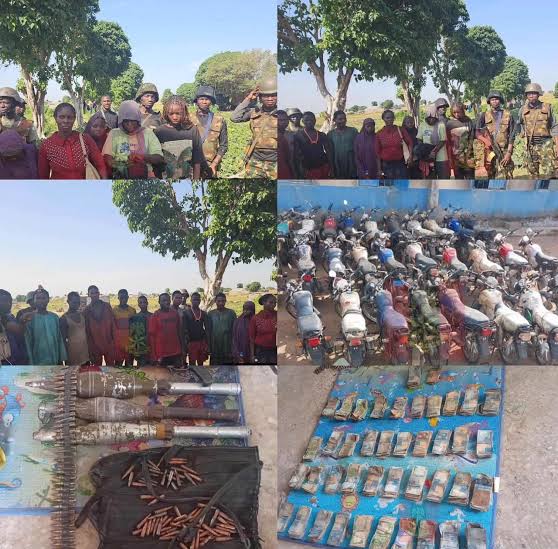
Nigerian Army troops from 18 Brigade rescued 16 abducted people during an ambush in Kontagora Local Government Area on November 5. The military said it recovered two AK-47 rifles, seven magazines, three RPG bombs, 33 motorcycles, ammunition and ₦4.105 million. A separate November 3 operation produced additional recoveries in Niger State.
Troops of the Nigerian Army have rescued 16 people held by armed groups in Niger State after an ambush along suspected terrorist routes in Kontagora Local Government Area, recovering two AK-47 rifles, three rocket-propelled grenade (RPG) bombs, 33 motorcycles, ammunition and more than ₦4.1 million in cash. The operation, carried out on Thursday, November 5, followed intelligence reports about the movement of suspected terrorists from Mashegu Local Government Area towards Rijiyan Nagwamatse in Kontagora, where the armed men were believed to have been moving with people they had abducted.
The Nigerian Army’s 18 Brigade said its troops established an ambush along the suspected route after receiving information about the group’s movements. Soldiers subsequently made contact with the armed men, who, according to the military, had earlier abducted residents in the area. A confrontation followed, during which troops rescued 16 captives and neutralized an unspecified number of the attackers. The Army did not disclose the identities or exact number of those killed, nor did it provide further details about the circumstances surrounding the original abductions.
The operation also yielded a substantial quantity of weapons and other materials. In a statement issued by the Acting Assistant Director of Army Public Relations, 18 Brigade, Captain Adebayo Adewumi, the military listed the recovered items as two AK-47 rifles, seven rifle magazines, three RPG high-explosive anti-personnel bombs, assorted ammunition, 33 motorcycles and ₦4,105,000 in cash. The recovered motorcycles and weapons are significant elements of the operation because armed groups operating across parts of north-central Nigeria have relied on mobility and access to forested routes to move between settlements, evade security patrols and carry out attacks.
The Army said the 16 rescued people received first aid after the operation and were subsequently handed over to the appropriate authorities for reunification with their families. It did not immediately provide information about their ages, the communities from which they were abducted, how long they had been held or whether any of them required further medical treatment. The military also said the recovered weapons, ammunition, motorcycles and cash remained in its custody for further action.
Captain Adewumi described the operation as evidence of the impact of the Army’s expanding operational presence, saying the deployment of troops and strengthened formations were improving the military’s ability to respond to security threats. The Commander of 18 Brigade commended the soldiers involved for their conduct and urged them to maintain pressure on armed groups operating within the brigade’s area of responsibility. The Army said it intended to sustain operations aimed at protecting communities and disrupting the activities and logistics of criminal networks.
The November 5 operation was not the only recent military engagement reported by the brigade. The Army also disclosed a separate encounter on November 3 involving troops who intercepted suspected terrorists travelling from Makuku Village in Sakaba Local Government Area of neighbouring Kebbi State towards Tungan Kawo in Rijau Local Government Area of Niger State. According to the military, soldiers engaged the group in a firefight, forcing the armed men to withdraw into surrounding forest areas. The Army said some of those who escaped sustained gunshot wounds, although it did not provide a confirmed casualty figure.
A subsequent search of the area led to the recovery of five motorcycles, a mobile phone, ₦644,300 in cash and other items. The November 3 recovery was separate from the November 5 operation in Kontagora. Taken together, the two incidents involved the recovery of 38 motorcycles and more than ₦4.7 million in cash, alongside the weapons and ammunition seized during the later operation. The Army has not publicly detailed the intended use of the recovered cash or established whether the motorcycles and other materials were directly connected to specific kidnapping incidents.
The operations come as Niger State continues to face serious security concerns, particularly in rural communities where armed groups have carried out kidnappings, attacks on residents and movements through sparsely populated areas. The scale of the state and the presence of extensive rural and forested terrain have created challenges for security agencies seeking to monitor movement between communities and respond quickly when attacks occur. In several incidents, residents have been seized from farms, villages and other locations where security presence is limited, leaving families dependent on rescue operations and negotiations for the safe return of abducted relatives.
One recent incident involved the abduction of 14 students of an Islamiyya school and their teacher in Tungan-Bako village, within Rafi Local Government Area. Police said the attack occurred on October 31, when suspected gunmen invaded a farm where the students were helping their teacher harvest maize. The Niger State Police Command confirmed that 14 students had been taken, correcting earlier reports that suggested a higher number, and said joint security efforts had been initiated to secure their release. The Army’s announcement of the rescue of 16 people in the Kontagora operation does not establish that those victims were among the students abducted in Rafi, and no official statement has linked the two incidents.
The distinction is important because several communities across Niger State have experienced separate attacks and abductions, sometimes within a short period. While the latest rescue represents a significant development for the families of the 16 people recovered, it does not by itself establish that the wider pattern of kidnappings has been brought under control. Security operations may disrupt armed groups in one location while other groups continue to operate across neighbouring local government areas, making sustained intelligence gathering, patrols and coordination between security agencies central to efforts to prevent further attacks.
The recovery of 33 motorcycles during the Kontagora operation also draws attention to the mobility of armed groups in the region. Motorcycles can be used to travel along narrow rural roads and routes that may be difficult for larger security vehicles to access. Their recovery may therefore restrict the movement of the particular group involved, although the Army has not explained how the motorcycles were being used or whether they were all owned or operated by the suspects. Similarly, the recovery of RPG bombs, rifles and ammunition indicates that the group had access to potentially lethal weapons, but the military has not disclosed whether the explosives were found ready for use or whether specialist teams were required to secure them.
The Army’s account provides the principal available details of the November 5 engagement, including the number of people rescued and the items recovered. However, several questions remain unanswered, including the identities of the abducted people, the precise location of their captivity, the number of attackers involved and whether any suspects were arrested. The military has also not provided details of follow-up investigations into the recovered weapons, cash and motorcycles. Further information from the authorities may clarify whether the operation has led to additional intelligence about the networks responsible for kidnappings in the area.
For the rescued people, the immediate priority is medical attention, identification and safe reunification with their families. The Army says first aid was administered before they were transferred to the appropriate authorities, but the process of confirming their identities and tracing relatives may require further coordination with local officials and security agencies. Their release is a positive development for those affected by the abductions, while the broader security situation in Niger State remains a concern for communities exposed to attacks and the threat of further kidnappings.
The military has pledged to sustain its operations against armed groups in its area of responsibility, but the effectiveness of that effort will ultimately depend on whether security agencies can maintain pressure beyond individual encounters and prevent the groups from returning to vulnerable communities. For residents in Kontagora, Mashegu, Rijau and other affected areas, the central test will be whether the latest operation is followed by a more consistent security presence, improved protection along rural routes and the safe recovery of other people who may still be held captive. The rescue of 16 abducted people marks an important outcome of the November 5 operation, but the continuing reports of kidnappings across the state underline the scale of the work still facing Nigerian security forces.