NIGERIAN ARMY RESPONDS TO VIRAL VIDEO SHOWING CONFRONTATION WITH POLICE IN PLATEAU
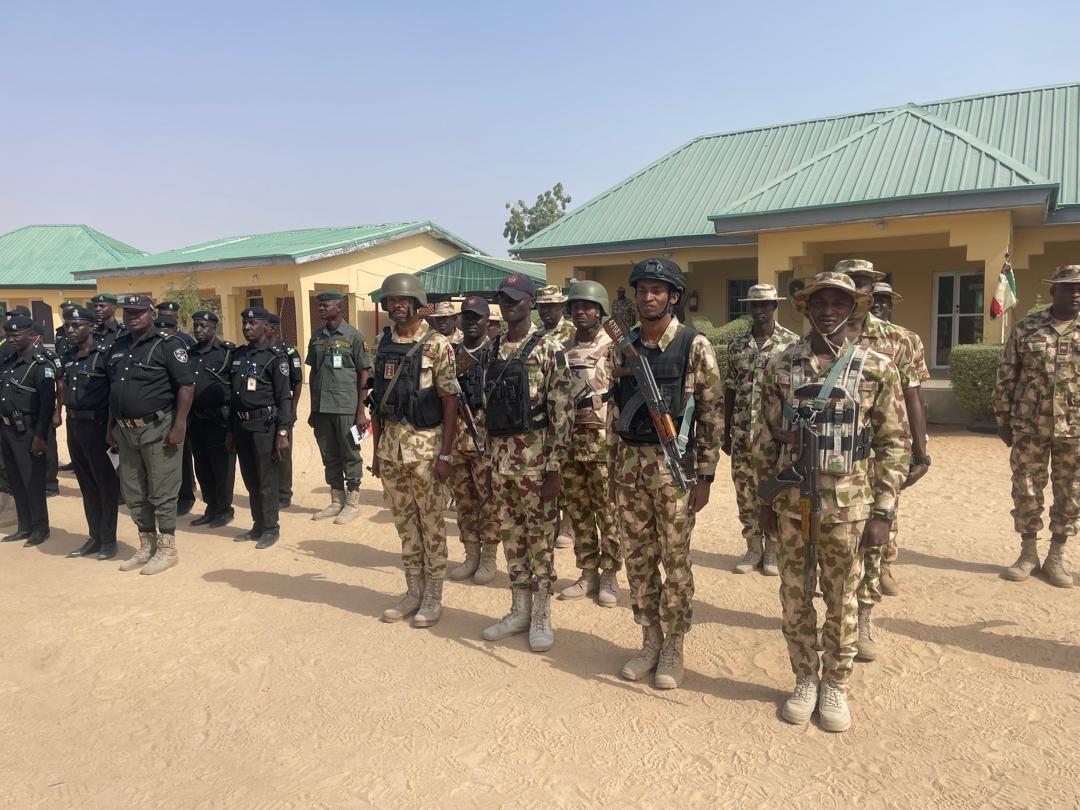
Nigeria’s Operation Enduring Peace has explained a viral video showing soldiers and police officers in a tense encounter in Bassa Local Government Area of Plateau State. The task force says troops were deployed on October 20 after reports of sporadic gunfire in Mai Farin Moto, Maraban Dere and neighbouring communities and the reported killing of resident Adamu Suleiman. The military alleges some police personnel failed to cooperate when soldiers attempted to coordinate the response. A viral-video narration contains additional claims involving armed militia members, but those allegations have not been independently verified. The matter is now being handled through military command and inter-agency channels, while a detailed police response remains outstanding.
The Nigerian Army’s Operation Enduring Peace has issued a detailed explanation following the circulation of a viral video showing a tense encounter between soldiers and officers of the Nigeria Police Force in Bassa Local Government Area of Plateau State, insisting that its personnel were deployed to the area in response to an operational distress call and not to obstruct a police security operation. The clarification follows growing online discussion around the footage, which has generated competing claims about what happened when the two security agencies encountered one another during an operation on October 20.
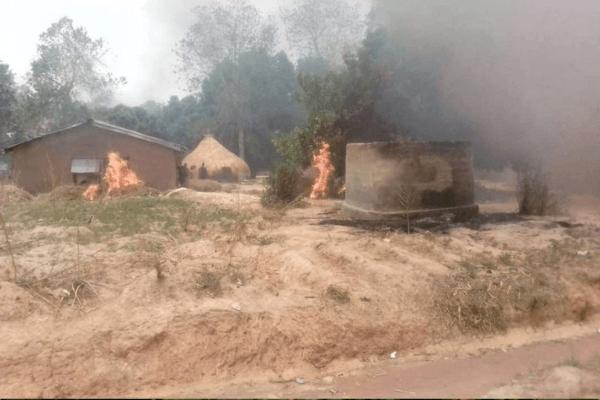
According to the Headquarters Joint Task Force, Operation Enduring Peace, troops from Sector 3 were deployed after receiving reports of sporadic gunfire in Mai Farin Moto, Maraban Dere and neighbouring communities in Bassa. The task force said the distress call also included information that a local resident, identified as Adamu Suleiman, had been killed, prompting troops to move into the area to assess the situation, determine what had happened, prevent further escalation and protect lives and property.
The military said that when its personnel arrived, they found police officers already operating in the area and attempted to engage them in order to clarify the situation and coordinate a joint security response. Operation Enduring Peace alleged, however, that the interaction became difficult because some of the police personnel were unwilling to cooperate, despite what the military described as attempts by soldiers to de-escalate the situation and maintain operational discipline.
The statement was signed by the task force’s Media Information Officer, Captain Chinonso Polycarp Oteh, who stressed that the soldiers had been sent into the area because of a security emergency and were acting, according to the military’s account, in the interest of public safety. He urged members of the public to consider the circumstances that triggered the deployment before drawing conclusions from the viral video or from commentary circulating on social media.
That explanation directly challenges claims attached to some versions of the viral footage. Daily Post reported that a narrator in the video alleged that police personnel had entered the area during a clearance operation, encountered individuals described as militia members carrying military-grade weapons and were then prevented by soldiers from making arrests. Operation Enduring Peace rejected that narrative as an inaccurate representation of events, but the full circumstances have not yet been independently established by a neutral investigation or publicly documented joint report from both agencies.
This distinction is important because the military’s statement is the official account of one of the agencies involved in the confrontation, rather than an independent finding on what happened. While Operation Enduring Peace has described the deployment, the reported killing and the alleged lack of cooperation from some police officers, there has not yet been a detailed public response from the Plateau State Police Command addressing each of those claims or explaining the police officers’ version of the confrontation.
The Sun reported that Plateau State Police Command spokesperson SP Alfred Alabo said he had not seen the Operation Enduring Peace statement when contacted and was in a meeting at the time. He reportedly indicated that he would respond later, but no substantive police account had been published by the time that report was filed. That means the public record currently contains a fuller military explanation than police explanation, making it especially important not to treat the Army’s version as the final established account.
Operation Enduring Peace said the dispute is now being handled through appropriate military command and inter-agency channels. According to the task force, those discussions are intended to establish the facts, preserve operational cohesion between security agencies and prevent similar confrontations from occurring during future joint or overlapping operations.
The task force also used the incident to emphasise the importance of cooperation between security organisations operating in Plateau State. It said successful joint operations depend on mutual respect, clear communication, adherence to established procedures and unity of effort among the Army, police and other security institutions responsible for responding to violence and maintaining public order.
The controversy is particularly sensitive because Plateau State remains one of Nigeria’s most security-challenged areas, where communal violence, armed attacks, criminal activity, farmer-herder tensions and reprisals have repeatedly placed pressure on security forces. The military and police often operate simultaneously in communities facing immediate threats, meaning confusion over command, intelligence, arrests and operational responsibility can quickly become dangerous if agencies are not closely coordinated.
Bassa Local Government Area has experienced repeated security incidents over the years, making the reported gunfire on October 20 consistent with the type of emergency that can draw multiple agencies into the same location. Operation Enduring Peace has responsibility for military-led security operations across parts of Plateau and neighbouring areas, while the Nigeria Police Force retains primary law-enforcement responsibilities involving investigation, arrest and prosecution of criminal suspects.
Those overlapping responsibilities can sometimes create friction, particularly when agencies arrive with different intelligence, operational objectives or understandings of who controls a specific scene. In the Plateau incident, the unresolved question is whether the confrontation resulted primarily from a breakdown in communication, disagreement over the identity of armed individuals in the area, or a more serious dispute over how the security operation should have been conducted.
The viral footage has intensified those questions because visual recordings of security confrontations can quickly shape public perception before official investigations establish the context surrounding what viewers are seeing. A short video may capture a heated exchange or physical positioning of officers without showing what occurred immediately before or after the recording, making accompanying narration particularly influential.
That appears to be one of the military’s concerns. Operation Enduring Peace urged both media organisations and members of the public to verify information before circulating claims and warned against unsubstantiated reports that could damage confidence in security institutions or worsen relations between agencies. The task force said misinformation surrounding sensitive operations could undermine the ability of personnel to work together in areas already affected by violence.
At the same time, calls for caution in sharing unverified material do not eliminate the need for transparent investigation of the incident itself. The viral video has raised legitimate public questions about why heavily armed security personnel from two federal agencies appeared to be in confrontation during an active security operation and whether their disagreement affected efforts to respond to the reported killing of a resident.
The reported death of Adamu Suleiman remains central to the military’s explanation. Operation Enduring Peace said the information about his killing formed part of the distress call that triggered the deployment, but the statement did not provide detailed circumstances of his death, identify suspects or explain whether any arrests had been made in connection with the killing.
The identity of those responsible for the reported gunfire also remains unclear from the official statement. The military did not publicly say whether the shooters were criminal gangs, communal fighters, militia members or other armed actors, and it did not confirm the claim in the viral narration that armed militia members were present at the scene.
Those unanswered questions make the outcome of the inter-agency review important. If investigators establish that armed suspects were present, authorities will need to determine whether they were identified, detained or allowed to leave and why. If the claims attached to the video are found to be inaccurate, security agencies may need to explain how that misinformation developed and why the confrontation was interpreted in that manner.
The review will also need to examine the conduct of personnel from both agencies. Operation Enduring Peace has alleged that some police officers failed to cooperate, but that allegation has not yet been independently tested. Any determination of responsibility should consider radio communications, deployment orders, eyewitness accounts, body-camera or phone footage where available and reports filed by officers after the incident.
Such evidence would help establish whether one agency attempted to obstruct the other, whether both were operating under conflicting instructions or whether the confrontation resulted from confusion during a rapidly developing security situation.
Inter-agency tensions are not unique to Plateau State. Nigeria has experienced previous incidents in which soldiers, police officers and other security personnel have clashed over arrests, checkpoints, detainees or jurisdiction. Those incidents can be especially damaging because the institutions involved are expected to cooperate against common security threats.
When disagreements become physical or public, they can weaken civilian confidence and create opportunities for criminal groups to exploit gaps in coordination. For residents in conflict-prone communities, the sight of security agencies confronting one another can be particularly disturbing because those same personnel are relied upon for protection.
That is why Operation Enduring Peace’s statement repeatedly emphasised operational cohesion. The task force said inter-agency cooperation remained essential to consolidating peace across its area of responsibility and assured Plateau residents that it remained committed to maintaining law and order and protecting civilians.
The Plateau incident also highlights a broader challenge in Nigerian security operations: the number of agencies that can become involved in the same crisis. The Army, police, Nigeria Security and Civil Defence Corps, intelligence agencies, local vigilantes and other security actors may all operate in areas affected by armed violence, sometimes under different command structures.
Joint task forces are intended to reduce those problems by bringing agencies into coordinated operational frameworks. Operation Enduring Peace itself is structured around that principle, making a public confrontation between soldiers and police particularly concerning because it suggests that coordination mechanisms may have broken down at the tactical level.
The military’s decision to address the video publicly indicates that the controversy had become significant enough to require an institutional response. Rather than dismissing the footage outright, the task force acknowledged that an encounter occurred but disputed the interpretation being circulated alongside it.
That approach leaves several facts uncontested. Soldiers and police officers encountered one another in Bassa on October 20, the interaction became tense enough to attract public attention, a video of the confrontation circulated widely and military authorities are now addressing the matter internally and through inter-agency channels.
What remains disputed is why the confrontation occurred and whether either agency obstructed a legitimate operation by the other.
The viral narration presents one version in which police were allegedly attempting to act against armed individuals. The military presents another version in which soldiers responded to gunfire and a reported killing, tried to coordinate with police already present and were met with insufficient cooperation from some officers.
Without a detailed police account or an independent investigation, neither broader narrative should be presented as completely established.
The timing of the military statement also matters. Although the incident occurred on October 20, the video circulated more widely several days later, prompting Operation Enduring Peace to issue its clarification around October 25 and 26. That sequence means much of the public conversation developed before the task force formally provided its version.
Social media has increasingly become a major source of information during Nigerian security incidents, but it can also accelerate incomplete or misleading narratives. Videos can travel nationally within minutes, often accompanied by commentary from individuals who may not have been present or who possess only one side of the story.
The challenge for security agencies is to respond quickly enough to prevent misinformation from becoming accepted as fact while still ensuring that official statements are accurate and do not simply defend their own personnel before investigations are complete.
In this case, Operation Enduring Peace’s statement combines factual claims about the distress call and deployment with an allegation about police cooperation. Those elements should be treated differently. The deployment and the military’s own operational orders can likely be documented internally, while the conduct of police personnel requires corroboration from other evidence and the police themselves.
Similarly, claims made by the narrator of the viral video require verification. The presence of individuals carrying weapons does not automatically establish that they were militia members, and any allegation that soldiers deliberately shielded armed suspects would be serious enough to require evidence beyond a social-media narration.
The absence of a full public police response leaves the investigation incomplete from the standpoint of public accountability. Plateau Police Command may eventually provide additional details or allow the inter-agency process to proceed without a separate public statement, but until then the Army’s explanation remains the most detailed official account available.
That does not necessarily mean it is wrong; it simply means it is not yet independently corroborated.
Residents of Plateau State have strong reasons to demand clarity because mistrust between security agencies can directly affect response times during attacks. Communities frequently complain that security personnel arrive late, fail to act on intelligence or disagree over responsibility during emergencies. Any institutional dispute that delays intervention can have serious consequences.
The alleged killing of Adamu Suleiman therefore should not disappear behind the viral confrontation. The underlying security incident involved reported gunfire and the death of a civilian, and determining who was responsible for that violence remains as important as investigating the conduct of the soldiers and police officers who responded.
Operation Enduring Peace did not announce any suspect arrests connected to Suleiman’s death in the statement reviewed by VNTV. It also did not say whether additional troops remain deployed in the affected communities or whether the area has returned fully to normal.
The task force instead focused primarily on explaining why its soldiers were present and defending the legitimacy of their deployment.
That explanation has helped clarify the military’s position but has not resolved the entire controversy.
A complete public account would ideally include the police version, findings from the command-level review, the circumstances of Suleiman’s death and an explanation of whether any armed suspects were identified during the operation.
If misconduct is established against personnel from either agency, accountability would be necessary to restore confidence. If the confrontation resulted mainly from miscommunication, authorities may need to revise operational procedures so that field commanders can rapidly identify one another’s objectives and avoid escalation.
The case is also a reminder that professionalism between security agencies is not merely an internal institutional concern. It directly affects civilians who rely on coordinated protection during violent incidents.
Soldiers and police officers have different legal functions, but in emergency situations they frequently operate in the same physical space. Clear command arrangements, communication channels and respect for each agency’s lawful mandate are therefore essential.
Operation Enduring Peace says those principles are now at the centre of discussions between commanders.
The task force has promised that the matter will be handled through appropriate channels and that steps will be taken to prevent a recurrence. Whether those discussions produce disciplinary action, revised procedures or simply a reconciliation between the agencies has not yet been announced.
Until that process is completed, the most accurate assessment is that a genuine confrontation occurred between military and police personnel in Bassa, but the cause and responsibility remain contested.
The Army says its soldiers were responding to a distress call about gunfire and the killing of Adamu Suleiman and encountered police officers who did not fully cooperate with efforts to coordinate the response. The viral video and its narration present allegations that go further, including claims involving armed militia members, but those assertions have not been independently verified.
The police have not yet publicly provided a detailed competing account sufficient to resolve the dispute.
For that reason, the incident remains a developing security story rather than a settled finding against either agency.
The strongest immediate conclusion is that the viral footage has exposed a breakdown, or at minimum a serious disagreement, between security personnel responding to the same troubled area. The command-level and inter-agency investigation now has to determine whether that disagreement was the result of communication failure, operational misconduct or competing understandings of the threat on the ground.
Until those findings emerge, claims that soldiers deliberately protected armed groups or that police officers were solely responsible for the confrontation should remain clearly attributed rather than reported as established fact.
For residents of Bassa and the wider Plateau State, the priority is that the institutions involved resolve the dispute quickly and ensure that coordination is strengthened rather than weakened. In an area where security forces are frequently called upon to respond to shootings, communal violence and armed attacks, cooperation between the Army and police is not optional; it is fundamental to protecting civilians and preventing further loss of life.