NIGERIAN EDITORS DEMAND RELEASE OF FIJ JOURNALIST DANIEL OJUKWU AS PRESS FREEDOM CONCERNS DEEPEN
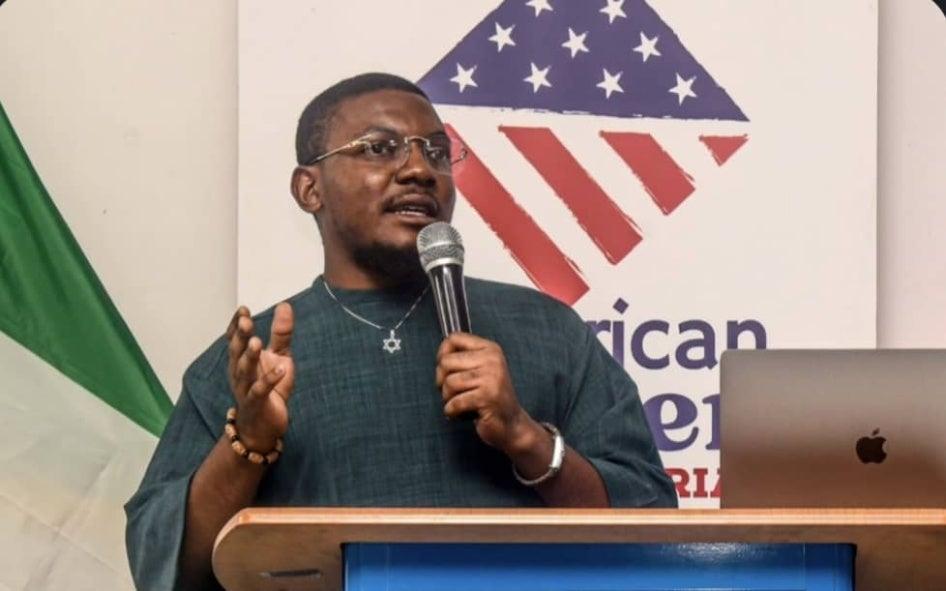
The Nigerian Guild of Editors has demanded the immediate release on bail of FIJ journalist Daniel Ojukwu and called for a review of the charges against him and FIJ founder Fisayo Soyombo. In its November 15 statement, the Guild warned that prosecuting journalists over investigations into public spending could discourage accountability reporting and damage press freedom. Vanguard News
ABUJA, NIGERIA — The Nigerian Guild of Editors has demanded the immediate release on bail of investigative journalist Daniel Ojukwu and called for a review of the criminal charges against him and Foundation for Investigative Journalism founder Fisayo Soyombo, warning that their prosecution over reports examining the use of public funds could have a chilling effect on investigative journalism and further deepen concerns about press freedom in Nigeria. Ojukwu, a correspondent with FIJ, is being held at the Kuje Correctional Centre in Abuja after a Federal High Court ordered his remand until December 1, when his bail application is scheduled to be heard, following his arraignment on 12 counts alleging cyberstalking, criminal defamation and related offences arising from a series of investigations into government contracts.
In a statement dated November 15 and signed by NGE President Eze Anaba and General Secretary Onuoha Ukeh, the Guild said it was alarmed that a journalist could face criminal prosecution and prolonged pretrial detention over reports raising questions about expenditure by the Office of the Senior Special Assistant to the President on Sustainable Development Goals. The editors argued that scrutiny of public spending is a legitimate function of journalism and that disputes over allegedly inaccurate or damaging reports should not automatically become grounds for criminal prosecution, particularly where the stories concern the administration of public resources and the conduct of public officials.
The case before Justice Joyce Abdulmalik of the Federal High Court in Abuja is marked FHC/ABJ/CR/486/2024 and names Ojukwu and Soyombo as defendants. Prosecutors accuse the journalists of offences under sections 27(b) and 24(2)(a) of the Cybercrimes Act, as well as sections 517 and 375 of the Criminal Code Act, provisions dealing respectively with conspiracy, cyberstalking and criminal defamation. CPJ, which reviewed the charge sheet, said the cybercrime counts each carry potential penalties of up to 10 years’ imprisonment or a ₦25 million fine, while the Criminal Code counts can carry prison terms of up to two years.
Ojukwu pleaded not guilty to all 12 counts when he was arraigned on November 10. His lawyers asked the court to allow him to continue enjoying the administrative bail previously granted during the earlier stages of the investigation, noting that he had not violated its conditions and had presented himself for proceedings. The court declined that request, ruling that the formal bail application had been filed too recently to be considered immediately, and remanded him at Kuje until December 1 so prosecutors could respond to the application.
The 21-day period between Ojukwu’s arraignment and the scheduled bail hearing has become one of the most controversial aspects of the case. The Nigerian Guild of Editors said the length of the remand risked turning pretrial detention into punishment before guilt had been established, while other media and civil society groups have argued that the offences are bailable and that Ojukwu’s professional and residential ties make it difficult to justify keeping him in custody solely because the court timetable delayed consideration of his application.
The charges arise from four related FIJ investigations published between late 2023 and early 2024 concerning contracts linked to the Office of the Senior Special Assistant to the President on Sustainable Development Goals, then headed by Adejoke Orelope-Adefulire. The reports questioned payments for projects including classroom construction and other public works and raised concerns about the companies selected to execute some of the contracts.
One of the central reports examined a payment of more than ₦147 million to an Abuja-based restaurant for the construction of classrooms and a skills-acquisition centre at a Lagos primary school. FIJ questioned the contractor’s record, the existence and quality of the projects and the process through which the contract was awarded. Other reports scrutinized a separate classroom contract valued at approximately ₦47.5 million and solar installations associated with SDG projects.
The prosecution takes a sharply different view of the publications. According to portions of the charge sheet reported by PUNCH and reviewed by CPJ, prosecutors allege that Ojukwu and Soyombo transmitted material that caused Orelope-Adefulire fear of death, violence or bodily harm and that the publications amounted to cyberstalking and criminal defamation. Those allegations remain unproven, and both defendants are entitled to the presumption of innocence.
Orelope-Adefulire’s lawyer, Muiz Banire, told CPJ that journalists must practice responsible journalism and challenged the reporters to demonstrate that their publications about his client were accurate. His position reflects the other side of the legal dispute: public officials retain the right to challenge publications they consider false or injurious, even while journalists and press-freedom organizations argue that the use of criminal law in such disputes can create a disproportionate threat to free expression.
The Nigerian Guild of Editors acknowledged that distinction in its statement. It said people who believe they have been defamed are entitled to seek redress, but warned that criminal prosecution and imprisonment should not be deployed in ways that intimidate journalists or discourage scrutiny of public institutions. The Guild said the constitutional role of the press requires journalists to investigate how public funds are used and to question officials entrusted with state resources.
The NGE cited sections 39 and 22 of Nigeria’s 1999 Constitution, which protect freedom of expression and assign the mass media a responsibility to hold government accountable to the people. It argued that those constitutional principles become weakened if reporters investigating public expenditure face arrest, prosecution and detention simply because their findings are disputed by powerful officials.
The Guild’s intervention adds to a rapidly growing coalition of organizations criticizing Ojukwu’s detention. The Committee to Protect Journalists, the Wole Soyinka Centre for Investigative Journalism, the Coalition for Whistleblowers Protection and Press Freedom, the Nigeria Union of Journalists, the West Africa Editors Society, SERAP and several other media and civil society organizations have all demanded his release or called for the charges to be withdrawn or reconsidered.
CPJ Africa Director Angela Quintal said Nigerian authorities should drop the charges against both Ojukwu and Soyombo and stop using criminal statutes against journalism. CPJ also noted that at least 29 Nigerian journalists had faced prosecution under the Cybercrimes Act by October 2024, reinforcing long-standing concerns among press-freedom groups that the legislation has repeatedly been used in disputes involving critical reporting.
The Cybercrimes Act has been controversial for years because of section 24, which originally contained broad provisions against communications considered grossly offensive, menacing, knowingly false or intended to cause annoyance, inconvenience, danger, obstruction, insult, injury, criminal intimidation, enmity, hatred or needless anxiety. Critics argued that the wording was so broad that it could be used against legitimate criticism, journalism and political speech.
Nigeria amended the law in 2024, but civil rights organizations have continued to raise concerns about its application. The National Human Rights Commission issued guidance in April 2025 cautioning law-enforcement agencies against arbitrary use of cybercrime provisions against journalists, activists and citizens exercising freedom of expression, stressing that arrests and prosecutions should be based on clearly defined offences and specific evidence rather than disagreement with critical publications.
Ojukwu’s present case has therefore revived a wider legal argument that predates the current prosecution. Press organizations say the issue is not whether journalists should be immune from accountability, but whether criminal law is being used where civil remedies, corrections, rebuttals or defamation proceedings would be more proportionate. Government officials and complainants, by contrast, have argued in previous cases that digital publication can cause serious reputational and personal harm and that journalists remain subject to the same laws as other citizens.
The courts will ultimately have to decide how those competing principles apply to the specific FIJ reports. Prosecutors must prove the elements of the offences beyond reasonable doubt, including any allegation that the publications were intended to create fear of death, violence or bodily harm. The defense, in turn, is likely to rely heavily on the public-interest character of the investigations, the documentary basis for the reports and constitutional protections for journalism.
Ojukwu’s detention is especially notable because this is not his first encounter with law enforcement over the same reporting. In May 2024, he was arrested in Lagos and held for approximately 10 days before being released following sustained pressure from media organizations, civil society groups and international press-freedom organizations. At the time, FIJ said he had initially disappeared without his family or colleagues knowing where he was being held before he was eventually transferred to the National Cybercrime Centre in Abuja.
That earlier detention attracted international criticism from organizations including Human Rights Watch and Reporters Without Borders, which argued that the case illustrated the risks faced by investigative journalists reporting on corruption and public expenditure in Nigeria. His eventual release did not end the matter, however, and the criminal charge now before the Federal High Court grew out of the same broader investigation.
The re-emergence of the case more than two years later has intensified criticism because Ojukwu had remained professionally active and had not, according to his lawyers, attempted to evade the authorities. His defense team argues that his history of complying with administrative bail conditions should have weighed strongly in favor of allowing him to remain free while awaiting trial.
Justice Abdulmalik’s ruling did not determine the merits of that argument. The court said the bail application was not yet ripe for hearing because prosecutors needed time to respond, and the case was adjourned to December 1. That procedural decision has nevertheless become central to the public debate because it results in Ojukwu spending three weeks in custody before the question of bail is fully considered.
Fisayo Soyombo occupies a different legal position. The FIJ founder was charged alongside Ojukwu but did not appear at the November 10 arraignment. Prosecutors asked the court to issue a bench warrant for his arrest, but Justice Abdulmalik declined, reasoning that Soyombo had never previously been brought before the court and therefore could not yet properly be treated as having disobeyed an order to appear.
Soyombo’s lawyers told CPJ that he was expected to attend the next hearing, while Soyombo himself subsequently visited Ojukwu at Kuje Correctional Centre and indicated his willingness to face the proceedings. His eventual appearance could therefore determine whether the prosecution seeks to arraign both journalists together going forward or whether their procedural paths remain temporarily separate.
The criminal case has also become politically sensitive because the reports concern the office of a senior presidential aide. Orelope-Adefulire served in a similar SDG role under former President Muhammadu Buhari and continued as Senior Special Assistant to President Bola Tinubu on Sustainable Development Goals, making questions about the contracts an issue involving continuity across administrations rather than a simple dispute confined to one political era.
The NGE has stressed that its concern is institutional rather than partisan. Its argument is that any public office entrusted with taxpayer funds should be subject to journalistic scrutiny regardless of which political party controls the government. In that context, the Guild says criminal prosecution of reporters investigating expenditure risks creating a precedent that could affect journalists covering officials from every party and level of government.
The Guild’s statement is particularly forceful because editors occupy a central position in Nigeria’s media structure. Their intervention is not only about the fate of one reporter but about the editorial environment in which newspapers, digital publications and broadcasters decide whether to pursue sensitive investigations. If reporters and editors believe a controversial story could result in criminal detention before trial, organizations may become more reluctant to approve investigations involving politically powerful subjects.
That possibility is what press-freedom groups mean when they describe a “chilling effect.” The concern is not that every journalist will immediately stop reporting, but that the perceived personal cost of investigative work may influence editorial decisions, source relationships and the willingness of whistleblowers to provide information.
Investigative journalism often depends on long reporting processes involving procurement records, company searches, site visits, interviews, confidential sources and requests for official responses. Such work can already be expensive and legally risky for relatively small news organizations. Adding the possibility of arrest and prolonged pretrial detention can significantly alter the risk calculation.
FIJ has built much of its reputation around precisely that kind of reporting. Founded by Soyombo in 2021, the organization has published investigations into corruption, policing, prisons, public procurement and other areas of government and private-sector conduct. Soyombo himself has received international recognition for undercover investigations and has previously faced detention and questioning over his work.
The current prosecution therefore has implications beyond FIJ. If the case eventually produces a conviction based on the publication of investigative reports, lawyers, editors and journalism organizations are likely to closely examine the judgment to understand where the court draws the line between protected reporting and criminal cyberstalking or defamation.
If the prosecution fails, the case may instead reinforce criticism that criminal law is being invoked too readily against journalists before the underlying allegations can be proved. Either outcome could influence how future disputes between officials and news organizations are handled.
The government has not announced any policy change in response to the mounting criticism. President Tinubu has repeatedly said his administration supports democratic freedoms, while critics argue that police actions against journalists remain inconsistent with those commitments. The present case provides another test of whether the federal authorities will intervene politically or allow the prosecution to proceed entirely through the courts.
SERAP has urged Tinubu and Attorney-General Lateef Fagbemi to secure Ojukwu’s release and end what it describes as the misuse of cyberstalking and criminal-defamation laws against journalists. The organization argues that where public officials dispute factual allegations, the appropriate response is to provide records, issue corrections or pursue proportionate civil remedies rather than use criminal proceedings that may result in imprisonment.
The government may counter that the judiciary, rather than the executive, is now responsible for the immediate question of bail because Ojukwu has been formally arraigned. Even so, the Attorney-General retains constitutional powers over federal prosecutions, and the police remain responsible for the case they initiated, meaning executive institutions are not entirely removed from the broader controversy.
The distinction between criticism of the prosecution and interference with judicial independence is therefore important. Press-freedom groups are entitled to demand withdrawal of charges or reform of legislation, but the court must independently determine the bail application and eventually the merits of the case unless prosecutors discontinue it.
The judiciary itself has now become part of the debate because of the length of the remand period. The Nigerian Guild of Editors urged courts to protect fundamental rights and ensure judicial processes are not used in a manner that silences critical voices. That statement reflects concern that even when a defendant is eventually acquitted, prolonged pretrial detention can create punishment before trial.
Nigeria’s Constitution guarantees the presumption of innocence, and courts are generally expected to balance the seriousness of charges against factors such as flight risk, interference with witnesses, public safety and the likelihood that the defendant will return for trial. Ojukwu’s lawyers are expected to rely on his previous compliance with administrative bail and established professional ties when the matter returns on December 1.
The prosecution may argue that the charges are serious and that formal judicial bail should be considered only after the state has had an opportunity to respond fully. The judge will then determine whether continued detention is necessary and, if bail is granted, what conditions should apply.
Beyond that hearing lies the substantive trial, where the disputed FIJ reports themselves will become central evidence. The defense may seek to demonstrate the investigative basis for the publications, while the prosecution will need to show why the reporting crossed the threshold from controversial journalism into criminal conduct.
The ₦147 million contract allegation is likely to receive particular attention because it became the most widely cited element of Ojukwu’s reporting. FIJ questioned how a company described as an Abuja restaurant came to receive a contract related to classroom and skills-centre construction in Lagos and whether the relevant projects were completed as represented.
The NGE has argued that such questions are inherently matters of public interest. It says the appropriate institutional response should include disclosure of procurement records, contract documents, evidence of project delivery and explanations from the public officials involved. Such transparency, in its view, would allow the public to evaluate both the government’s conduct and the accuracy of the journalism.
Orelope-Adefulire and her representatives, however, are entitled to dispute FIJ’s characterization of the transactions and to challenge any factual claims they believe are false. The unresolved legal question is whether that disagreement supports the specific criminal offences charged by police.
That question could eventually produce broader judicial guidance on the scope of Nigeria’s cybercrime legislation. Section 24 has been one of the most contested parts of the law, particularly when applied to speech rather than hacking, fraud or technical cyber offences.
Human rights lawyers have repeatedly argued that criminalizing allegedly offensive or defamatory online publications can conflict with constitutional freedom of expression and Nigeria’s obligations under international human-rights treaties. Nigeria is a party to the African Charter on Human and Peoples’ Rights and the International Covenant on Civil and Political Rights, both of which protect freedom of expression while permitting limited restrictions under defined circumstances.
International human-rights standards generally allow states to protect reputation, national security and public order, but restrictions must be lawful, necessary and proportionate. The United Nations Human Rights Committee has encouraged states to consider decriminalizing defamation and has warned that imprisonment is rarely an appropriate penalty for reputational harm.
Those standards do not automatically invalidate Nigerian criminal statutes, but they influence the arguments press-freedom organizations are making about proportionality. The NGE’s position is that investigative reporting about public spending should receive particularly strong protection because it contributes directly to democratic accountability.
The case arrives at a sensitive political moment as Nigeria approaches the 2027 general elections. Journalists will be expected to scrutinize campaign financing, procurement, security spending, political violence, electoral institutions and the conduct of incumbents and opposition parties. Media groups argue that an atmosphere in which reporters fear arrest could weaken the quality of information available to voters.
CPJ specifically linked the case to the approaching election period, warning that authorities should consider the effect of criminal prosecutions on journalists’ willingness to report freely. That does not mean election coverage itself is at issue in Ojukwu’s charge, but the timing increases the wider significance of the precedent.
Nigeria has one of Africa’s largest and most diverse media sectors, including national newspapers, television stations, radio networks and a rapidly growing digital investigative press. That diversity has often produced aggressive scrutiny of government, but journalists have also faced arrests, legal threats, physical attacks and economic pressure.
The dispute over Ojukwu therefore touches a longstanding tension in Nigerian democracy: the country has a vibrant press and strong constitutional guarantees, yet law-enforcement agencies continue to use statutes that critics say allow criminal intervention in disputes arising from journalism.
The NGE says that tension cannot be resolved by accepting the detention of reporters as routine. Its statement insists that investigative journalism is not itself a crime and that public officials should respond to questions about expenditure with evidence and transparency.
That position does not determine the legal outcome of Ojukwu’s case. Courts rather than professional associations decide guilt, and the prosecution remains entitled to present evidence supporting its allegations. The Guild’s intervention is instead a challenge to the appropriateness and proportionality of the criminal process being used.
The December 1 bail hearing will therefore be the next major legal milestone. If the court releases Ojukwu, the criminal case will continue while he remains outside custody under whatever conditions the judge imposes. If bail is denied, his detention could continue while lawyers pursue further applications or appeals.
Soyombo’s expected appearance may also clarify the prosecution’s case against the FIJ founder and whether both defendants will be tried together. His legal team has said he is prepared to face the proceedings, which could eliminate the question of whether police will seek a separate arrest order.
In the meantime, the NGE’s demand adds institutional weight to an already broad press-freedom campaign. Editors, journalists, civil-society organizations and international media advocates are increasingly presenting Ojukwu’s detention as a test of whether Nigeria will protect investigative reporting on public expenditure or permit criminal statutes to be used in ways they believe discourage scrutiny.
The prosecution and Orelope-Adefulire’s representatives reject the implication that journalists should be insulated from accountability, emphasizing that reporting must be accurate and responsible. That argument will remain part of the case, particularly if prosecutors attempt to show that FIJ’s reporting contained material they say was knowingly false or threatening.
What has not yet been established is whether the publications meet the criminal thresholds alleged in the charge sheet. Ojukwu has denied the charges, Soyombo has not yet been arraigned, and no court has found either journalist guilty of cyberstalking or defamation.
For that reason, the central issue now is procedural as much as substantive. A journalist accused of criminal offences remains in custody for three weeks before his bail application is heard, even though he has pleaded not guilty and previously complied with administrative bail. That circumstance has become the immediate focus of the Nigerian Guild of Editors and other organizations calling for his release.
The Guild’s broader warning is that what happens to Ojukwu will be watched by newsrooms across Nigeria. If investigative reporting on public expenditure can lead to prolonged detention before trial, editors fear journalists may increasingly avoid stories involving powerful institutions and officials.
Nigeria’s courts will eventually determine whether the specific reports crossed the line into criminal conduct. Until then, the case remains one involving disputed journalism, contested interpretations of the Cybercrimes Act and an unresolved question about how far the state can go in using criminal prosecution against reporters investigating the expenditure of public money.
The Nigerian Guild of Editors has now made its position unmistakable: Ojukwu should be released on bail, the charges against him and Soyombo should be reviewed, and allegations concerning public funds should be answered through transparency and lawful accountability rather than measures that could suppress investigative reporting. With Ojukwu still at Kuje Correctional Centre and the December 1 hearing approaching, the dispute has become not only a criminal case involving two journalists but a broader test of the boundaries between reputation, state authority, press freedom and the public’s right to scrutinize how government money is spent.